U.S. Navy Bases Face Growing Threat from Foreign Nationals

Rising Incidents of Unauthorized Access and Espionage
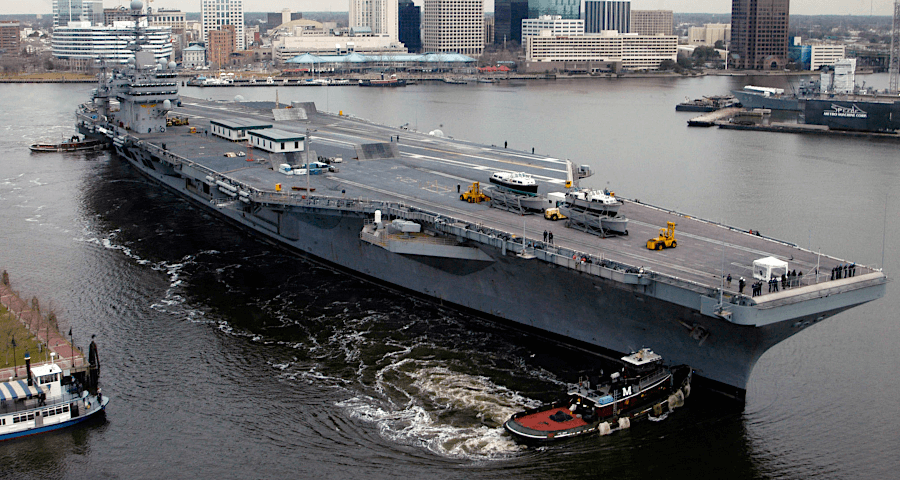
U.S Naval Base Norfolk. VA

The U.S. Navy has been confronting an alarming increase in the number of foreign nationals attempting to access its bases, with incidents occurring two to three times a week. These individuals, often posing as tourists or students, are predominantly Chinese nationals, according to U.S. Fleet Forces Commander Adm. Daryl Caudle. Their frequent unauthorized entries raise significant concerns about national security and espionage.

Recent Arrests and Security Breaches

The most notable incident involved the arrest of a Chinese national at the 29 Palms Marine Corps Base in March. This individual, who had entered the U.S. illegally, bypassed security measures and was eventually detained by military law enforcement before being handed over to Border Patrol agents. This case underscores the persistent and sophisticated nature of these security breaches.

Adm. Caudle emphasized the complexity of discerning the true intentions behind these incursions. While some individuals may genuinely appear to be harmless enthusiasts, the risk of espionage remains high. Two U.S. Navy servicemembers of Chinese origin were recently arrested on espionage charges, further highlighting the gravity of this threat.

U.S. Navy Bases Face Growing Threat from Foreign Nationals

In response to these incidents, the U.S. Navy has intensified its security protocols, involving the Naval Criminal Investigative Service (NCIS) and employing biometric technology whenever possible. Despite these efforts, the sheer volume and persistence of these attempts pose a formidable challenge.

Suspicious drone activities have also been noted as an emerging threat. Commercially available drones, which can be easily acquired, complicate the task of distinguishing between innocent use and potential espionage by foreign entities. The Navy is actively working on enhancing its drone detection and defense capabilities to counter this modern threat.

Implications for National Security

The frequent attempts by foreign nationals to penetrate U.S. military bases underscore a growing and sophisticated espionage effort. The increase in these incidents demands continuous vigilance and advanced security measures to protect sensitive military information and infrastructure.

The U.S. Navy’s proactive stance in addressing these security breaches is crucial in maintaining national security. As these threats evolve, so too must the strategies and technologies employed to counter them. The Navy’s ongoing efforts to enhance base security and develop countermeasures against espionage reflect a critical commitment to safeguarding the nation against foreign threats.

Conclusion

The rising incidents of unauthorized access to U.S. Navy bases by foreign nationals, particularly from China, represent a significant and growing threat. Through enhanced security measures and increased vigilance, the Navy continues to confront these challenges head-on. However, the persistent nature of these attempts calls for continuous innovation and adaptation in security protocols to ensure the protection of national security interests.
Honoring the Heroes of the Navy: Memorial Day Reflection

Memorial Day is a time for Americans to pause and reflect on the sacrifices made by those who have served our country, particularly those who have given their lives in the line of duty. As members and supporters of Americans for a Stronger Navy, today holds special significance for us. We honor the valor, dedication, and ultimate sacrifices of our naval forces who have safeguarded our freedom across the world’s oceans.

Our Navy has a storied history of bravery and resilience, epitomized by countless acts of heroism in battles across different eras. Each Memorial Day, we pay tribute to these heroes, ensuring their legacies live on and their sacrifices are never forgotten. Today, we share heartfelt stories from the Navy user community that highlight the profound impact of these sacrifices.

One poignant story comes from a Navy Ships member @CarolynGardner replying to one of our blog posts whose father served on the USS Quincy. The Quincy was tragically torpedoed during its service, and the torpedo hit the very station where this brave sailor was on duty. A survivor recounted this tale at a Quincy reunion, a testament to the enduring bond and memories shared by those who served. We remember and honor this father and all others who sacrificed their lives in the Solomon Islands campaign, ensuring that their bravery continues to inspire us.

Another tribute comes from a community member @TonyElumn who honors their uncle, STM2 Henry Jordan, who was lost with the USS Indianapolis. The Indianapolis tragedy is one of the most harrowing in naval history, and the bravery of those aboard is etched into our collective memory. To STM2 Henry Jordan and all fallen shipmates, we extend our deepest gratitude. Your service and sacrifice are solemnly honored this Memorial Day.

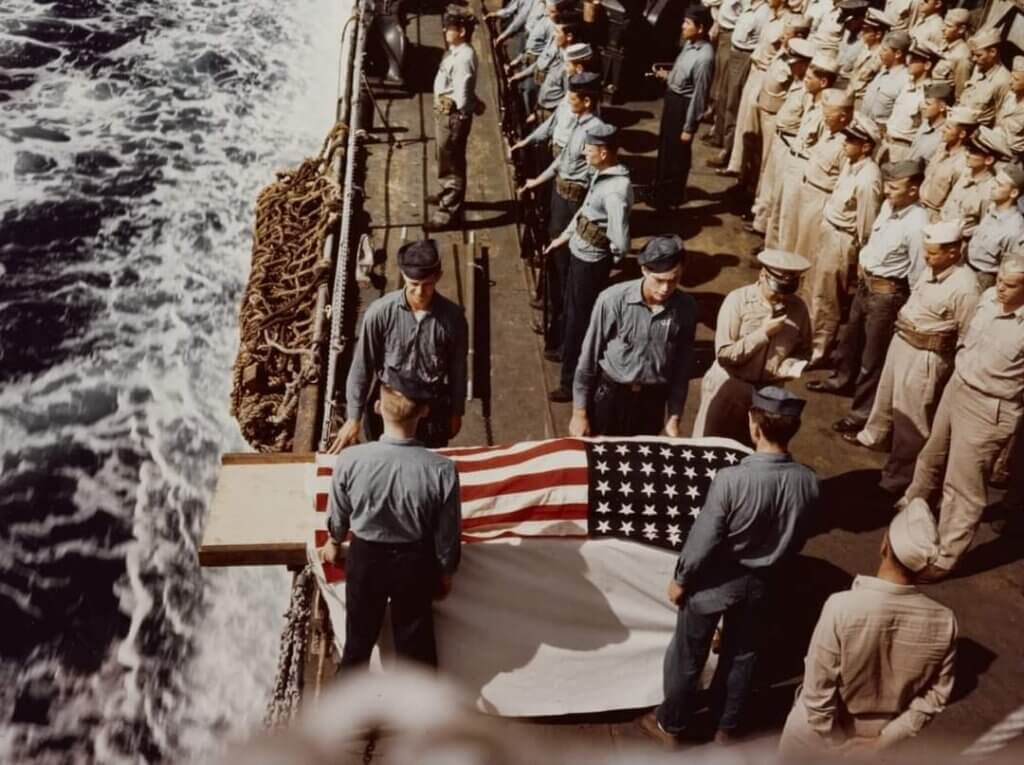
We also remember the touching account of a reader whose father, BM1 Morris Pratt Sr., served aboard the USS South Dakota BB-57. He bore the solemn duty of preparing fallen comrades for burial at sea, ensuring they were laid to rest with dignity and honor. His actions reflect the deep respect and camaraderie among sailors, even in the darkest of times.

Finally, it’s important to acknowledge not just those who perished but also the sailors who support their shipmates in every capacity. The strength of our Navy lies not just in its ships and weapons but in the unwavering bond and support among its personnel. This Memorial Day, we recognize and appreciate all sailors, past and present, for their unwavering dedication to duty and to each other.

As we commemorate this day, let us also pledge to support the families of the fallen, uphold the values they fought for, and strive to maintain the strength and readiness of our Navy. Their sacrifices demand nothing less than our utmost respect and commitment.

In closing, let us take a moment to remember and honor all those who have given their lives for our nation. Their bravery, sacrifice, and unwavering service are the bedrock of our freedom. On this Memorial Day, and every day, we salute them and hold their memories close to our hearts.

Thank you to all our naval heroes and their families. Your sacrifices will never be forgotten.

Americans for a Stronger Navy

AI and the US Navy: Transforming Naval Warfare

In our ongoing exploration of the future of American Naval power, we’ve already covered crucial topics that lay the groundwork for understanding AI’s role in naval warfare. In Episode 1: AI in Naval Warfare – From Logistics to Combat Strategy: , we examined the necessity of modernizing the Navy’s fleet and adapting shipbuilding strategies to meet contemporary challenges. Following that, Episode 2: Uncrewed Systems: How Drones and Autonomous Vehicles are Changing Naval Tactics delved into the realm of emerging technologies reshaping naval warfare, including groundbreaking initiatives like the Pentagon’s “Replicator.” These discussions set the stage for understanding how AI fits into the broader context of naval innovation and modernization.

Artificial Intelligence (AI) is revolutionizing the landscape of naval warfare and technology. The US Navy, recognizing the immense potential of AI, is integrating it across various domains, enhancing operational efficiency, decision-making processes, and multi-domain operations. This blog post delves into the transformative power of AI in the US Navy, highlighting key applications, opportunities, challenges, and insights from a former Navy captain.

AI Applications in the US Navy

The integration of AI in the US Navy is multifaceted, impacting numerous areas:

  • Autonomous Vehicles: AI-powered unmanned surface and underwater vehicles are enhancing surveillance, reconnaissance, and mine countermeasure operations.
  • Intelligent Decision Aids: AI systems assist naval officers in making faster and more informed decisions by analyzing vast amounts of data and providing actionable insights.
  • Unmanned Systems: Drones and other unmanned systems are increasingly used for tasks that are dangerous, repetitive, or require real-time data analysis.

Opportunities and Challenges

The adoption of AI presents both opportunities and challenges for the Navy:

  • Opportunities:
    • Enhancing operational efficiency and readiness.
    • Fostering multi-domain integration and collaboration.
    • Driving innovation in naval technology and warfare strategies.
    • Expanding into new domains like underwater, space, and cyberspace.
  • Challenges:
    • Ensuring data quality and security.
    • Addressing ethical and legal concerns.
    • Overcoming technical and organizational barriers.
    • Competing with AI advancements from foreign rivals, particularly China and Russia.

Insights from a Former Navy Captain

In a recent interview, Captain Sam Tangredi, a former US Navy officer, shared his thoughts on the broad implications of AI for naval operations. Captain Tangredi highlighted the following points:

  • Strategic Advantage: AI can provide a significant strategic advantage by improving situational awareness and enabling faster decision-making in critical situations.
  • Operational Efficiency: AI reduces the burden on human operators by automating routine tasks, allowing naval personnel to focus on more complex and strategic responsibilities.
  • Ethical Considerations: The importance of adhering to ethical principles in AI development and deployment was emphasized, ensuring that AI systems are reliable, safe, and governed appropriately.

Ensuring Responsible AI Adoption

As the Navy embraces AI, it is crucial to ensure responsible adoption:

  • Ethical AI: The Department of Defense⁸’s AI Ethical Principles emphasize being responsible, equitable, traceable, reliable, and governable.
  • Safety and Governance: Robust measures are in place to ensure AI systems are safe and their deployment is governed by strict regulations.

Conclusion

AI is set to transform naval warfare and technology, providing the US Navy with enhanced capabilities and strategic advantages. However, it is essential to address the associated challenges and ensure the responsible use of AI. By staying informed and engaged with developments in AI, we can support the Navy’s mission to maintain maritime superiority and safeguard national security.

For more insights, tune in to our latest podcast episode where we delve deeper into AI’s impact on the US Navy, featuring an exclusive interview with Captain Sam Tangredi.


.

The Importance of a Strong U.S. Naval Presence in the Face of Growing Geopolitical Tensions

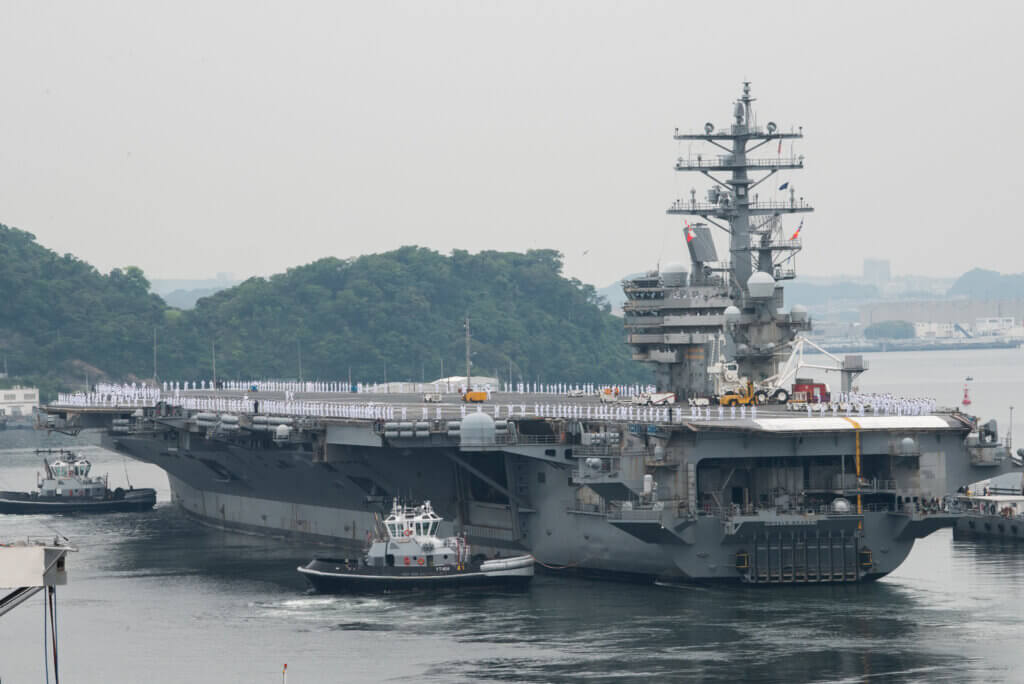
USS Ronald Reagan is (U.S. Navy photo by Tetsuya Morita)

Introduction: In an ever-changing world with dynamic geopolitical shifts, the significance of a powerful naval presence cannot be understated. The recent arrival of the USS Ronald Reagan, a nuclear-powered aircraft carrier, in South Korea underscores this importance, especially in light of escalating tensions with North Korea and their evolving ties with Russia.

Why This Matters to Americans: A robust naval presence in strategic regions is pivotal for a plethora of reasons:

  1. Security and Defense: The movement of the USS Ronald Reagan to South Korea is not merely symbolic; it’s a clear demonstration of America’s commitment to its allies and the protection of its interests overseas. By doing so, the U.S. aims to dissuade any potential threats from North Korea, which continues to advance its nuclear program.
  2. Deterrence: The deployment of such powerful U.S. military assets in the vicinity of potential threats is a testament to the nation’s determination to prevent any aggression. It sends a strong message of unity and strength, especially in light of North Korea’s perceived security threats and its history of ballistic missile tests in response to such deployments.
  3. Geopolitical Implications: North Korea’s pursuit of advanced weapons technologies from Russia, potentially in exchange for support in the ongoing Ukraine war, has wide-reaching implications. Such alliances can reshape the balance of power, making it essential for the U.S. to monitor, respond, and adapt to these changes effectively.

Key Takeaways:

  • The USS Ronald Reagan’s arrival in South Korea is a manifestation of America’s commitment to its allies in the region and its resolve against potential threats from North Korea.
  • The carrier’s deployment is part of a bilateral agreement to maintain U.S. visibility in the region in light of North Korea’s advancing nuclear program.
  • Growing ties between North Korea and Russia, especially in the realm of arms and weapons technologies, highlight the urgency and importance of a strong U.S. naval presence in strategic regions.

Conclusion: As the global landscape evolves with new alliances and challenges, it becomes imperative for the U.S. to maintain and display its naval strength. The recent deployment of the USS Ronald Reagan to South Korea emphasizes this commitment and highlights the necessity for a resilient navy. It’s not just about ships and military might; it’s about ensuring global stability, fostering peace, and protecting American interests and its allies. The strength of our navy is not just a source of pride; it’s a beacon of security in uncertain times.

USS Gerald R. Ford Engages in Diplomatic Port Call in Trieste, Italy

USS Gerald R. Ford (CVN 78) arrives in Trieste, Italy for a scheduled port visit, Sept. 17, 2023.

The USS Gerald R. Ford has anchored off the coast of Trieste, marking a significant step in strengthening ties between the U.S. Navy and its Italian counterparts. Commanding Officer Capt. Rick Burgess highlighted the importance of this visit, stating, “This port call offers Sailors from the USS Gerald R. Ford, Carrier Strike Group 12, Carrier Air Wing 8, and Destroyer Squadron 2 a unique opportunity to connect with a key ally and deepen their appreciation for Italian culture.”

During its anchorage, the Gerald R. Ford will welcome local officials and military leaders for a lunch and tour, emphasizing the longstanding alliance between the U.S. and Italy. Additionally, the crew will actively engage with the local community, with plans to participate in a city clean-up event to express gratitude to the city of Trieste.

Cmdr. Tim Yuhas, commanding officer of the USS Ramage, a ship accompanying the Gerald R. Ford, reemphasized the strategic significance of such visits: “The Carrier Strike Group symbolizes the U.S. Navy’s commitment to maintaining forward presence. This visit underscores the value we place on our alliance with Italy and our collective commitment within NATO.”

The Gerald R. Ford’s port call in Italy is part of its scheduled deployment within the U.S. Naval Forces Europe-Africa/U.S. Sixth Fleet’s operational area. This deployment exemplifies the U.S. Navy’s commitment to ensuring maritime stability, with the Gerald R. Ford Carrier Strike Group playing a pivotal role. Over 5,000 Sailors across various platforms are currently deployed, showcasing the Navy’s readiness to respond to global challenges.

Comprising this Strike Group are the Carrier Strike Group 12, Carrier Air Wing 8, Destroyer Squadron 2, along with notable ships such as the USS Normandy, USS Ramage, USS McFaul, and USS Thomas Hudner.

U.S. Naval Forces Europe-Africa/U.S. Sixth Fleet, with headquarters in Naples, Italy, orchestrates operations across European and African waters. Their continuous presence serves as a testament to the U.S.’s unwavering commitment to upholding international agreements and ensuring collective defense with its allies.


Why Should Americans Care? The Rise of China’s Navy

Chinese Navy Ship

Introduction

The global maritime landscape is undergoing a significant transformation, with China rapidly emerging as a dominant naval power. The implications of this shift have profound consequences for the United States and its position in the world. Recent revelations from a leaked US Navy briefing slide provide alarming insights into the trajectory of China’s naval capabilities and ambitions.

Key Takeaways

  1. China’s Overwhelming Shipbuilding Capacity
    • China’s shipyards boast a capacity of over 23.2 million tons, a staggering 232 times greater than the US’s capacity, which is less than 100,000 tons.
    • Sources: Yahoo News, Fox News, The Drive, and others.
  2. Strategic Focus on Naval Production
    • About 70% of China’s shipbuilding revenue is derived from naval production, while nearly 95% of American shipbuilding revenue is attributed to naval production.
    • Source: Fox News.
  3. The World’s Largest Navy
    • China currently commands the world’s largest navy with more than 355 vessels, including an array of combatant ships, submarines, and other essential naval assets.
    • Sources: Yahoo News, Fox News, The Drive.
  4. Projected Naval Fleet Growth
    • By 2025, China’s naval fleet is anticipated to encompass 400 ships and is further projected to expand to 440 ships by 2030. In contrast, the US naval fleet is expected to hover between 305 and 317 ships.
    • Sources: Yahoo News, Fox News, The Drive.
  5. Strategic Ambitions Behind the Naval Expansion
    • China’s fervent naval expansion is fueled by its strategic aspirations to establish itself as a global superpower and challenge the US’s supremacy in the Indo-Pacific realm.
    • Sources: Yahoo News, Fox News, The Drive.

Conclusion

The sheer magnitude of China’s shipbuilding prowess and its burgeoning naval fleet poses grave challenges to the US’s strategic interests and its longstanding dominance in the Indo-Pacific region. In the face of such rapid naval ascendance by China, it’s imperative for the United States to adopt robust measures to bolster its naval capabilities. As members and subscribers of the Americans for a Stronger Navy, the call to action is clear: Advocate for greater investments in the US Navy to ensure it remains a formidable force in the years to come.

Bridging the Waters: Understanding the Navy-Industry Partnership

To the esteemed members and subscribers of the Americans for A Stronger Navy,

Our nation’s security is a matter of collective pride and responsibility. A significant portion of this duty is understanding the complexities and dynamics between our armed forces and the industries that support them.

The relationship between the Navy and the defense industry is pivotal in this regard. In this article, we explore this intricate bond, highlighting its challenges and explaining its significance to all Americans and our mission.

Why This Matters to Americans and to Our Mission

The Navy serves as a beacon of our nation’s might, guarding our seas and ensuring our interests remain secure. But behind this force lies a complex network of collaborations, decisions, and strategies involving various stakeholders, most notably the defense industry.

To truly fortify our Naval capabilities, this partnership must be not just functional but exceptional. At the heart of the Americans for a Stronger Navy’s mission is the endeavor to ensure that this relationship is productive, transparent, and efficient.

Del Toro on the Essence of Partnerships

Secretary of the Navy, Carlos Del Toro, has frequently emphasized the significance of industry partnerships in strengthening the Navy. “I know what it takes to build a warship,” he remarked, shedding light on the intricate nature of defense contracts and collaborations.

Del Toro’s firsthand experience in shipbuilding has given him a deep appreciation for the teamwork between the government and industry players. “It’s an example of how America’s best can come together to build these tremendous platforms,” he observed, highlighting the symbiotic relationship that ultimately benefits national and economic security.

The Challenges for the Navy

Budget Constraints: Fiscal restrictions challenge the Navy to strike a balance between acquiring cutting-edge technology and ensuring value for money.
Rapid Technological Changes: The pace of tech advancements means the Navy must ensure new innovations integrate seamlessly with existing systems.
Bureaucratic Processes: Lengthy procurement procedures can potentially hamper the Navy’s preparedness.

The Challenges for the Industry

Understanding Navy Requirements: The defense industry must constantly adapt to the Navy’s evolving and specific needs.
Financial Risks: High initial costs with no certain returns can be a significant burden.
Security Protocols: While critical, stringent security guidelines can pose challenges to industry partners.

Role of Organizations in Strengthening the Partnership

External organizations play a pivotal role in nurturing and amplifying this relationship. Their contributions include:

Educating Both Parties: Through seminars and workshops, ensuring synergy between the Navy and industry.
Facilitating Communication: Promoting open dialogue to preempt misunderstandings and encourage seamless collaborations.
Advocacy: Championing policies and practices that benefit both the Navy and its industry partners.

A Personal Note from Bill Cullifer, Founder Americans for a Stronger Navy

“At the core of our ethos at the Americans for A Stronger Navy is the understanding that a robust Navy translates to enhanced safety and prosperity here at home.

Clarity and focus are our guiding principles. We strive to hone in on the essentials, especially in the procurement process, weeding out redundancies, stripping away non-essentials, and bypassing unnecessary overhead.

This perspective isn’t just about clarity; it’s about potential cost-savings, ensuring our Navy receives the best without undue expenses.”

Conclusion

In our commitment to enhancing public understanding and fostering dialogue about naval strength and its significance, the Americans for A Stronger Navy proudly underwrites a range of educational initiatives.

These resources serve as a bridge between the Navy, the defense industry, and the public, underscoring the importance of partnerships. The ‘Charting the Course: Navigating the Future of American Naval Power Podcast Series’ provides insights into how these partnerships can shape the future of naval capabilities.

Additionally, our upcoming ‘Wings of Victory: How Naval Aviators Transformed WWII from Battleships to the Skies and won the Pacific War’ series will highlight the historic significance of collaborative efforts.

Through these platforms, we aim to showcase the power of collaboration and the continuous need for a strong and adept Navy.”

Zero-Trust Cybersecurity: How the US Military Plans to Protect Its Networks from Cyberattacks

Us Navy Cyber Command

Hello and welcome to the Americans for a Stronger Navy, a non-profit organization that promotes naval warfare and technology. We are a community of naval enthusiasts, experts, and advocates who share a common passion and vision for the US Navy and its allies.

We believe that the US Navy is the most powerful and versatile naval force in the world, and that it plays a vital role in maintaining global peace and security.

We also believe that the US Navy needs to constantly innovate and modernize its capabilities and systems to keep up with the evolving threats and challenges in the 21st century. Today’s blog post includes a recent announcement from the Pentagon regarding Cybersecurity.

The US military is preparing to adopt a zero-trust approach to cybersecurity, which means that no user, device, or system is trusted by default and must be continuously verified.

This is a radical departure from the conventional methods that rely on perimeter-based defenses. Pentagon Chief Information Officer John Sherman announced that the Pentagon leadership will soon evaluate plans to implement zero-trust measures throughout the US military by the end of this year.

The plans are being developed by a specialized team led by Randy Resnick, the director of the zero-trust portfolio management office. Sherman said that this is a crucial step to address the growing and evolving cyber threats that the US military faces in 2023 and beyond.

This piece was written by Rizwan Choudhury and published on Interesting Engineering.

Why does this matter?

This news is important for the members and subscribers to the Americans for a Stronger Navy and why Americans should care because it shows that the US military is taking proactive and innovative steps to protect its digital and physical infrastructure from cyberattacks. Cybersecurity is a vital component of naval warfare and technology, as it affects the communication, command, control, intelligence, surveillance, and reconnaissance capabilities of the US Navy and its allies. A zero-trust approach can help the US Navy achieve its mission of maintaining maritime superiority, deterring aggression, and winning wars. It can also help the US Navy collaborate with other services, agencies, industry, academia, and partners to leverage the best practices and innovations in AI and related technologies.
Some other sources for this news are:
• DOD Releases Path to Cyber Security Through Zero Trust Architecture , which describes how the Defense Department plans to move beyond traditional network security methods to achieve reduced network attack surfaces, enable risk management and effective data-sharing in partnership environments, and contain and remediate adversary activities over the next five years.
• CISA Releases updated Zero Trust Maturity Model , which provides guidance for federal agencies on how to assess and improve their progress toward a zero trust architecture in support of the National Cybersecurity Strategy.
• 5 areas where zero trust can’t protect your organization , which highlights some of the potential blind spots and challenges that organizations may face when implementing a zero trust model, such as unmonitored IoT devices or third-party systems.

How a US Navy veteran helped his former Iranian prison mate escape to freedom

Michael White (left) meets Brian Hook, the U.S. special envoy for Iran, in Zurich, Switzerland, after White’s release from detention in Iran.

By Mark Roberts

Hello, fellow Americans. I’m a proud member of the Americans for a Stronger Navy, a group that advocates for a robust and well-equipped naval force to protect our nation’s interests and values. Today, I want to share with you a remarkable story of courage, friendship, and gratitude that involves a Navy veteran and an Iranian political activist who met in an Iranian prison. This story shows the resilience and compassion of our sailors, the plight of political prisoners in Iran, and the need for diplomatic efforts to secure the release of Americans detained abroad.

Michael White: A Navy veteran who was jailed in Iran for several years on spying charges

Michael White is a Navy veteran who served in the Persian Gulf War and later worked as a cook for the Department of Veterans Affairs. In July 2018, he traveled to Iran to visit his girlfriend in Mashhad, a city in northeastern Iran. He was arrested by Iranian authorities on vague charges of espionage and insulting the country’s supreme leader. He was interrogated, beaten, isolated, denied medical care, and threatened with execution. He spent nearly two years in Iran’s notorious Vakilabad prison, where he contracted COVID-19 and suffered from cancer.

Mahdi Vatankhah: An Iranian political activist who befriended White and helped him survive

Mahdi Vatankhah is an Iranian political activist who was also imprisoned in Iran for his involvement in anti-government protests in 2017. He was sentenced to 11 years in prison for “spreading propaganda against the system” and “insulting the supreme leader”. He was tortured, starved, and forced to confess on state television. He met White in Vakilabad prison and became his friend and protector. He helped White communicate with his family and survive the harsh conditions of the prison. He provided White’s mother with crucial, firsthand accounts about her son’s status in prison and passed along letters White had written while he was locked up. He also taught White some Farsi and shared his dreams of freedom and democracy.
How White was released in June 2020 as part of a prisoner swap deal between Iran and the US
In June 2020, White was released from Iran as part of a prisoner swap deal between Iran and the US. The deal involved the exchange of White for Majid Taheri, an Iranian-American doctor who had been held in the US for violating sanctions on Iran. White was flown to Switzerland, where he was greeted by US officials and reunited with his family. He thanked President Joe Biden and his administration for securing his release and expressed his gratitude to Vatankhah for saving his life.

How White helped Vatankhah flee Iran and come to the US

White did not forget Vatankhah’s kindness and friendship. He pushed successfully this year for Vatankhah’s admission to the US, allowing the men to be reunited last spring, something neither could have envisioned when they first met in prison years earlier. White contacted Jonathan Franks, a consultant in the US for families of American hostages and detainees, who helped him lobby the State Department and other agencies to grant Vatankhah a humanitarian parole visa. Vatankhah managed to escape from Iran with the help of smugglers and made his way to Turkey, where he waited for several months until he received his visa. He arrived at Los Angeles International Airport on June 1, 2023, where he was warmly welcomed by White and Franks.

Why this story matters

This story matters because it demonstrates the values of honor, courage, and commitment that are instilled in every sailor who serves our country with dignity and bravery. White showed honor by staying loyal to his friend and helping him escape from tyranny. He showed courage by enduring unimaginable hardships and never giving up hope. He showed commitment by fulfilling his promise to Vatankhah and bringing him to safety.

This story also matters because it illustrates the human rights violations and repression that are rampant in Iran, where thousands of political prisoners are languishing in jails without due process or fair trials. Vatankhah’s story is one of many that expose the brutality of the Iranian regime and its disregard for basic freedoms and dignity.

Finally, this story matters because it underscores the importance of diplomacy and negotiation to secure the freedom of Americans who are unjustly detained in foreign countries. The prisoner swap deal that led to White’s release was a result of months of behind-the-scenes talks between US and Iranian officials, facilitated by Switzerland as a neutral mediator. The humanitarian parole visa that allowed Vatankhah to come to the US was a result of persistent advocacy by White, Franks, and other supporters, who appealed to the humanitarian and moral values of the US government.

Conclusion

I hope this story has inspired you and moved you as much as it has me. I admire and thank White and Vatankhah for their courage, friendship, and gratitude. I also thank and salute all the American sailors who serve our country with honor, courage, and commitment. They are the reason why we need a stronger Navy to defend our nation and our allies.

I urge you to support the Americans for a Stronger Navy group, which works to educate the public and policymakers about the vital role of the Navy in ensuring our security and prosperity. I also urge you to advocate for human rights and democracy in Iran, where millions of people are suffering under a repressive regime. And I urge you to demand the release of other Americans who are still held hostage by Iran or other hostile regimes, such as Siamak Namazi, Baquer Namazi, Morad Tahbaz, Emad Shargi, and Kylie Moore-Gilbert.
Thank you for your attention and support.

Please feel free to comment or share your thoughts on this blog post. God bless America and God bless our Navy.

The Plumb Line: Lessons from a Navy Fighter Pilot and POW

Captain Charles Plumb, USN

Hello, members and subscribers of the Americans for a Stronger Navy.

Today, we want to share with you a remarkable story of courage, resilience, and wisdom. It is the story of Captain Charles Plumb, US Navy fighter pilot, prisoner of war during the Vietnam War and inspirational leader. His story is a testament to the spirit and values of our Navy and our nation. Here is his story:

Captain Plumb was a young man who dreamed of flying. He grew up on a farm in Kansas, where he watched the planes soar in the sky and imagined himself in the cockpit. He worked hard to achieve his goal, and graduated from the Naval Academy at Annapolis. He became a fighter pilot, flying the F-4 Phantom jet, one of the most advanced aircraft of its time. He joined the elite program that would later be known as “TOP GUN”, where he honed his skills and earned the respect of his peers.

He was sent to Vietnam, where he flew 74 successful combat missions over enemy territory. He was proud to serve his country and defend freedom. He was confident in his abilities and his plane. He was looking forward to returning home to his wife and family, who were waiting for him with love and gratitude.

But fate had other plans for him. On his 75th mission, just five days before he was due to go home, his plane was hit by a surface-to-air missile. He ejected and parachuted into enemy hands. He was captured, tortured, and imprisoned in a small cell. He spent the next 2,103 days as a prisoner of war in communist Vietnam.

He faced unimaginable hardships and horrors. He endured hunger, pain, isolation, humiliation, and despair. He witnessed the death and suffering of his fellow prisoners. He was tempted to give up hope and surrender to his captors.

But he did not. He fought back with courage and resilience. He used his ingenuity and creativity to communicate with other POWs through a secret code. He used his faith and optimism to inspire and comfort others. He used his humor and wit to cope with the absurdity and cruelty of his situation. He used his memory and imagination to escape from his cell and fly again in his mind.

He survived the ordeal and returned home as a hero. He received many honors and awards for his service and sacrifice. He wrote books and gave speeches about his experience and the lessons he learned from it. He shared his wisdom and insights with thousands of people from all walks of life. He helped others overcome their challenges and achieve their dreams.

He lived what he believed to be the American Dream. He was a farm kid from Kansas who became a fighter pilot, a prisoner of war, a motivational speaker, and a legend.

This is the true story of Charles Plumb , a man who faced adversity with bravery, dignity, and grace. A man who never gave up on himself or his country. A man who exemplifies the spirit of a stronger Navy.

As he said in one of his speeches: “The challenge is not to survive, but to come out of the experience with your honor, dignity, and self-respect intact.”

We hope you enjoyed this story as much as we did. We think it is an inspiring example of how our navy can overcome any obstacle and achieve any goal. We also think it is a reminder of why we need to support our Navy and its mission of protecting our security and prosperity in all domains.

We thank you for your attention and support. he Americans for a Stronger Navy team