

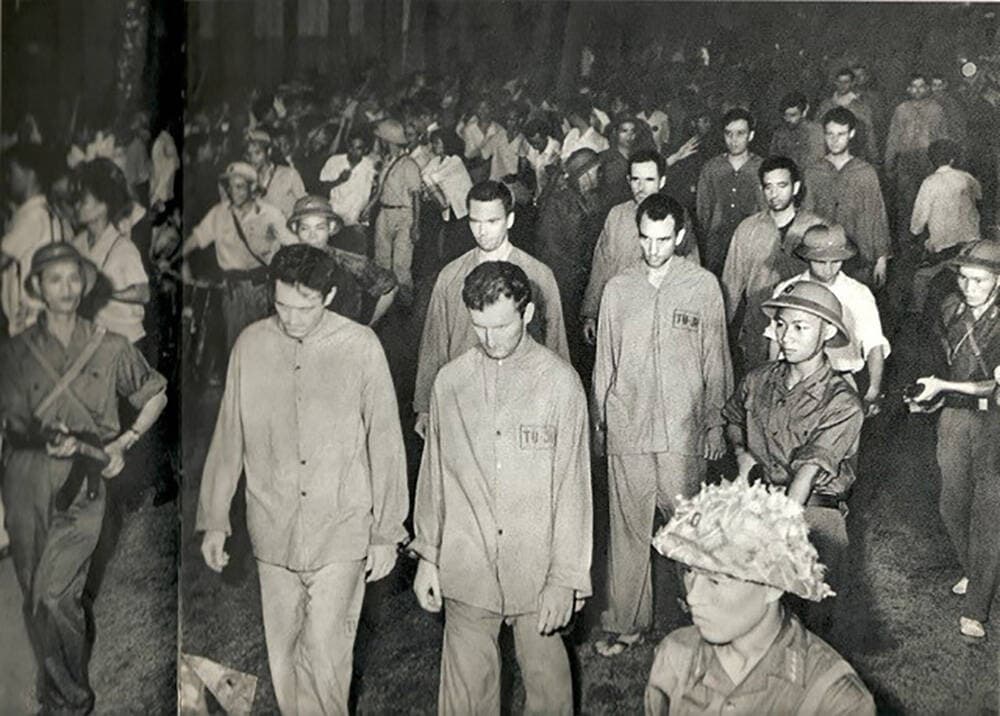

As the founder of Americans for a Stronger Navy and a former US Navy destroyer sailor, my journey to strengthen the Navy has led me to explore the complexities of the world we live in. This exploration includes interviewing experts, meeting with people from diverse backgrounds, and absorbing their insights. During this journey, I came across the book “Reflections on Captivity” by Porter Halyburton, a powerful account that caught my attention for its depiction of the bravery of Navy pilots and POWs.
Summary of “Reflections on Captivity”
“Reflections on Captivity” is a collection of 50 short stories that offer a window into Halyburton’s life as a POW. The North Vietnamese captors employed various methods to exploit personal and racial differences among prisoners, hoping to weaken their resolve and extract propaganda victories. Despite these efforts, Halyburton and his fellow prisoners used creativity, communication, and mutual support to maintain their unity. Stories of secret tap-code communication, shared acts of defiance, and moments of humanity shine through the darkness of their captivity, illustrating the indomitable spirit of the American POWs.
Analysis of Key Themes
Communist Tactics of Division: The North Vietnamese sought to exploit racial tensions by pairing Halyburton, a white Southerner, with Fred Cherry, an African American pilot. This tactic aimed to deepen existing societal divides and weaken the prisoners’ collective strength. However, instead of succumbing to hate, Halyburton and Cherry forged a deep bond, proving that unity could overcome even the most insidious attempts at division.
Resilience and Unity: In the face of relentless efforts to pit prisoners against each other, Halyburton and his comrades developed ingenious ways to stay connected and support one another. The tap-code communication system became their lifeline, allowing them to share news, organize covert activities, and maintain a semblance of normalcy. This sense of community was crucial in sustaining their morale and resisting the captors’ psychological warfare.
Power of Forgiveness: One of the most profound lessons from Halyburton’s story is his decision to forgive his captors. This act of forgiveness was not just a personal liberation but a powerful repudiation of the hatred and division the captors sought to instill. By choosing forgiveness, Halyburton reclaimed his freedom and demonstrated that true strength lies in unity and compassion.
Relevance to Modern Times
Modern Parallels: Halyburton’s experiences offer timeless lessons that are particularly relevant in today’s polarized world. The tactics of sowing division and exploiting differences are not confined to the past; they are evident in various aspects of contemporary American society. From political polarization to social media echo chambers, the divisive tactics employed by adversaries aim to fracture our sense of community and unity. Recognizing and countering these tactics with resilience, unity, and forgiveness is crucial for building a stronger, more cohesive society.
Lessons in Leadership and Ethics: The leadership and ethical choices demonstrated by Halyburton and his fellow POWs provide valuable insights for both military and civilian life. Their story underscores the importance of integrity, solidarity, and the moral courage to forgive. These lessons are vital as we navigate current social and political challenges, emphasizing the need for leaders who can unite rather than divide.
Online Hate and Division: As I continue my journey to understand and strengthen the US Navy, I have noticed a disturbing increase in hate and division, particularly online. This is not merely a societal issue; it is a strategic one. Adversaries exploit these divisions to weaken our national unity, a tactic with roots in communist strategies observed during the Vietnam War. By recognizing this pattern, we can better understand the importance of fostering resilience and unity in our digital interactions and beyond.
Conclusion
Porter Halyburton’s story is a powerful reminder of the strength found in unity and the liberating power of forgiveness. In a world where hate and division are often used as tools of control, his experiences teach us the importance of standing together and choosing compassion over conflict.
Reflecting on his journey encourages us to apply these lessons in our own lives, fostering resilience and unity in the face of adversity.
As America faces its own challenges, Halyburton’s story serves as a cautionary tale, urging us to resist division and embrace the power of unity and forgiveness.