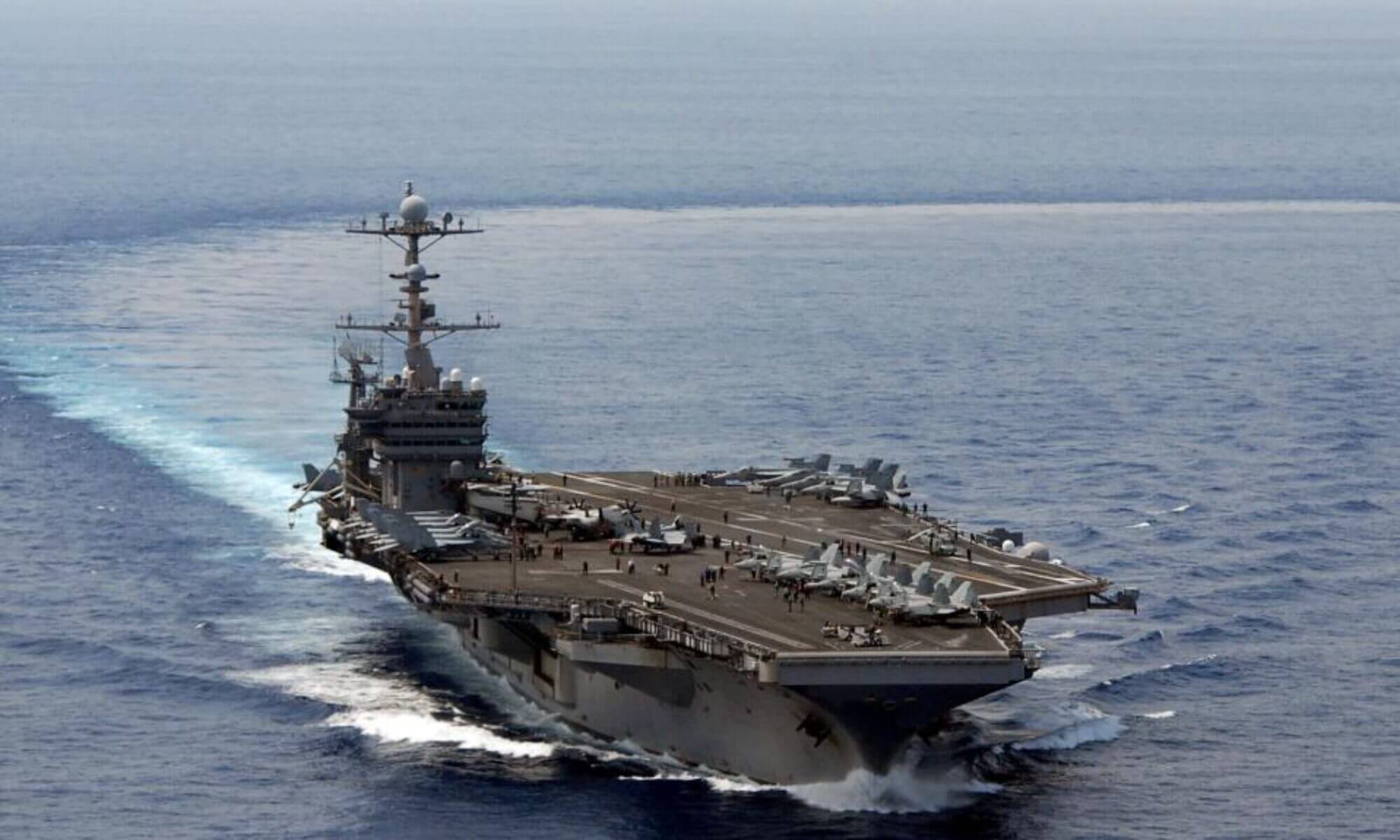

Hello friends. Bill Cullifer here with Americans for a Stronger Navy.
As we close out this year and gather with the people we care about, I want to take a moment to share something important with you. We’ve just completed a comprehensive review of America’s naval and maritime posture in twenty twenty-five. What we found is complicated. There is good news, troubling news, and some revelations that demand attention.
This is not another white paper filled with jargon. It’s a clear-eyed assessment of where we actually stand, what our competitors are doing, and what stands in the way of American maritime renewal.
Watch our short video below for a visual recap of the key findings:
Let me start with the good news, because it matters.
Despite everything else, the U.S. Navy did what it always does. It showed up.
Our sailors and Marines maintained global presence across multiple theaters. They responded to crises in the Red Sea, deterred aggression in the Pacific, and supported allies worldwide. Ship captains and crews performed with the professionalism Americans expect, even while operating aging ships and dealing with stretched maintenance schedules.
Leadership also spoke with urgency.
Secretary of the Navy John Phelan captured the crisis perfectly when he said, “A decade to deliver capability is the equivalent of fielding a twenty fifteen iPhone today, already obsolete.”
Navalists and key voices in Congress continued pushing for shipbuilding reform, the SHIPS Act, and workforce development. They have not given up — and neither should we.
So we still have talent, commitment, and awareness. But awareness alone is not a strategy.
That leads to the harder truth.
Twenty twenty-five left Americans and our allies asking the same question again and again: What is U.S. strategy?
For the first time in years, two congressionally mandated documents failed to appear.
The China Military Security Developments Report — missing.
The Navy Long-Range Shipbuilding Plan — missing.
Congress was left writing budgets without the strategic guidance it is legally entitled to receive. Allies grew uncertain. Adversaries grew bolder.
Policy signals also contradicted each other.
There were trial balloons about groupings that would include both the United States and China. Approvals of advanced AI chip sales to Beijing. Envoys sent to Moscow while tensions remained high. And a National Security Strategy that appeared to sideline Europe.
The result was strategic ambiguity. Friends worried. Competitors took notes.
At the same time, despite all the urgent rhetoric about industrial mobilization, America did not see new shipyards opening. We did not see expanded dry docks under construction. We did not see welding sparks flying from California to Virginia.
As one observer put it, “We talked about shipbuilding more than we did shipbuilding.”
China built more than two hundred ships this year. We built a handful.
Now here is what really changed the conversation in twenty twenty-five.
The most significant military development was not theoretical — it was operational.
China and Russia conducted coordinated naval and air operations in the Philippine Sea, the exact waters the U.S. Navy plans to defend in a future conflict. China surged a carrier group with real flight operations. Russian long-range bombers entered the same battlespace.
They are operating today the way we keep saying we will operate tomorrow.
And here is what surprised even us.
The biggest obstacle to American maritime renewal is not foreign competition — it is American corporate lobbying.
Bloomberg revealed that U.S. retail and shipping interests spent millions lobbying against funding our own shipyards. These corporations want U.S. Navy protection of the sea lanes, but they oppose investing in American shipbuilding because they profit from Chinese-built ships.
Let that sink in.
There is also a structural problem most Americans never hear about.
The Navy no longer fully controls its own future. Civilian budget offices and corporate lobbies now shape more naval policy than the uniformed Navy and Marine Corps.
One naval officer summarized it perfectly:
“We no longer build the Navy the Navy needs. We build the Navy the accountants will tolerate.”
That is not a recipe for maritime power.
So what do we do?
Naval expert Brent Sadler has identified a clear solution:
We need a Maritime Advisor to the President — one empowered official coordinating the Navy, MARAD, OMB, Commerce, and industry. Someone whose job is to think about American sea power every single day.
America is not outmatched. We are under-mobilized.
Our twenty-five page report explains how we got here, what twenty twenty-five revealed, and what must happen in twenty twenty-six if we’re serious about remaining a maritime power. You can request it at StrongerNavy.org by clicking Contact Us. We’ll send it to you right away.
The adversaries are watching. The allies are calculating. And the American people deserve to know what is at stake.
Let’s make twenty twenty-six the year we finally close the gap between words and action.
From all of us at Americans for a Stronger Navy, happy holidays — and fair winds.