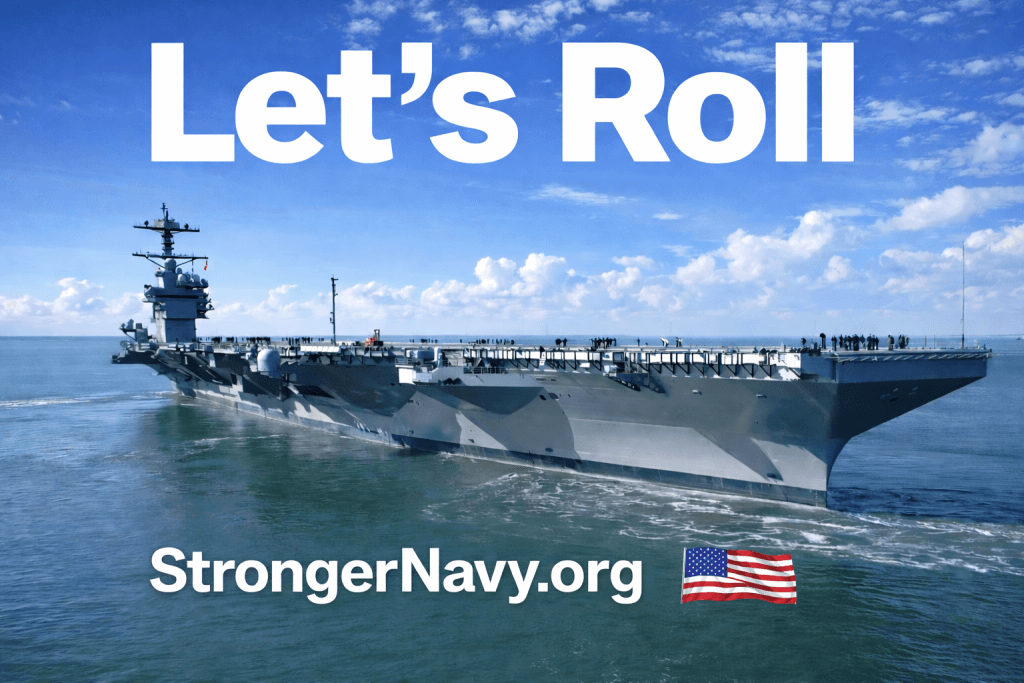

The future USS John F. Kennedy (CVN-79) has begun shipbuilder sea trials.
That sentence sounds technical. Routine. Almost boring.
It is anything but.
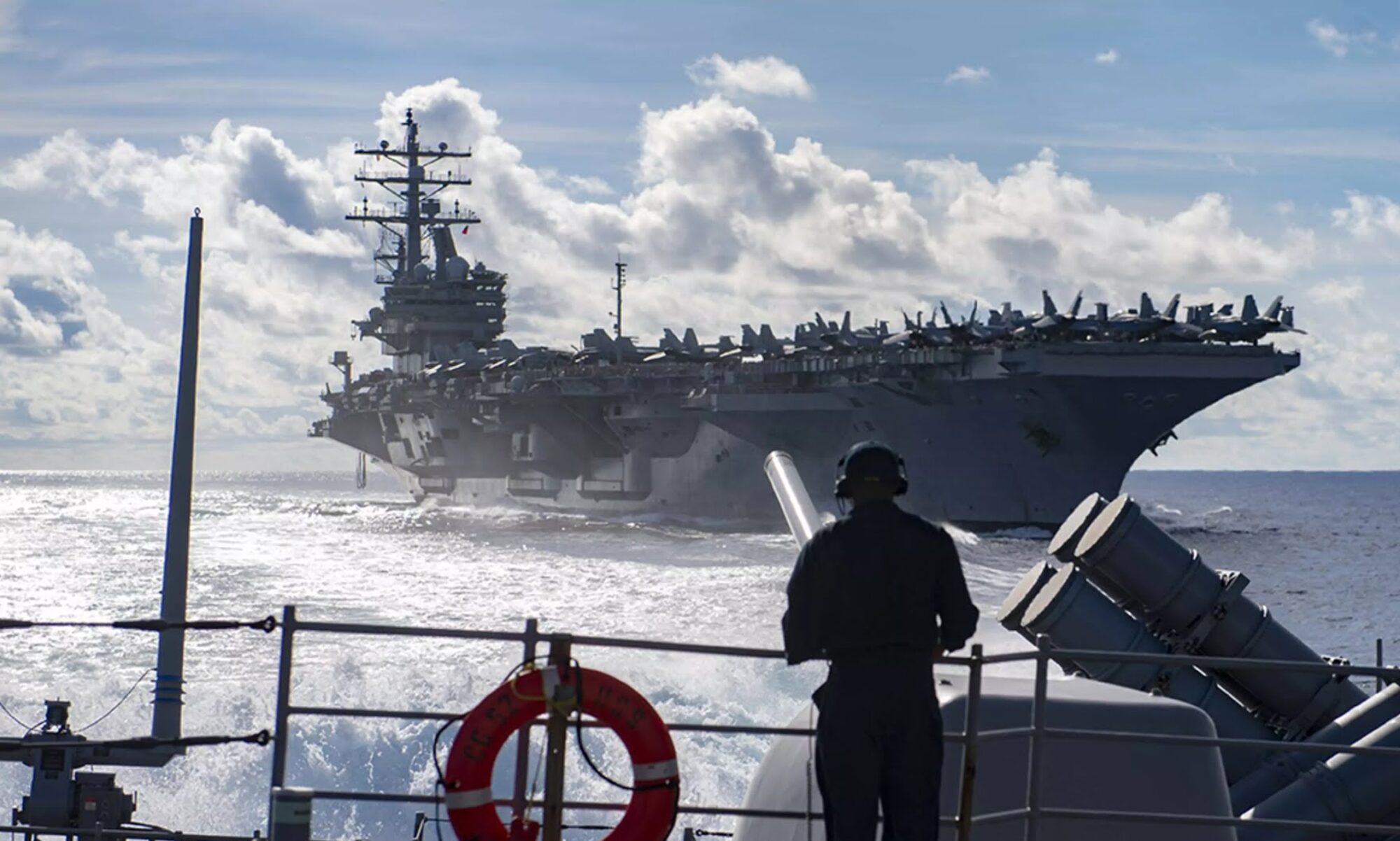
I still remember the first time I saw USS Enterprise (CVN-65).
Not in a book. Not in a documentary. But in person — a city of steel at sea that didn’t just float… it projected presence. You didn’t need anyone to explain what it meant. You felt it.
Eight reactors. A flat deck that seemed to stretch to the horizon. Sailors moving with purpose. Aircraft launching into the sky like it was routine business for a nation that understood the oceans mattered.
Enterprise wasn’t just a ship. She was a statement.
She told the world that the United States knew how to build big things, maintain them, crew them, and keep them forward where they mattered most.
That memory came rushing back this week as the future USS John F. Kennedy began sea trials.
Different era. Different technology. Same message trying to break through the noise:
America still knows how to build ships like this.
But here’s the part that concerns me.
When I saw Enterprise, there was no question we had the industrial base, the shipyards, the workforce, and the national will to keep ships like her coming. Today, every new carrier feels like a minor miracle of coordination, learning curves, delays, and hard-won progress.
Sea trials for Kennedy are more than a shipbuilder milestone. They’re a reminder of what we used to do routinely — and what we now must work very hard to preserve.
And that’s why this moment matters far more than most Americans realize..
For the first time, America’s next nuclear-powered aircraft carrier is operating in open water, testing the systems that will carry U.S. power, deterrence, and stability across the world’s oceans for the next 50 years.
This is not just a shipyard milestone.
This is a strategic milestone for the United States.
What Sea Trials Really Mean
Sea trials are where theory meets reality.
This is where:
- the Electromagnetic Aircraft Launch System is proven at sea
- the Advanced Arresting Gear is tested in real conditions
- the new SPY-6 radar begins to show what modern naval sensing looks like
- and lessons learned from USS Gerald R. Ford are put into practice
This is the Navy and the shipyard proving that American industrial capability still works.
But There’s A Catch Most People Miss
USS John F. Kennedy won’t join the fleet until 2027.
In that time:
- USS Nimitz retires this spring
- USS Harry S. Truman begins a long overhaul
- USS John C. Stennis is already over a year behind schedule in overhaul
That means for the next two years, the Navy will be operating with fewer carriers than planned during a period when China is expanding its fleet, its shipyards, and its maritime presence at record speed.
This is the readiness gap Americans don’t see.
Why Americans Should Care
Aircraft carriers are not symbols. They are mobile sovereign territory.
They protect:
- global trade routes
- allies in Europe, the Middle East, and the Pacific
- undersea cables and energy lanes
- the economic system Americans rely on every day
When carriers are in overhaul and replacements are delayed, coverage shrinks.
And when coverage shrinks, deterrence weakens.
Implications for the Navy
The Navy is doing what it can with what it has.
Shipbuilders are learning from past mistakes and improving delivery.
But the industrial timeline is unforgiving. You cannot rush nuclear carriers.
You cannot surge shipyards overnight.
You cannot rebuild lost capacity in a crisis.
This is why shipbuilding, maintenance, and industrial capacity are national security issues — not procurement trivia.
Implications for Our Allies
Allies don’t measure American commitment by speeches.
They measure it by hulls at sea.
Sea trials for John F. Kennedy signal that more hulls are coming.
But the gap between now and 2027 is where risk lives.
The Bigger Picture
This story isn’t about one carrier.
It’s about whether America remembers how to build, maintain, and sustain the fleet that keeps the world’s oceans stable.
That’s why this matters.
That’s why Americans should care.
That’s why we launched Charting the Course: Voices That Matter — a 24-part educational series breaking down how we got here, what went wrong, and what must happen next. Our goal is simple: educate the public, connect the dots, and build the support needed to close the readiness gap before it’s too late.
Let’s roll.