Fleet Forward: Charting Tomorrow’s Navy –  Episode 3: Technological Advancements and Design Considerations in Modern Shipbuilding

Introduction

Hello and welcome to Fleet Forward, the podcast series that explores the future of the U.S. Navy and its role in the world.  

In this episode, we are going to talk about the technological advancements and design considerations in modern shipbuilding, and how they affect the Navy’s ability to maintain a credible and capable fleet in the face of growing threats and challenges. 

In the previous episodes, we introduced the series and explained why we decided to create it and why it matters. We also discussed the format and the content of the series, and how we hope to provide you with insightful and informative analysis and commentary on the issues and trends that shape the Navy’s present and future. In the second episode, we explored the budgetary challenge of naval shipbuilding, and how it affects the Navy’s shipbuilding plan and force structure goal.

In this episode, we will delve into the technological aspects of naval shipbuilding, and how they influence the design and performance of the Navy’s ships. We will focus on one of the most critical and expensive shipbuilding programs in the Navy’s history, the DDG(X), the Navy’s next-generation guided-missile destroyer that is expected to provide the backbone of the surface fleet and deliver new capabilities such as hypersonic missiles, lasers, and electromagnetic railguns.

The DDG(X) is one of the most critical and expensive shipbuilding programs in the Navy’s history, and it has significant implications for the Navy’s strategy, tactics, and budget. The main question we want to explore today is: What is the operational concept and mission of the DDG(X), and how will it shape the future of the U.S. Navy?

The trade-offs and opportunities involved in designing and building the Navy’s ships are the choices and consequences that the Navy has to face and accept when it decides how to allocate its resources, prioritize its requirements, and balance its needs and wants for its ships. 

The trade-offs and opportunities can affect the cost, schedule, performance, and risk of the shipbuilding programs, and ultimately, the capability and readiness of the fleet.

Some examples of the trade-offs and opportunities involved in designing and building the Navy’s ships are:

Quantity vs. Quality: The Navy has to decide how many ships it needs and can afford, and how capable and advanced those ships should be. The Navy faces a trade-off between quantity and quality, as it has to balance the need for more ships with the need for more advanced and survivable ships that can operate in contested environments. The Navy also faces an opportunity to leverage new technologies and designs that can increase the quantity and quality of its ships, such as modular and scalable architectures, unmanned and autonomous systems, and additive manufacturing.

Risk vs. Reward: The Navy has to decide how much risk it is willing and able to take and manage, and how much reward it expects and seeks to achieve, when it develops and implements new technologies and capabilities for its ships. The Navy faces a trade-off between risk and reward, as it has to balance the need for innovation and experimentation with the need for reliability and certainty. The Navy also faces an opportunity to mitigate and overcome the risks and challenges associated with new technologies and capabilities, such as technical complexity, integration issues, and operational testing and evaluation.

Current vs. Future: The Navy has to decide how to address its current and future operational requirements and expectations, and how to adapt to the changing global security environment and the evolving threats and challenges from potential adversaries. The Navy faces a trade-off between current and future, as it has to balance the need for maintaining and modernizing its existing ships with the need for developing and acquiring new ships. The Navy also faces an opportunity to anticipate and prepare for the future, and to shape and influence the future, by incorporating new technologies and capabilities that can enhance its strategic and tactical advantages and options.

These are some of the trade-offs and opportunities involved in designing and building the Navy’s ships, and they are not mutually exclusive or exhaustive. The Navy has to consider and weigh them carefully and holistically, and make informed and rational decisions that can best serve its interests and values. The DDG(X) program is a case in point, as it reflects and illustrates some of the trade-offs and opportunities that the Navy faces and embraces in designing and building its next-generation guided-missile destroyer.

The DDG(X) program is the Navy’s effort to design and build a new class of large surface combatants (LSCs) that will replace the aging CG-47 Ticonderoga-class cruisers and a significant portion of the DDG-51 Arleigh Burke-class destroyers. The LSCs are the Navy’s most capable and versatile surface ships, as they can perform a wide range of missions, such as air and missile defense, anti-surface warfare, anti-submarine warfare, strike warfare, and ballistic missile defense.

The Navy’s previous force structure assessment, which was released in 2016, called for a fleet of 355 ships, including 104 LSCs, by 2030. However, the Navy’s previous shipbuilding plan, which was released in 2020, fell short of this goal, as it projected a fleet of 355 ships, including 88 LSCs, by 2034. Moreover, the shipbuilding plan was underfunded and unrealistic, as it did not account for the rising costs and delays of shipbuilding programs, the impact of inflation and maintenance, and the trade-offs between quantity and quality. On October 6, 2020, Secretary of Defense Mark Esper presented some details regarding a new Navy force-level goal, called Battle Force 2045, for achieving a fleet of more than 500 manned and unmanned ships by 2045, including 355 manned ships prior to 2035. This new force-level goal is based on an internal Office of the Secretary of Defense assessment that calls for the Navy to cut two aircraft carriers from its fleet, freeze the large surface combatant fleet of destroyers and cruisers around current levels and add dozens of unmanned or lightly manned ships to the inventory. The new force-level goal also reflects and illustrates some of the trade-offs and opportunities that the Navy faces and embraces in designing and building its next-generation ships, such as the DDG(X) destroyer.

The DDG(X) program is one of the most critical and expensive shipbuilding programs in the Navy’s history, as it is expected to provide the backbone of the surface fleet and deliver new capabilities that will enhance the Navy’s ability to operate in contested environments. The DDG(X) will be larger, more powerful, and more survivable than the DDG-51, and will be able to carry and launch hypersonic missiles, lasers, and electromagnetic railguns. The DDG(X) will also have improved seakeeping, Arctic operations, survivability, and lethality, and will be able to accommodate future technologies and missions.

The DDG(X) program is still in the early stages of development and subject to change, but the Navy estimates that each DDG(X) could cost up to $2.6 billion, while the Congressional Budget Office projects a higher cost of $3.4 billion. The Navy plans to start construction of the first DDG(X) in 2028 and deliver it in 2034, but this timeline could be affected by budget constraints, industrial capacity, and competing priorities.

Technological Advancements in the DDG(X)

The DDG(X) stands as a testament to naval modernization, according to its proponents. They point to its cutting-edge features like hypersonic missiles, advanced laser systems, and electromagnetic railguns, emphasizing how these technologies significantly enhance the Navy’s operational capabilities. However, it’s crucial to note that some analysts express concerns over the feasibility and reliability of these advanced systems, citing technological and integration challenges and cost

DDG(X)’s operational concept and mission

The DDG(X)’s operational concept and mission are based on the Navy’s vision of distributed maritime operations (DMO), which is a new way of fighting in the maritime domain that exploits the advantages of dispersed, networked, and resilient forces. DMO aims to counter the threats posed by China and Russia, which have developed anti-access/area denial (A2/AD) capabilities that can challenge the U.S. Navy’s access and freedom of maneuver in key regions, such as the Indo-Pacific and the Baltic Sea.

The DDG(X) will be a key enabler of DMO, as it will provide the surface fleet with the ability to operate in contested environments and deliver lethal and non-lethal effects across multiple domains. The DDG(X) will have four main missions, according to the Naval Sea 

Systems Command

Air and Missile Defense: The DDG(X) will be able to defend itself and other naval assets from air and missile threats, such as aircraft, cruise missiles, ballistic missiles, and hypersonic weapons. The DDG(X) will also be able to conduct offensive strikes against enemy air and missile systems, using its own hypersonic missiles, lasers, and electromagnetic railguns.

•  Surface Warfare: The DDG(X) will be able to engage and destroy enemy surface ships and coastal targets, using its hypersonic missiles, lasers, electromagnetic railguns, and torpedoes. The DDG(X) will also be able to conduct maritime security operations, such as counter-piracy, counter-terrorism, and counter-proliferation.

•  Undersea Warfare: The DDG(X) will be able to detect and track enemy submarines and mines, using its advanced sonar and towed array systems. The DDG(X) will also be able to attack enemy submarines and mines, using its torpedoes, lasers, and electromagnetic railguns.

•  Information Warfare: The DDG(X) will be able to collect and disseminate intelligence, surveillance, and reconnaissance (ISR) data, using its sensors, drones, and communication systems. The DDG(X) will also be able to conduct electronic warfare (EW) and cyber warfare (CW) operations, using its jammers, decoys, and hackers.

The DDG(X) will be able to perform these missions in a distributed and networked manner, meaning that it will be able to operate independently or in coordination with other naval platforms and systems, such as aircraft carriers, submarines, amphibious ships, littoral combat ships, unmanned vehicles, and satellites. The DDG(X) will also be able to adapt to different scenarios and threats, using its flexible and scalable design that can accommodate future technologies and missions.

Additional Insights on the DDG(X) Program

Recent discussions in the defense technology sphere, as highlighted in a Popular Science article, bring to light several intriguing aspects of the DDG(X) program. The article emphasizes the Navy’s vision for the DDG(X) to be equipped with powerful lasers, a significant leap from traditional destroyer armaments. This aligns with the Navy’s ongoing pursuit of cutting-edge technologies to maintain maritime superiority.

Lasers as a Game-Changer: The DDG(X) is envisioned to carry a forward-mounted 150-kilowatt laser and two rear-mounted 600-kilowatt lasers. These high-powered lasers could revolutionize naval warfare, offering rapid and efficient defense against various threats, including incoming missiles, drones, and even small manned vessels. The implementation of such advanced laser systems is a testament to the Navy’s forward-thinking approach in adapting to modern warfare scenarios.

Balancing Innovation with Practicality: While embracing innovation, the DDG(X) program also appears to be learning from past experiences, such as the challenges faced by the Zumwalt-class destroyers. Unlike the Zumwalt’s ambitious but problematic features, the DDG(X) aims for more modest, yet impactful advancements. This includes improved sensors, longer-range weapons, increased missile capacity, and an all-electric Integrated Power System, crucial for powering the new laser systems.

Efficiency and Sustainability: Another key aspect underlined in the article is the focus on efficiency and sustainability. The DDG(X) aims to achieve a 50 percent greater range and a 25 percent reduction in fuel usage compared to existing destroyers. This goal highlights the Navy’s commitment to operational efficiency and reduced logistical footprints, aligning with broader environmental and resource sustainability goals.

A Future-Proof Design: The DDG(X)’s design philosophy seems to be rooted in adaptability and future-proofing. While the hull form and specific components are yet to be finalized, there is a clear intent to create a platform that can evolve with emerging technologies and changing strategic needs. This approach ensures the DDG(X) remains relevant and formidable in the ever-evolving landscape of naval warfare.

Comparative Analysis – DDG(X) vs. Arleigh Burke-Class: Supporters of the DDG(X) highlight its advancements over the Arleigh Burke-class, focusing on enhanced stealth, advanced sensor arrays, and greater firepower with new weapon systems. They argue that the DDG(X) is a necessary evolution to maintain naval dominance. On the other hand, skeptics question whether these advancements justify the significant investment, especially considering the proven effectiveness of the existing fleet.

Land-Based Testing: A Pivotal Step in the DDG(X) Development:A recent milestone in the DDG(X) program was the inauguration of the DDG(X) Land Based Test Site (LBTS), as reported in March 2023. This facility, established by the Program Executive Office (PEO) Ships and the Naval Surface Warfare Center, Philadelphia Division (NSWCPD), represents a crucial step in advancing the design and capabilities of the DDG(X).

The Role of LBTS in Risk Reduction and Technical Oversight: The LBTS is not just a testing ground; it’s a cornerstone in ensuring the reliability and capability of the DDG(X)’s critical systems. Capt. Joseph Darcy of NSWCPD emphasized its importance, noting that the site will be instrumental in building the future of the U.S. Navy’s most advanced destroyers. The LBTS approach reflects a deliberate strategy to mitigate risks ahead of construction, aligning with the Navy’s goal of writing requirements from a place of knowledge rather than uncertainty.

Historical Context and Congressional Alignment: Rear Adm. Fred Pyle, Director, Surface Warfare Division (N96), highlighted the historical success of land-based testing for other ship classes like the Spruance and Arleigh Burke. This historical perspective underscores the value of the LBTS in comprehending new technologies and reducing risks. The alignment with Congress on the necessity of this test site reinforces its significance in the broader naval acquisition process.

Increased Capability and Operational Flexibility: The DDG(X), through developments at the LBTS, promises to offer substantial increases in range, efficiency, and time-on-station. This advancement will provide fleet commanders with greater operational flexibility and reduce the demand on fleet logistics. The emphasis on an evolutionary rather than revolutionary approach, integrating lessons learned from past shipbuilding programs, highlights the program’s pragmatic and informed development path. 

Legacy of Land-Based Testing at NSWCPD: NSWCPD’s rich history in land-based testing, dating back to 1943, and its experience with the DDG 51 Class Land Based Engineering Site (LBES) positions it uniquely for the DDG(X) program. The site’s ability to test full-scale propulsion systems and other critical components plays a pivotal role in refining and perfecting the DDG(X)’s technologies.

Current Phase of the DDG(X) Program: 

As the DDG(X) currently resides in the concept refinement stage, prior to entering the preliminary design phase, the LBTS stands as a testament to the program’s methodical and data-driven approach. This phase is crucial in shaping the future design and capabilities of what is set to be the country’s next enduring guided missile destroyer.

Operational Concept and Mission: Proponents of the DDG(X) underscore its strategic role within the Distributed Maritime Operations framework, envisaging it as a game-changer in various conflict scenarios. However, there are voices that caution about over-reliance on any single platform, emphasizing the need for a diverse and balanced fleet. 

Trade-offs and Opportunities: The development of the DDG(X) reflects a series of strategic decisions balancing technological advancement with cost. While supporters argue that these trade-offs are essential for future readiness, critics point to budgetary constraints and the risks of focusing too heavily on high-end capabilities at the expense of other naval needs.

Audience Engagement: We recognize that this topic generates diverse opinions, and we value your perspective. Your questions and comments about the DDG(X) help deepen our discussion, offering a platform for varied viewpoints.

Challenges and Future Outlook: Despite its potential, the DDG(X) faces challenges, including budgetary pressures and technological risks. Looking forward, we explore how the program might evolve to meet the Navy’s future needs while considering the broader debates surrounding its development.

Summary and Conclusion

The DDG(X) represents a significant stride in naval innovation, yet it stands at the center of an ongoing debate. It embodies the Navy’s push towards advanced technological capabilities, but this comes with its own set of challenges and differing opinions.

Teaser for Next Episode:

In our next episode, we’ll expand our exploration to the global stage, examining how emerging technologies like the DDG(X) influence international naval dynamics. How does the evolving U.S. Navy strategy shape and respond to global maritime challenges? Stay tuned for more. 
US Sends Powerful Message of Deterrence to Iran and Its Allies with Nuclear Submarine in Middle East

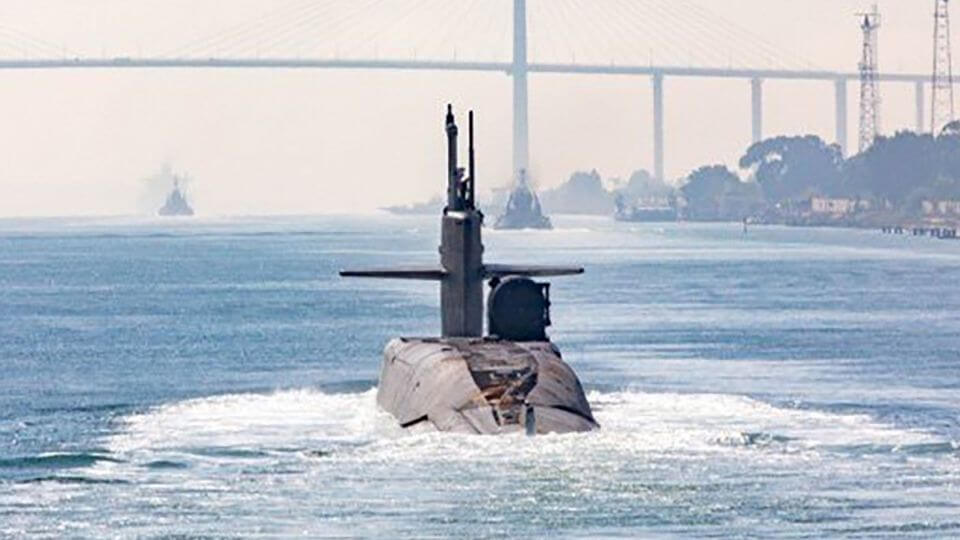
A picture shared by US Central Command appears to show a guided missile submarine in the Suez Canal passing under the Al Salam Bridge northeast of Cairo.

Introduction

As Americans for a Stronger Navy, we stand with our brave sailors and Marines who are serving in the Middle East amid the ongoing turmoil and violence. We salute their courage and dedication to protect our nation and our allies from the threats posed by those that would harm us and we pray for their safety.

In a rare and bold move, the US military announced on Sunday that an Ohio-class guided missile submarine had arrived in the Middle East, a clear message of deterrence to our regional adversaries according to press reports.

The Ohio-class submarines are among the most formidable weapons in the US arsenal, capable of carrying up to 154 Tomahawk cruise missiles, each with a 1,000-pound high-explosive warhead. These submarines can deliver a lot of firepower very rapidly and accurately, and no opponent of the US can ignore their presence.

The announcement of the submarine’s arrival in the Middle East is unusual and significant, as the US military rarely discloses the movements or operations of its fleet of ballistic and guided missile subs. The deployment comes as the Biden administration is trying to avoid a broader conflict amid the Israel-Hamas war, and to prevent Iran and its allies from opening new fronts against Israel or attacking US bases and interests in the region.

The submarine’s location and range suggest that it is focused on the threats in and around the Mediterranean, where Hezbollah, the Lebanese militant group backed by Iran, has fired rockets and drones at northern Israel, and exchanged fire with Israeli forces on the border.

The submarine could also target the Houthi rebels in Yemen, another Iran-supported group that has launched missiles and drones at Israel from across the Red Sea.

Additionally, the submarine could deter or respond to any aggression from Iran itself, or from its proxies in Syria and Iraq, where they have been firing rockets and drones at US military bases.

The presence of the submarine in the Middle East has important implications for the regional security and stability, as it demonstrates the US commitment and resolve to defend its allies and interests, and to deter or retaliate against any attack.

The submarine also adds to the existing US naval assets in the area, including two carrier strike groups and an amphibious ready group, creating a formidable force that can project power and influence across the region. The submarine’s deployment could also affect the ongoing negotiations with Iran over its nuclear program, as it shows the US willingness and ability to use military force if diplomacy fails.

The submarine’s deployment demonstrates the US commitment and resolve to defend its allies and interests, and to deter or retaliate against any attack. The submarine also adds to the existing US naval assets in the area, creating a formidable force that can project power and influence across the region.

The Ohio-class submarines and the US Navy are vital for the national security and the global peace, as they protect our freedom, preserve our economic prosperity, and keep the seas open and free.

U.S. Has 4 Objectives in Middle East says DOD

The Defense Department currently has four lines of effort in the Middle East, said Pentagon Press Secretary Air Force Brig. Gen. Pat Ryder, who briefed the media today.

Protection of U.S. forces and citizens in the region.

Flow of critical security assistance to Israel as it defends against further Hamas terrorist attacks.
Coordination with the Israelis to help secure the release of hostages held by Hamas, to include American citizens.

Strengthening of force posture across the region to deter any state or nonstate actors from escalating the crisis beyond Gaza.

Strengthened force posture includes the deployment of the USS Gerald R. Ford and USS Dwight D. Eisenhower Carrier Strike Groups, which are currently in the U.S. Central Command area, along with an Ohio-class submarine.

Over the past few weeks there have been attacks by Iranian proxy groups at al-Asad air base, Iraq, and al-Tanf, Syria, on U.S. forces there, Ryder said.

The attacks, by drones and missiles, resulted in several dozen injuries, including a mix of minor injuries and traumatic brain injuries, he said.

Some of those injured didn’t immediately report their condition, he said.

“The reporting data is highly dependent on self-reporting when individual injuries are not visually evident to medical personnel providing care directly following an incident,” he said.

As Americans for a Stronger Navy, we support and advocate for a strong and modern naval force that can meet the challenges and opportunities of the 21st century.

We urge you to join us in our mission and to help us spread the word about the importance and value of the US Navy. Together, we can make a difference for our nation and our world through peace by strength.

How the Navy’s Unmanned Boat Made History in the Middle East Region

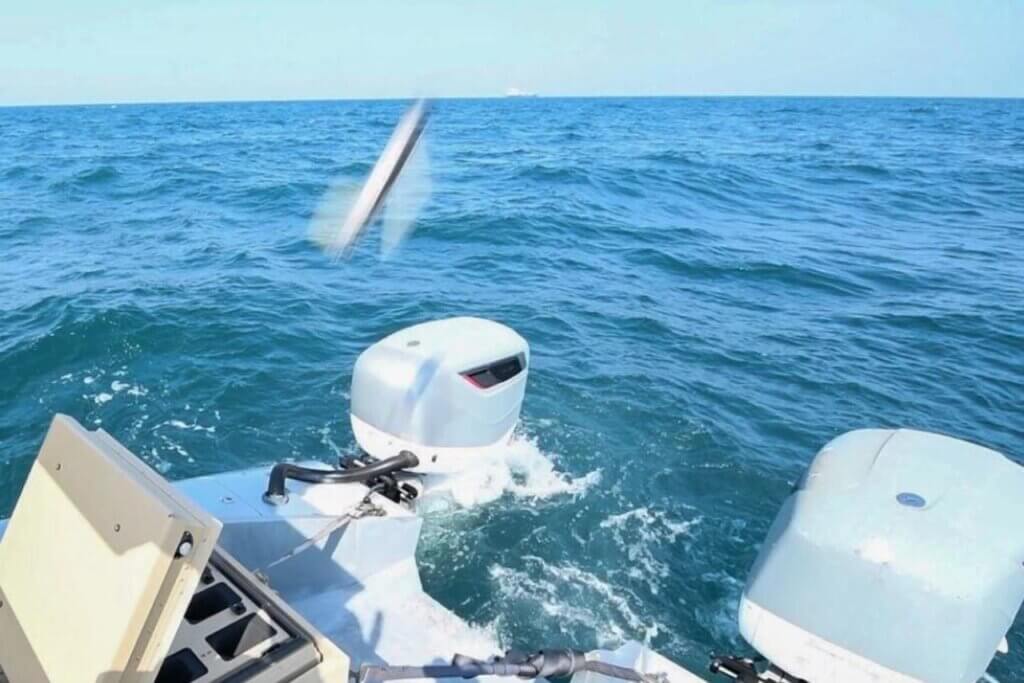
An unmanned U.S. Navy vessel fired “lethal munitions” in international waters near the Middle East on Oct. 23, 2023.
U.S. NAVAL FORCES CENTRAL COMMAND / U.S. 5TH FLEET

Dear Members and Friends,

Some news that demonstrates the U.S. Navy’s unmatched capabilities and leadership in the maritime domain.

On October 23, 2023, an unmanned U.S. Navy vessel successfully fired lethal munitions in international waters in the Middle East, marking the first time such an exercise has been carried out in the region. This unprecedented drill, dubbed Digital Talon, was conducted by the Navy’s Task Force 59, a team focusing on unmanned and artificial intelligence technologies.

Why Unmanned Systems Matter

Unmanned systems are a key component of the Navy’s strategy to respond to the growing threats from China, Russia, Iran, and other adversaries in the maritime domain. Unmanned systems offer the Navy numerous advantages, such as:
• Reduced personnel and manpower requirements
• Reduced risk to personnel
• Lower operating costs
• Greater persistence and range
• Enhanced speed and accuracy of data processing
• Greater access to denied areas
• Faster decision cycle

By integrating unmanned systems with manned platforms and networks, the Navy can create true human-machine teaming that is ubiquitous across the fleet. These systems can enhance the Navy’s lethality, survivability, and agility in both peacetime and wartime operations.

How Digital Talon Worked

During Digital Talon, the Navy used a method called manned-unmanned teaming, which involves the coordination and collaboration between manned and unmanned assets to achieve a common objective. In this case, the objective was to identify and target simulated hostile forces using an unmanned surface vehicle (USV) equipped with a Lethal Miniature Aerial Missile System (LMAMS).

The USV, a MARTAC T-38 Devil Ray, was remotely controlled by a human operator ashore, who made the engagement decisions. The USV used its sensors and artificial intelligence to detect, track, and classify potential targets.

The USV then launched a missile from its LMAMS, which is a small, lightweight, and low-cost weapon system that can be mounted on various platforms. The missile successfully scored direct hits each time, destroying the target boat.

The entire process was overseen by Vice Adm. Brad Cooper, the commander of U.S. Naval Forces Central Command, U.S. 5th Fleet, and Combined Maritime Forces. He praised the achievement as a significant step forward and a demonstration of the Navy’s next-level capabilities.

What This Means for th Future

Digital Talon is the second time in as many months that the Navy has successfully demonstrated its unmanned and artificial intelligence capabilities in the Middle East.

In September, the Navy used 12 different unmanned platforms to track Iranian Navy and Islamic Revolutionary Guard Corps Navy ships and small boats over the course of several days. These exercises show that the Navy is not only developing and testing new technologies, but also applying them to real-world scenarios and challenges.

The Navy is committed to investing in advanced autonomy, robust networks, and unmanned systems to build a more lethal and distributed naval force for the future. The Navy is also working closely with its allies and partners to share best practices and lessons learned from these experiments. By doing so, the Navy is strengthening regional maritime security and enhancing deterrence against malign activity.

We at the Americans for a Stronger Navy are proud to support the Navy’s efforts to innovate and adapt to the changing security environment. We believe that unmanned systems are a vital part of the Navy’s arsenal and a force multiplier for our Sailors and Marines.

We urge you to join us in advocating for the continued funding and development of these systems, which will ensure the Navy’s dominance and readiness in the 21st century.
Thank you for your attention and support.

The Sinking Submarine Industrial Base: Voices That Matter

Bill Cullifer, Founder

This article draws heavily upon the insightful and meticulously researched paper by Emma Salisbury, who shed light on the intricate challenges and opportunities facing the U.S. submarine industrial base with remarkable clarity.

Submarines are indeed an integral part of the U.S. Navy’s future. Many agree that the United States needs more submarines if it is to deter China in the Indo-Pacific and maintain its maritime superiority. 

Submarines are stealthy, survivable, and lethal platforms that can operate in contested waters and deliver precision strikes, intelligence, surveillance, reconnaissance, and special operations.

However, the U.S. submarine industrial base is facing serious challenges that threaten its ability to deliver the submarines that the Navy needs on time and on budget. 

The submarine industrial base consists of two main shipbuilders — General Dynamics Electric Boat and Huntington Ingalls Industries’ Newport News Shipbuilding — and hundreds of suppliers across the country that provide parts, materials, and services for submarine construction and maintenance.

The submarine industrial base is struggling to keep up with the growing demand for submarines, which has increased from one Virginia-class attack submarine per year in 2012 to two per year in 2021, plus the addition of the Columbia-class ballistic missile submarine program, which is the Navy’s top acquisition priority.

The Navy has recognized the importance of stabilizing and strengthening the submarine industrial base and has taken some actions to address its challenges. However, these actions are not enough.

The submarine industrial base needs more support and investment from Congress, the Department of Defense (DoD), and from our view, especially from the American public if we’re going to get anywhere. Decisions surrounding our national defense and industrial capabilities shouldn’t just be left to policymakers in isolation.

In our history, we’ve seen time and again the profound impact public opinion and support can have on shaping policy decisions. For our submarine industrial base and broader naval defense, public support isn’t just a nice-to-have; it’s the lynchpin.

While experts can identify problems and policymakers can draft solutions, it’s the collective will of the American people that determines our nation’s priorities. 

By becoming informed, involved, and vocal about the importance of a strong and capable Navy, the American public can be the driving force that ensures our naval defense remains robust and prepared for the challenges of the 21st century.

We echo the sentiments of urging Congress and DoD, and we further advocate for the American public to support and invest in the submarine industrial base.

Specifically, we need to:

  • Raise awareness of the imminent risks facing our naval defense. The U.S. Navy’s capability to deter potential threats, maintain maritime superiority, and ensure national security is at stake. Delays and shortcomings in our submarine and surface fleet programs could leave us vulnerable in a rapidly evolving global security environment. 
  • It’s essential to mobilize public support now for increased funding for both submarine and surface fleet programs alike, including infrastructure, support services, and the often overlooked but equally important logistics.
  • Invest in education and training in career techical education for shipyard building and management in areas such as welding pipefitting and for naval STEM (science, technology, engineering, and mathematics) fields. Beyond immediate funding and infrastructural upgrades, there’s an underlying need to address the skills gap.

If you are interested in learning more about the industrial base, the need for education and training, or supporting our cause, you can find more information at StrongerNavy.org.

South China Sea: Biden says US will defend the Philippines if China attacks

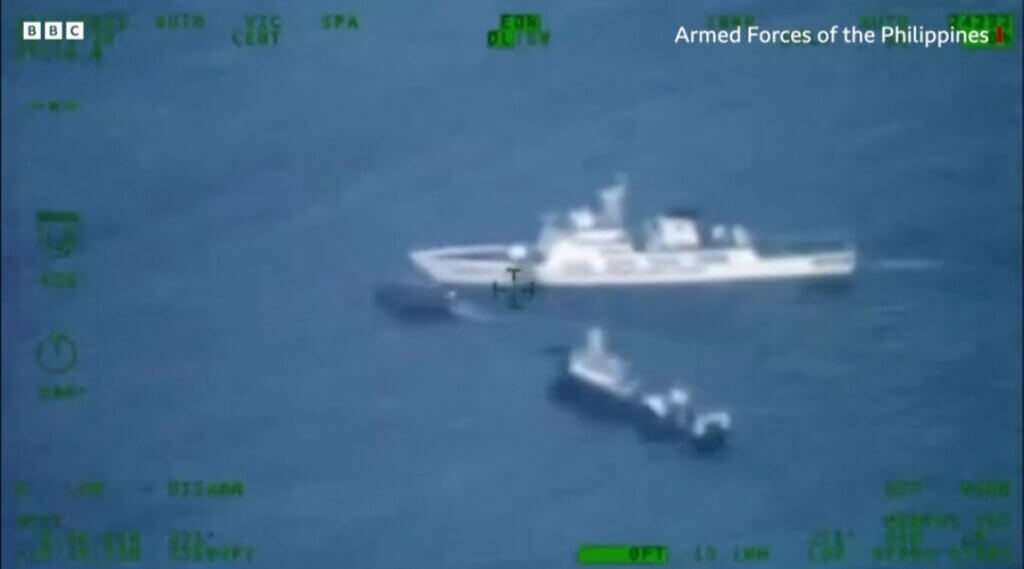
Boats collide in South China Sea’s disputed waters. image from video from BBC.

Members and friends of the Americans for a Stronger Navy.

Today, I want to share with you a news story that is relevant and important for the future of U.S. naval power and our alliance with the Philippines.

Key takeaways

Biden warns China. President Joe Biden has warned China that the US will defend the Philippines in case of any attack in the disputed South China Sea. The comments come days after two collisions between Filipino and Chinese vessels in the contested waters. Mr Biden reiterated his “ironclad” defense commitment to the Philippines under the Mutual Defense Treaty, which binds the US and the Philippines to defend each other in the event of an armed attack.

Philippines contests China’s claims
The Philippines has contested China’s claims to most of the South China Sea, which are based on a vague historical map known as the nine-dash line. The Philippines has also cut floating barriers and invited media to film what it calls Beijing’s dangerous moves at sea. The Philippines says that China’s “dangerous manoeuvres” have led to a collision between a China coast guard ship and a Filipino supply boat, and another incident where a Chinese militia boat “bumped” a Philippine coast guard vessel. The Filipino boats were on their way to a crumbling navy warship that Manila has marooned at the Second Thomas Shoal to reinforce its claims.

Congress critical to AUKUS success
Mr Biden also urged Congress to approve this year legislative proposals related to AUKUS, the defense technology partnership with Australia and Britain that involves supplying Australia with nuclear-powered submarines. Mr Biden said that AUKUS would enhance the US-Australia-UK partnership in developing and sharing advanced technologies, such as cyber, artificial intelligence, quantum technologies, and undersea capabilities. The legislative proposals include authorizing transfer of submarines to Australia, allowing maintenance of US submarines in Australia and Britain, authorizing Australian funding for US shipyards and training of Australian workers, and streamlining defense trade between AUKUS partners.

Why this matters

This news story matters because it shows that the US is committed to maintaining its presence and influence in the South China Sea, which is a vital waterway for global trade, security, and stability.

The South China Sea is also a flashpoint for potential conflict between China and its neighbors, especially the Philippines, which is an important strategic ally of the US. The US Navy has been conducting freedom of navigation operations and joint exercises with its allies and partners in the region to challenge China’s claims and actions.

The US has also been pursuing new initiatives, such as AUKUS, to enhance its naval capabilities and cooperation with its allies.

Why Americans should care

Americans should care about this news story because it affects their national interests and values. The South China Sea is not only a strategic waterway, but also a rich source of natural resources, such as fish, oil, gas, and minerals. The US has an interest in ensuring that these resources are shared equitably and peacefully among the claimant states, and not monopolized by China. The US also has an interest in upholding international law and norms, such as freedom of navigation and overflight, peaceful resolution of disputes, and respect for sovereignty and territorial integrity. The US also has an interest in strengthening its alliances and partnerships in the region, such as with the Philippines, Australia, and Britain, which share its democratic values and vision for a free and open Indo-Pacific.

What others are saying

For: “I want to be clear — I want to be very clear: The United States’ defence commitment to the Philippines is ironclad. … Any attack on the Filipino aircraft, vessels or armed forces will invoke our Mutual Defense Treaty with the Philippines.” – Joe Biden

Against: “The United States has no right to get involved in a problem between China and the Philippines … Its actions must not hurt China’s sovereignty and maritime interests in the South China Sea.” – Mao Ning

Navy: “AUKUS contributes to building a more robust defense industrial base ecosystem that contributes to integrated deterrence; and … the submarine industrial base can and will support AUKUS.” – Mara Karlin

From Depths to Skies: Exploring the Future Landscape of U.S. Naval Power: Segment: Submarine Industrial Base

Bill Cullifer, Founder

Welcome back to our series: From Depths to Skies: Exploring the Future Landscape of U.S. Naval Power. In this series, we aim to inform and engage our members and friends on behalf of Americans for a Stronger Navy. We examine the current and future challenges and opportunities for the U.S. Navy in maintaining its global leadership and superiority in the maritime domain.

In the previous segment, we focused on the submarine fleet, one of the most important and complex elements of the U.S. naval power. We discussed its role, capabilities, and plans for modernization and acquisition. We also reviewed some of the reports and studies that have been published on this topic and provided our own analysis and recommendations.

In this segment, we will shift our attention to the submarine industrial base, which is the backbone of the submarine fleet. We will explore how the AUKUS defense technology partnership, which involves supplying Australia with nuclear-powered submarines, will affect the U.S. submarine industrial base and its ability to meet the demand for both domestic and foreign submarines. We will also look at how Congress and industry are responding to this challenge and what are some of the potential benefits and risks of this deal.

Proposed Funding for Submarine Industrial Base

On October 22, 2023, President Joe Biden submitted a supplemental budget request to Congress, which earmarks $3.4 billion for further investments in the U.S. submarine industrial base. This funding is intended to improve the build and sustainment rates for attack submarines in order to meet U.S. military requirements, and to support the commitments under AUKUS.

The supplemental budget request comes after 25 U.S. Republican lawmakers urged Biden in July to increase funding for the U.S. submarine fleet, saying that the plan under AUKUS to sell Australia Virginia-class nuclear-power submarines would “unacceptably weaken” the U.S. fleet without a clear plan to replace them.

The U.S. Navy also supports the supplemental budget request, saying that it is “critical” to ensure that the submarine industrial base can deliver both Virginia-class and Columbia-class submarines on time and on budget. The Navy also says that AUKUS will “strengthen our ability to deter aggression, defend our interests, and maintain our technological edge”.

Key Takeaways from Congressional Hearing

On October 25, 2023, a subcommittee of the House of Representatives Armed Services Committee held a hearing on AUKUS and its implications for the U.S. submarine industrial base. The hearing featured testimony from Mara Karlin, acting deputy under secretary of defense for policy; Vice Admiral William Houston, commander of the U.S. Navy’s Submarine Force; Rear Admiral Scott Pappano, program executive officer for Columbia-class submarines; and Rear Admiral David Goggins, program executive officer for submarines.

Some of the key takeaways from the hearing are:

•  AUKUS contributes to building a more robust defense industrial base ecosystem that contributes to integrated deterrence; and … the submarine industrial base can and will support AUKUS.

•  Congress is critical to the success of AUKUS, and needs to approve four legislative proposals this year: authorizing transfer of submarines to Australia; allowing maintenance of U.S. submarines in Australia and Britain; authorizing Australian funding for U.S. shipyards and training of Australian workers; and streamlining defense trade between AUKUS partners.

•  The U.S. submarine industry is hoping to increase its production rate from 1.2 Virginia-class submarines per year to two – this on top of one Columbia-class submarine – but faces challenges such as supply chain fragility, labor shortages, and cost overruns.

•  The AUKUS deal will require sharing sensitive U.S. technology with Australia and Britain, which poses risks such as leakage, espionage, or reverse engineering by adversaries or third parties.

•  “AUKUS is an unprecedented opportunity to deepen our cooperation with two of our closest allies in developing cutting-edge capabilities that will ensure our collective security well into this century.” – Mara Karlin

•  “This funding is critical to improve build and sustainment rates for attack submarines in order to meet U.S. military requirements, and will also support our commitments under AUKUS.” – Joint statement by Navy representatives

•  “The fact is, the supply chain still remains very fragile. Any additional funding and support, whether it’s through the supplemental or other Navy support would be extremely helpful.” – Jason Aiken, General Dynamics’ chief financial officer

•  “We are confident that we have the appropriate measures in place to protect our technology as we move forward with this initiative.” – Vice Admiral William Houston

•  “The administration’s plan to sell Virginia-class submarines to Australia will unacceptably weaken our own submarine fleet without a clear plan to replace them. … The administration has not provided any evidence that our submarine industrial base can handle this additional workload without jeopardizing our own submarine programs.” – Representative Rob Wittman, ranking member of the House Armed Services Subcommittee on Seapower and Projection Forces.

Where We Stand

AUKUS deal is still being debated and negotiated by the governments and parliaments of the three countries involved: Australia, the UK, and the US. The deal also faces opposition and criticism from some other countries and groups, such as France, China, Indonesia, Malaysia, New Zealand, some Australian political parties and unions, some US lawmakers and analysts, and some environmental and anti-war activists.

The AUKUS deal has two main components: one is to help Australia acquire nuclear-powered submarines, and the other is to enhance joint capabilities and interoperability in areas such as cyber, artificial intelligence, quantum technologies, and undersea capabilities.

The first component is expected to take at least 18 months of consultation and planning before the actual construction of the submarines can begin. The US plans to sell between three and five Virginia-class submarines to Australia in the 2030s, before Australia starts building its own submarines in the 2040s. The US Navy and the US submarine industry are hoping to increase their production rate to meet the demand for both domestic and foreign submarines, but they face challenges such as supply chain fragility, labor shortages, cost overruns, and technology protection.

The second component is intended to foster deeper information sharing and technology sharing among the three AUKUS partners, but it also requires streamlining defense trade and export controls between them. The US Congress needs to approve four legislative proposals this year to authorize the transfer of submarines to Australia, to allow maintenance of US submarines in Australia and Britain, to authorize Australian funding for US shipyards and training of Australian workers, and to simplify defense trade between AUKUS partners.

The AUKUS deal is a historic and strategic initiative that aims to enhance the security and stability of the Indo-Pacific region and beyond. However, it also poses significant challenges and risks for the three countries involved and their allies and partners. The deal will require substantial investments, coordination, and oversight from the governments, parliaments, militaries, industries, and publics of the three countries.

Conclusion

The AUKUS deal is a historic and strategic initiative that aims to enhance the security and stability of the Indo-Pacific region and beyond. However, it also poses significant challenges and risks for the U.S. submarine industrial base, which is already under pressure to deliver submarines for the U.S. Navy and its allies. The deal will require substantial investments, coordination, and oversight from Congress, the Pentagon, the Navy, and the industry to ensure that it does not compromise the quality, quantity, or timeliness of the U.S. submarine fleet.

We at Americans for a Stronger Navy believe that AUKUS could be a worthwhile and beneficial endeavor that could strengthen our naval power and our alliances. However, we also acknowledge that there are different views and perspectives on this deal, both within and outside the U.S. We think that it is important to learn more from those who support and those who oppose the deal, and to understand their arguments and concerns. We also think that it is vital to hear from the American public, who ultimately have a stake in the future of our naval force and our national security. Therefore, we invite you to share your opinions and feedback on AUKUS with us, and to join the conversation on this topic with your fellow Americans.

•  Some Republican lawmakers, such as Representative Rob Wittman, the ranking member of the House Armed Services Subcommittee on Seapower and Projection Forces. He said that the plan to sell Virginia-class submarines to Australia would “unacceptably weaken our own submarine fleet without a clear plan to replace them” and that the administration has not provided any evidence that the submarine industrial base can handle the additional workload. Click here to review additional detail.

•  Some defense analysts, such as Bryan Clark, a former Navy strategist and senior fellow at the Hudson Institute. He said that selling submarines to Australia would reduce the number of attack submarines available to the U.S. Navy and that the Navy should prioritize building its own next-generation attack submarine (SSN-X) before exporting it. Click here for additional detail.

Some of the groups and individuals who are concerned about U.S. technology getting into the wrong hands are:

•  Some Democratic lawmakers, such as Senator Edward Markey, a member of the Senate Foreign Relations Committee. He said that he was “deeply concerned” about the potential for nuclear proliferation and leakage of sensitive technology as a result of the AUKUS deal and that he would seek assurances from the administration that it would not undermine the global nonproliferation regime. Click here for additional detail.

•  Some former U.S. officials, such as Richard Armitage, a former deputy secretary of state under George W. Bush. He said that he was “very nervous” about sharing nuclear propulsion technology with Australia and Britain and that he feared that it could be compromised by China or other adversaries. Click here for additional detail.

The AUKUS deal, which involves supplying Australia with nuclear-powered submarines, has sparked a heated debate among various stakeholders in the U.S. and abroad. Some of them have expressed opposition or concern about the deal, based on different reasons and perspectives. For example, some Republican lawmakers, such as Representative Rob Wittman, argue that the deal would weaken the U.S. submarine fleet and industrial base, without a clear plan to replace the submarines sold to Australia. Some defense analysts, such as Bryan Clark, suggest that the deal would reduce the availability of attack submarines for the U.S. Navy and that the Navy should prioritize building its own next-generation submarine (SSN-X) before exporting it. Some Democratic lawmakers, such as Senator Edward Markey, are worried about the potential for nuclear proliferation and leakage of sensitive technology as a result of the deal and seek assurances from the administration that it would not undermine the global nonproliferation regime. Some former U.S. officials, such as Richard Armitage, are nervous about sharing nuclear propulsion technology with Australia and Britain and fear that it could be compromised by China or other adversaries.

We will continue to monitor and report on this topic as it unfolds. We invite you to follow along and read more reports and studies on this topic as we delve deeper into this important and timely issue. We also welcome your feedback and suggestions as we seek to inform and engage our members and friends on behalf of Americans for a Stronger Navy. The time to act is now. Stay tuned for more updates soon.

From Depths to Skies: Exploring the Future Landscape of U.S. Naval Power: Segment: Submarine Fleet

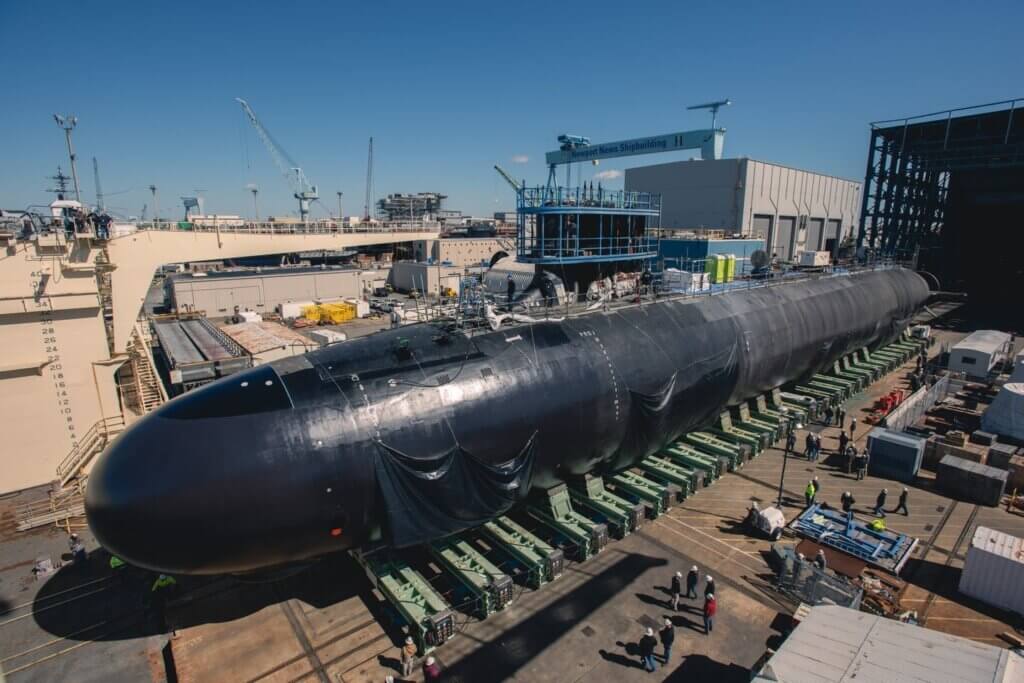
Virginia-class submarine New Jersey (SSN 796) recently translated at HII’s Newport News Shipbuilding Division. Credit: Huntington Ingalls Industries, Inc.

Welcome to the next segment of our series: From Depths to Skies: Exploring the Future Landscape of the U.S. Naval Power.

In this series, we aim to inform and engage our members and friends on behalf of Americans for a Stronger Navy. We examine the current and future challenges and opportunities for the U.S. Navy in maintaining its global leadership and superiority in the maritime domain.

In the previous segments, we covered various topics related to the U.S. naval power, such as The RAND perspective on the U.S. naval strategy and policy, including the recommendations and insights from their recent reports and publications. An interview with Captain Brent Sadler, a former naval officer and a current professor at the Naval War College, on his views and experiences on the U.S. naval strategy and policy.

US Navy Submarine Fleet Deep Dive

In this segment, we will focus on one of the most important and complex elements of the U.S. naval power: the submarine fleet. We will dive deep into the issues and options for the future of the submarine fleet and into the myriad aspects of U.S. naval strength and its potential trajectory. Your insights, concerns, and support drive the transformation of the Navy, securing our nation’s future.

The submarine fleet is one of the most important and complex elements of the U.S. naval power. It provides stealth, deterrence, and strike capabilities in various domains and regions.

However, the fleet also faces many challenges, such as aging platforms, maintenance backlogs, rising costs, and growing threats from adversaries.

In this series:

  • We’ll dive deep into the issues and options for the future of the submarine fleet.
  • Examine the current status, plans, and priorities of the Navy for its submarine force structure, acquisition, and modernization.
  • Review the perspectives and concerns of various stakeholders, such as lawmakers, analysts, critics, and allies.
  • Finally, we will explore some of the reports and studies that have been published on this topic and provide our own analysis and recommendations

Columbia-class Program

The Navy is charting its course to design and build 12 new ballistic missile submarines (SSBNs), set to succeed the Ohio-class SSBNs.

This is no minor endeavor—it’s the Navy’s pinnacle priority, representing a foundational element of our strategic deterrence.

Issue: A significant challenge emerges in the form of schedule risks. A delay in the delivery of the lead ship could compromise the Navy’s objective of ensuring at least 10 SSBNs are consistently available for deterrence patrols.

The Navy’s FY2020 30-year shipbuilding plan outlines that, given a timely procurement and an 84-month construction timeframe, a stable fleet of 10 SSBNs will be operational from 2030 for about nine years.

Pro: The new Columbia-class will reinforce our nuclear deterrence, with enhanced stealth, improved endurance, and cutting-edge communication capabilities over the Ohio-class.

Con: Financially, the program could demand a lion’s share of the Navy’s shipbuilding budget, overshadowing other initiatives or requiring additional funds from Congress.

Cost of Replacing the Navy Fleet

The fiscal implications of rejuvenating the Navy’s 296-ship fleet over the upcoming three decades are significant. Current projections place the cost around $31 billion annually, marking a 50% increment from the past three decades.

Issue: With intentions to acquire both Virginia-class and Columbia-class submarines concurrently, costs are set to soar. The anticipated annual spend for the next decade is estimated at $11 billion, more than double the previous decade.

Pro: Such an investment would culminate in a technologically superior and larger fleet by 2051. However, the operational and maintenance bills will also swell.

Con: This financial commitment could surpass previous shipbuilding budgets, prompting potential reallocations within the defense sector or elsewhere in the government.

Weapon Systems Annual Assessment

An analysis of 121 major defense acquisition programs (MDAPs) reveals shifts in cost, timelines, and technological maturity. From FY2019 to FY2020, the MDAPs’ acquisition cost surged by $8 billion, totaling $1.8 trillion.

Issue: The Virginia-class submarine program, for instance, faced a $2.4 billion hike, attributed to increased labor, material costs, and engineering changes. Interestingly, future economic inflation rates might provide some offset.

Pro: This assessment offers a holistic, independent review of MDAPs, identifying both commendable practices and extant challenges.

Con: Persistent challenges spotlighted in the assessment might impede delivery and efficacy.
Autonomous Systems for ASW

As global submarine threats from nations like China and Russia escalate, the U.S. is exploring the potential of autonomous systems to fortify anti-submarine warfare (ASW) capabilities.

The proposed paradigm emphasizes using UUVs, USVs, and UAVs in a distributed sensor network.

Issue: This ASW vision demands substantive investments to tackle technological, operational, and structural challenges. A dedicated Navy program office for autonomous ASW systems, equipped with authority and resources, is highly recommended.

Pro: The innovative approach could expand coverage zones, diminish risks, slash costs, and heighten manned platform survivability.

Con: Challenges span reliable communication, data security, integration with legacy systems, and compliance with legal and ethical standards.

Undersea Nuclear Arms Control

The viability of integrating submarine-launched ballistic missiles (SLBMs) and cruise missiles (SLCMs) in future nuclear arms control agreements demands attention.

Issue: Such integration might compromise the second-strike capability’s integrity. Addressing the U.S.-Russia asymmetry in nuclear triad reliance is imperative.

Pro: Integration could reduce accidental launch risks, foster strategic stability, and build trust among nuclear nations.

Con: Potential challenges encompass verification, negotiation complexities, and diverging interests among stakeholders.

Why It Matters: The Bedrock of National Security

The power of a nation is often measured by the might of its military, and at the heart of the United States’ defense strategy lies its naval force. The U.S. Navy, with its vast expanse of ships, submarines, and personnel, stands as a beacon of strength, ensuring the security of American shores and safeguarding its interests abroad.

But why should the average American care?

Every time we turn on the news and see international conflicts, trade negotiations, or discussions about global power dynamics, we are witnessing the ripple effects of naval strength and strategy.

A powerful navy ensures that the U.S. has a say in global matters, preserving peace, ensuring open sea lanes for trade, and offering a deterrence against potential adversaries. For the common citizen, this means a stable economy, job opportunities, and the assurance that they can sleep peacefully at night knowing they’re protected.

Moreover, as the geopolitical landscape shifts, the U.S. Navy’s strategy and fleet composition will inevitably change to counter emerging threats.

The decisions made today will shape the security and prosperity of future generations. It is, therefore, paramount for every American to be informed, engaged, and supportive of the endeavors that fortify the backbone of our nation’s defense: the U.S. Navy.

We profoundly value your continued engagement with Americans for a Stronger Navy. Together, we chart the course for a resilient, advanced, and secure naval future.

We invite you to follow along and read these reports as we delve into this important and timely topic. We also welcome your feedback and suggestions as we seek to inform and engage our members and friends on behalf of Americans for a Stronger Navy.

The time to act is now. Stay tuned for more updates soon. Until next time, fair winds and following seas!

USS Carney Defends Regional Stability in the Red Sea

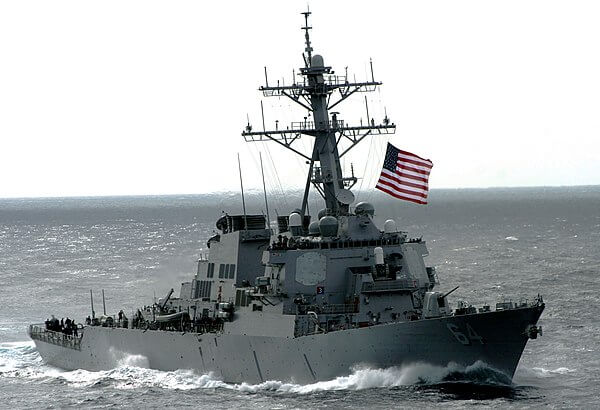
USS Carney DDG 64

Introduction to Members and Friends:

Greetings to our esteemed members and supporters of the Americans for a Stronger Navy. Today, we bring to your attention a significant event that underscores the indispensable role our U.S. Navy plays in maintaining global stability and safeguarding our allies.

Key Takeaways:

US Navy’s Proactive Defense: The USS Carney, a U.S. Navy guided-missile destroyer in the northern Red Sea, has intercepted and shot down missiles and drones potentially targeting Israel. These threats were launched by the Iranian-backed Houthi militia in Yemen.

A Historic Action: This incident marks the first time in recent memory where a U.S. Navy ship in the Middle East has engaged with threats not aimed directly at the vessel. It’s a testament to the Navy’s commitment to the defense of our allies, Israel in this case.

Growing Regional Tensions: With the current conflicts between Israel and Hamas and the involvement of Iranian-backed proxies, the geopolitical scenario in the region is becoming increasingly volatile.

Efficient and Timely Response: The USS Carney’s swift action in shooting down the missiles ensures that threats, even those not aimed directly at our forces, are neutralized to maintain peace and stability in the region.

U.S. Military’s Enhanced Presence: Given the growing tensions, the U.S. has strengthened its military presence in the region. The USS Carney is part of the USS Gerald R. Ford carrier strike group that was deployed to deter potential aggressors and to support our allies.

Our Message is Clear: As Brig. Gen. Pat Ryder stated, the positioning of our naval assets and aircraft in the region is a clear signal of our intent to deter wider conflicts, bolster regional stability, and defend our national security interests.

In these challenging times, the importance of a robust naval force is more evident than ever. The events in the Red Sea are a reminder of the crucial role our Navy plays in ensuring not just our nation’s security, but also in maintaining a balance of power and ensuring the safety of our allies.

We salute the brave men and women aboard the USS Carney and thank them for their unwavering commitment and service.

USS Carney Defends Regional Stability in the Red Sea

Introduction to Members and Friends:

Greetings to our esteemed members and supporters of the Americans for a Stronger Navy. Today, we bring to your attention a significant event that underscores the indispensable role our U.S. Navy plays in maintaining global stability and safeguarding our allies.

Key Takeaways:

US Navy’s Proactive Defense: The USS Carney, a U.S. Navy guided-missile destroyer in the northern Red Sea, has intercepted and shot down missiles and drones potentially targeting Israel. These threats were launched by the Iranian-backed Houthi militia in Yemen.

A Historic Action: This incident marks the first time in recent memory where a U.S. Navy ship in the Middle East has engaged with threats not aimed directly at the vessel. It’s a testament to the Navy’s commitment to the defense of our allies, Israel in this case.

Growing Regional Tensions: With the current conflicts between Israel and Hamas and the involvement of Iranian-backed proxies, the geopolitical scenario in the region is becoming increasingly volatile.

Efficient and Timely Response: The USS Carney’s swift action in shooting down the missiles ensures that threats, even those not aimed directly at our forces, are neutralized to maintain peace and stability in the region.

U.S. Military’s Enhanced Presence: Given the growing tensions, the U.S. has strengthened its military presence in the region. The USS Carney is part of the USS Gerald R. Ford carrier strike group that was deployed to deter potential aggressors and to support our allies.

Our Message is Clear: As Brig. Gen. Pat Ryder stated, the positioning of our naval assets and aircraft in the region is a clear signal of our intent to deter wider conflicts, bolster regional stability, and defend our national security interests.

In these challenging times, the importance of a robust naval force is more evident than ever. The events in the Red Sea are a reminder of the crucial role our Navy plays in ensuring not just our nation’s security, but also in maintaining a balance of power and ensuring the safety of our allies.

We salute the brave men and women aboard the USS Carney and thank them for their unwavering commitment and service.

From Depths to Skies: Exploring the Future Landscape of U.S. Naval Power.

Segment: An Interview with Captain Brent Sadler on U.S. Naval Strategy and Policy

Bill Cullifer, founder

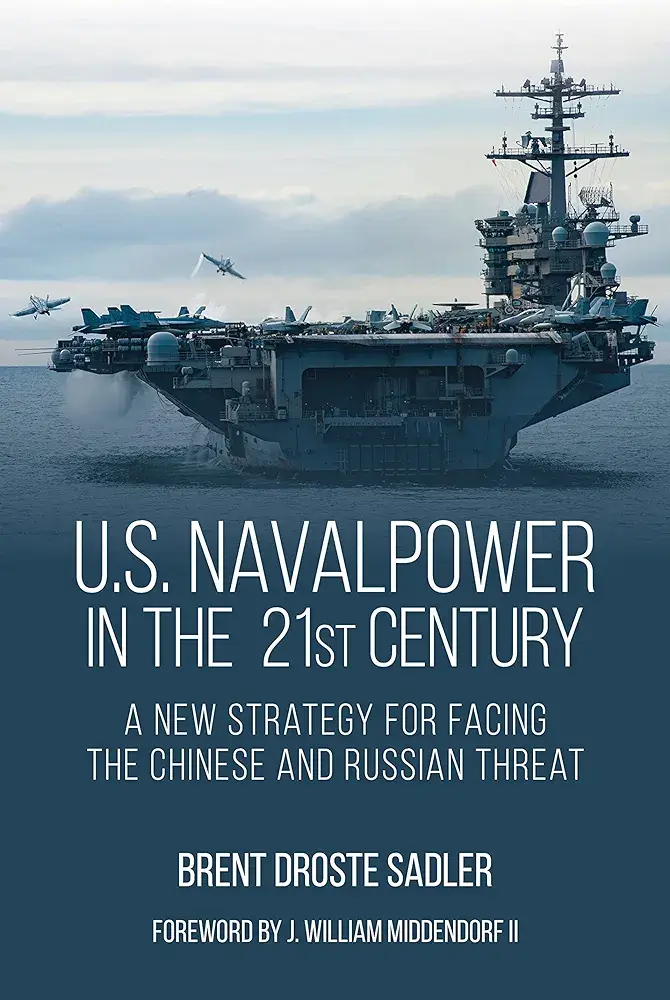
Editor’s Note: This segment is a continuation of our series “From Depths to Skies: Exploring the Future Landscape of U.S. Naval Power.” After exploring the future landscape of US Naval Power the RAND Perspective on U.S. naval power, we now converse with Captain Brent Sadler, a retired Navy officer and an expert on Naval strategy. Captain Sadler, currently a senior research fellow at The Heritage Foundation, has penned “U.S. Naval Power in the 21st Century: A New Strategy for Facing the Chinese and Russian Threat,” a pivotal read for those invested in our national security.

“The world is on the cusp of a dangerous decade, and whether it becomes a violent peace or worse is a function of how we as a nation choose to respond. Conventional thinking has not delivered the results or the forces needed to effectively compete with China and Russia.” – Brent Sadler

This is how Captain Brent Sadler, a retired Navy officer and an expert on naval power, begins his book U.S. Naval Power in the 21st Century: A New Strategy for Facing the Chinese and Russian Threat. In this book, he proposes a new strategy for U.S. naval power that integrates diplomacy, military operations, and economic statecraft to counter the challenges posed by China and Russia in the maritime domain.

As the founder of Americans for a Stronger Navy, I recognize the importance of a strong U.S. Navy more than anyone. The Navy protects our shores, our allies, and our way of life. But the Navy is facing new challenges in the 21st century, from China’s growing military power to Russia’s aggressive behavior.

That is why I reached out to Captain Sadler and asked him to share his insights and recommendations on U.S. naval power and how to overcome these challenges. He was very gracious to spend a few minutes in between meetings to discuss an office visit for a more in-depth series of conversations.

Highlight

In our brief conversation, Captain Sadler highlighted:

Urgency: The U.S. Navy must respond swiftly to deter threats from China and Russia. He stressed on fortifying maritime infrastructure, including shipyards and ports.

Public Awareness: He appreciated efforts to enlighten Americans about the Navy’s significance.

Naval Vision: He resonates with the vision of expanding the Navy fleet, infusing new technologies, devising fresh strategies, and bolstering alliances.

Future Discussions: Captain Sadler is keen on delving into his strategy’s nuances in our subsequent sit-down in Washington D.C.

Strategy

Captain Sadler’s book proposes a holistic naval strategy encapsulating diplomacy, military operations, and economic statecraft.

He bases his strategy on:

• Ensuring a credible deterrence posture.

• Augmenting maritime security cooperation.

• Broadening maritime domain awareness.

• Championing maritime governance and norms.

This strategy dovetails with the RAND Perspective, emphasizing innovation, alliances, and presence for the Navy’s evolution.

Conclusion

Join us in our upcoming interviews with Captain Sadler. Dive deeper into his work in Washingtom D.C.

Remember, as Americans, our Navy’s future strength and readiness lie in our hands. Let’s rally together for a robust U.S. naval power.

U.S. Naval Power in the 21st Century: A New Strategy for Facing the Chinese and Russian Threat

Welcome to Norfolk, HMS Prince of Wales: The British Carrier That’s Making Waves in the Atlantic

HMS Prince of Wales UK Navy

Hello, and welcome to the latest edition of our blog, where we share news and stories related to the U.S. Navy and its allies.

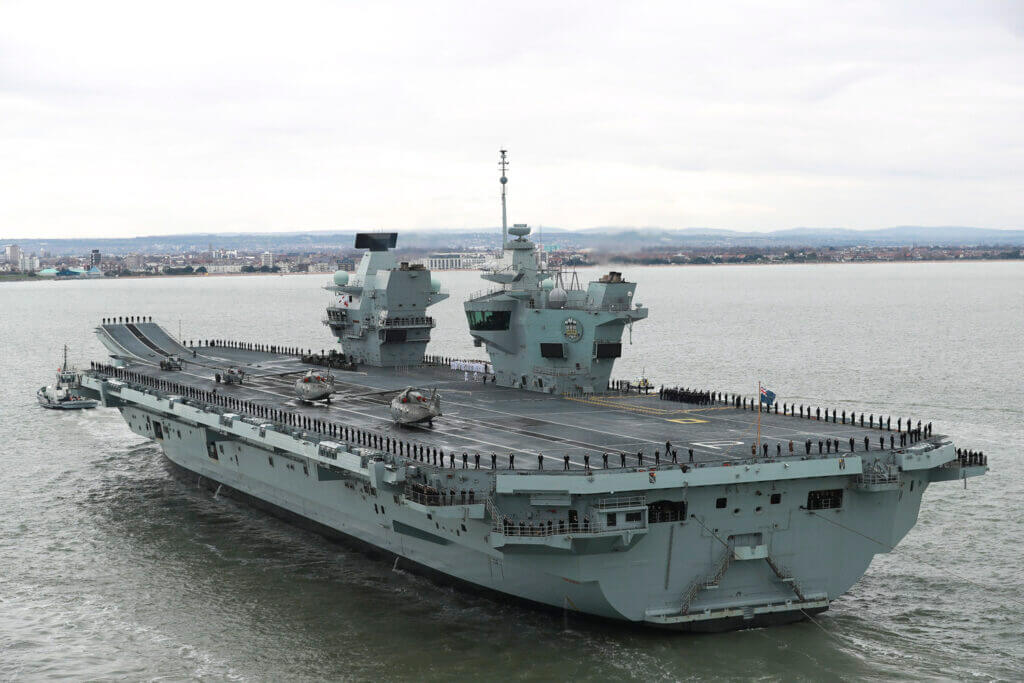
Today, we have a special story submitted by Dave L from North Carolina, who spotted a rare sight in Hampton Roads harbor: Britain’s largest aircraft carrier, HMS Prince of Wales. Thank you, Captain Dave L . of North Carolina for sharing this with us!

HMS Prince of Wales is a state-of-the-art warship that is visiting the U.S. for the next few months. It will be based at Naval Station Norfolk and will conduct joint exercises with the U.S. Navy. This is a great opportunity for our two navies to strengthen their cooperation and interoperability, as well as to showcase their capabilities and technologies.

HMS Prince of Wales is the second of two Queen Elizabeth class carriers built by the U.K., and it was commissioned in 2019. It is 280 meters long and can carry up to 40 aircraft, including F-35B stealth fighters, Merlin helicopters, and MV-22 Ospreys. It has a distinctive light blue color and two “islands” on its deck: one for navigation and flight control, and one for ship operations and command. It also has a “ski jump” on the bow, which helps the aircraft take off with a short runway.

HMS Prince of Wales is powered by Rolls Royce gas turbine engines, which provide electricity for propulsion and other systems. It does not have nuclear reactors like the U.S. carriers, but it can still operate for long periods without refueling. It also has a high degree of automation and digitalization, which reduces the crew size and increases efficiency.

HMS Prince of Wales is designed to be a versatile and adaptable platform that can perform various missions, such as carrier strike, air defense, amphibious assault, humanitarian aid, or diplomacy. It can also operate with different types of aircraft and drones, depending on the situation and the partner nation. For example, it can launch Mojave drones, which are unmanned aerial vehicles that can carry supplies, surveillance equipment, or weapons.

HMS Prince of Wales is not only a powerful asset for the U.K., but also a valuable ally for the U.S. The two navies have a long history of working together and sharing common values and interests. They are also part of the Five Eyes intelligence alliance, which includes Australia, Canada, and New Zealand. Together, they aim to promote peace and security in the world.

While in Norfolk, HMS Prince of Wales will train with the U.S. Navy in various scenarios and environments. It will also test its compatibility with the U.S. aircraft and systems, such as the Osprey tilt-rotor aircraft, which can fly faster, higher, and longer than the British helicopters.

The two navies will also exchange personnel and expertise to learn from each other.
HMS Prince of Wales is an impressive sight to behold in Hampton Roads harbor, and we are honored to have it as our guest. We hope you enjoyed this story and learned something new about our British friends. If you have any comments or questions, please feel free to leave them below. And if you have any stories or photos of your own that you would like to share please contact us by clicking here.

We would love to hear from you!
Thank you for reading our blog and supporting our cause. Until next time, Americans for a Stronger Navy