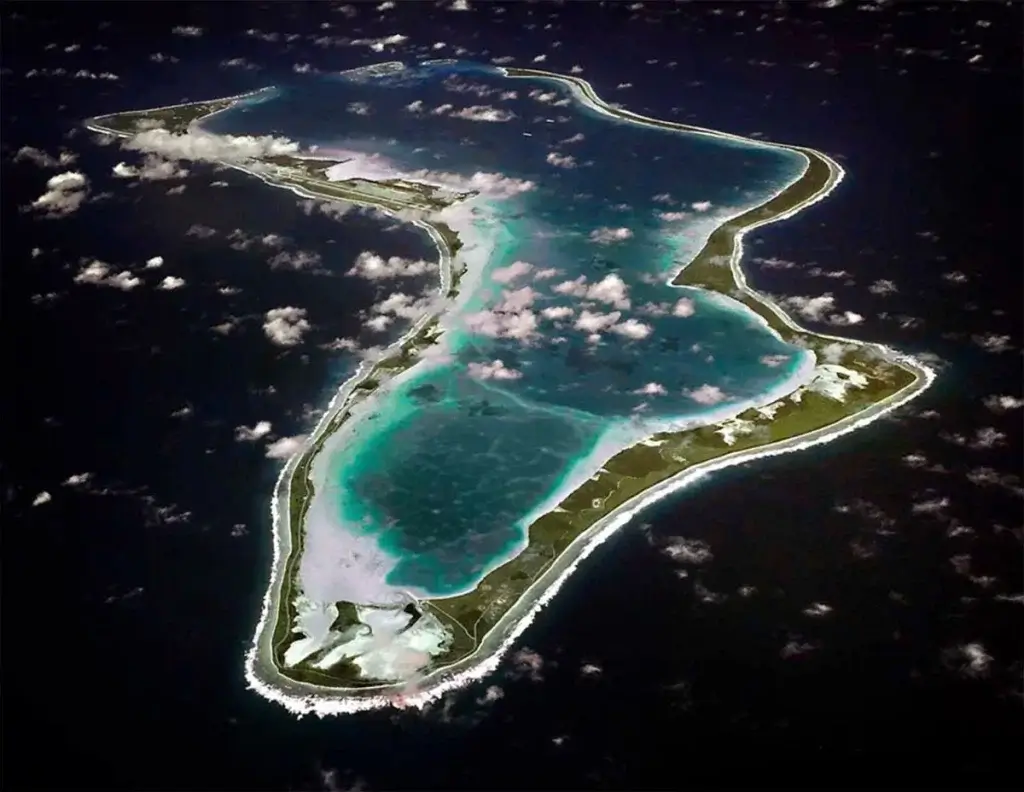
Diego Garcia represents the cornerstone of American naval power in the Indian Ocean—a facility that enables critical operations from the Middle East to the Indo-Pacific. The recently signed UK-Mauritius agreement transferring sovereignty of the Chagos Archipelago, while intended to resolve a long-standing legal dispute, introduces serious security vulnerabilities that could compromise this vital base. After extensive review of the agreement, parliamentary documents, and expert analysis, Americans for a Stronger Navy has drafted an open letter to UK Prime Minister Keir Starmer outlining our concerns and requesting strengthening of security provisions before final ratification. We publish this letter in the spirit of candid friendship that has always characterized the Special Relationship between our nations.
Key Concerns Raised:
Chinese Influence Risk: Mauritius maintains extensive economic ties with China, creating potential vectors for Beijing to establish surveillance capabilities on islands adjacent to Diego Garcia. The agreement’s prohibitions on foreign military presence may not cover civilian-flagged intelligence operations.
Weakened Control Structure: The transformation from British sovereign territory to a complex lease arrangement (UK leasing from Mauritius, US operating through UK) introduces political and legal vulnerabilities. American naval operations now depend on the stability of agreements between three parties rather than operating on secure sovereign territory.
Insufficient Security Guarantees: The agreement lacks robust enforcement mechanisms to prevent hostile powers from accessing outer islands for monitoring or influence operations. Ambiguities in defining prohibited activities could be exploited by adversaries operating under civilian cover.
Political Uncertainty: Changes in Mauritian government leadership create long-term risks. The current government has already ordered an independent review, and future administrations spanning the 99-year lease period may face economic pressure from China to renegotiate or modify terms.
What We Request:
- Explicit provisions prohibiting Chinese presence, investment, or infrastructure on outer islands with clear enforcement
- Joint UK-US monitoring and patrol authority across the archipelago
- Automatic termination clauses if security provisions are violated
- U.S. participation as a treaty party or guarantor for direct legal standing
- Enhanced parliamentary scrutiny before final ratification
The Bottom Line: Diego Garcia’s strategic value has never been higher as great power competition intensifies in the Indo-Pacific. While we respect the UK’s efforts to address the historical injustice to the Chagossian people, justice and security need not be mutually exclusive. We urge strengthening this agreement before ratification to ensure this critical base remains secure for generations to come.
AN OPEN LETTER TO THE RIGHT HONOURABLE KEIR STARMER MP
PRIME MINISTER OF THE UNITED KINGDOM
Concerning the Chagos Archipelago Agreement
From: Americans for a Stronger Navy
January 21, 2026
Dear Prime Minister,
We write to you as fellow guardians of the free world, united by history, shared values, and an unbreakable commitment to democratic liberty. The Special Relationship between our nations has been forged in the crucible of two world wars, sustained through the Cold War, and renewed in our common struggle against terrorism and authoritarianism. It is precisely because of this deep bond that we feel compelled to address our serious concerns regarding the recently signed agreement transferring sovereignty of the Chagos Archipelago to Mauritius.
This letter is written not in criticism, but in the spirit of candid friendship that has always characterized Anglo-American relations. We believe the current agreement, while well-intentioned, poses risks to our shared security interests that must be addressed before ratification becomes irreversible.
THE STAKES ARE HIGHER THAN EVER
Diego Garcia is not merely a military installation—it is the keystone of Western power projection in the Indian Ocean. From this small atoll, our nations have:
- Defeated terrorist networks in Afghanistan and Iraq
- Countered Iranian aggression and Houthi attacks on international shipping
- Protected vital sea lanes carrying half the world’s containerized cargo
- Maintained stability in a region increasingly contested by China’s expanding naval presence
Today, as China constructs military facilities across the South China Sea, as Russia threatens European security, and as Iran destabilizes the Middle East, the strategic value of Diego Garcia has never been greater. Yet at this critical juncture, the agreement with Mauritius introduces vulnerabilities that our adversaries will certainly seek to exploit.
OUR CONCERNS AS ALLIES
1. The Shadow of Chinese Influence
Mauritius, a small island nation, has become deeply economically dependent on China. Chinese investment pervades Mauritian infrastructure—ports, telecommunications, energy. This is not coincidence; it is the systematic implementation of Beijing’s strategy to gain leverage over nations along critical maritime routes.
We must ask: What guarantees exist that a future Mauritian government, facing economic pressure from Beijing, will not grant China “civilian” access to the outer islands? What prevents the establishment of “research stations,” “telecommunications facilities,” or “environmental monitoring posts” that serve as covers for signals intelligence operations?
The agreement’s language prohibiting foreign armed forces is insufficient. China has mastered the art of military operations under civilian guise. Islands merely miles from Diego Garcia could become surveillance platforms monitoring every ship, submarine, and aircraft movement—intelligence that would be instantly shared with Russia, Iran, and other adversaries.
2. From Sovereignty to Lease: A Dangerous Transformation
For decades, Diego Garcia operated on British sovereign territory. This provided legal certainty and operational security. Now, under the new arrangement, the United Kingdom must lease Diego Garcia from Mauritius at a cost of $136 million annually—and the United States operates at Diego Garcia under a further sublease arrangement with the UK.
This creates a cascading dependency. American naval operations now rest upon:
- British adherence to the lease terms
- Mauritian governments honoring their predecessors’ commitments
- Both nations resisting external pressure to renegotiate or restrict operations
History teaches us that 99-year leases are not permanent. China’s 99-year lease of Hong Kong ended in humiliation for the West. We cannot allow Diego Garcia to follow the same path.
3. Political Instability and Long-Term Uncertainty
The current Mauritian government has already ordered an independent review of the agreement negotiated by its predecessor. Opposition parties criticize the deal. Future elections will bring new leaders with new priorities, new pressures, and potentially new patrons.
Over 99 years, Mauritius will see dozens of governments. Can we truly be confident that all of them will prioritize Western security interests over economic inducements from Beijing? The agreement provides insufficient mechanisms to prevent a future Mauritian government from effectively weaponizing the lease against Allied interests.
4. Legal and Historical Justice vs. Strategic Reality
We understand the moral arguments underlying this agreement. The forced removal of the Chagossians was a grave injustice that demands acknowledgment and remedy. The International Court of Justice’s advisory opinion and UN General Assembly resolutions created legal and political pressure.
But we must also recognize that international law is not self-executing and that advisory opinions do not carry binding force. The United Kingdom acted under the legitimate belief that resolving this dispute was necessary—yet in doing so, it may have exchanged one set of problems for far graver ones.
Justice for the Chagossians and security for the free world are not mutually exclusive. Better solutions existed—and may still exist—that address historical wrongs without compromising the strategic foundation of Indo-Pacific security.
WHAT WE ASK OF YOUR GOVERNMENT
Prime Minister, we do not ask the United Kingdom to repudiate this agreement outright. We recognize that your government has acted in good faith, seeking to resolve a complex legal and moral situation. What we ask is that, before final ratification, you consider strengthening the agreement to address the security vulnerabilities we have identified.
Specifically, we respectfully urge:
For Your Government:
- Negotiate explicit provisions prohibiting any Chinese presence, investment, or infrastructure on the outer islands, with clear enforcement mechanisms
- Establish joint UK-US monitoring and patrol of the archipelago with authority to prevent unauthorized activities
- Include automatic termination clauses if Mauritius violates security provisions or grants access to adversary nations
- Secure American participation as a treaty party or guarantor, giving the United States direct legal standing
For Parliament:
- Conduct thorough scrutiny of the agreement’s security implications before ratification
- Demand full transparency regarding payment terms and any side agreements with Mauritius
- Require regular reporting to Parliament on compliance with security provisions
For the British People:
- Recognize that Diego Garcia represents not just American interests, but British interests and the interests of the entire free world. This is not a matter of American imperialism—it is a matter of collective defense of the international order that has brought unprecedented prosperity and peace.
THE WAY FORWARD: PARTNERSHIP, NOT DIVISION
Some will say we are being alarmist. They will argue that Mauritius is a democracy, that China’s influence is exaggerated, that the 99-year lease provides sufficient security. We respectfully but firmly disagree.
In 1997, many believed Hong Kong’s “One Country, Two Systems” would endure. In the early 2000s, few imagined China would militarize the South China Sea. In 2014, the West was shocked when Russia annexed Crimea. Again and again, we have learned that authoritarian powers exploit every opening, every ambiguity, every moment of Western inattention.
We cannot afford such complacency at Diego Garcia. The Indo-Pacific theater is where the fate of the 21st century will be decided. Chinese naval expansion, the militarization of artificial islands, aggressive territorial claims, and economic coercion of smaller nations—all of this points to a future where freedom of navigation and the rule of law are under assault.
Diego Garcia is our insurance policy against that future. It must remain invulnerable, legally secure, and operationally unrestricted. The current agreement, as written, does not provide these assurances.
A CALL TO ACTION
Prime Minister, we urge you to pause, reconsider, and strengthen this agreement before it becomes irreversible. History will not judge kindly those who prioritized legal formalism over strategic necessity at such a critical moment.
To the British people: Understand that your government is making a decision with consequences that will echo for generations. Diego Garcia is not a relic of empire to be shed in pursuit of moral absolution. It is a shield protecting your nation, our nation, and the free world from those who would overthrow the international order.
To our American leaders: Stand with our British allies, but make clear that we cannot accept an arrangement that compromises the security foundation of our Indo-Pacific strategy. If necessary, pursue alternative arrangements that preserve American access to Diego Garcia under conditions we can trust.
The United States and United Kingdom have stood together through our darkest hours. We fought side by side against fascism, communism, and terrorism. That partnership endures because we share not just interests but values—democracy, liberty, and the rule of law.
Today, we face new threats from authoritarian powers who respect only strength and exploit every weakness. The Chagos agreement, in its current form, creates weakness where we desperately need strength. We can do better. We must do better.
We write not as adversaries, but as friends. Not to divide, but to unite. Not to criticize, but to protect that which we have built together and must defend together.
The Special Relationship demands nothing less than total candor. In that spirit, we ask: strengthen this agreement, secure Diego Garcia, and ensure that the beacon of freedom in the Indian Ocean continues to shine brightly for generations to come.
Respectfully and in friendship,
Americans for a Stronger Navy
On behalf of Americans who cherish the Special Relationship
and recognize that our security is inseparable from yours
Contact:
Americans for a Stronger Navy
StrongerNavy.org
StrongerNavy.org/blog