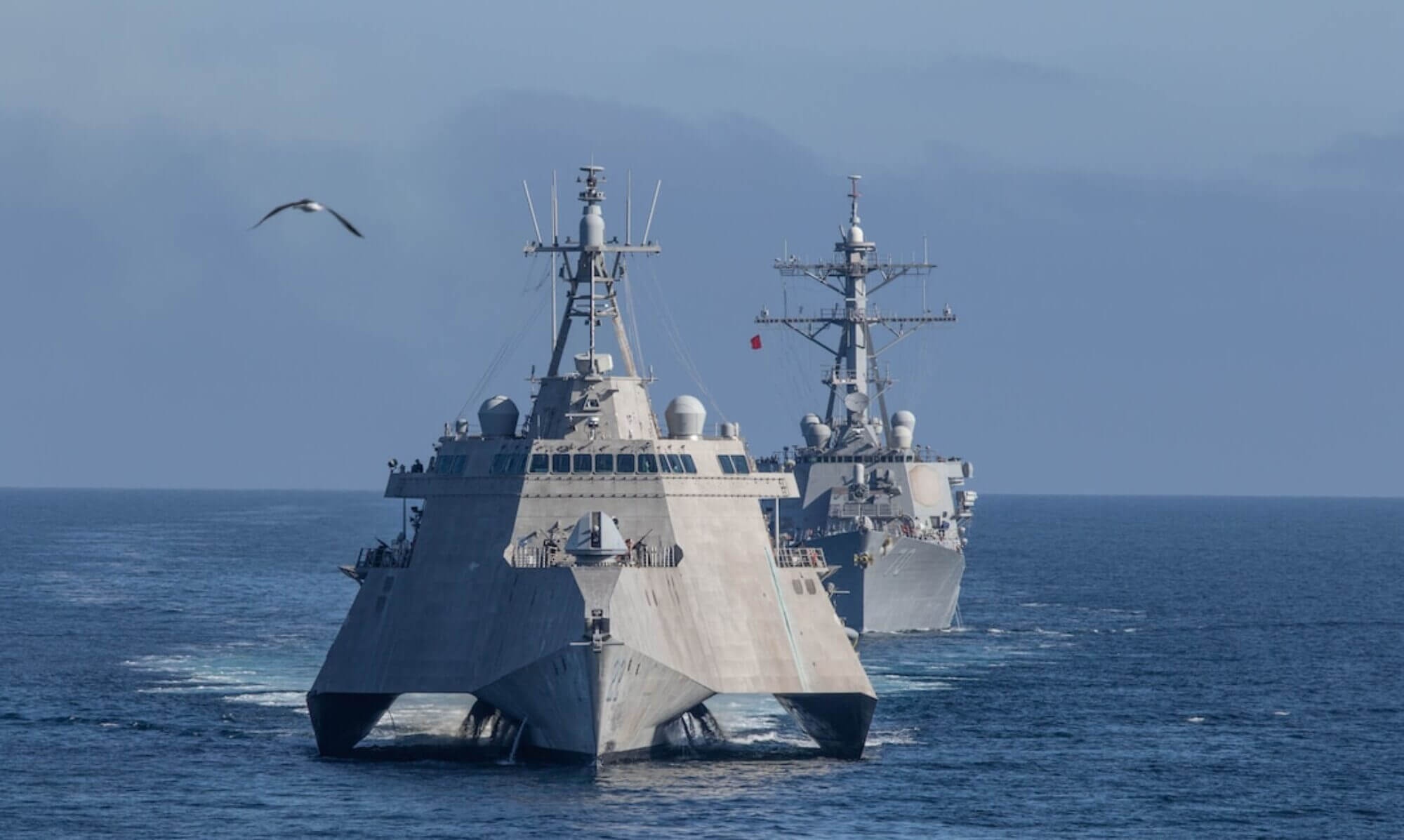
The Navy needs money. Taxpayers are tapped out. So where does the funding come from?
That is not a rhetorical question. It is the defining challenge of American naval policy in 2026. The fleet is shrinking. Shipyards are strained. The gap between what the Navy is asked to do and what it has the resources to do grows wider every year. And the American taxpayer — already carrying an unsustainable fiscal burden — cannot be the answer to every problem.
But there is an answer. It just requires asking who else benefits from American naval power — and whether they are paying their share.
The United States Navy keeps the Persian Gulf open. Every tanker that transits the Strait of Hormuz does so because American sailors, American ships, and American taxpayers back the deterrent that makes it possible.
Japan imports it. South Korea imports it. Germany imports it. The economic engines of our closest allies run on Gulf-sourced petroleum — secured by a Navy they do not fund.
That is not an alliance. That is a subsidy.
We’ve Seen This Before
This is not a new problem. In 1987, Iran began attacking tankers in the Persian Gulf. The Reagan administration launched Operation Earnest Will — the largest naval convoy operation since World War II — reflagging Kuwaiti tankers as American vessels and providing direct Navy escort through waters Japan depended on for survival.

Congress noticed. If the U.S. Navy was protecting Japan’s oil supply, Japan should help pay for it. The pressure produced the first formal Special Measures Agreement in 1987, requiring Japan to contribute to the cost of U.S. forces providing that protection. The principle was established: beneficiaries of U.S. naval protection should contribute to it.
That agreement has been renewed and expanded ever since. The precedent has held for nearly four decades.
The Gap Has Grown
What was true in 1987 is more true today. Gulf oil revenues exceed $350 billion annually. The nations collecting that revenue — and the allies consuming it — benefit from sea lanes the U.S. Navy patrols at a cost of billions per year.
The Navy keeps the sea lanes open. The beneficiaries collect the profits.
Meanwhile, the Navy that provides this service is smaller, older, and more strained than at any point in recent memory. Shipyards are at capacity. The fleet is shrinking. The gap between what the Navy is asked to do and what it has the resources to do grows wider every year.
Allies reliant on Gulf energy are not being asked to share that burden in proportion to their dependence on it.
The Gulf Act: Applying an Established Principle
The Gulf Act is the logical extension of the 1987 burden-sharing framework to the present day. The concept is straightforward: nations that depend on Gulf energy security — and the sea lane access that makes it possible — should contribute meaningfully to the naval forces that provide it.
This is not a radical idea. It is the application of a 35-year-old precedent to a threat environment that has grown more complex, not less.
The mechanisms can take multiple forms — direct contributions to naval operations, minesweeper deployments, escort ship commitments, or financial contributions to a dedicated naval modernization account. The form matters less than the principle: if you benefit, you contribute.
A Note on Why We’re There
Some will argue that the United States has multiple reasons for maintaining a naval presence in the Gulf — and they are right. Security commitments to allies in the region, Iranian nuclear ambitions, freedom of navigation as a global principle, and counterterrorism interests all play a role. The Gulf Act does not dispute any of that.
But those reasons are a separate question from this one: who should pay for the benefit they receive?
The two questions are separable. In 1987, the U.S. had multiple reasons for being in the Gulf too — and Congress still established that Japan, as the primary beneficiary of tanker protection, should contribute to its cost. The Gulf Act asks the same narrow, defensible question: if your economy depends on sea lanes the U.S. Navy keeps open, what is your fair share of that bill?
This is not about relitigating American strategy. It is about making sure the nations that benefit most are not free-riding on the nations that bear the cost.
The SEAS Act Connection
Regular readers will recognize the parallel. The Strategic SEAS Act applies the same beneficiary-pays doctrine to U.S. corporations with significant China operations — companies that helped build the industrial base now threatening American naval superiority should help fund the response.
The Gulf Act and the SEAS Act are two applications of the same governing principle:
Those who extract value from American naval protection should share the cost of providing it.
Whether the beneficiary is an allied nation importing Gulf oil or a Fortune 500 company running supply chains through Chinese ports, the logic does not change.
The Cost of Doing Nothing
If the burden-sharing argument sounds abstract, consider what is happening right now in the Persian Gulf.
According to a Center for Strategic and International Studies estimate cited by Defense One on March 12, 2026, the first 100 hours of Operation Epic Fury cost approximately $3.7 billion — roughly $891 million per day. Air defense munitions costs alone ranged from $1.2 billion to $3.7 billion. [2]
The cost asymmetry is stark. Iran’s Shahed drones cost around $30,000 each. The missiles used to shoot them down — AIM-120s at $1 million, PAC-3 interceptors at $4 million — cost orders of magnitude more. As one defense analyst put it: every cheap drone that forces the U.S. to fire an expensive interceptor is a win for Iran. [2]
Six U.S. soldiers were killed at Port Shuaiba, Kuwait, when an Iranian drone evaded air defenses. Three F-15E Strike Eagles were lost in a friendly fire incident over Kuwait. [2]
Meanwhile, the nations whose energy supplies depend on the Gulf’s sea lanes — Japan, South Korea, Germany — are not bearing these costs. The American taxpayer is.
That is the externality the Gulf Act is designed to correct.
The Question Sadler Asked
Captain Brent Sadler of the Heritage Foundation recently raised this directly in the context of a potential Gulf convoy mission, asking whether it was time for allies dependent on Gulf petroleum to contribute escort ships and minesweepers. [1]
The answer is yes. It has always been yes. The 1987 precedent proved it was politically achievable. The current fiscal and force structure reality — and the live situation unfolding today in the Strait of Hormuz — makes it urgent.
The Navy cannot be the world’s free security service while simultaneously being asked to compete with a Chinese fleet building ships at a rate that dwarfs American production. Something has to give — or someone else has to contribute.
What Comes Next
Americans for a Stronger Navy will be developing the Gulf Act framework in the coming months, including burden-sharing models, historical precedents, and legislative pathways. This post is the opening argument.
If you agree that nations benefiting from American naval protection should help fund it, share this post. The conversation Sadler started on X deserves a longer answer than a tweet.
The sea lanes don’t protect themselves.
— Bill Cullifer, Founder, Americans for a Stronger Navy
References
[1] Brent D. Sadler (@brentdsadler), X (formerly Twitter), March 11, 2026. Captain Sadler serves as a Senior Research Fellow at the Heritage Foundation’s Center for National Defense.
[2] Thomas Novelly, “Fighter jets are downing Iranian drones—a dangerous, expensive mission,” Defense One, March 12, 2026. Cost figures sourced from CSIS estimate and Forecast International report cited therein.