 1. The “Five-Day Reprieve”: Trump Postpones Strikes
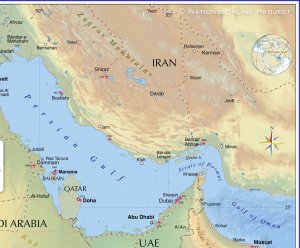
In a major de-escalation move today, President Donald Trump announced a five-day extension on his deadline for Iran to reopen the Strait of Hormuz. Citing “very good and productive” conversations involving intermediaries, the President has instructed the Department of War to postpone planned strikes on Iranian power plants and civilian energy infrastructure.
* The Market Reaction: Global oil prices dropped nearly 10% following the announcement as markets reacted to the potential for a “total resolution” of hostilities.
* The Catch: The President noted that the pause is “subject to the success” of ongoing meetings throughout the week.
2. USS Gerald R. Ford (CVN 78) Sabotage Investigation
The USS Gerald R. Ford arrived at Souda Bay, Crete, today for emergency repairs. However, the focus has shifted from a simple fire to a formal criminal inquiry.
* The Investigation: Investigators are formally examining whether the 30-hour laundry room fire on March 12 was an act of internal sabotage. One theory suggests industrial dryers were intentionally overloaded to trigger the blaze.
* Crew Impact: The fire destroyed the ship’s laundry capability and displaced over 600 sailors from their berths. To provide relief, the Navy successfully airlifted 1,000 mattresses from the future USS John F. Kennedy (CVN 79).
3. Long-Range Escalation: Diego Garcia Targeted
Over the weekend (March 21), Iran demonstrated a previously unrevealed long-range capability by firing two ballistic missiles at the joint U.S.-U.K. base at Diego Garcia.
* The Defense: The strike covered a distance of approximately 2,500 miles (4,000 km), double Iran’s previously claimed 2,000 km limit. One missile failed mid-flight, and the second was successfully intercepted by a U.S. Navy Aegis destroyer.
* Significance: This marks Iran’s first operational use of an Intermediate-Range Ballistic Missile (IRBM), confirming they can now reach high-value U.S. logistics hubs far outside the Middle East.
4. “Lightning Carrier” Arrival: USS Tripoli (LHA 7)
The amphibious assault ship USS Tripoli and the 31st Marine Expeditionary Unit (MEU) are expected to take up station in the North Arabian Sea within the next 24 hours.
* The Mission: Carrying over 2,200 Marines and F-35B stealth fighters, the Tripoli provides a flexible “raid” capability. Despite the diplomatic pause, this force is positioned to forcefully reopen the Strait or conduct maritime interdictions if negotiations fail.
5. Shipbuilding & Fleet Renewal
* USS Harvey C. Barnum Jr. (DDG 124): The Navy’s newest Arleigh Burke-class destroyer arrived at its homeport in Norfolk on March 20. It is officially scheduled for commissioning on April 11, 2026.
* Budget Boost: Congress has finalized a $27.2 billion shipbuilding budget for FY2026—a $6.5 billion increase over initial requests—to fund 17 new ships, including a Columbia-class ballistic missile sub and two Virginia-class attack subs.