“We strongly encourage other nations whose economies depend on the strait far more than ours to come and help us.”
Those are President Trump’s words. Not a think tank analyst. Not a naval advocacy group. The President of the United States, standing in the White House, publicly demanding that the nations who benefit most from American naval protection start paying their share.
He’s right. And there’s already a legal framework to make it happen.
The Strongly Worded Letter
On March 19, 2026, twenty nations issued a joint statement condemning Iran’s closure of the Strait of Hormuz. Britain. France. Germany. Japan. South Korea. Canada. Twenty signatures. Strong language. Zero ships.
The statement expressed “readiness to contribute to appropriate efforts to ensure safe passage.” France and Germany were more direct — any coalition would only form after a ceasefire. The German chancellor said he would only join a mission with an international legal mandate, and only after the fighting stopped.
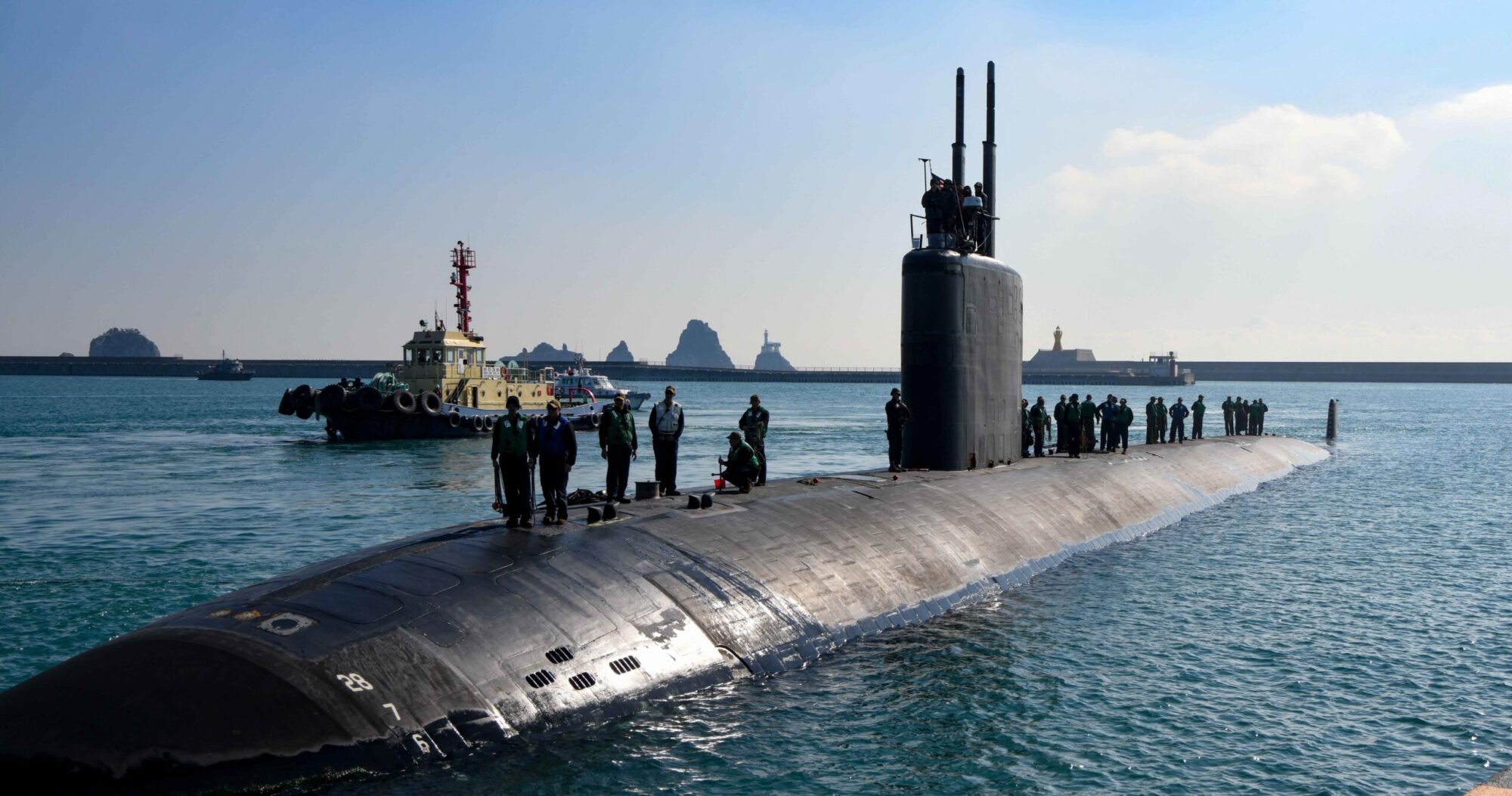
Meanwhile, American sailors — some at sea more than 250 days — are doing it now.
This is not a new pattern. It is the defining pattern of post-Cold War burden-sharing. Allies sign statements. America sends ships. The bill goes to the American taxpayer.
What’s Actually at Stake
The Strait of Hormuz is not a regional waterway. It is the world’s most critical energy chokepoint. Roughly one-fifth of global oil supply passes through it daily. Since Iran’s effective closure began on February 28, tanker traffic has dropped by approximately 70 percent. Over 150 ships anchored outside the strait rather than risk transit. Oil crossed $100 a barrel.
Then Iran struck Qatar’s Ras Laffan LNG facility — the world’s largest. QatarEnergy reported extensive damage. Their CEO said repairs would take three to five years. This is not a temporary disruption. The economic consequences will be measured in years, not weeks.
Who depends on that oil?
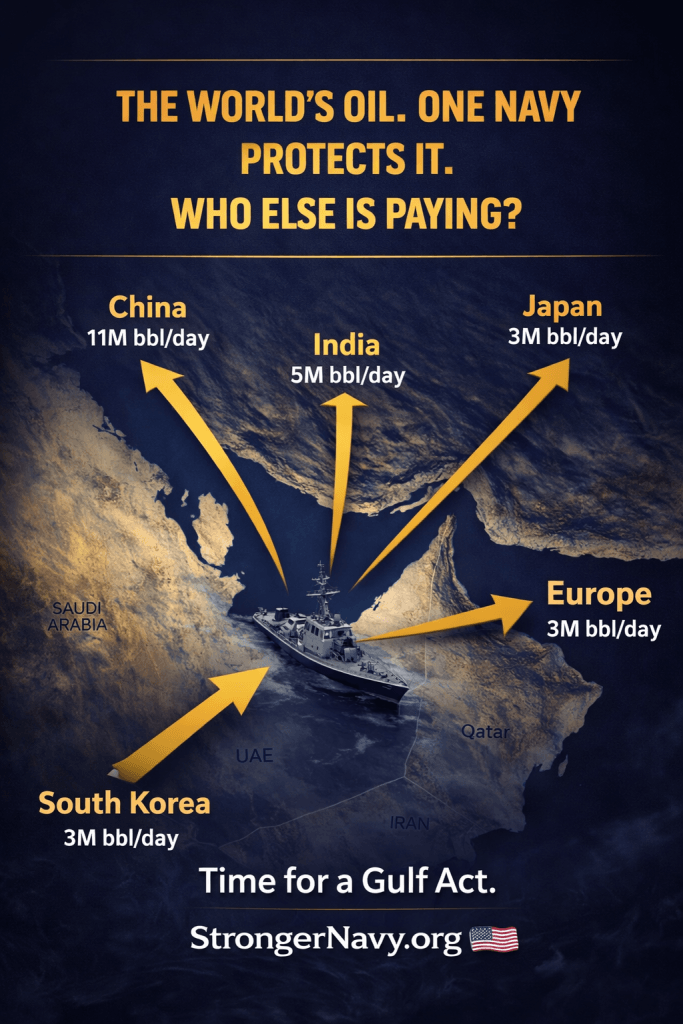
China imports approximately 11 million barrels per day through Gulf sea lanes secured by the U.S. Navy. India imports 5 million. Japan 3 million. South Korea 3 million. Europe 3 million. Japan gets 95 percent of its crude oil from the Gulf. South Korea is similarly dependent.
One navy keeps it flowing. Ours.
The Precedent Already Exists
This is not uncharted territory. The beneficiary-pays principle has been established twice in living memory.
In 1987, Kuwait paid the United States Navy to escort their tankers through the Persian Gulf during the Iran-Iraq tanker war. Operation Earnest Will established a clear precedent: nations that benefit from U.S. naval protection of their commercial interests contribute to the cost of that protection.
In 1991, Japan paid $13 billion toward Operation Desert Storm. Japan did not send combat troops. Japan wrote a check. The Special Measures Agreement made the burden-sharing arrangement formal and documented.
The precedent exists. What is missing is a permanent, mandatory mechanism.
The Gap in the Framework
Every crisis produces a new round of negotiations, statements, and voluntary contributions — or the lack thereof. The 1987 model worked because Kuwait had a direct and immediate interest in the outcome. The 1991 model worked because Japan faced intense diplomatic pressure and the threat of real consequences.
Neither model is durable. Neither model is predictable. Neither model builds the naval industrial base that sustained forward presence requires.
The current Hormuz crisis will eventually resolve. The Iranian threat will recede, or be defeated, or be negotiated away. And when it does, the allied nations who signed that joint statement will declare victory, go home, and resume importing Gulf oil on America’s dime.
Until the next crisis. When the cycle repeats.
The Gulf Act: If You Benefit, You Contribute
Americans for a Stronger Navy has proposed the Gulf Maritime Protection and Burden Sharing Act — the Gulf Act — as a permanent legislative solution to a permanent structural problem.
The Gulf Act establishes a mandatory burden-sharing mechanism requiring nations that benefit from U.S. naval protection of Gulf sea lanes to contribute to the cost of that protection. It is grounded in the 1987 Earnest Will precedent and the 1991 Desert Shield/Desert Storm Special Measures model. It codifies what has previously been left to ad hoc diplomacy and presidential pressure.
The core principle is straightforward: if you benefit, you contribute.
This is not isolationism. It is not a withdrawal from global leadership. It is the application of a basic fairness principle that the American people already understand instinctively. You don’t get to import millions of barrels of oil through a strait secured by American sailors — some of whom haven’t seen their families in eight months — and sign a statement saying you’ll help out after the shooting stops.
The Window Is Now
President Trump has made burden-sharing a front-page issue. The Hormuz crisis has made the stakes visible to every American who has filled a gas tank in the last month. The National Commission on the Future of the Navy is examining the structural questions underlying American naval power.
This is the moment to move from principle to legislation.
The strongly worded letter had twenty signatories. The Gulf Act needs one vote.
Learn more at StrongerNavyDotOrg.
References
[1] Axios, “Seven U.S. allies back potential Strait of Hormuz coalition,” March 19, 2026. https://www.axios.com/2026/03/19/strait-hormuz-coalition-allies-statement-uk
[2] Wikipedia, “2026 Strait of Hormuz crisis,” accessed March 24, 2026. https://en.wikipedia.org/wiki/2026_Strait_of_Hormuz_crisis
[3] Al Jazeera, “European nations, Japan to join ‘appropriate efforts’ to open Hormuz Strait,” March 19, 2026. https://www.aljazeera.com/news/2026/3/19/european-nations-japan-to-join-appropriate-efforts-to-open-hormuz-strait
[4] Naval News, “The challenges of securing Hormuz as 6 nations issue joint statement,” March 2026. https://www.navalnews.com/naval-news/2026/03/the-challenges-of-securing-hormuz-as-6-nations-issue-joint-statement/
[5] GOV.UK, “Joint statement from the leaders of the United Kingdom, France, Germany, Italy, the Netherlands, Japan, Canada and others on the Strait of Hormuz,” March 19, 2026. https://www.gov.uk/government/news/joint-statement-from-the-leaders-of-the-united-kingdom-france-germany-italy-the-netherlands-and-japan-on-the-strait-of-hormuz-19-march-2026
[6] Operation Earnest Will / Special Measures Agreement, 1987. Historical record.
[7] Desert Shield/Desert Storm burden-sharing agreements, Japan Special Measures, 1991. Historical record.