America at Sea: Seth Cropsey
America at Sea: Voices That Matter is a 45-day maritime conversation hosted by Americans for a Stronger Navy with U.S. Maritime Action and moderated by Capt. Brent Sadler, USN (Ret.). Each voice answers the same three questions: What’s working? What’s the biggest barrier? What would you fix first?
Seth Cropsey is president of the Yorktown Institute, which focuses on the influence of the maritime sphere on commerce, geopolitics, strategy, and America’s relations with allies and adversaries [1]. A former naval officer and former Deputy Under Secretary of the Navy, he writes regularly on naval and maritime issues and is the author of three books, including Seablindness and, this year, Breaking the New Axis: A U.S. Grand Strategy for Eurasia from the Naval Institute Press [2][3].
His view of the moment is sobering: adversaries growing stronger at the same time Americans are growing more reluctant to engage. “That makes for a dangerous combination,” he says.
What’s Working: Washington Is Finally Listening
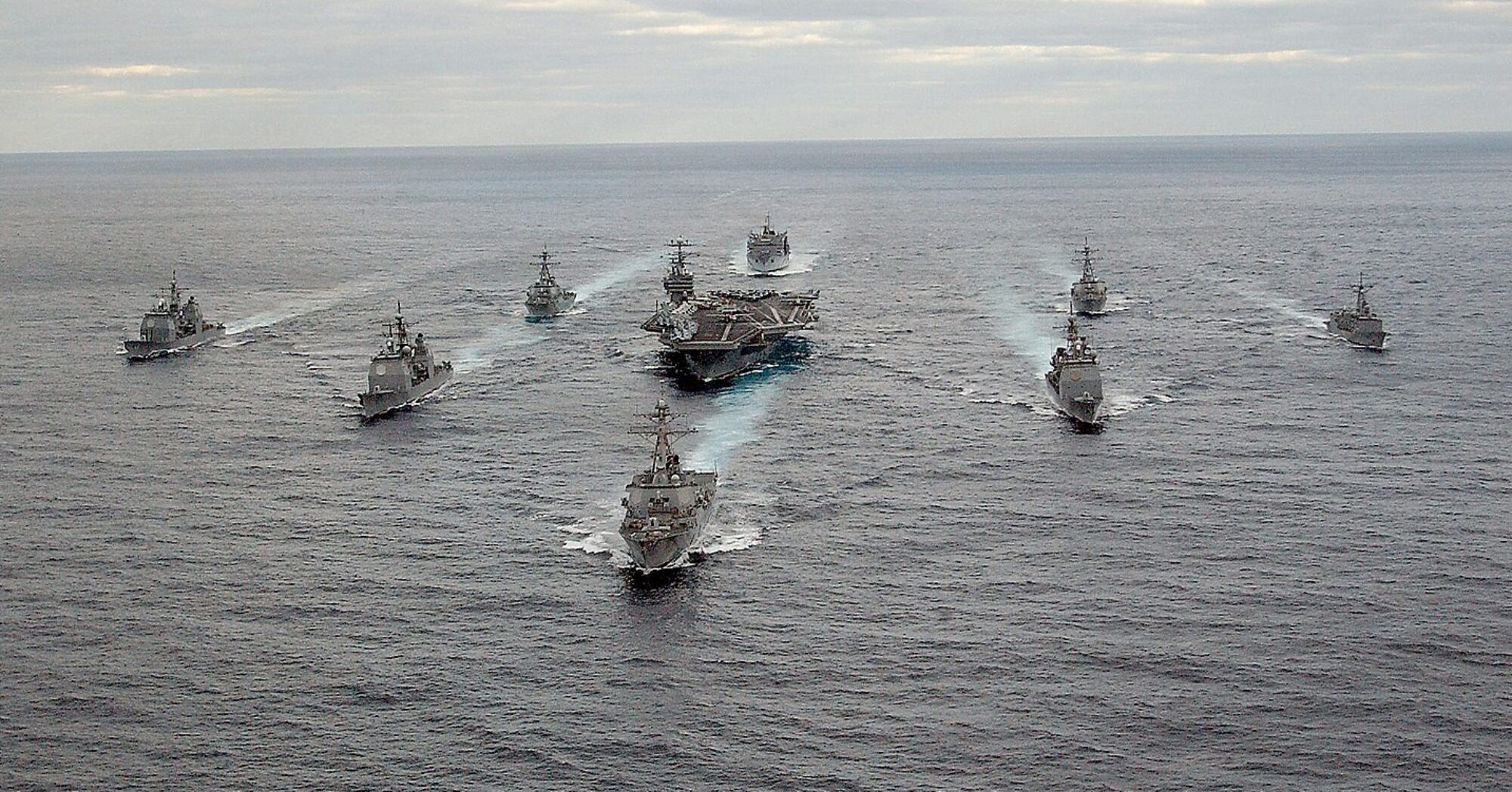
Ten years ago, Cropsey says, you could hardly get anyone to listen. Today people are talking about the Navy’s problem, and the budgets show it. By his count, the first Trump administration, with Congress, funded 50 ships, and the 2027 budget proposal includes money for 34 more.
But money is not ships.
“Unfortunately, you can’t buy a ship like you buy a pretzel. It takes a lot longer to make a ship than a pretzel.”
In the meantime, he notes, China is turning out ships “like hotcakes,” its navy is already numerically larger than ours, and many U.S. ships built 40 or more years ago will retire before the new ones arrive. “It’s a mixed picture.”
The Biggest Barrier: Washington Keeps Losing Its Navy Experts
Cropsey’s barrier is political. The members of Congress who truly understand the Navy keep leaving office. He names former Rep. J. Randy Forbes of Virginia, who “knew more about the Navy than anybody else in Congress,” and, after him, former Rep. Elaine Luria of Virginia, a former naval officer. Both lost their seats.
“We don’t have a Carl Vinson today. We don’t have somebody who is a preeminent national figure on the Navy.”
Vinson was the Georgia congressman behind the 1940 Two-Ocean Navy Act, which built the fleet that won World War II [4]. Cropsey argues that kind of recognition exists today only “in pockets,” even as China builds a huge merchant fleet and a navy to protect it, “a page out of Alfred Thayer Mahan’s book” [5], and as attacks on shipping near the Strait of Hormuz and the Red Sea show how exposed the sea lanes are.
“We just don’t seem to realize as a country how dependent we are for our security and our commerce on the seas. And that’s got to change.”
Fix One Thing: A Maritime Strategy
The quickest fix, Cropsey says, is to buy ships from foreign builders who can build to American specifications. But the most important fix is deciding what we are buying and why.
“The root of the problem is that there is no maritime strategy today. It does not exist, as it did, for example, during the end of the Cold War.”
That 1980s strategy, he says, didn’t require everyone to agree, only to understand. It was the driver that produced the Reagan Navy: “We knew what we were going to do with it. We knew how to do it. We practiced for it. We trained for it.”
Asked how to get there, he starts at the top. It would help a great deal, he says, if the president would explain these facts to the American people and take a personal interest in the nation’s maritime strategy.
“It doesn’t mean that he has to come up with it himself. It just means that he has to show some interest in it and explain why it’s important.”
He adds a second fix: secretaries of the Navy who arrive already knowing the job. The average secretary serves about two years, he notes, and someone coming from Wall Street or an unrelated field spends much of that time learning before they can make real change.
The Takeaway
Cropsey’s three answers point to one gap: the nation has the money flowing and the threat in plain view, but no one at the top who owns the question of what the Navy is for. In his telling, the understanding exists in a handful of members of Congress and staff, and it doesn’t get outside that bubble.
That diagnosis, no maritime strategy and no one at the top who owns it, is the case for putting maritime strategy on the President’s desk, through a dedicated Maritime Security Advisor in the White House. That is our conclusion, not his, but it follows from his argument.
—
About America at Sea
America at Sea: Voices That Matter is a 45-day maritime conversation launched October 18, 2026, by Americans for a Stronger Navy with U.S. Maritime Action. Moderated by Capt. Brent Sadler, USN (Ret.), the series asks shipbuilders, mariners, industry leaders, the Navy community, and policy experts the same three questions. A common-ground report will be delivered to policymakers, their staffs, and the public at the end of November.
Learn more: StrongerNavy.org
—
About the Guest
Seth Cropsey is president of the Yorktown Institute. He served as a naval officer and as Deputy Under Secretary of the Navy, and writes and lectures widely on naval, maritime, and foreign policy. His work has appeared in the Wall Street Journal, National Review, RealClearDefense, and Foreign Affairs. He is the author of Seablindness, Mayday: The Decline of American Naval Supremacy, and Breaking the New Axis: A U.S. Grand Strategy for Eurasia (Naval Institute Press, 2026).
—
References
[1] Yorktown Institute: https://yorktowninstitute.org
[2] Seth Cropsey, Seablindness: How Political Neglect Is Choking American Seapower and What to Do About It (Encounter Books, 2017).
[3] Seth Cropsey, Breaking the New Axis: A U.S. Grand Strategy for Eurasia (Naval Institute Press, 2026).
[4] The Two-Ocean Navy Act (Vinson-Walsh Act) of July 1940 authorized a roughly 70 percent expansion of the U.S. Navy’s combatant tonnage, the largest naval procurement in U.S. history.
[5] Alfred Thayer Mahan, The Influence of Sea Power upon History, 1660–1783 (1890).