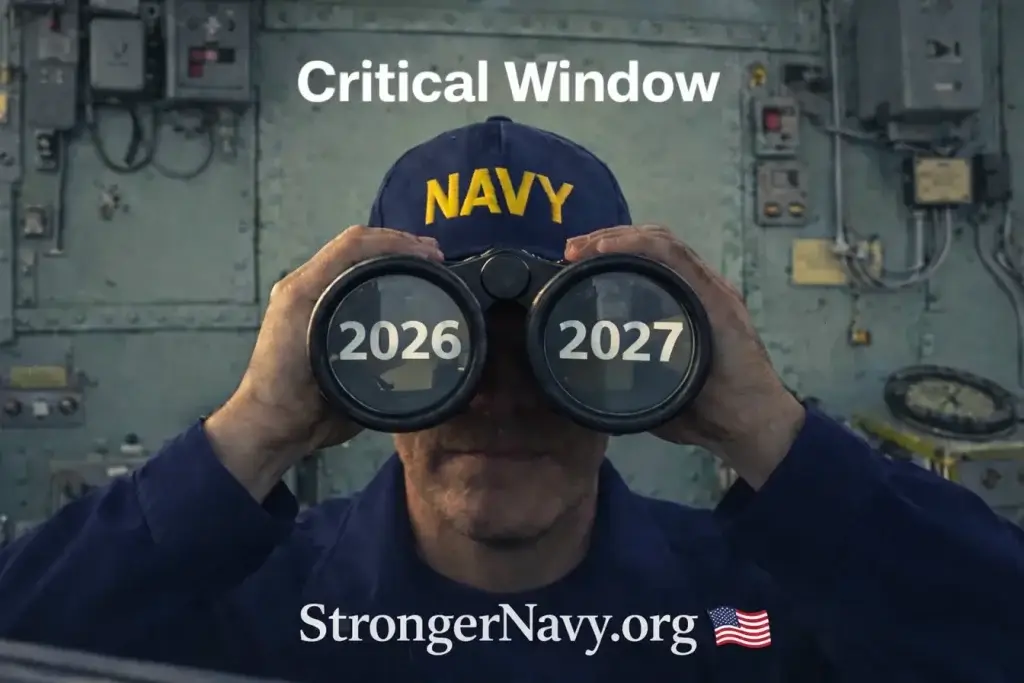
There’s a concept every naval planner understands but few Americans realize – one that I’ve come to appreciate over time: the decisions we make today about shipbuilding, maintenance, and industrial capacity don’t affect today’s Navy – they determine what Navy we’ll have seven to ten years from now.
This creates what I call the Critical Window – a concept familiar to anyone who’s managed large-scale projects. It’s that narrow period when decisions made now lock in outcomes years down the line. For shipbuilding, budget decisions, industrial investments, and strategic commitments made in 2026-2027 will directly shape our naval capabilities in the 2030s.
After this window closes, the die is cast. The industrial base will be committed. The budgets will be locked in. The ships – or the absence of ships – will be determined by choices we’re making right now.
Why 2026-2027 Is The Critical Window
The mathematics of naval construction are unforgiving:
Attack submarines take 7-8 years from contract award to delivery. A Virginia-class submarine ordered in FY2027 enters the fleet in 2034-2035.
Surface combatants take 4-5 years to build. An Arleigh Burke-class destroyer funded in FY2027 delivers in 2031-2032.
Shipyard expansions take 3-4 years to become operational. Capacity investments made in FY2027 start producing results in 2030-2031.
Columbia-class ballistic missile submarines require 7+ years and are consuming enormous portions of the shipbuilding budget through the end of this decade.
This isn’t abstract policy planning – it’s industrial reality. You cannot surge naval capability. You cannot speed up physics, metallurgy, or the skilled workforce required to build nuclear-powered warships.
Several factors converge to make 2026-2027 uniquely consequential:
The Big Beautiful Bill Timeline: The $150 billion defense investment passed in July 2025 is one-time funding available through 2029. By 2027, Congress must decide whether to sustain these investments with recurring appropriations or let them lapse.
The 2030s Capability Gap: Multiple studies project the Navy falling below required force structure in the early 2030s as older ships retire faster than new ones are built.
The China Pacing Challenge: China’s shipbuilding capacity far exceeds America’s. The gap between their naval growth and ours widens with each passing year we fail to accelerate production.
The Commission Opportunity: The National Commission on the Future of the Navy becomes operational in 2026. This represents a once-in-a-generation chance to reshape naval policy.
Looking Through The Binoculars: What We See In The 2030s
What you see depends entirely on decisions being made right now. If we maintain the current trajectory, the total battle force will decline by 2030, and the attack submarine fleet will reach minimum viable numbers by 2032. By 2035, China’s navy will be substantially larger, exploiting our constrained shipbuilding.
If we use the Critical Window wisely, shipyard expansions funded in 2026-2027 will come online by 2030. Accelerated production will begin delivering boats by 2032, and industrial base investments will enable us to match strategic requirements by 2035.
What The Critical Window Requires
Using this window effectively demands moving beyond one-time supplemental funding to sustained, recurring appropriations. The Big Beautiful Bill provided a down payment, but the FY2027 and FY2028 budgets must demonstrate a commitment to sustaining those investments. We also need acquisition reform to reduce the time from budget authorization to ship delivery and alternative funding mechanisms to supplement traditional appropriations.
From Experience: The Hollow Navy and The Reagan Response
I served during the 1970s hollow Navy – ships that couldn’t deploy and maintenance deferred. I also witnessed the Reagan administration’s response: a commitment to rebuild the Navy to 600 ships. That wasn’t just rhetoric – it was budget authority and political will sustained across multiple cycles. We face the same choice now. The 1980s rebuild succeeded because leaders recognized their Critical Window. We must do the same.
What You Can Do During The Critical Window
For veterans and advocates, understand that your voice matters most during the budget markup season. For policymakers, recognize that today’s choices have 10-year consequences. For concerned citizens, ask candidates about their plans for sustaining naval investment. Peace through strength requires backing rhetoric with budget authority.
The Bottom Line
The Critical Window of 2026-2027 is closing. We cannot change the physics of shipbuilding, but we can recognize this moment for what it is. The decisions made in the next 18 months will determine what Navy America has in the 2030s.
Americans for a Stronger Navy advocates for naval transparency, readiness, and strategic policy development. Learn more: StrongerNavy.org
Follow the Commission: National Commission on the Future of the Navy
The Critical Window is now. The time to act is today.
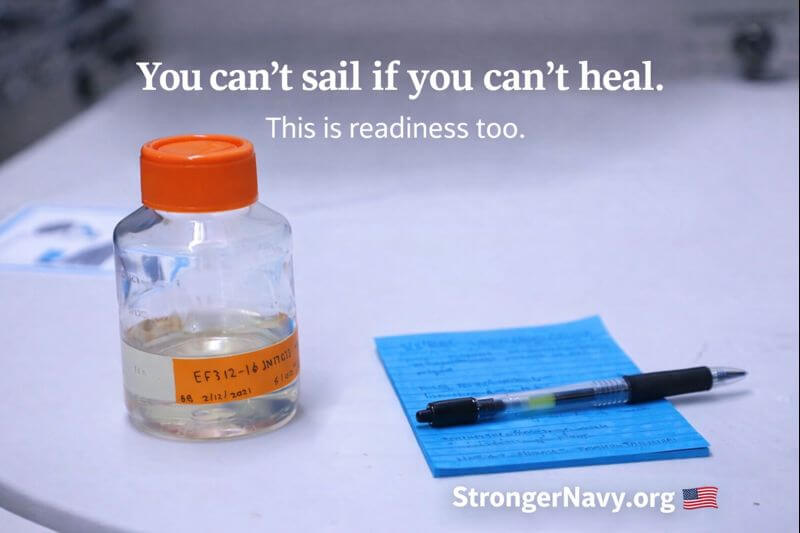
While we focus on ship counts, readiness percentages, and hull maintenance, there’s another critical battle being fought in Navy Medicine laboratories that directly impacts our fleet’s combat power: the fight against antibiotic-resistant bacteria.
The Naval Medical Research Command (NMRC) just completed a six-year research program that could revolutionize how we protect our sailors and Marines from one of the most insidious threats they face—bacterial infections that laugh at our best antibiotics.
The Invisible Enemy
Here’s the reality: our warfighters aren’t just exposed to enemy fire. They face bacteria through combat injuries, deployments to overseas locations, and the close-quarters environment of shipboard life. And increasingly, these bacteria are resistant to the antibiotics we’ve relied on for decades.
Four bacterial villains are the focus: Acinetobacter baumannii (nicknamed “Iraqibacter” from the early Iraq war days), Klebsiella pneumoniae, Pseudomonas aeruginosa, and Staphylococcus aureus. All can cause fevers, fatigue, swelling—and in severe cases, death.
When a sailor or Marine is fighting a multidrug-resistant infection, they’re not mission-ready. They’re not protecting their shipmates. They’re fighting for their life.
The Navy’s Secret Weapon: Bacteriophages
Navy Medicine Research & Development has a solution that sounds like science fiction but is brilliantly simple: use viruses that naturally hunt and kill bacteria.
Bacteriophages—or phages—are viruses that target specific bacteria with surgical precision. Unlike antibiotics that carpet-bomb your body’s bacterial ecosystem (killing both good and bad bacteria), phages are smart weapons. They go after only the harmful bacteria you want eliminated.
Over six years of focused research funded by Congressionally Directed Medical Research Programs (CDRMP), NMRC has developed approximately 2,500 phage cocktails. Think of these as personalized medicine—specific combinations designed to attack specific bacterial threats.
From Wastewater to Warfighter
The collection process is global and fascinating. Navy researchers harvest phages from wastewater—bogs, sewers, rivers—across multiple continents. These microscopic hunters are everywhere. In fact, if you strung together all the phages on Earth, they could wrap around the Milky Way Galaxy three times.
Each collected phage goes through rigorous purification and characterization. As Dr. Biswajit Biswas, chief of NMRC’s Bacteriophage Science Division, explains: “We collect these phages, purify them and grow them in large quantities. Then, we extract DNA, sequence its genome and analyze the phage very carefully to understand if it carries any toxins, since we cannot push something in the human systems if the phage carries toxins.”
This is meticulous work. This is Navy excellence.
Proof of Concept: The Tom Patterson Story
In 2015, NMRC achieved something historic. Dr. Tom Patterson fell critically ill from Acinetobacter baumannii, slipped into a coma, and remained ill through multiple treatments. Nothing worked. Until he was administered an NMRC-developed phage cocktail intravenously.
He survived.
As Dr. Biswas notes: “It should be understood that before Tom Patterson’s case, nobody used phage to treat systemic bacterial infection in the United States.”
NMRC didn’t just save a life. They opened a door.
Why This Matters for Naval Readiness
Commander Mark Simons, director of NMRC’s Infectious Diseases Directorate, gets straight to the point: “Navy and Marine Corps warfighters are often first to the fight as expeditionary units, and thus will experience early casualties in a potentially prolonged-care setting. This will require novel antimicrobial countermeasures to be used early and throughout the continuum of care to treat antibiotic-resistant infections which are rising globally and highly prevalent in developing countries and high-conflict regions.”
Read that again. First to the fight.Early casualties.Prolonged-care settings.
When we deploy our carriers to the Indo-Pacific, when we send Marines into contested environments, when we operate in regions where medical evacuation isn’t guaranteed—our people need every medical advantage we can give them.
A sailor fighting a superbug infection can’t stand watch. A Marine with a resistant wound infection can’t complete the mission. Medical readiness is operational readiness.
Joint Innovation at Its Best
This research demonstrates something we don’t celebrate enough: when Navy Medicine and Army Medicine researchers work together with focused priorities, incredible things happen. NMRC collaborated seamlessly with Walter Reed Army Institute of Research (WRAIR) and the U.S. Naval Research Laboratory.
WRAIR’s Forward Labs collected phages in Thailand, Kenya, and Georgia. Naval Medical Research Unit (NAMRU) SOUTH provided phage isolates from South America. This global network, coordinated across services, created a phage library that will serve warfighters for years to come.
This is how you build combat advantage.
Next Mission: FDA Approval
NMRC’s next objective is clear: Investigational New Drug applications with the FDA to move the most promising cocktails into phase one safety and immune response studies.
“Navy Medicine R&D is a leader in bacteriophage research so that we can bring this promising technology to clinicians and corpsman to improve battlefield survival for Sailors and Marines,” Commander Simons states.
That’s the goal. Not publications. Not academic prestige. Battlefield survival..
The Bigger Picture
We talk often about the “hollow Navy” of the 1970s—rusting ships, deferred maintenance, degraded readiness. But readiness isn’t just hull numbers and operating budgets. It’s whether our people can fight and survive when called upon.
This bacteriophage research represents the same commitment to readiness that we demand in ship maintenance, training, and logistics. It’s the Navy refusing to accept that warfighters should die from infections we could prevent or treat.
It’s innovation driven by mission necessity.
It’s medical capability that directly enables combat power.
It’s the kind of work that happens when national will, proper funding, and talented professionals align toward a clear objective: keeping our sailors and Marines ready, healthy, and lethal.
What This Teaches Us
For 250 years, Navy Medicine has delivered healthcare to warfighters “on, below, and above the sea and ashore.” This bacteriophage research continues that legacy with 21st-century tools.
But it also demonstrates something broader about naval strength: readiness is a system. Every piece matters. From hull coatings that prevent rust to phage cocktails that prevent death from resistant bacteria, it all connects.
When we advocate for a stronger Navy, we’re advocating for all of it. The ships, yes. But also the medicine, the logistics, the training, the innovation, the global partnerships that make American naval power possible.
NMRC and its partner commands have shown what’s possible when the mission is clear and the resources are provided. They’ve built a library of 2,500 phage cocktails, established processes that could save countless lives, and positioned the U.S. military to lead in a crucial medical technology.
That’s not just good science. That’s good strategy.
That’s a stronger Navy.
FREDERICK, Md. (April 11, 2025) Researchers with Biological Defense Research Directorate (BDRD), pose for a group photo after conducting bacteriophage therapy research to combat multidrug resistant bacteria that could impact warfighter readiness. Phages are viruses that target and kill antibiotic-resistant bacteria. Navy Medicine Research & Development (NMR&D) is engaged in bacteriophage therapy research to protect the warfighter from these threats, keeping U.S. forces ready and lethal. NMRC, headquarters of NMR&D, is engaged in a broad spectrum of activity from basic science in the laboratory to field studies in austere and remote areas of the world to investigations in operational environments. In support of Navy, Marine Corps and joint U.S. warfighter health, readiness and lethality, researchers study infectious diseases, biological warfare detection and defense, combat casualty care, environmental health concerns, aerospace and undersea medicine, operational mission support and epidemiology. For 250 years, Navy Medicine, represented by more than 44,000 highly-trained military and civilian healthcare professionals, has delivered quality healthcare and enduring expeditionary medical support to the warfighter on, below, and above the sea and ashore.
Americans for a Stronger Navy advocates for the transparent reporting, proper resourcing, and strategic innovation necessary to maintain U.S. naval superiority. Medical readiness is operational readiness. Support the sailors and Marines who stand the watch.
Why a narrow stretch of ocean between three landmasses has shaped 80 years of naval strategy — and why Americans need to understand it now
Introduction
A recent debate centered on whether China or Russia pose an imminent military threat to Greenland. The answer from intelligence sources appears to be no. But that answer, while technically correct, misses the deeper strategic point that has guided U.S. thinking for over two centuries.
The real issue is not invasion. The real issue is strategic positioning in geography that matters to naval power.
Greenland sits in one of the most important pieces of maritime real estate on the planet. And the United States has understood that for a very long time.
The GIUK Gap: A Naval Choke Point Since World War II
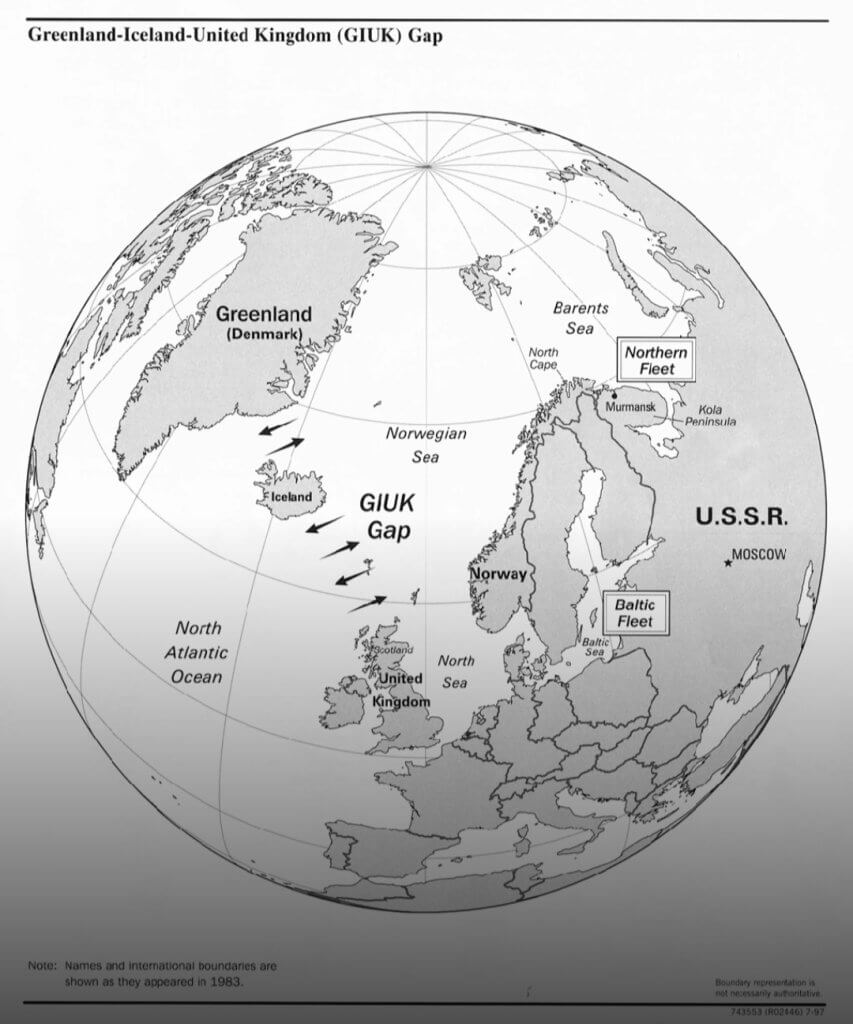
Greenland forms the western anchor of what naval strategists call the GIUK Gap — the sea space between Greenland, Iceland, and the United Kingdom.
This is not a modern concept. During World War II and throughout the Cold War, this gap was the primary maritime passage between the Russian Northern Fleet and the Atlantic Ocean. Soviet submarines had to pass through this space to threaten U.S. and NATO shipping lanes.
The U.S. and NATO built an entire system of surveillance, patrols, air bases, and anti-submarine warfare doctrine around this geography. This was one of the most heavily monitored naval regions on earth for decades.
That geography has not changed.
What has changed is public memory of why it mattered.
Greenland and the U.S. Military Presence
The United States has maintained a military presence in Greenland since World War II. Today, Pituffik Space Base (formerly Thule Air Base) remains a critical U.S. installation for:
Missile warning
Space surveillance
Arctic operations
Early warning radar coverage of the North Atlantic and polar approaches
This is not symbolic. It is operationally significant to U.S. homeland defense and NATO maritime awareness.
The Monroe Doctrine and Western Hemisphere Strategy
In 1823, the Monroe Doctrine established a foundational principle of U.S. strategy:
Foreign powers establishing strategic footholds in the Western Hemisphere is a U.S. security concern — even if that presence appears commercial or political rather than military.
This was never about invasion. It was about presence.
Because presence becomes leverage.
That thinking has guided U.S. behavior for 200 years across the Caribbean, South America, Central America, and the Arctic.
Greenland fits squarely into that tradition.
China’s Pattern of Strategic Positioning
There is no evidence China plans to invade Greenland. But there is extensive documentation of China’s interest in:
Arctic shipping routes as ice recedes
Rare earth and mineral projects in Greenland
Financing infrastructure projects, including attempted airport construction
Expanding its presence in Arctic research and commercial ventures
This pattern is not unique to Greenland. Similar approaches have been seen in Africa, the Pacific Islands, South America, and Australia.
The pattern is not military. It is long-term positioning.
That is what concerns strategists, not headlines.
Why This Matters to Naval Strategy
Naval strategy is built around geography, choke points, and access.
Greenland is not important because of its population or economy. It is important because of where it sits on the map.
Control and awareness of the GIUK Gap means control and awareness of submarine movement between the Arctic and the Atlantic. That has been true for 80 years.
It is still true today.
Why This Is Urgent Now
Three developments make Greenland’s strategic position more critical today than at any point since the Cold War:
1. Arctic ice recession is opening new shipping routes and resource access, increasing activity in waters the U.S. has monitored for decades.
2. Russian submarine activity in the North Atlantic has returned to Cold War levels, but U.S. anti-submarine warfare capabilities have atrophied.
3. China’s systematic positioning in Arctic governance, research, and commercial ventures is establishing presence before the U.S. fully recognizes the competition.
Meanwhile, the U.S. Navy faces its smallest fleet since 1916 and readiness challenges that limit sustained presence in multiple regions simultaneously.
The stake is not hypothetical: If the U.S. cannot maintain awareness and presence in the GIUK Gap, it cannot guarantee:
Protection of transatlantic commerce that underpins the American economy
Early warning of submarine-launched threats to the homeland
Credible deterrence that prevents crises from starting
Why Americans Should Care
Most Americans think of naval strength as ships and aircraft carriers. Few think about the map.
But naval power is first and foremost about geography.
The sea lanes that carry global trade, energy supplies, and military movement pass through predictable choke points. Greenland anchors one of them.
Understanding this is key to understanding why the United States watches foreign interest in Greenland closely — not because of paranoia, but because of history.
Implications for the Navy
For the U.S. Navy and NATO maritime forces, Greenland and the GIUK Gap remain central to:
Monitoring Russian submarine activity
Securing North Atlantic shipping lanes
Maintaining Arctic awareness as access increases
Supporting homeland and allied defense from the maritime domain
This is classic naval statecraft.
Implications for Our Allies
Denmark, the United Kingdom, Iceland, Canada, and NATO partners all share an interest in maintaining control and awareness of this region.
Greenland is not just a U.S. concern. It is a NATO maritime concern.
The Real Debate
The debate is not about whether China or Russia plan to invade Greenland.
It is about whether we recognize the long pattern of strategic positioning that great powers use long before conflict.
Geography doesn’t change. Neither does its importance to naval strategy.
Understanding Geography Is Just The Beginning
Greenland matters because of where it sits on the map. But knowing why geography matters doesn’t answer the harder questions:
How did the U.S. Navy — which once dominated these waters without question — reach a point where we’re debating our ability to maintain presence in strategically vital regions?
What decisions, what budget choices, what policy shifts brought us here?
And most importantly: what must happen next?
That’s why we launched Charting the Course: Voices That Matter — a 24-part educational series breaking down how we got here, what went wrong, and what must happen next. We connect the dots between geography, strategy, budgets, readiness, and national will. Our goal is simple: educate the public on the fundamentals of naval power so Americans understand what’s at stake — and what it will take to close the readiness gap before it’s too late.
As I continue to learn from naval professionals, analysts, and thoughtful voices like CDR Salamander, Brent Sadler, and Steven Wills, one reality keeps coming into sharper focus: wars between major powers are not decided by what we start with, but by what we can replace after the fighting begins. Many of our most advanced systems today are designed in ways that make rapid replacement, repair, and adaptation extremely difficult. This is not simply a funding or acquisition issue — it is a design, industrial, and national alignment issue. Understanding this is essential if Americans are to understand what true naval power requires in the 21st century.
Bill Cullifer, Founder
Introduction
As I continue this journey with Americans for a Stronger Navy, I find myself learning as much as I am advocating.
One of the most valuable parts of this work has been listening to and reading professionals like CDR Salamander, retired U.S. Navy Commander and widely read naval commentator; Brent Sadler, Senior Research Fellow for Naval Warfare and Advanced Technology at The Heritage Foundation and former U.S. Navy submariner; and Dr. Steven Wills, naval historian and former U.S. Navy officer, who are describing a reality that should concern every American — not just those in uniform or working in the defense industry.
Here’s the light-bulb moment. Imagine two football teams. One starts the game with the best players in the league — faster, stronger, more skilled. The other starts with good players, but has a deep bench. When players get hurt, they substitute quickly. When equipment breaks, they replace it. When fatigue sets in, they rotate fresh players onto the field. By the fourth quarter, the first team is exhausted, short-handed, and can’t keep up. The second team wins.
Wars between major powers work the same way. It’s not the starting lineup that decides the outcome. It’s the depth of the bench.
Today, we have an impressive starting lineup. What professionals like Salamander, Sadler, and Wills are warning us about is the size of our bench.
That was true in World War II. It is proving true in Ukraine today. And it will be true in any future conflict in the Pacific.
Here’s the uncomfortable part: many of the systems we build today are extraordinarily capable — but they are not designed to be built, repaired, or replenished at wartime scale.
The Lesson We Forgot from World War II
In World War II, America did not win because our tanks, ships, and aircraft were perfect. We won because they were designed to be built in massive numbers by the factories we already had. Design matched industrial strength. Throughput, not elegance, won the war.
What CDR Salamander Is Warning Us About
“In a fight defined by attrition, adaptation, and industrial endurance, the winning systems will not be the perfect ones on paper but the ones that can be produced, replaced, and improved the fastest.”
Brent Sadler and Maritime Statecraft
Sadler calls this maritime statecraft — naval power tied directly to shipyards, logistics, trade, workforce, and industry.
Steven Wills and the Structural Slide
Wills shows this is a structural capacity problem, not a readiness statistic.
What This Means for Middle America
Factories, trades, ports, shipyards — naval power begins in American towns long before a ship leaves port.
How We Got Here — The Quiet Erosion of Industrial Depth
This didn’t happen overnight. Industrial redundancy gave way to efficiency. What was once economic change is now understood as national security fragility.
Maritime Commerce — The Part Most Americans Never See
Over 90 percent of global trade moves by sea. Naval strength protects American prosperity.
How the Country Benefits
Stable supply chains, energy security, jobs, reliable trade, and deterrence.
The Good News
The good news is this: America has solved this problem before. In the 1930s, we did not yet have the industrial capacity that would later win World War II. What we had first was understanding. Once Americans understood what was required, industry, workforce, and national focus followed. We are at a similar moment now.
Why Americans Should Care
If war comes in the Pacific, it will not be decided in the first month. It will be decided in month six by who can replace losses fastest.
That’s why we launched Charting the Course: Voices That Matter — a 24-part educational series breaking down how we got here, what went wrong, and what must happen next. Our goal is simple: educate the public, connect the dots, and build the support needed to close the readiness gap before it’s too late.
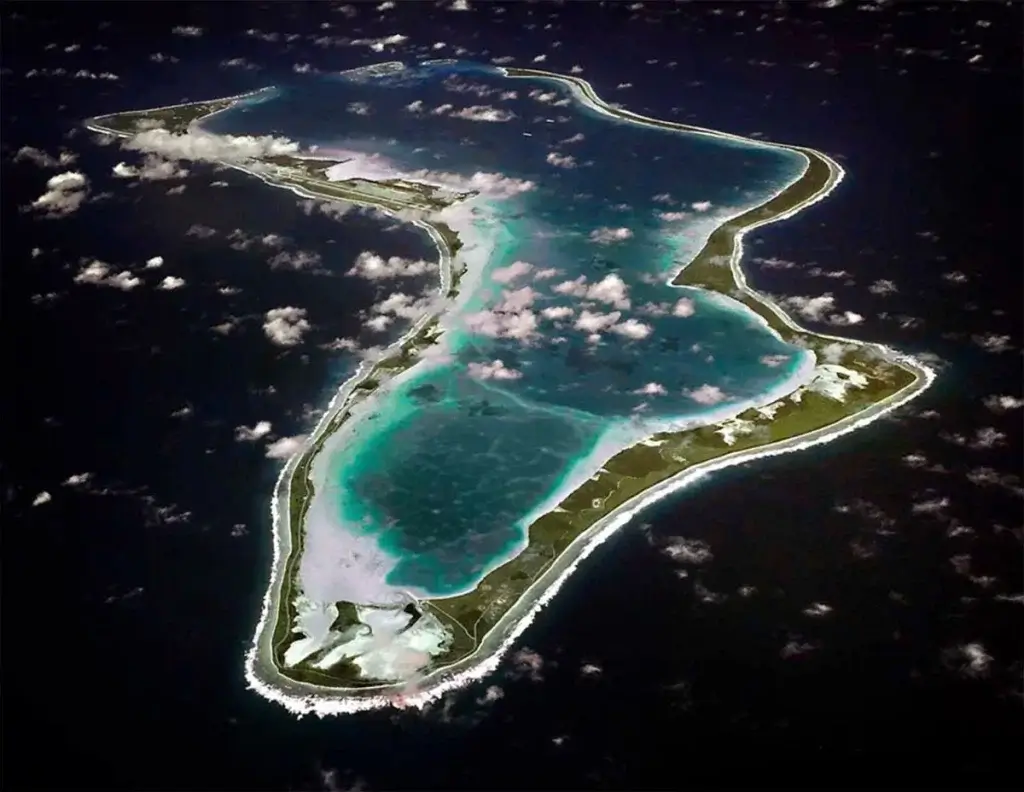
Diego Garcia represents the cornerstone of American naval power in the Indian Ocean—a facility that enables critical operations from the Middle East to the Indo-Pacific. The recently signed UK-Mauritius agreement transferring sovereignty of the Chagos Archipelago, while intended to resolve a long-standing legal dispute, introduces serious security vulnerabilities that could compromise this vital base. After extensive review of the agreement, parliamentary documents, and expert analysis, Americans for a Stronger Navy has drafted an open letter to UK Prime Minister Keir Starmer outlining our concerns and requesting strengthening of security provisions before final ratification. We publish this letter in the spirit of candid friendship that has always characterized the Special Relationship between our nations.
Key Concerns Raised:
Chinese Influence Risk: Mauritius maintains extensive economic ties with China, creating potential vectors for Beijing to establish surveillance capabilities on islands adjacent to Diego Garcia. The agreement’s prohibitions on foreign military presence may not cover civilian-flagged intelligence operations.
Weakened Control Structure: The transformation from British sovereign territory to a complex lease arrangement (UK leasing from Mauritius, US operating through UK) introduces political and legal vulnerabilities. American naval operations now depend on the stability of agreements between three parties rather than operating on secure sovereign territory.
Insufficient Security Guarantees: The agreement lacks robust enforcement mechanisms to prevent hostile powers from accessing outer islands for monitoring or influence operations. Ambiguities in defining prohibited activities could be exploited by adversaries operating under civilian cover.
Political Uncertainty: Changes in Mauritian government leadership create long-term risks. The current government has already ordered an independent review, and future administrations spanning the 99-year lease period may face economic pressure from China to renegotiate or modify terms.
What We Request:
Explicit provisions prohibiting Chinese presence, investment, or infrastructure on outer islands with clear enforcement
Joint UK-US monitoring and patrol authority across the archipelago
Automatic termination clauses if security provisions are violated
U.S. participation as a treaty party or guarantor for direct legal standing
Enhanced parliamentary scrutiny before final ratification
The Bottom Line: Diego Garcia’s strategic value has never been higher as great power competition intensifies in the Indo-Pacific. While we respect the UK’s efforts to address the historical injustice to the Chagossian people, justice and security need not be mutually exclusive. We urge strengthening this agreement before ratification to ensure this critical base remains secure for generations to come.
AN OPEN LETTER TO THE RIGHT HONOURABLE KEIR STARMER MP PRIME MINISTER OF THE UNITED KINGDOM Concerning the Chagos Archipelago Agreement
From: Americans for a Stronger Navy January 21, 2026
Dear Prime Minister,
We write to you as fellow guardians of the free world, united by history, shared values, and an unbreakable commitment to democratic liberty. The Special Relationship between our nations has been forged in the crucible of two world wars, sustained through the Cold War, and renewed in our common struggle against terrorism and authoritarianism. It is precisely because of this deep bond that we feel compelled to address our serious concerns regarding the recently signed agreement transferring sovereignty of the Chagos Archipelago to Mauritius.
This letter is written not in criticism, but in the spirit of candid friendship that has always characterized Anglo-American relations. We believe the current agreement, while well-intentioned, poses risks to our shared security interests that must be addressed before ratification becomes irreversible.
THE STAKES ARE HIGHER THAN EVER
Diego Garcia is not merely a military installation—it is the keystone of Western power projection in the Indian Ocean. From this small atoll, our nations have:
Defeated terrorist networks in Afghanistan and Iraq
Countered Iranian aggression and Houthi attacks on international shipping
Protected vital sea lanes carrying half the world’s containerized cargo
Maintained stability in a region increasingly contested by China’s expanding naval presence
Today, as China constructs military facilities across the South China Sea, as Russia threatens European security, and as Iran destabilizes the Middle East, the strategic value of Diego Garcia has never been greater. Yet at this critical juncture, the agreement with Mauritius introduces vulnerabilities that our adversaries will certainly seek to exploit.
OUR CONCERNS AS ALLIES
1. The Shadow of Chinese Influence
Mauritius, a small island nation, has become deeply economically dependent on China. Chinese investment pervades Mauritian infrastructure—ports, telecommunications, energy. This is not coincidence; it is the systematic implementation of Beijing’s strategy to gain leverage over nations along critical maritime routes.
We must ask: What guarantees exist that a future Mauritian government, facing economic pressure from Beijing, will not grant China “civilian” access to the outer islands? What prevents the establishment of “research stations,” “telecommunications facilities,” or “environmental monitoring posts” that serve as covers for signals intelligence operations?
The agreement’s language prohibiting foreign armed forces is insufficient. China has mastered the art of military operations under civilian guise. Islands merely miles from Diego Garcia could become surveillance platforms monitoring every ship, submarine, and aircraft movement—intelligence that would be instantly shared with Russia, Iran, and other adversaries.
2. From Sovereignty to Lease: A Dangerous Transformation
For decades, Diego Garcia operated on British sovereign territory. This provided legal certainty and operational security. Now, under the new arrangement, the United Kingdom must lease Diego Garcia from Mauritius at a cost of $136 million annually—and the United States operates at Diego Garcia under a further sublease arrangement with the UK.
This creates a cascading dependency. American naval operations now rest upon:
British adherence to the lease terms
Mauritian governments honoring their predecessors’ commitments
Both nations resisting external pressure to renegotiate or restrict operations
History teaches us that 99-year leases are not permanent. China’s 99-year lease of Hong Kong ended in humiliation for the West. We cannot allow Diego Garcia to follow the same path.
3. Political Instability and Long-Term Uncertainty
The current Mauritian government has already ordered an independent review of the agreement negotiated by its predecessor. Opposition parties criticize the deal. Future elections will bring new leaders with new priorities, new pressures, and potentially new patrons.
Over 99 years, Mauritius will see dozens of governments. Can we truly be confident that all of them will prioritize Western security interests over economic inducements from Beijing? The agreement provides insufficient mechanisms to prevent a future Mauritian government from effectively weaponizing the lease against Allied interests.
4. Legal and Historical Justice vs. Strategic Reality
We understand the moral arguments underlying this agreement. The forced removal of the Chagossians was a grave injustice that demands acknowledgment and remedy. The International Court of Justice’s advisory opinion and UN General Assembly resolutions created legal and political pressure.
But we must also recognize that international law is not self-executing and that advisory opinions do not carry binding force. The United Kingdom acted under the legitimate belief that resolving this dispute was necessary—yet in doing so, it may have exchanged one set of problems for far graver ones.
Justice for the Chagossians and security for the free world are not mutually exclusive. Better solutions existed—and may still exist—that address historical wrongs without compromising the strategic foundation of Indo-Pacific security.
WHAT WE ASK OF YOUR GOVERNMENT
Prime Minister, we do not ask the United Kingdom to repudiate this agreement outright. We recognize that your government has acted in good faith, seeking to resolve a complex legal and moral situation. What we ask is that, before final ratification, you consider strengthening the agreement to address the security vulnerabilities we have identified.
Specifically, we respectfully urge:
For Your Government:
Negotiate explicit provisions prohibiting any Chinese presence, investment, or infrastructure on the outer islands, with clear enforcement mechanisms
Establish joint UK-US monitoring and patrol of the archipelago with authority to prevent unauthorized activities
Include automatic termination clauses if Mauritius violates security provisions or grants access to adversary nations
Secure American participation as a treaty party or guarantor, giving the United States direct legal standing
For Parliament:
Conduct thorough scrutiny of the agreement’s security implications before ratification
Demand full transparency regarding payment terms and any side agreements with Mauritius
Require regular reporting to Parliament on compliance with security provisions
For the British People:
Recognize that Diego Garcia represents not just American interests, but British interests and the interests of the entire free world. This is not a matter of American imperialism—it is a matter of collective defense of the international order that has brought unprecedented prosperity and peace.
THE WAY FORWARD: PARTNERSHIP, NOT DIVISION
Some will say we are being alarmist. They will argue that Mauritius is a democracy, that China’s influence is exaggerated, that the 99-year lease provides sufficient security. We respectfully but firmly disagree.
In 1997, many believed Hong Kong’s “One Country, Two Systems” would endure. In the early 2000s, few imagined China would militarize the South China Sea. In 2014, the West was shocked when Russia annexed Crimea. Again and again, we have learned that authoritarian powers exploit every opening, every ambiguity, every moment of Western inattention.
We cannot afford such complacency at Diego Garcia. The Indo-Pacific theater is where the fate of the 21st century will be decided. Chinese naval expansion, the militarization of artificial islands, aggressive territorial claims, and economic coercion of smaller nations—all of this points to a future where freedom of navigation and the rule of law are under assault.
Diego Garcia is our insurance policy against that future. It must remain invulnerable, legally secure, and operationally unrestricted. The current agreement, as written, does not provide these assurances.
A CALL TO ACTION
Prime Minister, we urge you to pause, reconsider, and strengthen this agreement before it becomes irreversible. History will not judge kindly those who prioritized legal formalism over strategic necessity at such a critical moment.
To the British people: Understand that your government is making a decision with consequences that will echo for generations. Diego Garcia is not a relic of empire to be shed in pursuit of moral absolution. It is a shield protecting your nation, our nation, and the free world from those who would overthrow the international order.
To our American leaders: Stand with our British allies, but make clear that we cannot accept an arrangement that compromises the security foundation of our Indo-Pacific strategy. If necessary, pursue alternative arrangements that preserve American access to Diego Garcia under conditions we can trust.
The United States and United Kingdom have stood together through our darkest hours. We fought side by side against fascism, communism, and terrorism. That partnership endures because we share not just interests but values—democracy, liberty, and the rule of law.
Today, we face new threats from authoritarian powers who respect only strength and exploit every weakness. The Chagos agreement, in its current form, creates weakness where we desperately need strength. We can do better. We must do better.
We write not as adversaries, but as friends. Not to divide, but to unite. Not to criticize, but to protect that which we have built together and must defend together.
The Special Relationship demands nothing less than total candor. In that spirit, we ask: strengthen this agreement, secure Diego Garcia, and ensure that the beacon of freedom in the Indian Ocean continues to shine brightly for generations to come.
Respectfully and in friendship,
Americans for a Stronger Navy
On behalf of Americans who cherish the Special Relationship and recognize that our security is inseparable from yours
Contact: Americans for a Stronger Navy StrongerNavy.org StrongerNavy.org/blog
As the founder of Americans for a Stronger Navy, my mission is to advocate for the naval power our nation needs to secure its interests, project influence, and deter aggression in an increasingly complex world. For too long, discussions about naval strength have focused almost exclusively on traditional, crewed warships. While these mighty vessels remain the backbone of our fleet, a silent revolution is underway—one that promises to redefine naval warfare as we know it.
More Than Just Boats: The Brains Behind the Brawn
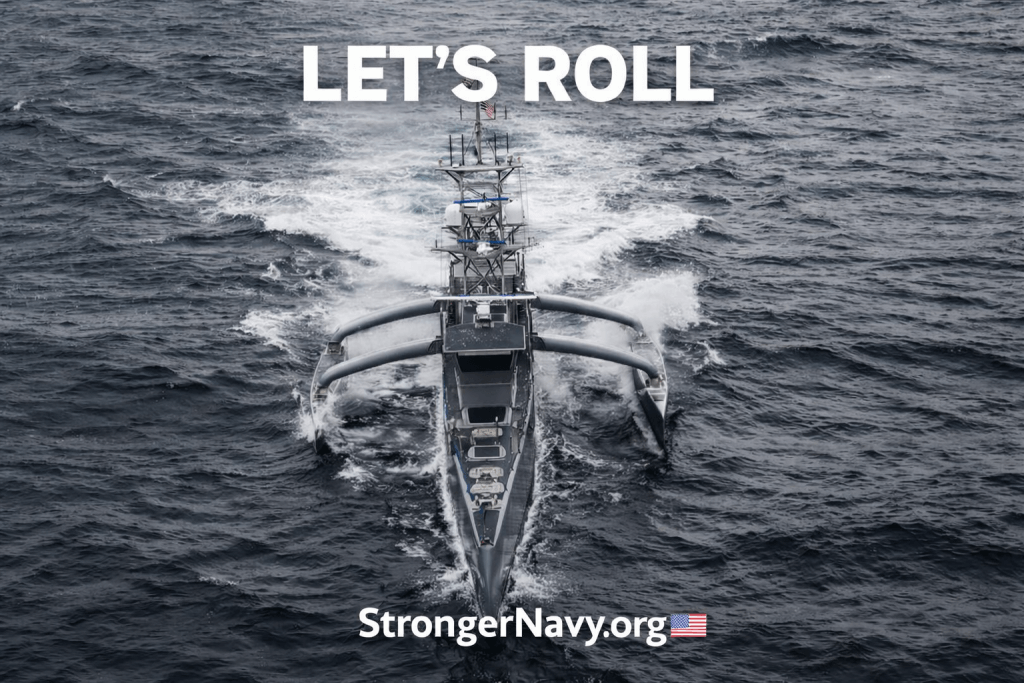
What makes these vessels so transformative isn’t just their ability to operate without a crew, but the sophisticated artificial intelligence that empowers them. Both the Sea Hunter and Seahawk were designed and built by Leidos, and they are powered by an advanced software ecosystem called LAVA (Leidos Autonomous Vessel Architecture).
Self-Correction & Resilience: If a system fails or damage occurs, LAVA can reconfigure its mission in real-time. It’s like having a captain who can rewrite the playbook mid-battle without human intervention.
Intelligent Navigation: LAVA constantly processes data from radar, lidar, AIS, and cameras to execute collision avoidance maneuvers in full compliance with international “Rules of the Road” (COLREGS).
Modular Versatility: The same “brain” can be installed across a wide range of vessels, from high-speed interceptors to specialized sub-hunters.
A Fleet of Ghost Ships: The Strategic Advantages
Persistence & Endurance: Without a crew, these ships can operate for extended periods without the need for rotation or resupply.
Reduced Risk to Personnel: Deploying unmanned vessels for dangerous missions like anti-submarine warfare (ASW) preserves our most valuable asset: our sailors.
Cost-Effectiveness: Long-term operational costs are significantly lower than traditional warships, offering an affordable way to expand global presence.
Scalability & Swarming: LAVA enables “swarms” of USVs to coordinate and search vast ocean areas for threats simultaneously.
Looking Ahead: The Future is Unmanned
The US Navy’s commitment is clear. With an expansion from just four small USVs to hundreds projected within a single year, the shift is undeniable. The Seahawk and Sea Hunter have already logged over 140,000 autonomous nautical miles—more than five times the Earth’s circumference.
For Americans for a Stronger Navy, this represents a crucial step forward. Investing in these innovative, autonomous systems ensures that our Navy remains at the forefront of global naval power, ready to face the challenges of tomorrow’s maritime domain with unparalleled strength.
Join the Mission for a Modern Fleet
The transition to an autonomous-integrated fleet is a generational shift that requires steady advocacy and public support. At Americans for a Stronger Navy, we are dedicated to ensuring our sailors have the most advanced technology on the planet to keep our seas free and our nation secure.
Support our efforts today:
Stay Informed: Subscribe to our newsletter for deep dives into naval tech like LAVA and the Ghost Fleet.
Spread the Word: Share this article with your network to highlight the innovation happening in our shipyards.
Advocate: Join our community of maritime supporters and help us champion the 21st-century fleet.
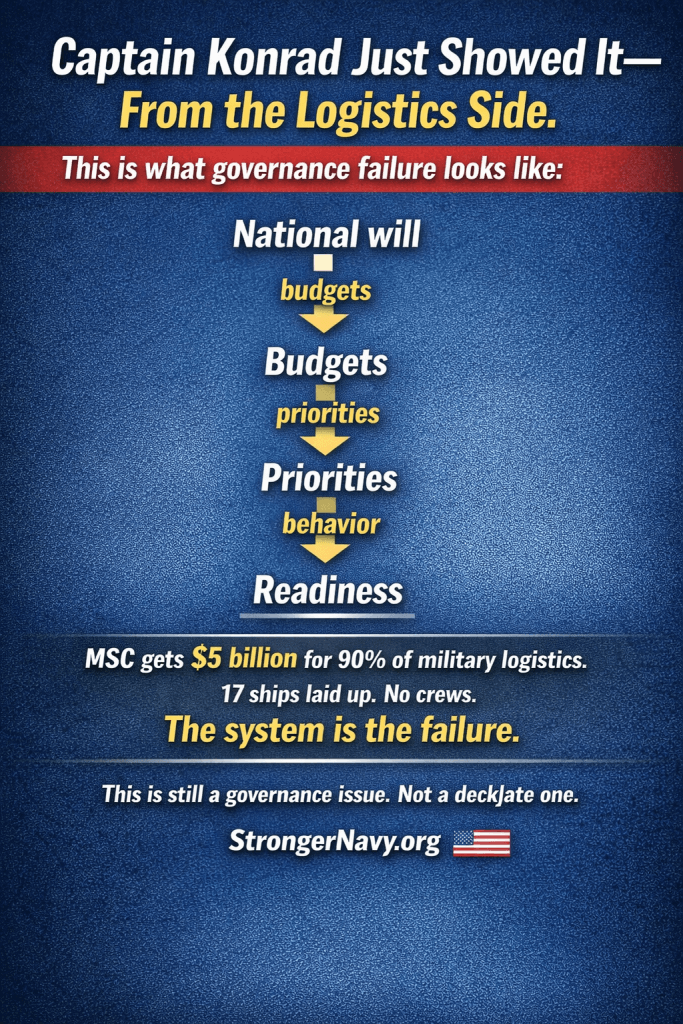
A few days ago, we published a piece about rust on Navy ships. Not because rust is the problem, but because rust is the symptom of something deeper: a governance system that doesn’t fund the unglamorous, essential work of maintaining a ready fleet.
Now Captain John Konrad has walked through the 2025 Military Sealift Command handbook page by page in a detailed podcast, and he’s telling the exact same story—from the other side of the hull.
What Konrad Found
Captain Konrad, founder of gCaptain and a licensed Master Mariner with decades at sea, attended the Surface Navy Association’s National Symposium and picked up what he calls “the most important book the Navy publishes every year”—the MSC handbook.
His conclusion after reviewing it: “We are completely unprepared for a war in the Pacific.”
Here’s what the handbook reveals:
$5 billion annual budget for Military Sealift Command—the organization responsible for 90% of everything the military moves overseas, including fuel, ammunition, food, and equipment for all services across all theaters worldwide.
As Konrad puts it bluntly: “Ships are expensive, people. Crewing ships are expensive. Maintaining ships are expensive. And you just can’t do it with a $5 billion budget.” That’s less than 0.5% of the $1.1 trillion defense budget to sustain the logistics backbone that enables everything else.
17 ships laid up—not because they’re broken, but because there aren’t enough licensed merchant mariners to crew them. The workforce crisis isn’t theoretical. It’s operational right now.
A command authority mismatch: MSC is a one or two-star command trying to support operations across all numbered fleets, which are three and four-star commands. When they compete for resources in Congress, they get outranked by everyone.
The Single Point of Failure Inventory
Konrad methodically documents what “running on fumes” actually looks like:
1 Missile Range Instrumentation Ship (to track adversary weapons development)
4 Ocean surveillance ships (we had dozens during the Cold War to track Soviet submarines)
4 Submarine support ships (submarines can’t safely enter or leave port without them)
4 New John Lewis-class replenishment oilers—with only one or two actually deployed due to environmental scrubber requirements making them too tall to fit under 70% of bridges
The oiler situation is particularly critical. As Konrad notes, a former Commandant of the Merchant Marine wrote that we’re 100 tankers short of minimum requirements to fuel the fleet in a Pacific campaign.
This Is the Same Story We’ve Been Telling
In our earlier post on rust, we made a simple point: rust isn’t a Navy problem. It’s an American one.
We showed this governance chain:
National will → budgets → priorities → behavior → readiness
When that chain breaks down, you get rust on deckplates. But as Konrad’s breakdown proves, you also get:
Ships that can’t deploy because bureaucracy matters more than mission
Mariners overworked to the point of tragedy (he references the officer who died by suicide aboard the USNS Amelia Earhart from stress and overwork)
Single ships doing missions that require dozens
A logistics fleet averaging 40 years old with no replacement plan adequate to requirements
The Governance Failure at Every LevelKonrad’s evidence maps directly to our framework:
National will: Americans support the Navy—surveys prove it. But they picture aircraft carriers and destroyers, not oilers and cable repair ships. They don’t know Military Sealift Command exists. They don’t understand that 90% of military logistics moves by ship, or that the Air Force’s entire airlift capacity is less than what China can fit on one modern container ship.
Budgets: When the public doesn’t understand what naval power requires, Congress doesn’t fund it. MSC gets 0.5% of the defense budget to do what Konrad calls “the most important mission” because logistics wins wars.
Priorities: MSC is outranked by every other command. When it’s time to fight for resources, they lose. The result is predictable: deferred maintenance, aging ships, no replacement pipeline, and a workforce crisis.
Behavior: With inadequate funding and low command priority, you get exactly what Konrad documents—ships laid up, mariners burned out, critical capabilities down to single digits, and new ships stuck pier-side because nobody fixed the bureaucratic tangles.
Readiness: We can move the fleet to the Pacific. But we can’t sustain them there. We can win the first battle, but we can’t win the campaign.
What “Lack of Support” Actually Means
This isn’t about public indifference. It’s about invisibility.
The American public sees:
Carriers launching jets (thrilling)
Destroyers shooting missiles (dramatic)
Submarines running silent (mysterious)
They don’t see:
The oiler keeping the carrier’s air wing flying
The dry cargo ship bringing ammunition to the destroyers
The cable repair ship maintaining secure communications
The ocean surveillance ship tracking enemy submarines before they become threats
The submarine tender ensuring boats can safely enter and leave port
What’s invisible doesn’t get funded.
This is why the governance failure at the top of the chain matters so much. If national will doesn’t include understanding what naval power actually requires, budgets will never prioritize the systems that make it work.
Naval Power Is Systems, Not Platforms
We’ve been making this point for months: naval power isn’t platforms. It’s systems.
You can have the most advanced destroyers and carriers in the world, but if you can’t fuel them at sea, resupply them with ammunition, track enemy submarines approaching your bases, repair undersea cables when they’re cut, or crew the ships you already have—then you don’t have naval power. You have expensive hulls that can’t sustain operations.
Konrad’s handbook walkthrough proves this from the logistics side. The platforms get the attention and the funding. The systems that enable them get $5 billion and a two-star admiral.
A Call to Action: DOD and Congress Must Act
We know from surveys that Americans support a strong Navy. They want us to be ready. But readiness isn’t just about how many ships we have—it’s about whether those ships can operate, sustain, and prevail in extended campaigns.
The Department of Defense must:
Elevate MSC to a three-star command so it has the authority to compete for resources
Fix bureaucratic tangles keeping new capabilities pier-side
Properly recognize civilian mariners to improve recruitment and retention
Stop treating logistics as an afterthought in force structure decisions
Congress must:
Fund MSC and the maritime industrial base at levels that match strategic requirements, not political convenience
Expand the Maritime Security Program, especially tankers
Invest in the mariner training pipeline and Strategic Sealift Officer program
Demand readiness reporting that focuses on systems and sustainability, not just platform counts
Acknowledging Captain Konrad’s Work
Captain Konrad has been a persistent, credible voice highlighting America’s maritime readiness crisis. Through gCaptain, his podcasts, and media appearances on NPR, BBC, the New York Times, and Wall Street Journal, he’s documented the decline of our merchant marine, the shipbuilding crisis, and strategic sealift challenges.
His latest breakdown of the MSC handbook is a public service. He’s showing Americans what their Navy actually depends on—and how fragile that foundation has become.
At Americans for a Stronger Navy, we’ve been making the case that rust is a symptom and the system is the cause. Konrad just proved it from the logistics side. His work validates our concerns and strengthens the case for urgent action.
The Bottom Line
Rust isn’t a deckplate problem. It’s a governance one.
Ships laid up for lack of crews isn’t a manning problem. It’s a governance one.
Oilers stuck pier-side because nobody fixed the bureaucracy isn’t a maintenance problem. It’s a governance one.
And a $5 billion budget for the logistics backbone that enables 90% of military power projection isn’t a budget problem—it’s a national priority failure.
Captain Konrad is right: we’re not ready for a sustained fight in the Pacific.
But the solution isn’t just to build more ships. It’s to fix the governance chain that determines whether we fund, crew, maintain, and deploy the capabilities we already need.
The American people support a strong Navy. Now we need DOD and Congress to match that support with the resources, priorities, and leadership that readiness actually requires.
Naval historian Trent Hone recently published a thoughtful piece explaining why the U.S. Navy no longer builds battleships—and why, from a warfighting standpoint, it probably shouldn’t.
Hone’s argument is straightforward: the operational logic that once justified battleships has been obsolete for decades. Big guns gave way to aircraft. Aircraft gave way to missiles. Today’s naval combat rewards dispersion, networking, and numbers—not massive armored hulls.
That assessment is widely shared among naval professionals.
But Hone makes a second, more subtle point that deserves more attention: battleships have always carried symbolic power far beyond their military utility. They were never just weapons. They were national statements—about strength, reach, prestige, and ambition.
That symbolic role has not disappeared.
And that’s where the conversation gets interesting.
Two Serious Perspectives, One Shared Conclusion
Hone is a respected scholar and strategist. He holds the Marine Corps University Foundation Chair of Strategic Studies and has written extensively about how naval doctrine evolves with technology and threat environments. His view is clear: building a new battleship today would produce a smaller, less resilient, less lethal fleet than the alternatives.
Others, however, approach the issue from a different angle.
Defense analyst Brent Sadler, for example, has argued that what matters most is not any specific platform but the urgent need to rebuild American sea power at scale. His emphasis is on fleet size, industrial capacity, and the ability to sustain combat operations over time. For Sadler, bold ideas—even controversial ones—are useful if they force the public to confront how far the Navy has fallen behind its global responsibilities.
These two views may differ on specifics, but they converge on something essential:
America needs a stronger Navy.
Not symbolically. Not nostalgically. Structurally.
The Real Problem Isn’t Battleships—It’s Public Understanding
The deeper issue raised by this debate is not whether we should build a new class of battleships. It’s that the American public has lost touch with what sea power actually means.
Most Americans don’t see the Navy at work. They don’t see trade routes. They don’t see chokepoints. They don’t see logistics. They don’t see undersea cables. They don’t see maintenance backlogs. They don’t see shipyard fragility. They don’t see attrition math.
But they do recognize symbols.
Battleships, like aircraft carriers, are easy to understand. They look powerful. They feel powerful. They communicate strength in a way spreadsheets and logistics diagrams do not.
That doesn’t make them good warfighting solutions—but it does make them powerful communication tools.
And the Navy has a communication problem.
A stronger Navy is not only a military challenge. It is a civic one—requiring public understanding, long-term commitment, and new thinking about how we fund and sustain national security.
Why Americans Should Care
The U.S. Navy is not just a military force. It is the invisible foundation of modern American life.
It protects global trade. It stabilizes energy flows. It keeps shipping lanes open. It reassures allies. It deters coercion. It underwrites economic stability.
When the Navy weakens, these systems become fragile.
That fragility doesn’t show up overnight—but it shows up eventually.
Implications for the Navy
Modern naval power is no longer about a few dominant platforms. It is about:
A stronger Navy is not just a bigger Navy—it is a Navy that can take losses and keep fighting.
That requires more ships, more shipyards, more trained sailors, and more public support.
Implications for Our Allies
Allies do not just look at U.S. statements. They look at U.S. capacity.
They ask: Can America show up? Can America stay? Can America sustain? Can America adapt?
A strong Navy reassures allies. A hollow Navy invites testing.
Where We Stand
At Americans for a Stronger Navy, we are not here to pick winners in platform debates. Reasonable people will disagree about hulls, missiles, drones, and fleet composition.
But most serious voices agree on one thing:
The Navy is stretched too thin. The industrial base is fragile. The fleet is too small for its mission set. And the public does not understand what’s at stake.
That is the gap we exist to close.
Not through nostalgia. Not through fear. But through education.
Because a democracy cannot sustain a strong Navy if it does not understand why it needs one.
That’s why we launched Charting the Course: Voices That Matter — a 24-part educational series breaking down how we got here, what went wrong, and what must happen next. Our goal is simple: educate the public, connect the dots, and build the support needed to close the readiness gap before it’s too late.
When Americans hear about Venezuela, they tend to think in humanitarian terms—migration, political repression, economic collapse. But that framing misses the point. Venezuela is not just a tragedy. It’s a test case for how power works in the modern world.
And power today is not primarily exercised by invading countries. It is exercised by controlling access.
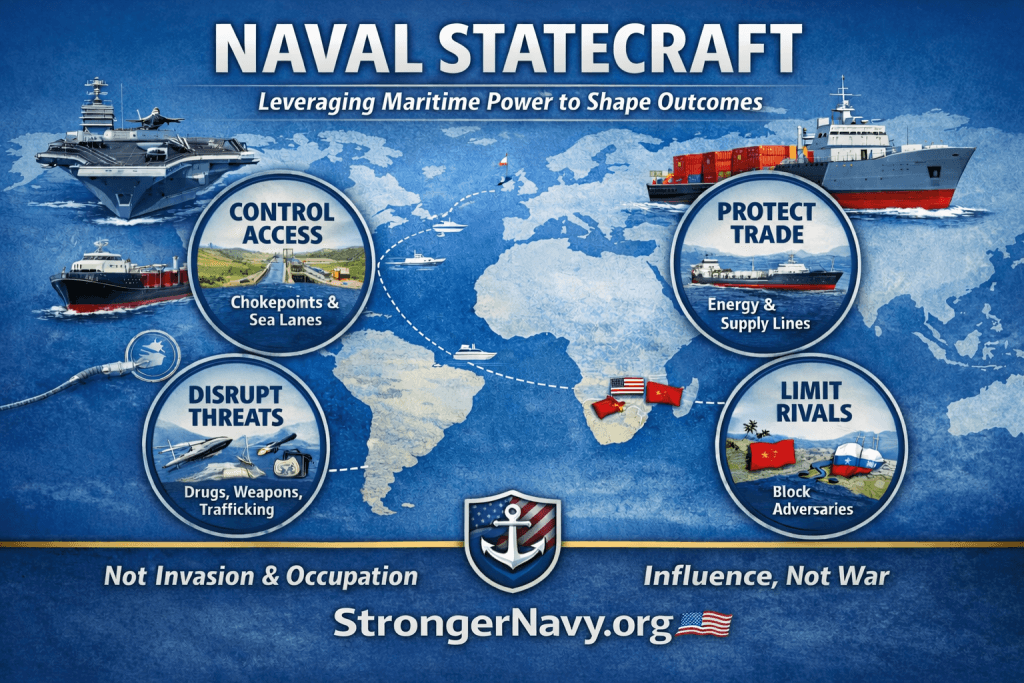
Naval strategist Brent Sadler calls this naval statecraft: the use of maritime power not to occupy territory, but to shape outcomes by controlling sea lanes, ports, trade routes, and strategic flows.
That may sound academic. It isn’t.
Oil moves by tanker. Food moves by ship. Weapons move by ship. Data moves across undersea cables. Whoever controls maritime access controls leverage over markets, pricing, and political behavior.
That is why Venezuela matters.
The country holds the largest proven oil reserves on earth. Those reserves don’t just sit in the ground—they move through ports, shipping routes, refineries, and insurance markets. If you influence those arteries, you influence global energy prices.
This is how power works now.
China, Russia, and Iran understand this. That’s why they don’t primarily project influence through armies anymore. They do it through ports, infrastructure loans, logistics hubs, shipping contracts, and maritime footholds.
This isn’t ideological. It’s commercial.
It’s about controlling the plumbing of globalization.
Most Americans still think about war in 20th-century terms: tanks crossing borders, armies seizing capitals, long occupations. Iraq and Afghanistan showed us the limits of that model—astronomical cost, endless entanglement, poor return on investment.
Naval power offers a different approach.
You don’t need to own the house to control the driveway.
Naval statecraft lets a country shape outcomes without rebuilding foreign societies, policing local politics, or stationing troops for decades. It raises the cost of destabilizing behavior. It disrupts illicit flows. It protects trade. It limits rivals’ reach.
No nation-building. No permanent occupation. No trillion-dollar quagmires.
Just leverage.
That matters to Americans because the modern economy is maritime. Roughly 90% of global trade moves by sea. Energy markets are maritime. Supply chains are maritime. Even the internet relies on undersea cables.
When those systems destabilize, Americans feel it—in fuel prices, grocery bills, insurance costs, and lost jobs.
The Navy doesn’t just protect territory. It protects flows.
And flows are what modern economies run on.
The public debate still frames U.S. foreign policy as a binary choice: invade or disengage. But the events in Venezuela show that this is a false choice.
Naval statecraft offers a third option.
It allows the U.S. to protect its interests without trying to govern other nations. It shapes incentives instead of regimes. It deters without occupying.
It is not warmongering. It is cost control.
It is not militarism. It is market stability.
And it has domestic benefits.
A credible naval presence requires ships, ports, dry docks, logistics networks, and skilled labor. That means long-term industrial jobs, capital investment, and manufacturing capacity—things America has been hollowing out for decades.
Naval power is not just a security asset. It is an economic one.
When rival powers build ports in the Western Hemisphere, they aren’t doing charity work. They’re building leverage. They’re shaping future trade behavior. They’re embedding themselves into supply chains.
Naval statecraft is how you counter that without turning every dispute into a war.
It is power with restraint. It is influence without occupation. It is competition without catastrophe.
And it may be the most important strategic concept Americans have never been taught.
Two U.S. Navy destroyers just spent weeks tracking, shadowing, and supporting the seizure of a runaway oil tanker in the North Atlantic.
This was not a combat mission. It was not a press event. It was not symbolic.
It was enforcement.
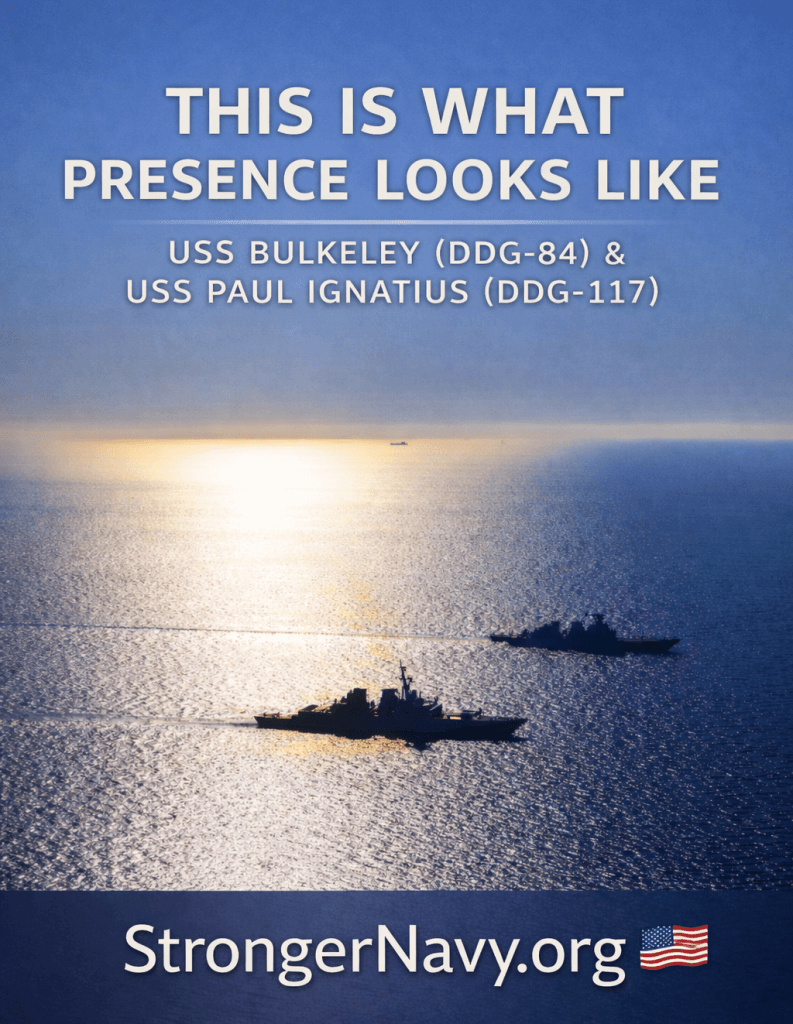
USS Bulkeley (DDG-84) and USS Paul Ignatius (DDG-117) helped support an operation that ultimately boarded and seized a Russian-flagged tanker that had been actively evading authorities across thousands of miles of open ocean.
This is what maritime power looks like in 2026. And most Americans never see it.
What Happened The vessel—initially named Bella 1—was operating as part of what U.S. officials describe as a “dark fleet,” a network of tankers designed to evade sanctions through deceptive practices.
Over the course of its escape, the tanker: • Changed its name • Reflagged as Russian • Painted a new national tricolor on its hull • Altered its identity • Evaded a U.S. naval blockade • Attempted to disappear into the Atlantic
After weeks of pursuit, U.S. forces—supported by Navy destroyers, Coast Guard assets, special operations forces, and allied surveillance—seized the vessel in waters between the UK and Iceland.
The UK provided support. NATO was not involved.
This was a multinational, multi-domain enforcement operation.
Not war. Not peace. Enforcement.
Why This Matters Sanctions do not enforce themselves.
Every time a government announces new sanctions, it implies something most people never think about:
Someone has to physically enforce them.
That means: • Ships • Crews • Surveillance • Boarding teams • Legal frameworks • Sustainment • Allies • Weeks of continuous presence
Sanctions without maritime power are just words on paper.
The Rise of the Dark Fleet So-called “dark fleet” vessels use identity laundering to move oil, weapons, and sanctioned goods across the world.
They: • Reflag repeatedly • Change names • Operate under shell companies • Transmit false data • Disable tracking systems • Exploit legal gray zones
This is modern maritime gray-zone warfare.
And the U.S. Navy is now its primary counterforce.
Attrition Isn’t Just Combat A Navy captain once wrote: “Wars at sea are wars of attrition.”
What most people miss is that attrition doesn’t only happen during wars.