U.S. Naval News Wednesday – October, 10-16, 2024: Operational Highlights and Strategic Developments

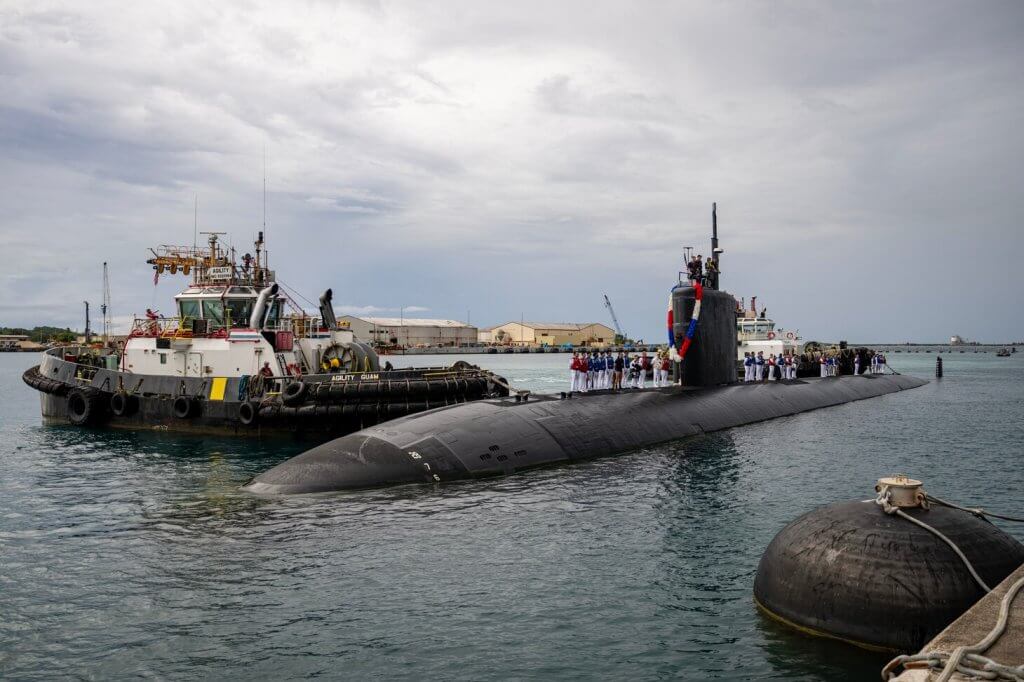
USS Annapolis

Welcome to this week’s edition of U.S. Naval News Wednesday, covering the latest operational activities, strategic shifts, and key developments for the U.S. Navy from October 10 to October 15, 2024. In this update, we explore the Navy’s dynamic actions across the Indo-Pacific, relief efforts in the Philippines, advancements in missile reloading technology, and more. We also feature updates in our China Watch, Russia Watch, and Iran Watch sections to keep you informed on the latest geopolitical movements.

Top Stories

  • USS Annapolis Returns to Guam: The Los Angeles-class fast-attack submarine USS Annapolis (SSN 760) concluded a three-month deployment across the Indo-Pacific, returning to its homeport of Naval Base Guam​.
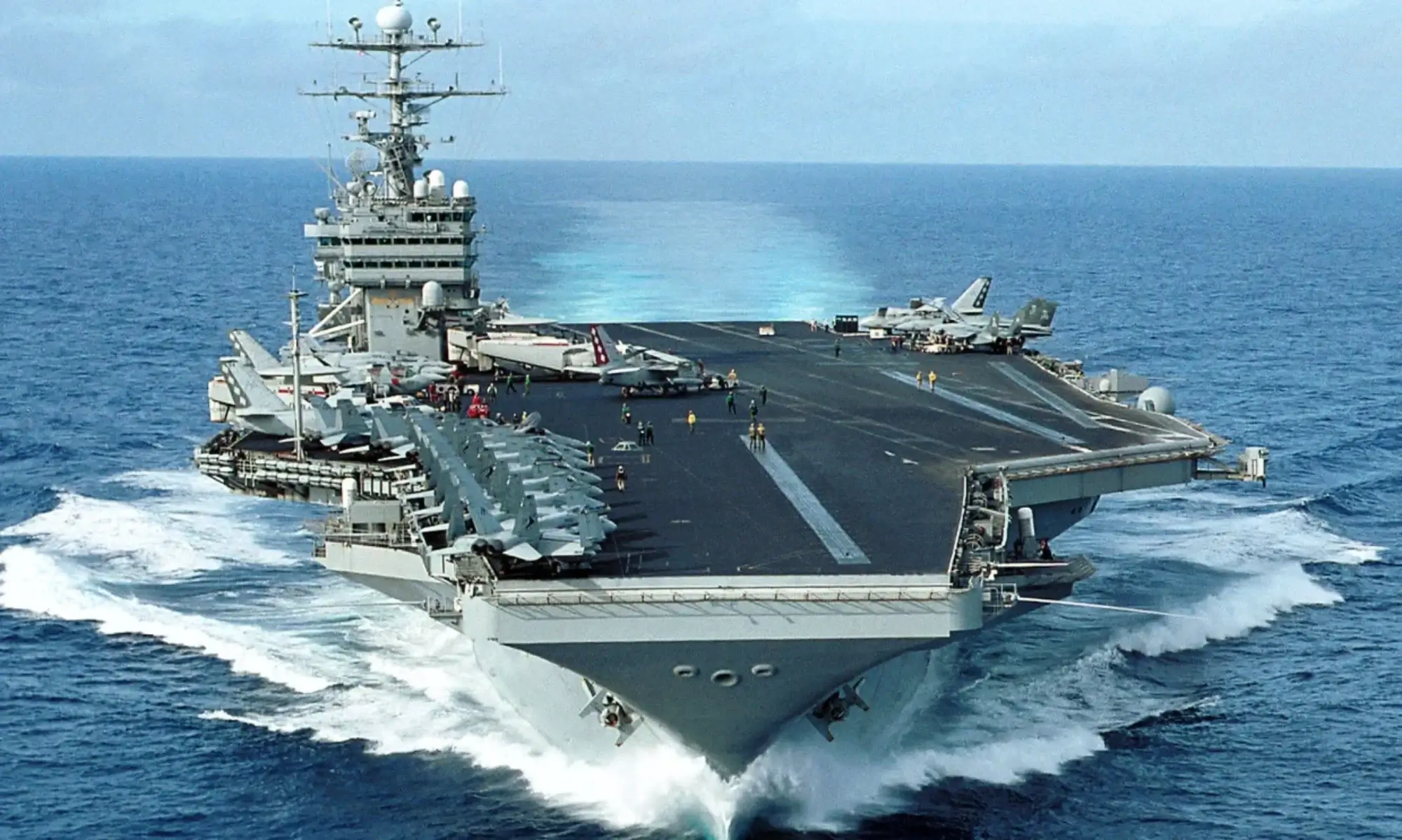
  • Truman Strike Group Transits Strait of Dover for the North Sea: On October 14, the Harry S. Truman Carrier Strike Group (HSTCSG) transited the Strait of Dover, heading to the North Sea for operations alongside NATO allies, demonstrating strategic partnerships and interoperability​.
  • Happy Homecoming | USS Theodore Roosevelt Returns: The USS Theodore Roosevelt (CVN-71) returned to San Diego after a 9-month deployment, completing operations across the Indo-Pacific and highlighting the resilience of its crew​.
  • USS Preble Arrives in Japan with Advanced Laser Weapon: The guided-missile destroyer USS Preble (DDG 88) docked at Yokosuka Naval Base equipped with a high-energy laser weapon, preparing for testing within the U.S. 7th Fleet​.
  • Navy Tests Reloading Missiles at Sea: A first-of-its-kind test saw the Navy successfully reloading missiles on a guided-missile cruiser while underway, a significant step in enhancing operational flexibility​.
  • USS Boxer Delivers Typhoon Relief in the Philippines: The USS Boxer (LHD 4) and the 15th Marine Expeditionary Unit provided critical support in Luzon, Philippines, as part of U.S. disaster relief efforts following recent typhoon damage​.
  • Navy’s 249th Birthday Celebrations: Celebrations marking 249 years of the Navy’s service took place across the U.S., featuring ceremonies and concerts attended by naval leaders and veterans​.
  • UK Fears Chinese Hackers Compromised Critical Infrastructure: UK Labour ministers were briefed on systemic cyber incursions by Chinese hackers, raising concerns over potential impacts on critical infrastructure​.

China Watch

  • Chinese Carrier Group Returns to South China Sea: After exercises simulating a blockade of Taiwan, the Liaoning Carrier Strike Group has redeployed to the South China Sea, highlighting continued regional tensions​.
  • Pentagon Criticizes China’s Taiwan Drills: On October 14, China conducted a large-scale military drill that simulated a blockade around Taiwan, sparking condemnation from the Pentagon, which described the exercise as destabilizing​.
  • China Encircles Taiwan with Military Maneuvers: In a show of force, China encircled Taiwan with warships, warplanes, and an aircraft carrier, vowing its readiness for conflict. Taiwan’s government condemned the exercises as provocations​..
  • AUKUS Progress and Nuclear Training: The U.S. Navy’s training of Australian personnel is a vital step in the AUKUS partnership, aiming to enhance nuclear capabilities and joint defense efforts in the Indo-Pacific​.

Russia Watch

  • Russia-China Cooperation in the Arctic: U.S. military officials are increasingly concerned about the strategic partnership between Russia and China in the Arctic, a region of growing geopolitical importance​.
  • Russian Naval Activity in the Black Sea: Intelligence reports indicate a rise in Russian naval maneuvers in the Black Sea, keeping Western allies vigilant in the face of ongoing conflicts with Ukraine​.
  • NATO and U.S. Forces Respond: As Russia maintains a strong maritime presence, the U.S. Navy and NATO allies continue to strengthen their readiness, ensuring security in contested waters​

Iran Watch

  • U.S. Navy Counters Drone Threats in Red Sea: The U.S. Navy remains actively engaged in countering drone and missile threats in the Red Sea, providing security for vital shipping routes​
  • Navy Intercepts Iranian Missile Targeting Israel: In a recent operation, the U.S. Navy successfully intercepted an Iranian missile aimed at Israel, demonstrating its commitment to regional security and the protection of allies​.
  • Strategic Deployments in the Persian Gulf: The Navy has bolstered its presence in the Gulf, ensuring freedom of navigation in the Strait of Hormuz amidst heightened tensions with Iran​.

Additional Highlights

  • CH-53K Training Device Now Operational: New training tools for the CH-53K helicopter have been deployed, enhancing the capabilities of Naval Air Systems Command​.
  • Navy’s Submarine Supplier Contracts: The Navy’s $1.28 billion contract with General Dynamics Electric Boat aims to stabilize the submarine supply chain​.
  • USS Frank Cable Visits Jeju-Do: The submarine tender’s recent port visit to Jeju-Do, South Korea, underscores the U.S. Navy’s commitment to regional partnerships​.
  • USS New York Docks in Cyprus: The USS New York (LPD 21) arrived in Larnaca, Cyprus, for a routine port call, strengthening regional cooperation efforts​.

U.S. Naval Tachnology and Industry Watch

Epirus’ Drone-Disabling HPM Technology: The U.S. Navy is set to test Epirus’ high-p7ower microwave (HPM) technology as part of the Advanced Naval Technology Exercise (ANTX-CT24). This technology aims to disable small vessels and drones, providing a non-lethal means to counter seaborne threats​.

Private 5G Networks for Naval Operations: The Republic of Korea Navy has partnered with Samsung and KT Corporation to develop a private 5G network for its “Smart Naval Port” project. This network will support operations, enhance security, and create a digital twin of naval bases for improved decision-making​

Rapid Fielding of New Capabilities: The U.S. Navy’s Rapid Capabilities Office has been advancing new methods to quickly integrate tested technologies into the fleet. This includes deploying portable versions of systems like the Aegis combat system, enabling faster operational deployment of advanced weaponry​Raytheon’s Barracuda Mine Neutralization System: Raytheon has advanced its Barracuda mine neutralization technology through a series of hydrodynamic tests, moving closer to operational deployment. This system is designed to enhance the Navy’s capabilities in mine countermeasures​

Naval Technology.

Uncrewed Aerial Vehicle (UAV) Expansion in the Fifth Fleet: The Navy has expanded the deployment of MQ-4C Triton UAVs Thales’ CAPTAS-4 Sonar System: The U.S. Navy has taken delivery of Thales’ CAPTAS-4 Variable Depth Sonar (VDS) for enhanced anti-submarine warfare capabilities. This system will be deployed on multiple platforms, improving detection range and precision .Autonomous Systems Testing on Littoral Combat Ships: Recent experiments aboard Littoral Combat Ships (LCS) have tested the integration of the Army’s Typhon missile system with Navy platforms, demonstrating a new approach to joint-service weapons deployment​

Unleashing Unmanned Systems: A Critical Strategy for Taiwan Defense

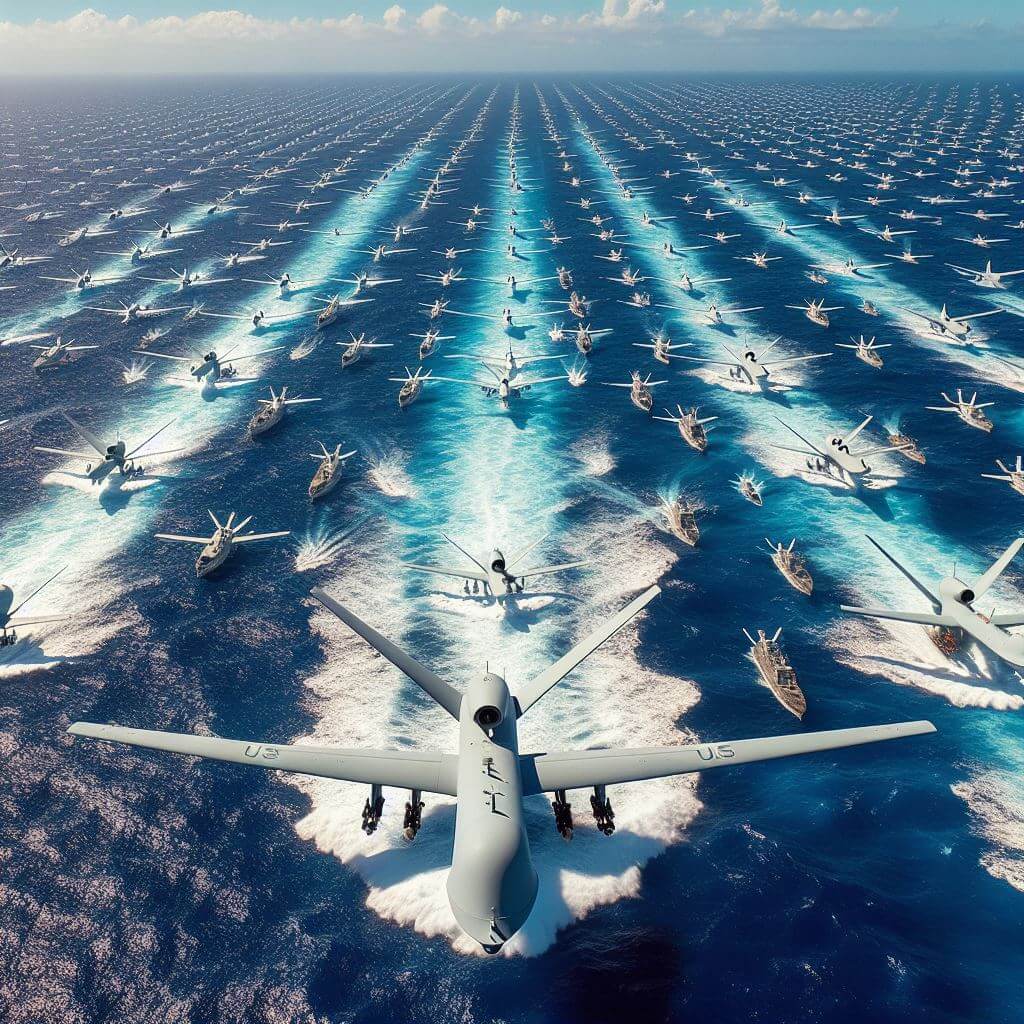
“Unmanned Hellscape” Admiral Samuel Paparo, commander of US Indo-Pacific Command vision

Bill Cullifer, founder

Hooyah to the recent announcement by Admiral Samuel Paparo, commander of US Indo-Pacific Command! His groundbreaking defense strategy is designed to fortify the Taiwan Strait against potential Chinese aggression. Dubbed the “unmanned hellscape,” this plan is poised to revolutionize modern warfare by leveraging a massive deployment of unmanned systems to create a formidable first line of defense.

The Strategy Unveiled

Admiral Paparo’s bold declaration at the International Institute for Strategic Studies’ Shangri-La Dialogue Summit outlines a vision where thousands of drones, ranging from surface vessels to aerial systems, would be deployed to thwart any invasion attempts by China. This strategy aims to inflict significant disruption on Chinese forces, thereby buying the US valuable time to mobilize and assist Taiwan effectively.

The essence of this approach lies in the creation of an inhospitable environment for invaders, transforming the Taiwan Strait into a perilous zone filled with autonomous defense mechanisms. This tactic not only underscores the importance of technological advancements in defense but also highlights a shift towards more innovative and less conventional methods of warfare.

Investment in Unmanned Systems

The success of the “unmanned hellscape” strategy is contingent upon substantial investments in drone technology. The US Department of Defense’s Replicator initiative is a pivotal component of this plan, aiming to develop and field thousands of autonomous systems. This initiative is a direct response to China’s overwhelming numerical advantage in terms of military assets, seeking to counterbalance it with a more sophisticated and elusive drone force.

Deputy Defense Secretary Kathleen Hicks has emphasized the critical nature of this investment, highlighting a $1 billion allocation for the fiscal year towards developing these capabilities. The goal is to create drones that are not only cost-effective but also resilient and adaptable, capable of functioning effectively in the dynamic and challenging conditions of modern warfare.

Lessons from Global Conflicts

The importance of drones in contemporary conflicts is further evidenced by their extensive use in the Russia-Ukraine war. Both sides have employed UAVs for intelligence gathering, target acquisition, and direct attacks, demonstrating the versatility and impact of these systems. Ukraine’s experience underscores the necessity for reliable, secure, and advanced drones, free from the vulnerabilities associated with Chinese-made models, which have been subject to data leaks and electronic warfare attacks.

American-made drones, powered by next-generation artificial intelligence and autonomous capabilities, have proven to be invaluable in countering Russian aggression. These drones offer a blueprint for how the US can support its allies, including Taiwan, by providing advanced UAVs that can operate independently and adapt swiftly to battlefield conditions.

Implications for US Defense and Diplomacy

The deployment of unmanned systems as a primary defense strategy marks a significant evolution in military tactics. For the US, this not only enhances its defensive capabilities but also sets a precedent for its allies and partners. The emphasis on rapid, iterative development and the integration of AI-driven technologies positions the US at the forefront of drone warfare, ensuring it remains a dominant force in future conflicts.

Furthermore, this strategy has broader implications for US foreign policy and defense diplomacy. By championing the development and distribution of American-made drones, the US can strengthen its ties with allies, deter adversaries, and promote a cohesive defense network against common threats.

Conclusion

Admiral Paparo’s vision for an “unmanned hellscape” in the Taiwan Strait is more than a defensive measure; it is a testament to the transformative power of technology in modern warfare. As the US continues to invest in and develop advanced unmanned systems, it not only fortifies its own defenses but also provides a robust support framework for its allies, ensuring a stable and secure global landscape.

For Americans for a Stronger Navy, this development reaffirms our commitment to advocating for innovative defense strategies that leverage cutting-edge technologies.

It is a call to action for continued support and investment in our military capabilities, ensuring that we remain prepared to face and overcome any challenges that lie ahead.


Navigational Freedom and National Security: The Importance of the U.S. Navy’s Taiwan Strait Transit

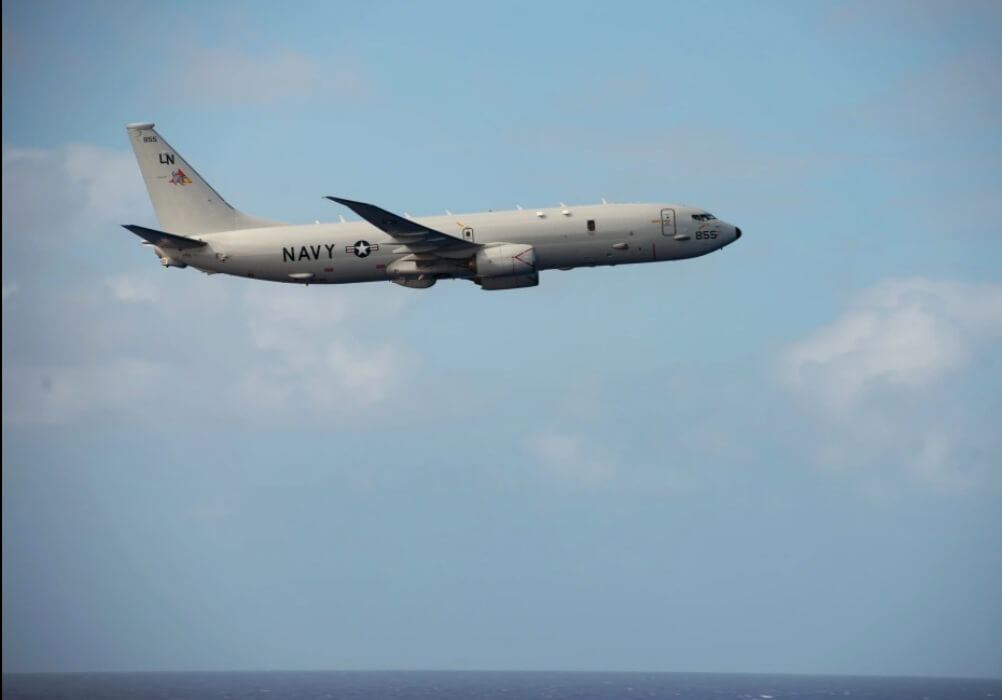
us navy plane


Introduction

The recent flight of a U.S. Navy P-8A Poseidon through the Taiwan Strait not only reaffirms America’s commitment to navigational freedoms but also highlights the strategic importance of U.S. military presence in key international waterways. This operation comes at a critical time, just a day after high-level defense talks between the United States and China, aiming to mitigate tensions in the region.

Why This Matters

The Taiwan Strait is a vital gateway between the South and East China Seas, making it a focal point of international trade and military strategy. Despite being international waters, China views the transit of foreign military vessels and aircraft through the strait as a challenge to its claims over Taiwan. The U.S. Navy’s actions demonstrate a clear stance on upholding international law and ensuring that these waters remain open to all, a principle that is fundamental to global security and economic stability.

Why America Should Care

As a global leader, the United States has a vested interest in maintaining free and open access to the world’s maritime routes. The freedom of navigation operations (FONOPs) conducted by the U.S. Navy in the Taiwan Strait serve as a deterrence against aggressive territorial claims that threaten to undermine international norms and the global order. These operations also reassure U.S. allies and partners in the region of America’s commitment to security and stability.

Implications for the Navy

Continued operations in the Taiwan Strait are essential for the U.S. Navy in several ways. Strategically, they provide vital reconnaissance and maintain a U.S. presence in key areas, potentially deterring hostile or militaristic actions. Operationally, these missions enhance the Navy’s ability to operate in contested environments, ensuring readiness and capability in response to any regional crises. Politically, they reinforce the U.S. stance on international laws governing maritime navigation, supporting global maritime security.

Conclusion

The transit of the U.S. Navy through the Taiwan Strait is a clear signal of America’s enduring commitment to protecting navigational rights and freedoms for all nations. This operation not only supports international law but also underscores the crucial role of naval power in achieving U.S. strategic objectives. As tensions continue to manifest in the Asia-Pacific, the strength and presence of the U.S. Navy remain key to maintaining a balance in the region, ensuring that the seas remain open and free for all. Through steadfast and visible actions like these, the U.S. Navy not only defends its own national security interests but also upholds those of the free world.