America at Sea: Blake Herzinger
America at Sea: Voices That Matter is a 45-day maritime conversation hosted by Americans for a Stronger Navy with U.S. Maritime Action and moderated by Capt. Brent Sadler, USN (Ret.). Each voice answers the same three questions: What’s working? What’s the biggest barrier? What would you fix first?
Blake Herzinger is a career naval officer. He spent ten years on active duty as an intelligence officer, then moved to the Navy Reserve as a foreign area officer specializing in Asia, and was mobilized to USS Lewis B. Puller in the Arabian Gulf from 2019 to 2020. He has lived in Singapore since 2013, where he once helped plan U.S. Navy exercises across the region and has watched maritime statecraft play out up close.
What’s Working: Maritime Diplomacy as Industrial Policy
Herzinger sees pragmatic shipbuilding policy taking hold, starting in the Biden administration and hitting its stride under the current one. He credits the shipbuilding team at the Office of Management and Budget led by Jerry Hendrix [1].
“We’re fighting out of a hole with regard to our shipbuilding capacity. And that’s not something you fix overnight. You can’t just magic up a shipyard.”
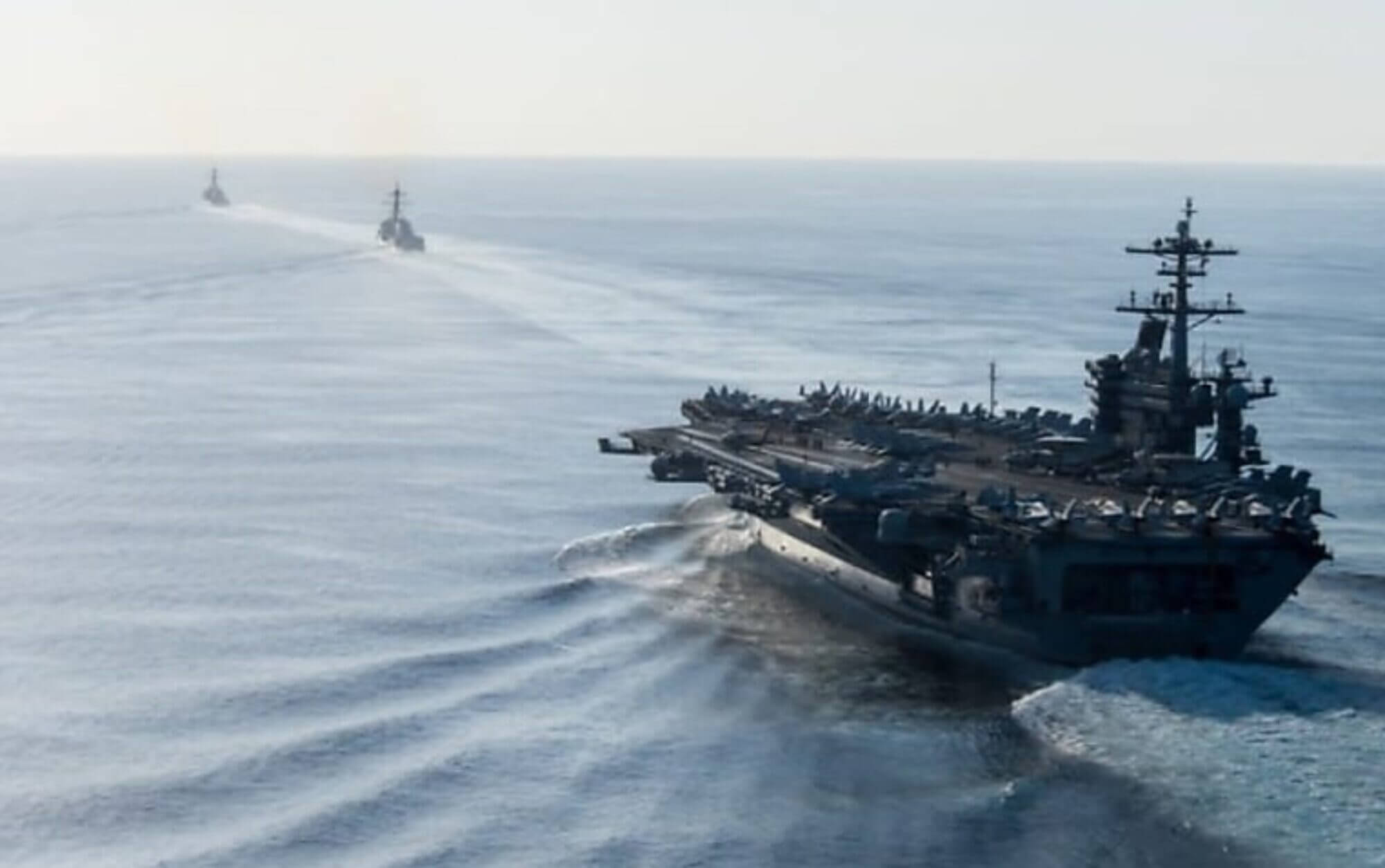
What excites him are deals that build capacity while ships get built: the “Finland model,” where foreign builders start construction overseas and shift it to American yards as the workforce is trained; Hanwha’s investment in Philly Shipyard [2]; and Arsenal-2, the new shipyard Anduril and the U.S. government are building at Sparrows Point, Maryland [3]. To him, it all reflects a renewed awareness that America is a maritime nation, something we got distracted from for decades.
The Biggest Barrier: Capacity, and the Sea Blindness Behind It
The barrier, he says, is capacity, and for years the conversation went in circles. We need more ships. The industrial base can’t handle it. Builders with one customer turn out one or two destroyers a year, and can’t scale without the promise of more money.
Underneath it all, he argues, was sea blindness. The nation focused on wars in Southwest Asia and the Middle East and lost the awareness earlier generations had of why the sea matters to our security and our economy. Partners and adversaries kept that awareness and watched with concern as U.S. hulls in the water dwindled and port calls grew rare.
“We are in a period of elevated risk, because while we are now investing, we are still in a period of real risk out to ’28, 2030, when these investments actually start coming online. The fleet’s too small, it’s run ragged, and we won’t be able to start fixing it ourselves for still a number of years.”
Fix One Thing: Help Sailors Feel Like Sailors
Herzinger calls his answer “a bit self-indulgent.” He was raised by a Reagan-era sailor, a nuclear operator on USS Enterprise, and grew up on his father’s stories and cruise books: Australia, Pakistan, Pearl Harbor, Okinawa, Hong Kong, Naples. He still has the poster on his wall: Not just a job, it’s an adventure.
He wants the Navy to find its footing in that spirit again, instead of what he calls the “rah-rah, digital camouflage” warrior image of the war on terror.
“You join the Navy from Idaho like I did, and you see things that you would have never seen if you’d stayed home. Whether you stay in for four years or 30 years, you see the world and it changes you.”
A sailor who spends six to eight months off the coast of a desert nation probably won’t stay in, he says, and won’t tell friends how amazing it was. That is partly a fleet too small to do more than one thing at a time, and partly a vision of the service that “doesn’t feel maritime.”
“I think we need to help people feel like sailors, and we need to help them tell the story at home of why the Navy matters to America. And I think it begins with that kind of spiritual awakening.”
The Takeaway
Herzinger connects two problems that are usually discussed separately: a shipbuilding base that can’t keep up, and a public that stopped seeing why the sea matters. His fix links them. Sailors who see the world come home and tell the story, and that story is how a nation recovers from sea blindness.
He is not alone. Several America at Sea voices have raised the same question about how the Navy sees itself, and it is one this organization intends to keep asking: are we training warriors who happen to go to sea, or sailors ready to fight when the nation asks?
About America at Sea
America at Sea: Voices That Matter is a 45-day maritime conversation launched October 18, 2026, by Americans for a Stronger Navy with U.S. Maritime Action. Moderated by Capt. Brent Sadler, USN (Ret.), the series asks shipbuilders, mariners, industry leaders, the Navy community, and policy experts the same three questions. A common-ground report will be delivered to policymakers, their staffs, and the public at the end of November.
About the Guest
Blake Herzinger is a career naval officer. After ten years on active duty as an intelligence officer, he moved to the Navy Reserve as a foreign area officer specializing in Asia, and was mobilized to USS Lewis B. Puller in the Arabian Gulf from 2019 to 2020. Based in Singapore since 2013, he has worked for American-headquartered multinationals across technology, defense, and finance, and previously helped plan U.S. Navy exercises across the Indo-Pacific.
References
[1] USNI News, “White House Shipbuilding Effort Moves to Office of Management and Budget,” July 18, 2025: https://news.usni.org/2025/07/18/white-house-shipbuilding-effort-moves-to-office-of-management-and-budget
[2] Hanwha Group acquired Philly Shipyard in December 2024, its first U.S. shipyard investment.
[3] Naval Technology, “US Navy, Anduril plan $6.6bn Arsenal-2 shipyard in Maryland,” October 7, 2026: https://www.naval-technology.com/newsletters/arsenal-2-shipyard-us-navy