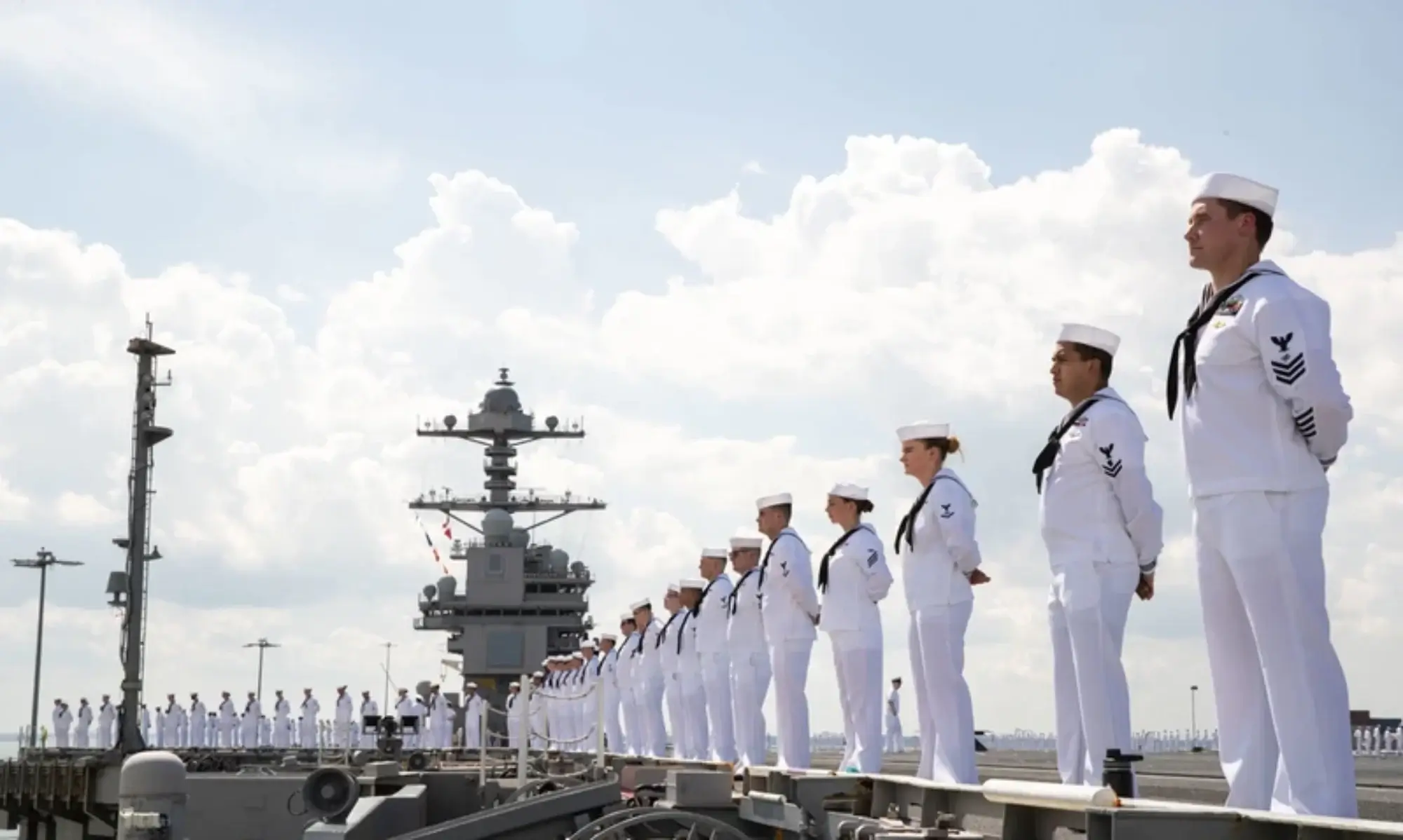

As a former blue water sailor and founder of Americans for a Stronger Navy, I learned early that naval strength is not defined by speeches or strategies alone. It is defined by readiness—by ships that work, sailors who are trained, and shipyards that can sustain them.
Over the past two years, through Americans for a Stronger Navy and StrongerNavy.org, I have worked to better understand the forces shaping the future of our Navy. What I have discovered is both reassuring and sobering.
Reassuring because the Navy’s leadership clearly understands the changing threat environment. Sobering because serious professionals—inside and outside the Navy—are actively debating how best to prepare for it.
This series is designed to help Americans understand that debate.
A Navy in Transition
The United States Navy is undergoing one of its most significant strategic transitions since the end of the Cold War. For decades, our Navy operated in an environment where it could project power with relative freedom. That era is over.
China now operates the world’s largest navy by ship count and continues expanding its industrial capacity at a pace unmatched in modern times. Russia remains a capable undersea competitor. Meanwhile, unmanned systems, artificial intelligence, and directed-energy weapons are changing how naval warfare may be conducted in the decades ahead.
The Navy’s leadership recognizes this reality. They are adapting strategy, exploring new technologies, and rethinking how naval forces will operate in the future. But within that effort, there are important and healthy debates—and Americans deserve to understand them.
Different Perspectives, Shared Purpose
Some leaders emphasize the continued importance of traditional crewed ships—destroyers, submarines, and aircraft carriers—as the backbone of naval power. Others emphasize the growing role unmanned systems may play in extending reach and enhancing survivability. Still others focus on the industrial foundation that makes both possible: shipyards, maintenance infrastructure, and workforce capacity.
These are not disagreements about the mission. They are discussions about how best to ensure the Navy remains ready, effective, and capable in a changing world. What unites these perspectives is a shared recognition that readiness requires sustained national support.
Ships must be built. Shipyards must be modernized. Sailors must be trained. Infrastructure must be maintained. None of this happens automatically.
Why Industrial Capacity Matters
One of the most important lessons from this work is that naval power is built on industrial strength. Strategy determines what the Navy needs to do. Industrial capacity determines whether it can do it.
Naval Sea Systems Command (NAVSEA), our public and private shipyards, and the skilled workforce that supports them form the foundation of naval readiness. Without their ability to build, maintain, and modernize ships, even the best strategy cannot succeed.
This is not a criticism. It is simply reality—and it is why public understanding matters. Americans deserve to know how their Navy works, what challenges it faces, and what is required to sustain it for future generations.
From Understanding to Sustained Support: The Strategic SEAS Act
Understanding the challenge is the first step. Sustaining readiness over time requires structural solutions.
That is why Americans for a Stronger Navy developed the Strategic SEAS Act—a framework designed to provide predictable, sustained funding for shipbuilding capacity, shipyard modernization, workforce development, and allied maritime infrastructure. Its purpose is straightforward: to help ensure that the Navy and the maritime industrial base have the long-term support necessary to meet national security requirements.
The Strategic SEAS Act complements legislative efforts like the SHIPS Act by addressing a critical question: how to provide sustained, reliable funding to support the Navy’s long-term readiness. Readiness is not built in a year. It is built over decades.
Why This Matters Now
The decisions being made today—about ships, shipyards, technology, workforce, and sustained funding—will define America’s naval strength for the next generation. These decisions are being made now, in budget cycles and legislative sessions that most Americans never see.
Meanwhile, serious questions are being raised by experienced naval professionals, defense analysts, and members of Congress about whether America’s shipbuilding capacity and industrial base can support the strategy at the pace required. Those questions deserve honest, public answers.
This series is intended to provide that clarity—directly, responsibly, and in plain English.
The Questions This Series Will Address
Among them:
• Are traditional ships like destroyers, submarines, and carriers still essential in the age of drones and autonomous systems?
• Can unmanned systems truly enhance naval power—or are they being asked to do too much, too soon?
• Is America’s shipbuilding and repair infrastructure strong enough to sustain the Navy the nation requires?
• What role does Naval Sea Systems Command (NAVSEA) play in ensuring readiness—and what challenges does it face?
• How does America’s shipbuilding capacity compare to China’s—and what does that mean strategically?
• Can the Navy realistically surge its fleet when needed?
• What role do Congress, industry, and the American people play in sustaining naval strength over time?
• And most importantly: what must be done—practically, responsibly, and sustainably—to ensure the United States Navy remains ready to protect American interests for decades to come?
These are not political questions. They are national questions. And Americans deserve clear, honest answers.
Why Americans Should Care
The U.S. Navy protects far more than military interests. It safeguards global commerce, deters conflict, reassures allies, and protects the economic system Americans depend on every day. When the Navy is ready, it helps preserve peace through strength. When industrial capacity declines, readiness becomes harder to sustain.
The decisions being made today will shape America’s naval strength for decades to come. Americans deserve to understand those decisions.
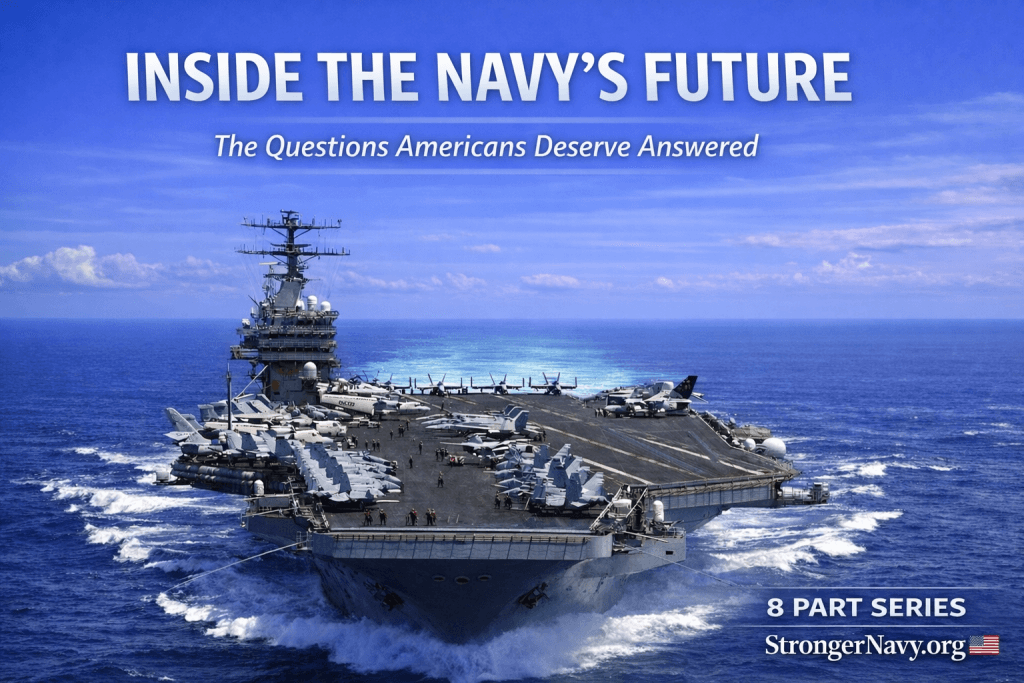
What This 8-Part Series Will Explore
In the weeks ahead, this series will examine why traditional naval ships remain essential, how unmanned systems are changing naval operations, the critical role of NAVSEA and America’s shipyards, the industrial and workforce foundation behind naval readiness, how China and other nations are approaching maritime power, how naval strength is sustained over time, and what must be done to ensure continued readiness.
This is not about choosing sides in a debate. It is about understanding the full picture—because an informed public is essential to sustaining a strong Navy.
Let’s get to work.