Six Frigates: Why America Chose Sea Power — and Why That Choice Still Matters

Six Frigates: Why America Chose Sea Power — and Why That Choice Still Matters

Ian W. Toll’s Six Frigates: The Epic History of the Founding of the U.S. Navy should be required reading for anyone who believes America’s naval strength simply “happened” or that today’s debates about shipbuilding, cost, and purpose are somehow new.

They aren’t.

This book tells the story of how a young, divided, cash-strapped republic made a deliberate decision to build a Navy — not for glory, not for empire, but for survival, commerce, and credibility in a dangerous world.

Reading it today, the parallels are impossible to miss.

What the Book Is Really About

On the surface, Six Frigates recounts the creation of the first six capital ships authorized by the Naval Act of 1794. But at its core, the book is about civic will.

Toll shows that the U.S. Navy was born amid fierce political resistance, public skepticism, regional rivalries, and intense arguments over cost and necessity. Many Americans feared a standing Navy would drag the nation into foreign wars or empower a central government at the expense of liberty.

Nothing about this debate feels distant.

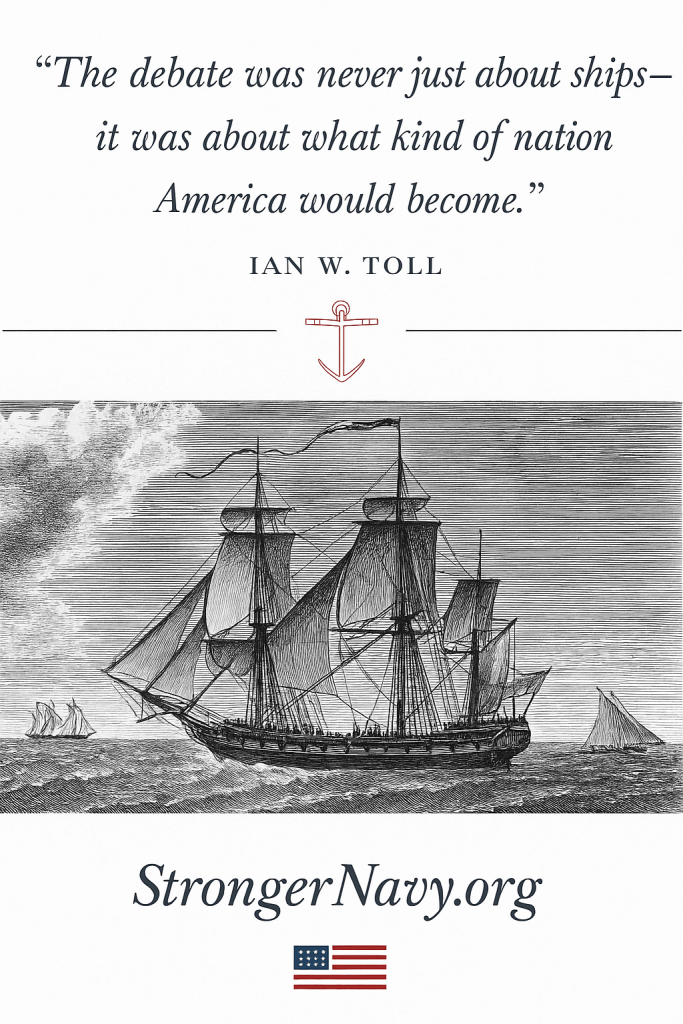
“The debate was never just about ships — it was about what kind of nation America would become.”
— Ian W. Toll

From the beginning, sea power was a choice — not a given.

Notable Quotes That Still Matter Today

Toll repeatedly underscores a truth early Americans learned the hard way:

“A nation that depended on commerce could not afford to remain defenseless at sea.”

American sailors were seized, trade was disrupted, and diplomacy without strength proved ineffective.

Another passage feels especially relevant now:

“Naval power was expensive, controversial — and delay was more dangerous still.”

That sentence could be written today about shipbuilding delays, fragile supply chains, and readiness gaps without changing a word.

And perhaps the most important civic reminder in the book:

“The frigates represented an investment not just in ships, but in skills, infrastructure, and national confidence.”

The founders weren’t just building hulls. They were building a maritime nation.

Why Americans Should Care

This book makes one thing unmistakably clear: the founders did not stumble into sea power. They argued their way into it.

They debated cost, foreign entanglements, corruption, and waste. And then they acted — because they understood that refusing to decide was itself a decision.

Today, Americans benefit daily from secure sea lanes, global trade, and deterrence at sea. Yet public understanding of how fragile that system is has faded.

Six Frigates reminds us that civic engagement is not optional when it comes to national security. The Navy exists because Americans once paid attention.

Implications for the Navy

One of the book’s strongest lessons is that shipbuilding takes time — and delay carries strategic risk.

The original frigates faced cost overruns, workforce shortages, material constraints, and political interference. None of that stopped the effort, because leaders understood that maritime strength could not be created on demand.

“Ships could not be conjured by urgency alone. They required patience, discipline, and sustained public support.”

That lesson applies directly to today’s challenges: a smaller fleet, stressed shipyards, and a public often disconnected from the maritime foundations of American power.

What Has Changed — and What Hasn’t

Technology has changed. The scale of global competition has changed. The oceans have not.

America remains a maritime nation, dependent on trade, energy flows, undersea cables, and allied sea lanes. Adversaries understand this and are building accordingly.

What has not changed is the central truth Six Frigates makes clear: sea power depends on informed citizens willing to support long-term decisions — even when they are politically uncomfortable.

Final Reflection

Six Frigates is not a call for militarism. It is a warning against complacency.

It shows that the U.S. Navy was born not from inevitability, but from hard choices made by leaders who understood the world as it was — not as they wished it to be.

As America approaches its 250th anniversary, this book offers a timely reminder: the Navy belongs to the American people, and its strength ultimately reflects public understanding, engagement, and resolve.

That responsibility didn’t end in 1794.

That’s why we launched Charting the Course: Voices That Matter — a 24-part educational series breaking down how we got here, what went wrong, and what must happen next. Our goal is simple: educate the public, connect the dots, and build the support needed to close the readiness gap before it’s too late.

Let’s roll.

Guard the Lanes


Silicon Valley builds the networks. The Navy protects them. Invest to keep them both secure.

Bill Cullifer, Founder

Sometimes the search for clarity keeps me up long past midnight. That was the case at 3 a.m. this week when I came across a RAND report titled Economic Deterrence in a China Contingency. I hoped it might explain how America could keep the peace without firing a shot. It did—and it didn’t. RAND’s conclusion is clear: economic tools help, but they work only when anchored to credible strength, industrial capacity, and alliances that hold.

Why Americans Should Care
RAND’s analysis shows that sanctions alone can’t deter China from acting against Taiwan. Even coordinated multilateral efforts might shave a few points off China’s GDP, but they won’t change its core objectives. Unilateral U.S. measures could even harm our own economy. That means deterrence isn’t about paperwork or tariffs—it’s about preparation, partnerships, and public will.

When the lanes of trade and data stay open, the world stays stable. If those lanes close, the cost lands on every American household.

Implications for the Navy
For navalists, the message is unmistakable: economic deterrence rides on sea power. If sanctions are to work, allied fleets must protect the supply lines and chokepoints that keep global commerce moving. RAND calls for better modeling of economic impacts; I’d add that we also need better modeling of shipbuilding, repair, and readiness.

Our destroyers, carriers, and submarines aren’t just tools of war—they’re instruments of economic freedom. They guard the lanes.

Implications for Our Allies
RAND emphasizes that sanctions mean little without unified action. The same applies to maritime strength. Japan, Australia, and the U.K. can’t afford hesitation; unity is deterrence. Coordinated naval presence across the Indo-Pacific signals resolve more effectively than any embargo ever could.

A Call to Silicon Valley
This is where the RAND findings connect directly to our call for America’s tech industry. The report warns that markets adapt faster than governments—and that the private sector will make or break national resilience. That’s a polite way of saying: Silicon Valley, you’re in this fight whether you know it or not.

We’re not asking for militarization of innovation. We’re asking for civic responsibility: secure the code, protect the data, and strengthen the digital lanes that mirror the sea lanes our sailors defend. The Navy protects what you build. Now America must invest to keep both secure.

The Bottom Line
Peace depends on readiness. RAND’s economists proved it with data; our sailors prove it every day with sweat and steel. The future will be written not only in shipyards and naval bases, but also in design labs and data centers.

That’s why we launched Charting the Course: Voices That Matter—a 24-part educational series explaining how we got here, what went wrong, and what must happen next. Our goal is simple: educate the public, connect the dots, and build the support needed to close the readiness gap before it’s too late.

Let’s roll.


America’s Next Generation of Warships: Drones Built for the Pacific Fight


In Response to the Call for a Stronger Navy

A major announcement this week marks a breakthrough in naval innovation. Blue Water Autonomy, a Boston-based defense startup, confirmed on November 5 that it has successfully tested its long-range autonomous ship technology on the waters off Massachusetts — a first for U.S. industry.

The company shared new images and data from sea trials, demonstrating that its medium-sized drone warship systems can operate reliably in open-ocean conditions, a critical milestone as the Navy looks to expand its reach in the Pacific. A full-scale 150-foot prototype is planned for 2026, advancing the goal of deploying uncrewed ships capable of long-range operations alongside traditional fleets.

Why It Matters

China’s shipyards continue to outproduce America’s by wide margins, while U.S. shipbuilding struggles with delays, labor shortages, and cost overruns. Blue Water Autonomy’s success offers a glimpse of what’s possible when innovation meets urgency. These modular vessels are designed to carry sensors, radars, and missile payloads across more than 6,000 nautical miles, from California to Taiwan and back — a range that redefines how the U.S. could project power across the Indo-Pacific.

Implications for the Navy

The Navy’s future battle force calls for 381 crewed ships and 134 uncrewed vessels, but reaching those numbers requires new approaches. By designing ships that can be mass-produced quickly at smaller shipyards, Blue Water Autonomy’s model could help offset the strain on America’s overstretched industrial base. With a Navy contract already in hand and potential full-scale production in Louisiana shipyards next year, the company’s success represents a tangible step toward restoring U.S. maritime advantage through technology and industrial reform.

Why Americans Should Care

Every advancement in autonomy brings the same truth into sharper focus: deterrence is cheaper than war. Building smarter, more flexible fleets keeps sailors safe, strengthens deterrence, and ensures America remains a global maritime leader. Blue Water Autonomy’s announcement isn’t just about a new vessel — it’s about rebuilding the capacity and confidence of a nation that must once again lead at sea.

That’s why we launched Charting the Course: Voices That Matter — a 24-part educational series breaking down how we got here, what went wrong, and what must happen next. Our goal is simple: educate the public, connect the dots, and build the support needed to close the readiness gap before it’s too late.

Let’s roll.


USS Ohio Surfaces in the South China Sea: A Strategic Signal Amid Rising Tensions

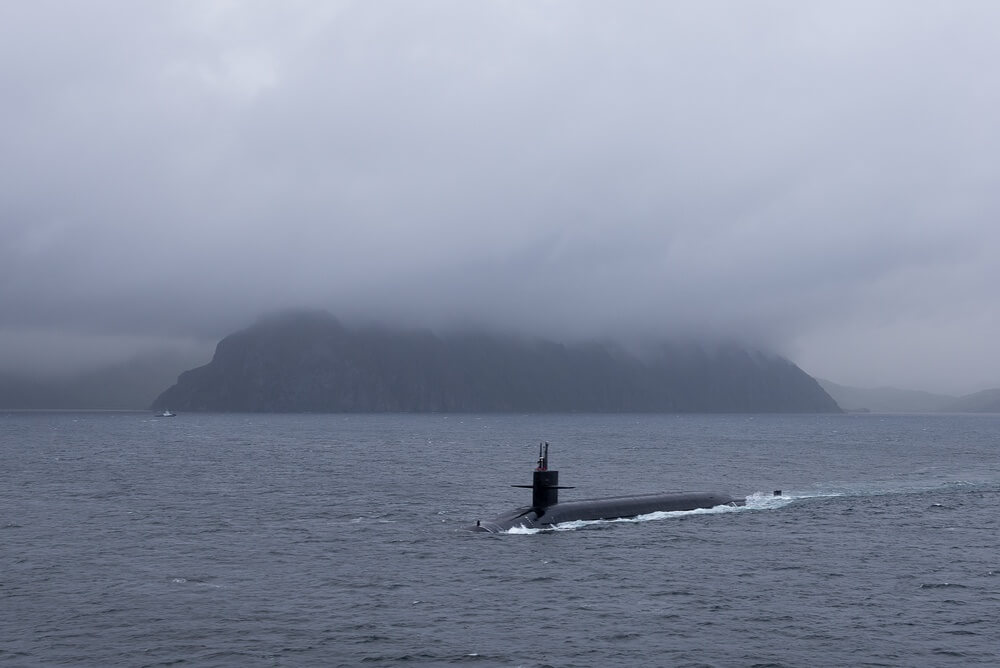
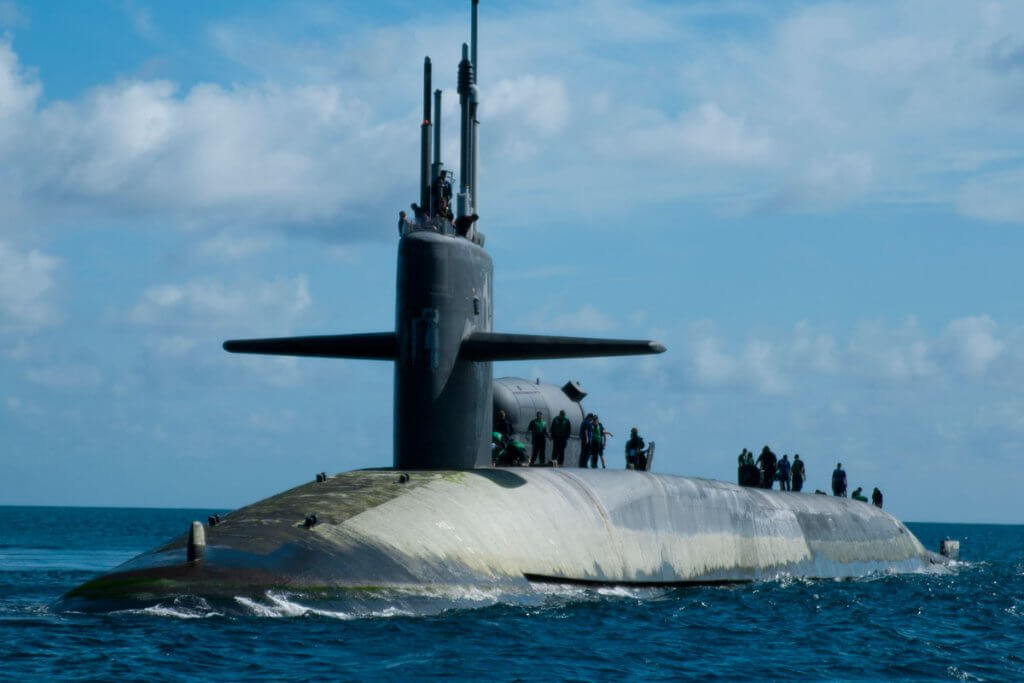
USS Ohio

Background

The nuclear-powered guided-missile submarine USS Ohio recently arrived at Subic Bay in the Philippines, underscoring America’s commitment to allies and to a free and open Indo-Pacific. Capable of launching up to 154 Tomahawk cruise missiles, Ohio is one of the most formidable strike platforms in the U.S. arsenal. Its appearance follows the deployment of China’s newest aircraft carrier, CNS Fujian, which has been conducting tests near Hainan Island.

The port call at Subic Bay—once the U.S. Navy’s largest overseas base—comes at a time when maritime disputes between China and the Philippines have escalated, especially around contested waters in the South China Sea.

Why This Matters
The U.S. Navy’s submarine force remains one of the most credible deterrents against Chinese naval ambitions. Analysts note that American submarine capability is seen as the primary threat vector for the People’s Liberation Army Navy (PLAN). While China invests heavily in anti-submarine warfare, the U.S. maintains the advantage in stealth, firepower, and global reach.

By positioning Ohio at Subic Bay, the U.S. highlights the strategic role of the Philippines within the First Island Chain—a defensive line stretching from Japan through Taiwan and the Philippines into the South China Sea. This network of alliances forms the geographic anchor of American naval strategy in the Pacific.

Implications for the Navy
For the U.S. Navy, forward deployment of submarines in contested waters provides:

  • Flexible strike capability: Rapid response to crises with precision-guided weapons.
  • Special operations support: Stealth platforms for insertion of SEALs or Marine units.
  • Strategic messaging: Visible reassurance to allies and a reminder to Beijing that the U.S. retains unmatched undersea dominance.

The routine but highly symbolic visit to Subic Bay reflects a balance between operational necessity and diplomatic signaling. Whether or not Ohio conducts exercises with the Philippine Navy, its very presence strengthens deterrence.

Implications for Our Allies
For the Philippines, hosting Ohio marks another step in strengthening defense ties with Washington after years of uncertainty. For Australia—where Ohio also made a port call earlier this year—the deployment aligns with AUKUS ambitions to enhance collective submarine capability. Together, these moves demonstrate that the U.S. Navy is not acting alone, but rather as part of a broader coalition determined to counter coercion and preserve maritime freedom.

Why Americans Should Care
The South China Sea is not a distant problem—it is one of the busiest shipping lanes in the world. Roughly one-third of global trade, including vital energy supplies and consumer goods bound for American shores, flows through these waters. If China were to dominate or restrict access, the ripple effects would hit American families and industries directly.

Maintaining a credible U.S. Navy presence in the Indo-Pacific is about more than military balance—it is about protecting the lifelines of our economy and ensuring peace through strength.


That’s why we launched Charting the Course: Voices That Matter — a 24-part educational series breaking down how we got here, what went wrong, and what must happen next. Our goal is simple: educate the public, connect the dots, and build the support needed to close the readiness gap before it’s too late.

Let’s roll.


A Clear Pretext for Occupation: Philippines Pushes Back on China’s Nature Reserve Claim

.


Philippine Officials Raise the Alarm
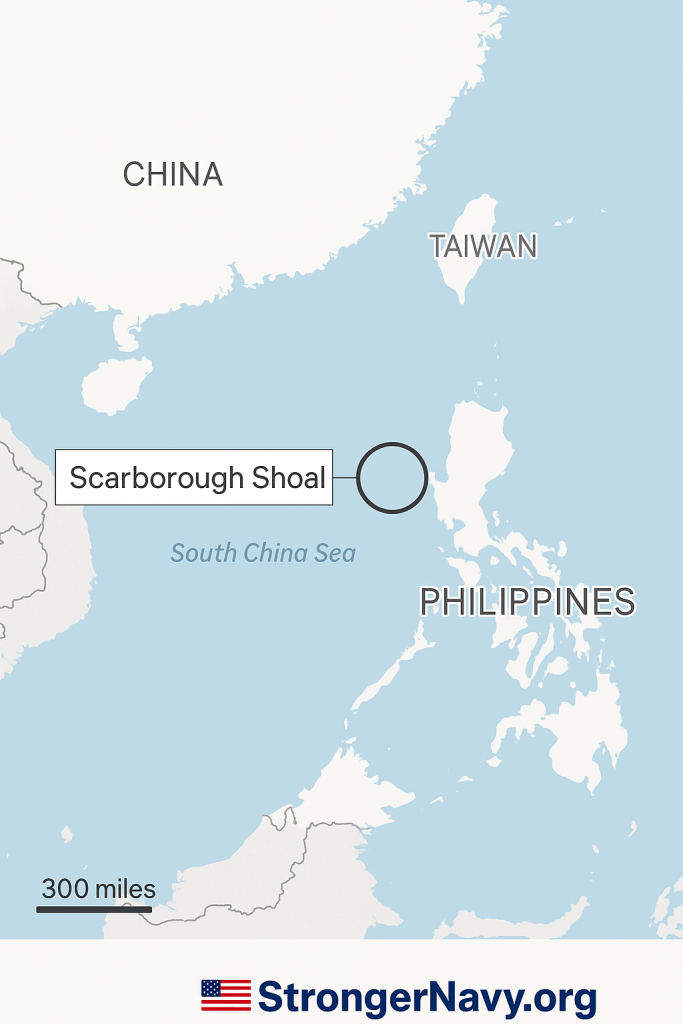
Top Philippine defense and maritime officials have condemned China’s recent declaration of a “nature reserve” at Scarborough Shoal, calling it a “clear pretext for occupation.” This bold response comes in reaction to Beijing’s move to designate the disputed shoal—known locally as Bajo de Masinloc and internationally ruled to be within the Philippine EEZ—as a Chinese national marine reserve.

Philippine officials aren’t mincing words. Former Supreme Court Justice Antonio Carpio, former Defense Secretary Delfin Lorenzana, and Coast Guard Commodore Jay Tarriela are among those warning that the “reserve” designation masks a broader strategy: to lock down access, increase Chinese presence, and project power deep into Southeast Asia’s maritime heart.

Part 1 — Broken Promises and Growing Risks
In 2012, after a tense naval standoff, the U.S. brokered a deal: both China and the Philippines would withdraw their ships from Scarborough Shoal. The Philippines complied. China didn’t. The U.S. didn’t press the issue. The result? Beijing solidified its control and sent a message that international mediation wouldn’t be enforced.

Part 2 — International Law Ignored
In 2016, an international tribunal ruled in favor of the Philippines, stating clearly that China had no legal claim to Scarborough Shoal. Beijing ignored the decision, accelerating militarization and disrupting Filipino fishing. Once again, global rule of law was challenged—and left unenforced.

Part 3 — The “Nature Reserve” Play
Now, in 2025, China has unveiled a new maneuver: using environmental language to advance military and political objectives. The creation of the “Huangyan Island National Nature Reserve” is being widely viewed as part of a creeping campaign to normalize Chinese administrative control.

Despite the label, this is not about conservation. China has repeatedly blocked Filipino fishermen, driven out environmental research vessels, and deployed maritime militia under the radar. Calling this a “preserve” is like calling a fortress a flower garden.

Why Americans Should Care

  • Strategic Sea Lanes: The South China Sea is a maritime superhighway. If China controls it, they can control access to vital markets and resources.
  • U.S. Credibility Is on the Line: American influence is measured by what we protect—not just what we promise.
  • Civic Responsibility: Understanding how foreign policy, trade, and defense intersect isn’t just for experts. It’s for every American who relies on secure energy, stable prices, and a functioning global order.
  • Environmental Lawfare: Americans should be wary of tactics that exploit noble causes—like conservation—to advance authoritarian control.

Implications for the Navy
The U.S. Navy has long played a vital role in ensuring freedom of navigation and stabilizing flashpoints. But gray zone tactics like these require more than just ships—they require intelligence, strategy, and public support. The Navy cannot succeed without a civilian base that understands the stakes.

Implications for Our Allies
This isn’t just a Philippine problem. What happens at Scarborough sends ripples across the Pacific. Taiwan, Vietnam, Japan, Australia—all are watching to see whether the U.S. will back its allies when it counts. So are our adversaries.

Call to Action
The future of maritime freedom—and American leadership—may hinge on places like Scarborough Shoal. When China tests the limits, Americans need to respond—not just with ships, but with awareness and resolve.

That’s why we launched Charting the Course: Voices That Matter — a 24-part educational series breaking down how we got here, what went wrong, and what must happen next. Our goal is simple: educate the public, connect the dots, and build the support needed to close the readiness gap before it’s too late.

Let’s roll.


U.S. Marines Expand Presence on Strategic Pacific Islands


Overview
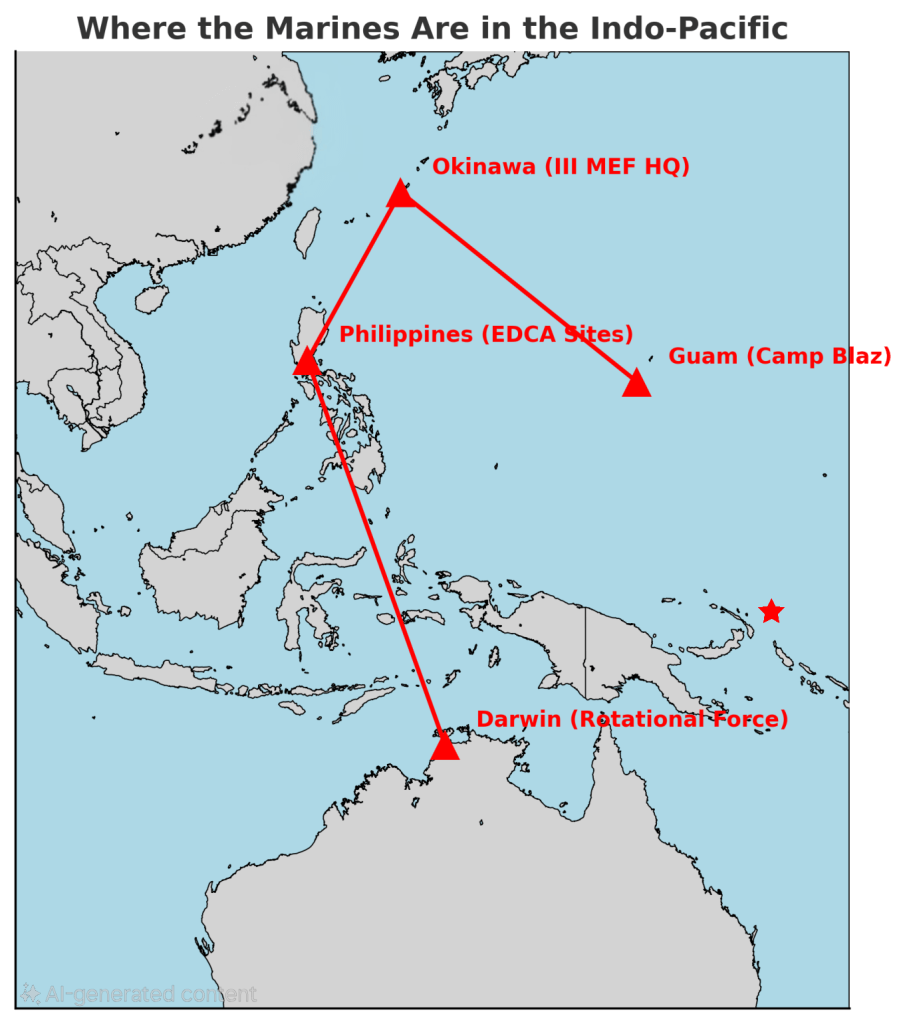
The United States is increasing its forward military presence near China by deploying Marine forces aboard the expeditionary sea base ship USS Miguel Keith. This afloat platform extends the reach of the Marine Rotational Force-Darwin (MRF-D), based in northern Australia, across the contested island chains of the western Pacific. This move underscores Washington’s commitment to countering Beijing’s growing influence and military footprint in the Indo-Pacific.

The Island Chain Strategy
At the heart of this deployment lies the U.S. island chain strategy: three north-south defensive lines stretching across the Pacific. By leveraging allied territory and naval access points, the U.S. can project power, deter aggression, and defend against potential Chinese military action. The second island chain, where the USS Miguel Keith is homeported in Saipan, plays a pivotal role in supporting operations deeper into the Pacific.

Why This Matters
Operating from a sea base offers the Marines flexibility and unpredictability. Unlike fixed land bases, the Miguel Keith allows U.S. forces to maneuver rapidly across archipelagic terrain and forward locations ashore, complicating adversary planning. This is especially important at a time when Chinese forces are building out anti-access/area-denial (A2/AD) capabilities designed to push U.S. forces farther from contested waters.

Recent Exercises
The deployment follows recent exercises across the first and second island chains:

  • Exercise Alon 25 in the Philippines (August 15–29).
  • Exercise Super Garuda Shield 25 in Indonesia (August 25–September 4).

These multinational drills reinforced cooperation with allies, improved readiness, and signaled a unified front in the region.

Implications for the Navy
The Navy’s role in enabling sea-based expeditionary operations is central. With amphibious ships like the USS New Orleans temporarily out of service due to fire damage, expeditionary sea bases provide a critical stopgap. They allow Marines and sailors to continue distributed operations, demonstrating the Navy’s adaptability in keeping forward presence credible.

Implications for Our Allies
For Australia, the Philippines, and Indonesia, U.S. deployments reinforce security guarantees. The Marines’ message, as articulated by Colonel Jason Armas, was clear: America and its allies “stand ready to maneuver, sustain and fight as one force.” This is reassurance at a time of rising Chinese assertiveness in the South China Sea and beyond.

Why Americans Should Care
This is not simply a faraway deployment. The Pacific is a lifeline for U.S. trade, energy, and global communications infrastructure. Securing these waters ensures that Americans at home continue to benefit from stable supply chains and open sea lanes. A failure to hold the line in the Pacific would ripple into our economy and national security alike.

Closing Call
As the U.S. strengthens its presence in the Indo-Pacific, the question is not whether we can afford to maintain this posture, but whether we can afford not to. A stronger Navy and Marine Corps presence ensures deterrence, protects trade, and preserves peace.

That’s why we launched Charting the Course: Voices That Matter — a 24-part educational series breaking down how we got here, what went wrong, and what must happen next. Our goal is simple: educate the public, connect the dots, and build the support needed to close the readiness gap before it’s too late.

Let’s roll.


Allies, Scale, and America’s Navy: A Conversation We Can’t Delay

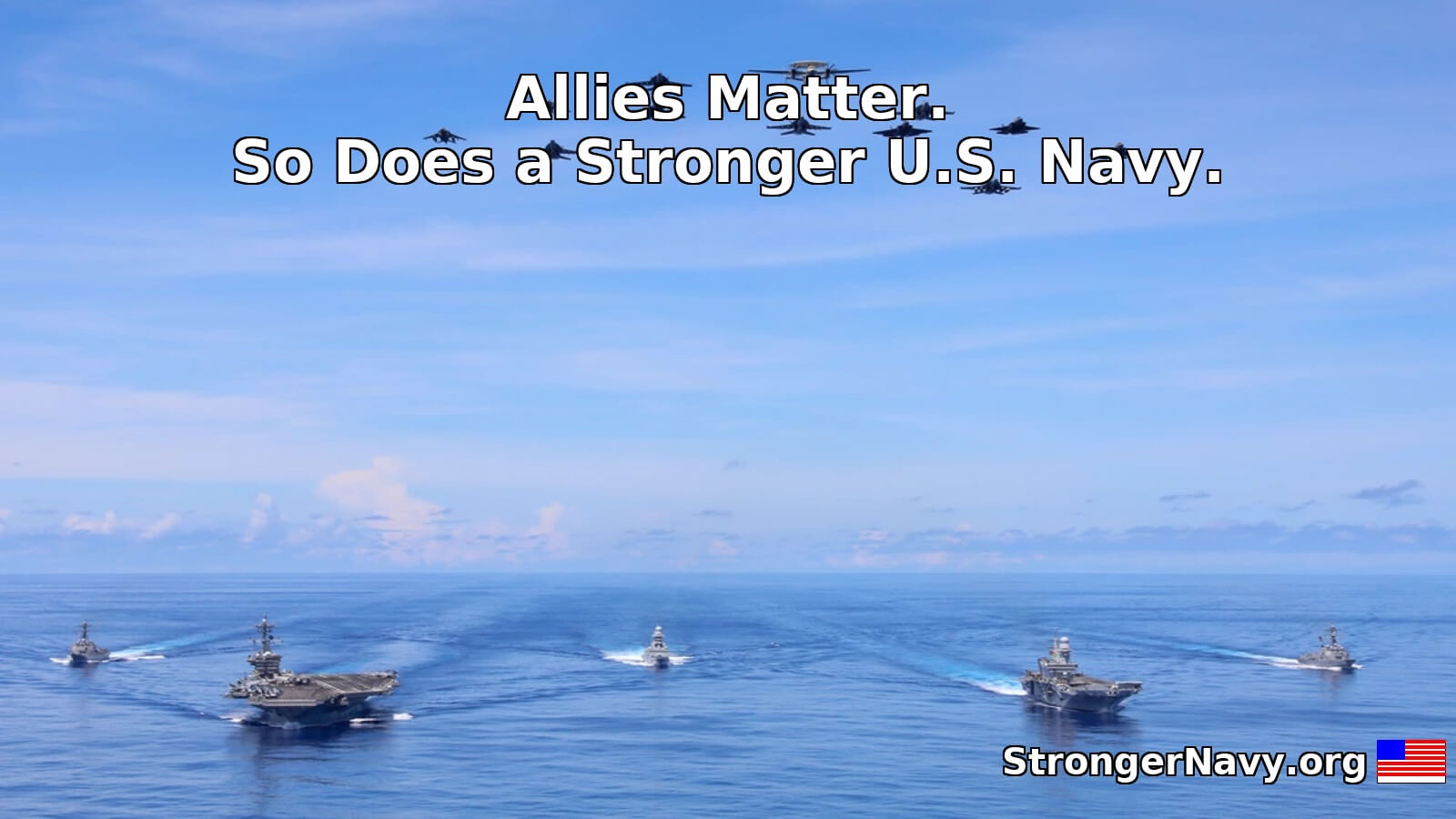
U.S. and allied navies sailing in formation
Bill Cullifer, Founder

Introduction

Giving Credit Where It’s Due
Kurt Campbell and Rush Doshi recently argued in the New York Times that America alone cannot match China’s growing scale — economically, technologically, or militarily — and that our strength depends on “allied scale.” They are right to say this out loud, and they deserve credit for raising the issue. Campbell has long been a voice for rebalancing U.S. strategy toward Asia, and Doshi has studied China’s grand strategy in depth. Their track records show they’ve been sounding the alarm.

Why We’re in This Position
It’s fair to ask: if they saw this coming, why didn’t America adjust sooner? The truth is, Campbell and Doshi were not sitting in the chairs with the ultimate levers. Campbell’s call for a pivot to Asia faced headwinds from wars in the Middle East and competing budget priorities. Doshi, until recently, was in academia, warning of China’s rise but without a policymaker’s authority. They were raising the right concerns, but Washington’s attention was elsewhere. That’s not about pinning blame on individuals — it’s about recognizing how easy it is for America to be distracted.

The Larger Point
The conversation they are starting in public now is one America needs to have candidly. China’s scale in shipbuilding, technology, and manufacturing is a strategic challenge unlike any we have faced before. Campbell and Doshi are right that alliances matter — losing India, Japan, or Europe to Chinese influence would change the balance overnight. But alliances alone aren’t enough. America must also invest in its own naval strength and rebuild the industrial base that sustains it.

My Role in This Conversation
I am two years into this effort with Americans for a Stronger Navy. My job is not to dictate policy but to help Americans understand the facts. It is up to the American people to decide. What I can do is publish what’s happening, provide context, and advocate on behalf of my shipmates — so that when the time comes, they have the resources they need, where and when they need them.

Why Americans Should Care
If we don’t get this right, it’s not only the Navy that will feel the consequences. Our supply chains, our economy, and our security all ride on free and open seas. Campbell and Doshi are right to remind us that “quantity has a quality all its own.” China has the quantity. America must respond with both quality and scale — and it will take both allies abroad and buy-in at home to meet that challenge.

That’s why we launched Charting the Course: Voices That Matter — a 24-part educational series breaking down how we got here, what went wrong, and what must happen next. Our goal is simple: educate the public, connect the dots, and build the support needed to close the readiness gap before it’s too late.
Let’s roll.

Alaska’s Arctic Waters: The Overlooked Front in U.S. Homeland Defense

China and Russia are pushing closer to our northern doorstep — and Alaska is the front line.

Introduction

Over the past year, U.S. Coast Guard cutters have repeatedly intercepted foreign “research” ships operating just beyond the 200-mile line off Alaska’s Arctic coast. At the same time, the U.S. Navy has kept up under-ice submarine operations, while Russian aircraft test our air defense zone and Sino-Russian flotillas sail through the Bering Strait.

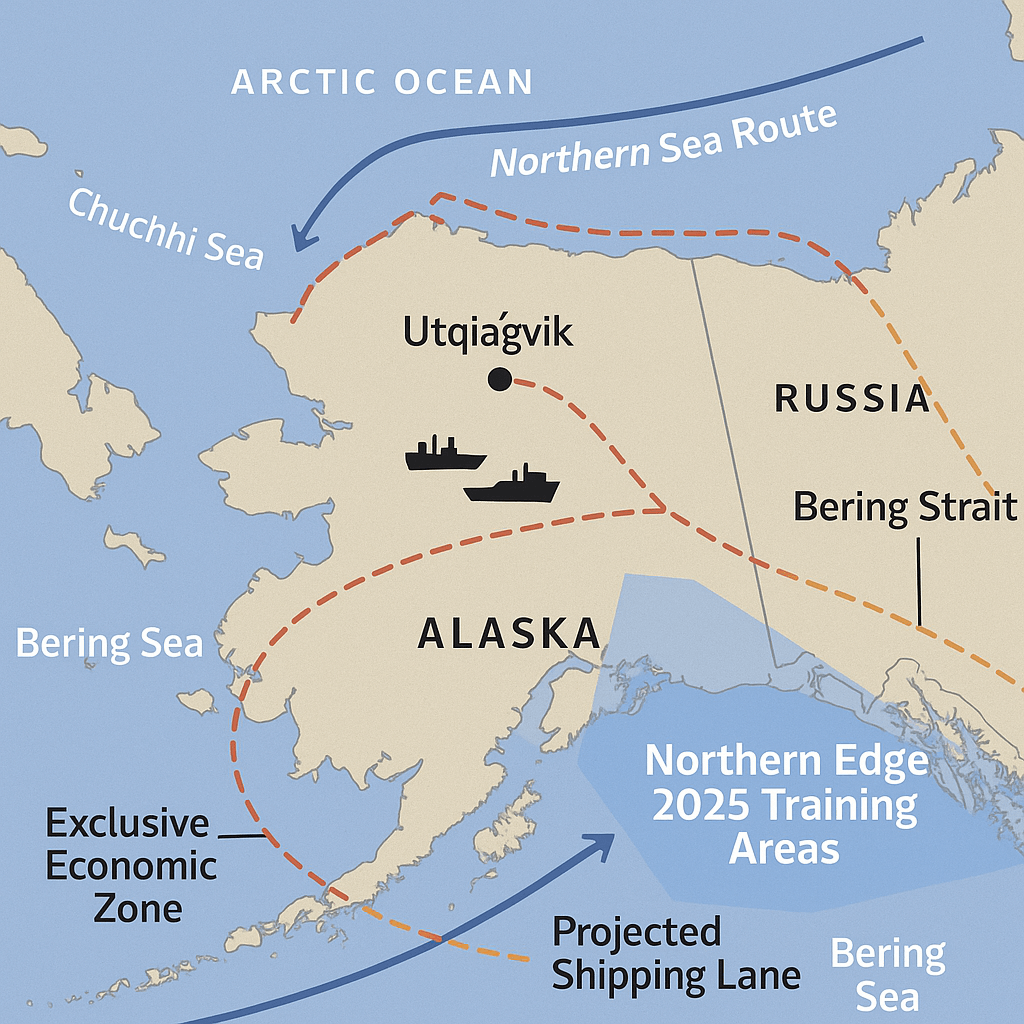
Map Legend
Dashed Red Lines – Patrol routes and foreign vessel tracks monitored by the U.S. Coast Guard near Alaska’s Arctic coast.
Solid Blue Lines – Projected Arctic shipping lanes, including the Northern Sea Route (along Russia) and emerging trans-Arctic corridors.
Shaded Blue Zone – Exercise Northern Edge 2025 training areas, where U.S. and allied forces conducted joint, multi-domain operations.
Black Ship Icons – Locations of recent intercepts of foreign “research” vessels near Utqiaġvik.
Exclusive Economic Zone (EEZ) – U.S. waters extending 200 nautical miles from Alaska’s coast, where America exercises sovereign rights over resources.

The takeaway is simple: America’s Arctic is no longer quiet. It’s contested.

Why Americans Should Care
Alaska is not a remote outpost. It is our Arctic front yard, rich in resources, with thousands of miles of shoreline and a narrow strait that connects the Pacific to the Arctic. When Chinese “research” vessels map our seabeds or Russian aircraft enter the Air Defense Identification Zone, they’re probing how close they can get to our homeland. What happens off Alaska affects energy security, trade routes, and even the protection of undersea cables that carry the world’s internet traffic.

RAND’s latest study underscores this point. In The Future of Maritime Presence in the Central Arctic Ocean (July 2025), RAND concludes that as sea ice retreats, the Arctic will draw in both Arctic and non-Arctic actors for economic, political, and military gain. They warn that competition will intensify in phases: first commercial, then political, and ultimately strategic. For the U.S., that means maritime presence is not optional — it is essential to prevent rivals from dictating the rules of the Arctic.

Implications for the Navy
Day-to-day patrols fall to the Coast Guard, which provides the only regular surface presence in the Arctic. But the Navy’s role is no less critical. Its submarines operate beneath the ice, practicing for deterrence and warfighting in a domain where rivals are gaining ground. The Navy also views Alaska as part of the defense-in-depth of the United States — the first line of detection and deterrence against missile submarines, long-range bombers, and other threats moving south from the Arctic.

This year’s Northern Edge 2025 exercise made that point clear. More than 6,400 U.S. and Canadian service members, 100 aircraft, and seven warships, including USS Abraham Lincoln and her carrier strike group, trained across Alaska. Running alongside Arctic Edge, the exercises brought together INDOPACOM and NORTHCOM to practice joint, multi-domain operations — from the Aleutians to Adak. In other words: Alaska is not just about defending the homeland, it is a launchpad for projecting U.S. power into the Indo-Pacific.

The challenge remains that America’s icebreaker fleet is thin, while Russia operates dozens and China fields new polar-capable vessels. Without recapitalization and greater presence, the U.S. risks falling behind in its own backyard. RAND echoes this warning: presence and infrastructure — from icebreakers to domain awareness — are key to avoiding strategic surprise.

Implications for Our Allies
The Arctic is no longer an American issue alone. NATO allies — Canada, Denmark, Norway — all face the same northern pressure. China brands itself a “near-Arctic state” and seeks influence in waters that directly border allied territory. Coordinated exercises like Northern Edge and Arctic Edge are proof that alliances matter. Shared domain awareness and investment in icebreaking and seabed security will be vital. If America steps back, allies are left exposed — and adversaries will fill the gap.

The Bottom Line
Alaska’s Arctic waters are an overlooked but critical front in U.S. homeland defense. The Coast Guard may be on point, but the Navy’s presence under the ice and in the chokepoints is just as important. Together, they demonstrate that the U.S. is watching, ready, and committed to protecting its northern approaches.

That’s why we launched Charting the Course: Voices That Matter — a 24-part educational series breaking down how we got here, what went wrong, and what must happen next. Our goal is simple: educate the public, connect the dots, and build the support needed to close the readiness gap before it’s too late.

Let’s roll.
Adversaries Inside Our Homeland: A Call to Strengthen the U.S. Navy

Bill Cullifer, Founder

Introduction
Most people don’t realize it yet. We are already in a quiet w@r. Not with bombs. Not with missiles. But with fentanyl, with financial schemes, and with cyber attacks. These are not random hacks — they are deliberate intrusions aimed straight at America’s lifelines.

Targeting America’s Core Systems
They target our banks — draining trust from the financial system.
They map our pipelines — threatening the flow of oil and gas that heats our homes.
They burrow into our power grids — carrying the ability to shut down American cities.
They test our hospitals and emergency networks.
They infiltrate our communications — preparing to cut the way America speaks, trades, and defends itself.

And now, they even target our homes and businesses. The devices we plug in. The networks we rely on. Even solar panels and batteries made overseas — carrying hidden back doors that could one day flip a switch against us.

Banks. Grids. Solar.

Why Americans Should Care
This is not only about us. Our allies are targeted too. These attacks seek to divide, to weaken the bonds that keep freedom strong. A crisis in one corner of the world can ripple across oceans — and into our own homes.

The Navy and the Nation
Our strength rests on both our sailors and our civilian maritime industry. Civilian ships move the goods America needs. Our Navy protects those ships and the sea lanes they travel. Together, they keep our nation alive and our economy moving.

As Rear Admiral Mike Studeman, U.S. Navy (Retired) has said:
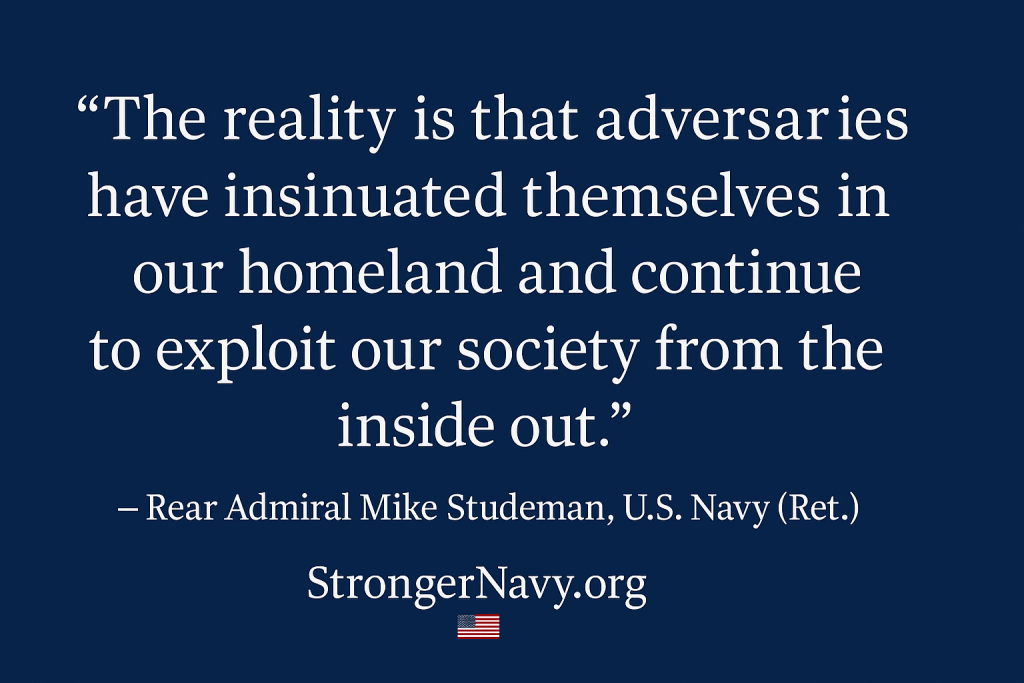
“The reality is that adversaries have insinuated themselves in our homeland… and continue to exploit our society from the inside out.”

A Call to Action
That’s why today I am asking you: Call Congress. Tell them to support our sailors. Find your Representative or Senator at USA.gov. Use your voice. Every call is logged. Every message counts.

Demand that Congress fund emergency shipbuilding. And strengthen the Navy’s fleet.

Conclusion
The future of America depends on us — on our sailors, on our civilian maritime, on our citizens, and on a Navy that protects them all.

That’s why we launched Charting the Course: Voices That Matter—a 24-part educational series breaking down how we got here, what went wrong, and what must happen next. Our goal is simple: educate the public, connect the dots, and build the support needed to close the readiness gap before it’s too late.

Let’s Roll.

The Quiet War We’re Already In: Cyber, Fentanyl, and the CCP’s Strategy of Attrition

Bill Cullifer, Founder

Introduction

As a former destroyer sailor from the ’70s, a Navy veteran who served on the Henry B. Wilson (DDG 7), and later a telecom and web technology executive, I don’t take words like “war” lightly. But we need to face facts: the Chinese Communist Party (CCP) has already launched a quiet war against America and our allies.

It doesn’t look like Pearl Harbor or Midway. Instead, it comes as millions of cyberattacks, poisoned streets, disinformation campaigns, and infiltrations into our critical infrastructure. The weapons are different, but the intent is the same: weaken America from the inside out until resistance collapses.

Two voices recently captured this reality:

  • Retired Rear Admiral Mike Studeman, former Commander of the Office of Naval Intelligence, warned: “The reality is that adversaries have insinuated themselves in our homeland and continue to exploit our society from the inside out. This is the quiet and costly national crisis we have insufficiently mobilized to address.”
  • Another security analyst summarized it bluntly: “Massive list of aggressive actions against the US by China, but two stand out: 1) cyber attacks on critical infrastructure, and 2) subsidizing fentanyl to addict our citizens. The CCP is an existential threat to our democracy and we must treat it as such.”

These aren’t exaggerations. They’re the facts on the ground — and in cyberspace.


Cyber Siege: The First Strike of Modern Conflict

The Hudson Institute’s August 2025 policy memo makes it plain: Taiwan now faces an average of 2.4 million cyberattacks per day. These intrusions target energy grids, logistics, medical systems, and semiconductors. Hudson’s conclusion is chilling: in a crisis, Beijing could disable Taiwan’s systems “without expending a single missile.”

This isn’t theory. It’s the same playbook Russia used against Ukraine in 2022, starting with cyberattacks to degrade command and control. The difference is that Taiwan is at the center of global supply chains, producing 90 percent of the world’s advanced semiconductors. If its networks go dark, the shockwaves would slam every corner of the global economy — including the U.S. Navy’s shipyards and weapons programs.

Fentanyl: War in Our Streets

While Taiwan faces digital siege, America faces chemical siege. CCP-linked networks subsidize the production of fentanyl precursors that end up killing tens of thousands of Americans each year. This is not just crime — it’s a form of warfare. An addicted, divided society is weaker, less resilient, and less able to project power abroad.

Just as cyberattacks aim to paralyze a nation’s systems, fentanyl undermines its people from within. Together, they form a strategy of attrition: weaken the United States until it can no longer lead.

Why Americans Should Care

  • PRC-backed groups like Volt Typhoon have already penetrated U.S. critical infrastructure in places like San Diego, Norfolk, and Houston.
  • Our communities are flooded with fentanyl that is subsidized and trafficked through networks linked to China.
  • Our economic security hangs on supply chains that Beijing can disrupt with a few keystrokes.

The CCP doesn’t need to invade to weaken us. They’re already doing it.

Implications for the Navy
A Navy cannot fight if its logistics, communications, and supply lines are compromised. If Taiwan falls prey to a digital siege, our fleets in the Pacific will face an even harder fight — one fought without the semiconductor edge or the industrial resilience we’ve taken for granted.

The Navy will inevitably be tasked with cleaning up the mess: defending supply chains, securing sea lanes, and protecting American infrastructure from further exploitation. That means cyber resilience and industrial revival are as critical to naval readiness as shipbuilding or new destroyers.

Implications for Our Allies
Hudson warns of a dangerous ambiguity: there is no Indo-Pacific cyber alliance. Would Japan, South Korea, or Australia respond to a Chinese cyberattack on Taiwan? Would Washington retaliate in kind? The lack of clarity undermines deterrence — and gives Beijing confidence.

We need joint cyber defense drills, clear doctrine, and public-private coordination on resilience — not after a crisis, but now.

Conclusion
We are already at war — just not in the way most Americans imagine. The CCP’s cyberattacks, fentanyl subsidies, and influence operations are part of a long game of attrition. Admiral Studeman is right: this is a “quiet and costly national crisis” we’ve failed to mobilize against.

Hudson is right too: resilience is deterrence. America must strengthen its cyber defenses, rebuild its industrial base, and support Taiwan’s ability to withstand a digital siege. At the same time, we must recognize how Silicon Valley’s past choices — offshoring technology and handing Beijing the keys — helped create this vulnerability.

The sooner we admit the war has already begun, the sooner we can rally the Navy, our allies, and the American people to win it.