Introduction
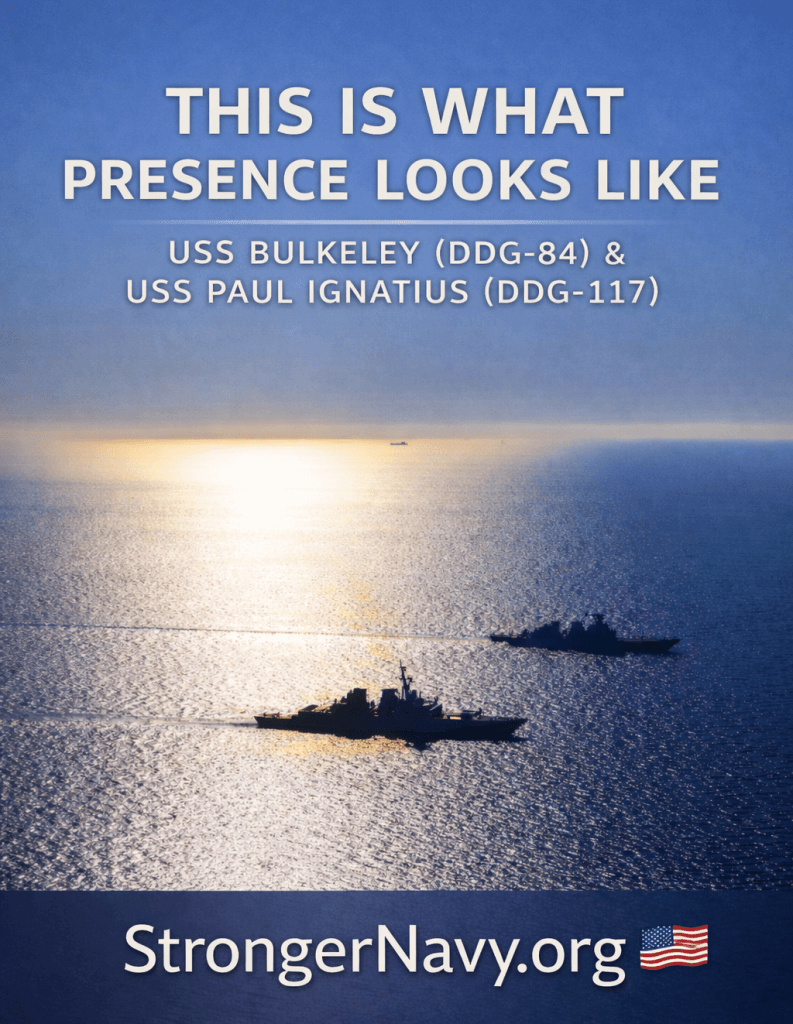
Two U.S. Navy destroyers just spent weeks tracking, shadowing, and supporting the seizure of a runaway oil tanker in the North Atlantic.
This was not a combat mission.
It was not a press event.
It was not symbolic.
It was enforcement.
USS Bulkeley (DDG-84) and USS Paul Ignatius (DDG-117) helped support an operation that ultimately boarded and seized a Russian-flagged tanker that had been actively evading authorities across thousands of miles of open ocean.
This is what maritime power looks like in 2026. And most Americans never see it.
What Happened
The vessel—initially named Bella 1—was operating as part of what U.S. officials describe as a “dark fleet,” a network of tankers designed to evade sanctions through deceptive practices.
Over the course of its escape, the tanker:
• Changed its name
• Reflagged as Russian
• Painted a new national tricolor on its hull
• Altered its identity
• Evaded a U.S. naval blockade
• Attempted to disappear into the Atlantic
After weeks of pursuit, U.S. forces—supported by Navy destroyers, Coast Guard assets, special operations forces, and allied surveillance—seized the vessel in waters between the UK and Iceland.
The UK provided support. NATO was not involved.
This was a multinational, multi-domain enforcement operation.
Not war. Not peace. Enforcement.
Why This Matters
Sanctions do not enforce themselves.
Every time a government announces new sanctions, it implies something most people never think about:
Someone has to physically enforce them.
That means:
• Ships
• Crews
• Surveillance
• Boarding teams
• Legal frameworks
• Sustainment
• Allies
• Weeks of continuous presence
Sanctions without maritime power are just words on paper.
The Rise of the Dark Fleet
So-called “dark fleet” vessels use identity laundering to move oil, weapons, and sanctioned goods across the world.
They:
• Reflag repeatedly
• Change names
• Operate under shell companies
• Transmit false data
• Disable tracking systems
• Exploit legal gray zones
This is modern maritime gray-zone warfare.
And the U.S. Navy is now its primary counterforce.
Attrition Isn’t Just Combat
A Navy captain once wrote: “Wars at sea are wars of attrition.”
What most people miss is that attrition doesn’t only happen during wars.
It happens during:
• Blockades
• Sanctions enforcement
• Freedom of navigation patrols
• Counter-smuggling missions
• Persistent surveillance
• Shadowing operations
Weeks of pursuit burn:
• Fuel
• Maintenance cycles
• Crew endurance
• Parts
• Readiness margins
Every ship tied up on one mission is unavailable for another. Presence has a cost.
Why Americans Should Care
This mission protected more than a legal principle.
It protected:
• The credibility of sanctions
• The integrity of maritime law
• The security of global trade routes
• The idea that rules still matter
If the U.S. Navy cannot enforce order at sea, someone else will rewrite the rules. And they will not do it in our favor.
This Is What Presence Looks Like
Destroyers aren’t just warfighting platforms.
They are:
• Law enforcement tools
• Diplomatic signals
• Deterrence mechanisms
• Economic stabilizers
• Crisis responders
This mission never trended. But it kept the system from breaking.
The Bigger Picture
The Navy is being asked to do more:
• With fewer ships
• With aging hulls
• With shrinking margins
• With rising global demand
This operation was a success. But success should not blind us to strain.