Year-End Message: The Pentagon’s China Report and What It Means for 2025

As We Close Out 2025 — Big Announcements, Bigger Challenges, and Why the Clock Is Ticking

Bill Cullifer, Founder

Hello friends, and fellow supporters of America’s Navy.

Bill Cullifer here with Americans for a Stronger Navy.

Just two days ago, the nation heard a dramatic announcement. Plans for a new generation of massive American warships. Trump class battleships. The announcement energized many Americans and reminded the country of something important. We live in a maritime century, and naval power still matters.

That ambition is worth acknowledging. Big thinking about sea power is healthy for America.

But big headlines don’t build fleets. Shipyards do. A trained workforce does. Predictable strategy and stable planning do.

And that’s why this moment matters. And why the Pentagon’s China report, released just one day later on December 23rd, makes our 2025 U.S. Navy Review more important than ever.

As we close out this year and gather with the people we care about, I want to take a moment to share something important with you.

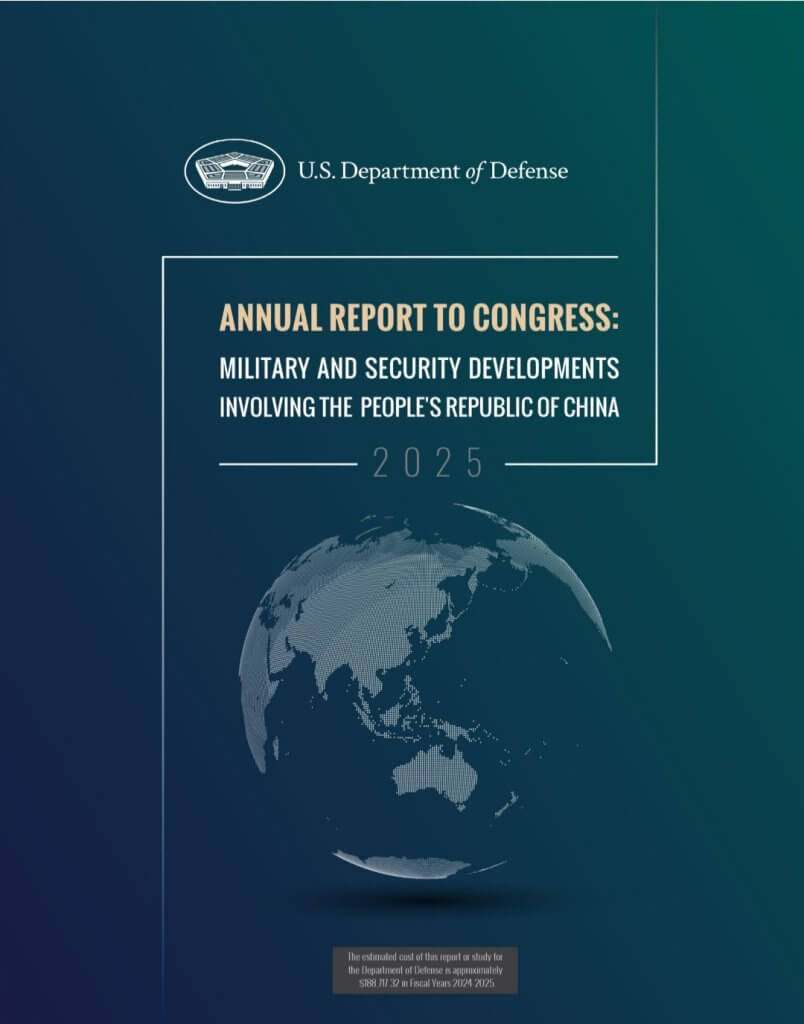
The congressionally mandated China Military Power Report. The strategic assessment that had been conspicuously missing all year while Congress debated budgets and strategy. It finally arrived just before Christmas.

Now we know why it was delayed.

This year’s report contains the most sobering message yet. China expects to be able to fight and win a war over Taiwan by the end of 2027.

That’s less than three years away.

We’ve just completed our own comprehensive review of America’s naval and maritime posture in 2025. And what we found is complicated. There is good news. There is troubling news. And there are revelations every American should understand.

The Pentagon’s China report confirms what we’ve been warning about. And adds urgency we didn’t fully grasp.

This is not another white paper full of jargon. This is a clear-eyed assessment of where we actually stand, what our competitors are doing, and what still stands in the way of American maritime renewal.

Let me start with the good news. Because it matters.

What Went Right in 2025

Despite everything else, the U.S. Navy did what it always does. It showed up.

Our sailors and Marines maintained global presence across multiple theaters. They responded to crises in the Red Sea, deterred aggression in the Pacific, and supported allies around the world. Individual ship captains and crews performed with the professionalism Americans expect. Even while operating aging ships and working through tight maintenance windows.

And leadership has spoken with urgency. Secretary of the Navy John Phelan captured the crisis perfectly.

He said, quote, “A decade to deliver capability is the equivalent of fielding a 2015 iPhone today — already obsolete.” End quote.

Those words matter. They show that senior leaders understand the stakes, even if the system hasn’t yet caught up.

There are also strong voices in Congress and within the national security community pushing for reform. Advocating for the SHIPS Act, industrial modernization, and workforce investment.

They haven’t given up. And neither should we.

China still lacks sufficient amphibious ships to conduct a large-scale invasion of Taiwan. And massive corruption investigations have hit 19 percent of China’s military leadership, including top nuclear forces commanders. Though the Pentagon warns not to count on that saving us.

But here is where the story gets harder.

The Strategic Clarity Crisis

2025 left Americans, and our allies, asking a familiar question. What is U.S. strategy?

For the first time in years, two key congressionally mandated strategic documents never arrived on time.

The Department of Defense China Military Power Report. Delayed until December 23rd.

The Navy’s Long-Range Shipbuilding Plan. Still missing.

Congress was forced to debate budgets without answers it is legally entitled to. Allies watched uncertainty grow. Adversaries took note.

Messaging contradicted policy. And while we talked about shipbuilding, we did not see new shipyards breaking ground. We did not see dry docks expanding. We did not see welding sparks from California to Virginia.

As one analyst put it, quote, “We talked about shipbuilding more than we actually built ships.” End quote.

Meanwhile, China launched over 200 vessels this year. We built a handful.

Why Should We Care About Taiwan?

Before I share what the Pentagon report reveals, let me answer the question many Americans ask. Why does a small island 7,000 miles away matter to us?

As Elbridge Colby, former Deputy Assistant Secretary of Defense, explains in TIME Magazine, quote:

“Defending far-off Taiwan and our allies seems to many like yet another foolish military misadventure for our country. But it is not. This strategy is rooted in a practical, hard-nosed assessment of what is in Americans’ concrete economic and political interests. It is not about ending evil in the world or making it safe for Wilsonianism. It is about defending Americans’ security, liberties, and prosperity from a very real, and in terms of China’s gigantic scale, unprecedented danger.” End quote.

Here’s what’s at stake in concrete terms.

Economic Impact. Taiwan produces 60 percent of the world’s most advanced semiconductors. The chips that power everything from your iPhone to F-35 fighter jets, hospital equipment to AI systems. The Director of National Intelligence testified that a blockade or invasion would cost the global economy at least a trillion dollars a year. For context, that’s after we’ve barely recovered from COVID disruptions and the Russia-Ukraine war supply chain crisis.

Strategic Geography. Taiwan sits at what the Pentagon calls, quote, “a critical node within the first island chain, anchoring a network of U.S. allies and partners, stretching from the Japanese archipelago down to the Philippines and into the South China Sea.” End quote. The Trump administration’s National Security Strategy notes that one-third of global shipping passes annually through the South China Sea. Trade routes that keep American shelves stocked and our economy running.

Alliance Credibility. If China successfully takes Taiwan by force, Japan would be 70 miles away, the Philippines 120 miles. The Council on Foreign Relations explains that U.S. allies would question whether America would or even could come to their defense, potentially leading them to either accommodate China or develop their own nuclear weapons. That’s the world our children would inherit.

Democratic Values. Taiwan is one of Asia’s few democratic success stories. 24 million free people whose open political system demonstrates an alternative path for Chinese society.

What the Pentagon Report Reveals

The 2025 assessment is the most direct warning yet about China’s military preparations.

China’s Military Buildup.

Nuclear warhead stockpile reached 600 plus in 2024, on track to exceed 1,000 by 2030.

Space-based surveillance tripled since 2018 to 359 plus satellites tracking U.S. ships.

First full-range I-C-B-M test into the Pacific since 1980. That happened in September 2024.

Cyber weapons embedded in U.S. critical infrastructure via operations like “Volt Typhoon.”

Pressure on Taiwan Intensified.

3,067 P-L-A air incursions into Taiwan’s airspace in 2024. Nearly double from 2023’s 1,641.

Two major military exercises surrounded the island, simulating blockade operations.

China dropped references to “peaceful unification” from multiple official statements.

First-ever dual aircraft carrier operations in the South China Sea.

America’s Navy Faces Unprecedented Challenge.

The operating environment for U.S. naval forces has become extraordinarily hostile. Chinese missiles can now reach 1,500 to 2,000 nautical miles from their coast. Covering Guam, Japan, the Philippines, and every U.S. naval base in the Western Pacific. The report notes these strikes, if realized in sufficient volume, could seriously challenge and disrupt U.S. presence in or around a conflict in the Asia-Pacific region.

If conflict occurs, the Navy would face a mission unprecedented in modern history. Breaking a blockade or contesting an invasion in the most contested waters since World War Two. All while Chinese forces operate from bases mere miles away while ours are thousands of miles distant.

The Timeline That Should Concern Every American

The Pentagon assesses that China’s P-L-A is making steady progress toward 2027 goals requiring ability to do three things.

Achieve “strategic decisive victory” over Taiwan. Meaning, win a war with U.S. involvement.

“Strategic counterbalance” against U.S. nuclear and strategic forces.

“Strategic deterrence and control” against other regional countries.

Translation. China is preparing to fight and win. And expects to have that capability in less than three years.

Meanwhile, Back Home

While China launched over 200 vessels in 2024, America built a handful.

While China tripled its surveillance satellites, we debated budgets without key strategic documents.

And here’s what shocked us most. Bloomberg revealed that U.S. retail giants, shipping associations, and corporate trade groups spent millions lobbying against the SHIPS Act. Legislation to rebuild American shipyards. Because it included a modest fee on Chinese-built vessels entering U.S. ports.

Let that sink in.

They benefit from the U.S. Navy keeping sea lanes open. They depend on American sailors to protect global commerce. But they opposed investing in the very shipbuilding industrial base that makes that security possible.

That’s not a foreign problem. That’s an American problem.

The Battleship Announcement. Ambition versus Reality

Two days before the Pentagon’s China report arrived, President Trump announced plans to build a new class of battleships. The largest surface combatants since World War Two. The reaction from naval experts has been mixed, and instructive.

The Center for Strategic and International Studies assessed, quote: “This ship will never sail. It will take years to design, cost 9 billion dollars each to build, and contravene the Navy’s new concept of operations.” End quote. C-S-I-S noted the program will likely follow the same path as the D-D-G 1000 destroyer. Originally planned for 18 to 24 ships, cut to 10, finally reduced to 3.

Tom Nichols, professor emeritus at the U.S. Naval War College, observed that the Navy has been, quote, “structurally compromised because its people are exhausted, its ships are aging faster than they can be repaired, and the fleet’s readiness is declining.” End quote. He argued the billions allocated for each battleship could be invested elsewhere for far better returns.

And here’s the revealing detail. The battleship announcement came the same day the Navy confirmed its new frigates would be delivered without vertical launch systems. Essentially the same light armament as the Littoral Combat Ship that the Navy has been trying to retire.

This isn’t a critique of ambition. America needs bold naval thinking. But it is a reminder of what we’ve been saying all year.

The gap between announcement and delivery is where American sea power is being lost.

China’s newest carrier, the Fujian, completed sea trials in 2024 and is operational.

Our newest carrier, the John F. Kennedy, is two years behind schedule.

China launched 200 plus vessels this year while we built a handful.

Secretary Phelan just canceled the Constellation frigate program. Three years behind schedule.

The question isn’t whether we should build battleships or carriers or frigates. The question is. Can we build anything on time and on budget?

C-N-N’s analysis noted the fundamental problem. U.S. shipyards are already stretched thin with current construction, maintenance and overhaul jobs. Until we fix the industrial base, every announcement, no matter how bold, faces the same obstacles.

And China isn’t waiting for us to figure it out. They’re building while we’re announcing.

The Structural Problem

And there’s a deeper structural problem. The Navy no longer fully controls its own future. Budget offices, political cycles, and corporate pressure shape naval reality more than sailors, Marines, shipbuilders, or combatant commanders.

One naval officer put it bluntly. Quote, “We no longer build the Navy the Navy needs. We build the Navy the accountants will tolerate.” End quote.

What Must Change

Naval expert Brent Sadler has called for a Maritime Advisor to the President. Someone whose sole mission is integrating Navy, Maritime Administration, Office of Management and Budget, Commerce, industry, and Congress. Someone who wakes up every morning thinking not about headlines or politics, but American sea power.

Right now, no one truly owns maritime strategy. And when no one owns it, nothing changes.

The Pentagon report makes clear. America is not outmatched. We are under-mobilized.

We have the technology, the coastline, the people, the industrial potential, the innovation, and the courage. What we lack is political will. And the willingness to stand up to those who profit from delay.

Why This Matters Right Now

The decisions we make in 2025 will determine whether deterrence holds or fails by 2027.

Shipyards can’t be built overnight. Dry docks take years to expand. Trained welders don’t appear by magic. If we wait until China moves on Taiwan to start mobilizing our industrial base, we will have waited too long.

Secretary Phelan was right. Quote, “A decade to deliver capability is the equivalent of fielding a 2015 iPhone today — already obsolete.” End quote.

We don’t have a decade. We have less than three years.

What You Can Do

First. Understand what’s at stake. This isn’t about abstract geopolitics. It’s about American security, prosperity, and the credibility of our word to allies who depend on us.

Second. Demand action from your representatives. The SHIPS Act, industrial base modernization, and stable long-term naval strategy aren’t partisan issues. They’re survival issues.

Third. Speak up when corporations lobby against American maritime strength while profiting from Navy-protected sea lanes.

Fourth. Support the sailors, Marines, and shipbuilders who show up every day despite aging ships, delayed maintenance, and uncertain strategy.

Our 2025 U.S. Navy Year in Review lays out exactly how we got here, what this year revealed, and what must change if we are serious about remaining a maritime power. Combined with the Pentagon’s China report, the picture is complete and urgent.

If you want to understand the full picture, the good, the bad, and the honest truth, request your copy at StrongerNavy dot org and complete the contact form. We will send it to you.

This isn’t just about ships. It’s about our economy, our allies, and our national future.

And the clock is ticking.

Thank you for caring about America’s maritime strength.

Happy holidays and fair winds.

Bill Cullifer
Founder, Americans for a Stronger Navy
StrongerNavy dot org