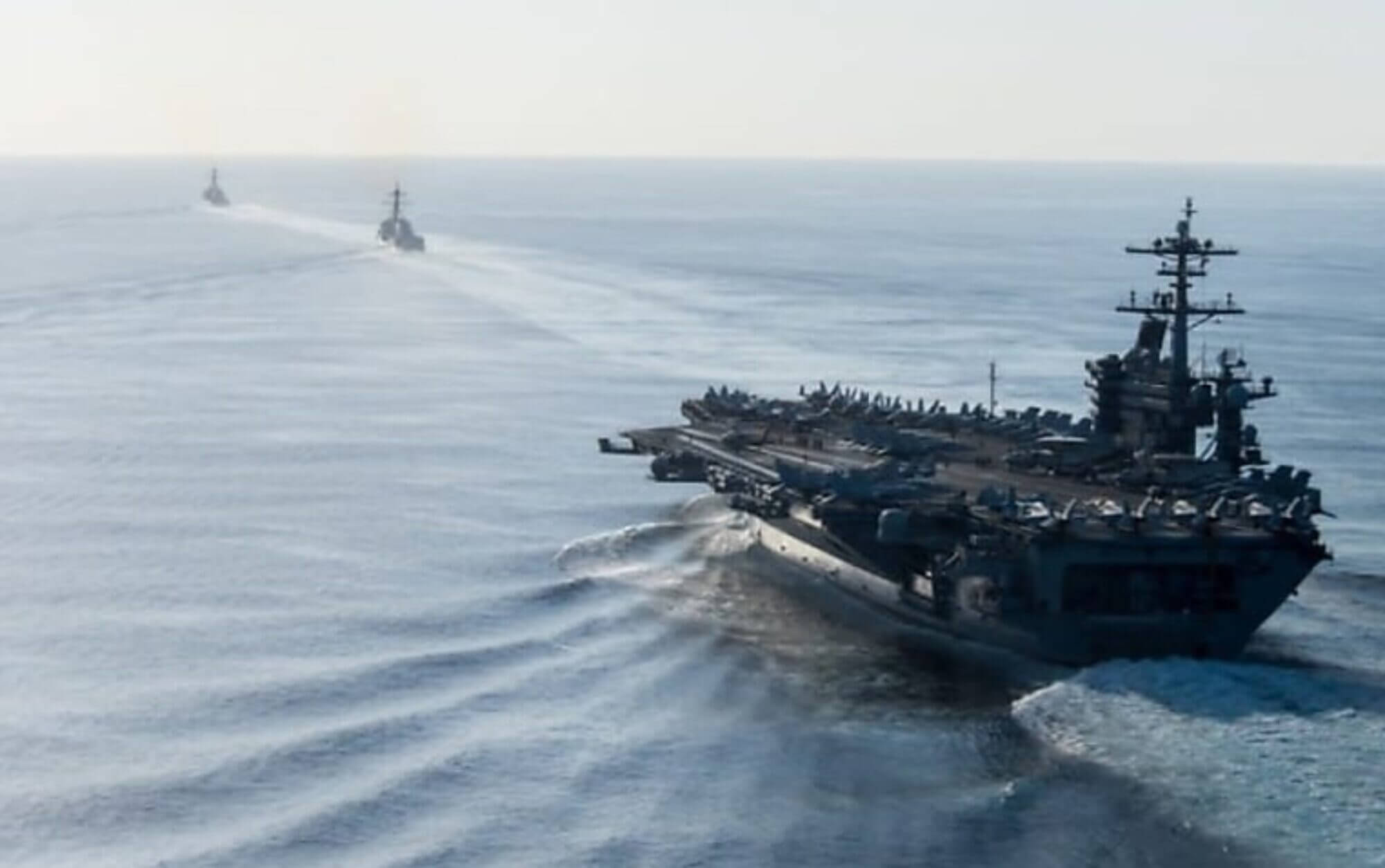
Welcome back to America at Sea: Voices That Matter. Today we hear from Glenn Mallo, Command Master Chief, U.S. Navy (Ret.). He came up through the Navy’s nuclear power program and spent most of his career aboard aircraft carriers and with forward-deployed naval forces. Today he works in the defense industrial base, so he sees the same problems from the other side. Same three questions as everyone: what’s working, what’s in the way, and what he’d fix first.
What we heard
What’s working: People. Sailors, shipbuilders, engineers, tradespeople and government civilians deliver when they are trained, mentored and led. New technology helps, but “we need people to know how to put it to work.”
The biggest barrier: A system that separates responsibility, authority, incentives and consequences. Workforce, supply chain and infrastructure problems are real, but leaders also have to ask which contracting practices and management incentives let those problems persist.
“A for effort, but D minus for results. The system has got to stop measuring effort as though it was readiness.”
Fix first: Ownership of delivery. Try many approaches, fail fast, learn fast, and hold leaders accountable for results without lowering standards. He welcomed the “First Breakfast” approach to working with industry [1], a play on the 1993 “Last Supper” that set off defense industry consolidation [2].
New to the Last Supper and the First Breakfast? Read our explainer: [LINK TO FIRST BREAKFAST POST]
Full transcript
Lightly edited for clarity.
Bill Cullifer: Bill Cullifer here with Americans for a Stronger Navy. Welcome back to America at Sea: Voices That Matter. Yesterday we heard from a merchant mariner about the people who sail our ships. Today, a retired Command Master Chief on the people who build them, fix them and crew them. Two different worlds, same message: you can’t rebuild America at sea without the people. And as he puts it, effort isn’t the same as results. Glenn Mallo, over to you.
Introduction
Glenn Mallo: Thanks, Bill. Thank you so much for this opportunity. I’m humbled and honored to join you in this conversation.
I’m Glenn Mallo, a retired United States Navy Command Master Chief. I spent most of my career serving aboard aircraft carriers and with forward-deployed naval forces. I started in the Navy’s nuclear power program and had the privilege of serving in engineering, shipyard, industrial and training environments.
As I got more senior in the Navy, I was privileged to be selected for senior enlisted assignments. I served aboard the USS Ronald Reagan pre-commissioning unit, the carrier USS Enterprise, and the USS George Washington twice: once here in Norfolk, Virginia, and again when she was forward-deployed in Yokosuka, Japan. I also had the great honor of leading the chiefs mess aboard the USS Carl Vinson during the carrier’s refueling and complex overhaul.
Now I work in the defense industrial base, where I see the other side. The same foundational principles apply, and that reinforces what I strongly believe: America’s maritime strength depends not just on our ships, but on our sailors and the industrial base that supports and sustains the whole ecosystem.
Question 1: What’s working right now that we should do more of?
Glenn Mallo: I’d start with our people. And truly, it’s not just the sailors. As I alluded to in my intro, it’s everybody: our civilian counterparts, now that I’m on the commercial side, as well as our government people who make everything work.
Having spent much of my career aboard aircraft carriers and with forward-deployed naval forces, I know what American sailors can accomplish when they are properly trained, mentored and led. I believe that same concept extends to our shipbuilders, our engineers, technicians and tradespeople, and the government civilians who support the whole ecosystem.
One thing the Navy taught me is that we have got to invest in our people. Coming up through the nuclear power training pipeline, where high standards, technical competence and accountability were not optional, I learned that we have to train people, invest in mentoring and equipping them, and set them up for success. We’d all be surprised by what they can deliver.
In naval nuclear power, we were trained to understand our systems, take ownership of our responsibilities and operate safely under demanding conditions. We need more of that across the maritime industrial base. Set up apprenticeships and technical education. Get the senior folks to provide mentorship and opportunities for young Americans, so they can see and believe that they can build meaningful careers in this industry.
I am encouraged by the advances in robotics, advanced systems and autonomy, and by different approaches to shipbuilding and maintenance, like Korean shipbuilders coming here to work with us. Those are novel concepts. But technology, in my humble opinion, is not the answer by itself. We need people who know how to put it to work.
Leadership matters too. Throughout my career I learned that you cannot lead from behind a desk. Our leaders have got to get out where the work happens, understand the challenges and take care of the people. With good people, the right training, leadership and the mission, we’re going to be amazed at what our people can deliver.
Question 2: What’s the biggest barrier to rebuilding America at sea?
Glenn Mallo: I think the biggest barrier is really the system. Right now, in my opinion, it separates responsibility, authority, incentives and consequences.
I’ve heard the workforce shortages, the supply chain problems and the aging infrastructure described eloquently many times. Those deserve attention. But we also need to ask leadership what decisions, contracting practices and management incentives are allowing those problems to persist. I’ve read about the Last Supper, and now I’m very excited about the First Breakfast.
We cannot keep asking the waterfront to overcome the instability and friction created upstream from the deck plates. More money and more technology will not deliver their full value if we do not address the root causes. The underlying execution system has got to change.
The standard should be operational results. I’ve seen it, and you know it, Bill. We have to deliver qualified components, build and repair ships, and deliver on time. And the Navy has to have sailors ready to operate them. Not just activity that looks like progress.
Across the seven chiefs messes where I served as command master chief, I’m guilty of giving a performance assessment that said, “A for effort, but D minus for results.” Effort matters. But in my experience, effort alone did not mean we had accomplished the mission.
“The system has got to stop measuring effort as though it was readiness.”
Question 3: If you could fix one thing first, what would it be?
Glenn Mallo: I’d continue with what we’re doing right now. I’m excited about the First Breakfast approach. One thing I would emphasize is that there are many different solutions, and I’m all in on that. Let’s experiment and try them all. It’s not going to be one size fits all, where somebody says, “This is what we’ve got to do. Contract it this way.” We have to try them all.
Most importantly, though, we have to fix the ownership of delivery. It’s results, not excuses. Leadership matters a lot. Marshal all those different ideas, run them through experimentation, then tweak. If we don’t see the right results, let’s try something else. We have to do that fast. We should not be afraid to fail, as long as we fail fast, learn from it and turn it around quickly.
I keep going back to my naval nuclear power experience, where quality, safety and accountability are not in conflict. They’re inseparable. And when I had the opportunity to lead sailors, we had to take care of them and set them up for success.
In the world we’re in right now, with leadership taking charge and a maritime czar who will marshal all this and be accountable for the results, I think the same principles I’ve seen apply directly to rebuilding America at sea. Give capable people room to work, remove the obstacles, and hold leaders accountable for results.
We cannot lower our standards. Fail fast, fail often and learn, yes, but that means we get better and apply those lessons. We’ve been repeating the same lessons. It’s time to look at the results, ask what we haven’t been doing correctly, and get it done.
“Clear ownership, disciplined execution, measurable results. That’s where I believe we should start. It’s fixing the system.”
About America at Sea: Voices That Matter
America at Sea: Voices That Matter is a conversation hosted by Americans for a Stronger Navy with U.S. Maritime Action and moderated by Capt. Brent Sadler, USN (Ret.). Shipbuilders, mariners, industry, the Navy community and policy experts answer the same three questions about rebuilding America at sea. Views expressed are the speaker’s own.
Join the conversation on X. What’s working? What’s in the way? What would you fix first?
References
[1] Josh Kirshner and Jonathan Green, “The ‘Last Supper’ era is over — it’s time for the ‘First Breakfast’,” Breaking Defense, December 2024. https://breakingdefense.com/2024/12/the-last-supper-era-is-over-its-time-for-the-first-breakfast/
[2] “Last Supper (defense industry),” Wikipedia. https://en.wikipedia.org/wiki/Last_Supper_(defense_industry)