Night Flight Ops aboard USS Gerald R Ford

Night Ops aboard USS Gerald R. Ford

Hello, members and subscribers of Americans for a Stronger Navy.

We are excited to share with you a thrilling story of air operations at night on an aircraft carrier. This is not a fiction, but a reality that our brave and skilled naval aviators face every day.

Imagine landing a plane on a moving ship in the dark, with no lights, no runway, and no margin for error. Imagine doing it while the ship is pitching and rolling in rough seas, and the wind is blowing from all directions.

  • Imagine doing it with a plane that weighs over 30 tons, carries tons of fuel and weapons, and travels hundreds of miles per hour.
  • Imagine doing it with only a few seconds to react, and no second chances.

This is what our naval aviators do every night on an aircraft carrier. It is one of the most challenging and dangerous feats in aviation, requiring precision, courage, and razor-sharp instincts.

It is also one of the most vital capabilities of our Navy, enabling us to project power and protect our interests around the world.

In this story, we will take you behind the scenes of night carrier operations, and show you how our Navy pilots train, prepare, and execute these missions.

We will also show you how the aircraft carrier USS Gerald R. Ford, the newest and most advanced carrier in the world, supports these operations with its cutting-edge technology and systems.

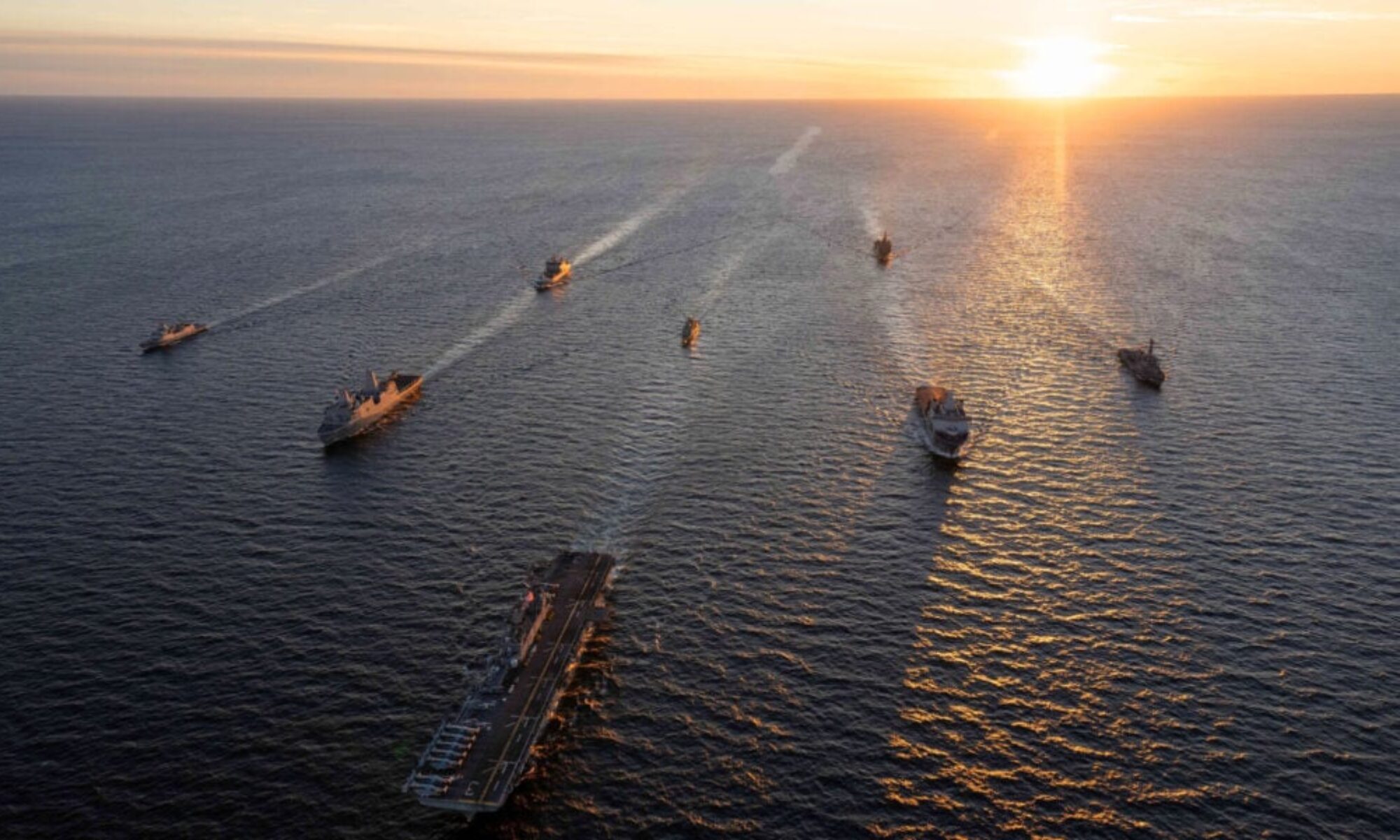
The aircraft carrier USS Gerald R. Ford conducts flight operations in the Adriatic Sea, July 25, 2023.

The Gerald R. Ford Carrier Strike Group is on a scheduled deployment in the U.S. Naval Forces Europe area of operations, employed by U.S. Sixth Fleet to defend U.S., allied, and partner interests.

We will tell you what it takes to launch and recover these planes in the dark, what are the risks and rewards of doing so, and what are the secrets of success for these elite pilots.

We will also share with you some facts and statistics about night carrier landings that will amaze you:

  • According to a YouTube video by NAVY Productions , night carrier landings are graded on a scale of 0 to 5 by the Landing Signal Officer (LSO), who guides the pilots with visual signals and radio calls. A perfect landing is a 5, a safe but average landing is a 3, and a bolter (a missed arrestment) is a 2.5.
  • According to Wikipedia , bolters occur when the plane’s tailhook fails to catch any of the four arresting wires on the carrier deck, forcing the pilot to abort the landing and go around for another attempt. Bolters can happen due to pilot error, equipment failure, or adverse weather conditions.
  • According to an article by Carey Lohrenz , a former Navy fighter pilot and author of Fearless Leadership: High-Performance Lessons from the Flight Deck , night carrier landings are so stressful that they can cause physiological effects such as increased heart rate, blood pressure, adrenaline, cortisol, and pupil dilation.
  • According to an article by Proceedings Magazine , published by the U.S. Naval Institute , night carrier landing accident rates have historically been about three times higher than day rates, due to reduced visibility, depth perception, and situational awareness.

We hope you enjoy this story as much as we enjoyed writing it for you. We hope it will inspire you to appreciate the incredible work that our Navy does every day, and to support our cause of making our Navy stronger and more capable.
Thank you for your attention and loyalty.
Americans for a Stronger Navy.
USS Harvey C. Barnum Jr. (DDG 124): Embodying American Strength and the Pursuit of Peace

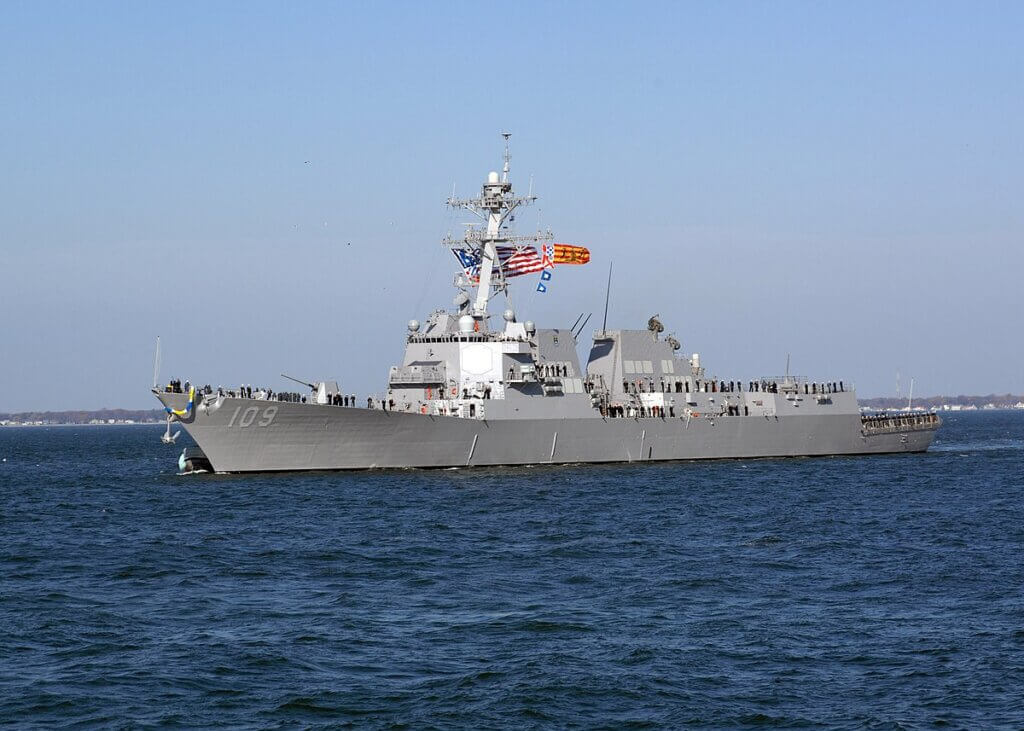
101123-N-5292M-186 NORFOLK The newly commissioned guided-missile destroyer USS Jason Dunham (DDG 109) arrives in its new homeport of Naval Station Norfolk Nov. 23, 2010. The ship is named for Marine Cpl. Jason Dunham, who selflessly sacrificed his life at eh age of 22 in Iraq, April 14, 2004. (U.S. Navy photo by Mass Communication Specialist 1st Class Julie R. Matyascik) (Released).

Dear members and subscribers of Americans for a Stronger Navy,

We are excited to share with you an event that highlights not just the steadfast progress of our naval forces, but also the values and heroism that permeate the proud history of our organization and our country.

On July 29th, the U.S. Navy is set to christen the future USS Harvey C. Barnum Jr. (DDG 124), a state-of-the-art guided-missile destroyer, at the General Dynamics Bath Iron Works in Bath, Maine. This momentous event embodies the continued evolution and modernization of our naval capabilities, ensuring our country remains secure and well-protected against potential threats.

In the context of our mission at Americans for a Stronger Navy, events like this further amplify the significance of our work. Our commitment to ensuring a robust, well-equipped Navy is vindicated as we see the christening of such advanced warships. We believe that a stronger navy is vital for maintaining America’s position in the global arena, defending our interests, and securing our nation’s prosperity.

Why does this matter to America and the American people, you may ask? In a world increasingly defined by geopolitical tensions and unpredictable threats, a strong navy serves as a bulwark against such challenges. With the commissioning of USS Harvey C. Barnum Jr. (DDG 124), we honor not just a war hero, but also the values of bravery, leadership, and sacrifice that he symbolized. These are values that unite us as Americans and remind us of the cost of our security and freedom.

The USS Harvey C. Barnum Jr. is more than a guided-missile destroyer – it represents the backbone of our surface fleet, prepared to ensure American safety at all times. It embodies our dedication to the defense of our country and our determination to promote peace.

This event serves as a proud reminder of our mission, and we invite you to join us in celebrating this historic occasion. Together, let’s continue working to strengthen our Navy, uphold our shared values, and safeguard the American dream for future generations.

Best Regards,
Bill, Americans for a Stronger Navy

A Historic Meeting for a Stronger Navy

PSecretary of Defense Lloyd J. Austin III greets Papua New Guinean Minister for Defense Win Daki in Port Moresby, Papua New Guinea, July 27, 2023.

a also faces many challenges, such as poverty, corruption, health crises, environmental degradation, and illegal fishing. Moreover, it is located in a region where China is expanding its influence and presence, posing threats to the sovereignty and security of our allies and partners.

That is why the United States has been working closely with Papua New Guinea to support its development and defense needs. The United States has already provided personal protective equipment to the country to help it combat the COVID-19 pandemic.

A Landmark Defense Cooperation Agreement

The meeting between Secretary Austin and Papua New Guinea’s defense leaders resulted in two major outcomes that will benefit both countries and our navy.

First, the two countries concluded a shiprider agreement in May. This agreement will allow Papua New Guinea’s forces to ride along with U.S. Coast Guard vessels patrolling the area. This collaboration will help the country enforce its sovereignty and combat illegal fishing activities, ensuring the protection of its marine resources.

Second, the two countries negotiated and signed a landmark Defense Cooperation Agreement that will deepen U.S.-PNG ties. The Defense Cooperation Agreement is currently awaiting approval from Papua New Guinea’s parliament.

This agreement seeks to deepen the defense ties between the two nations and enable the United States to support the modernization of Papua New Guinea’s defense force. It will foster closer collaboration on exercises, training, interoperability, and defense-capacity building.

Furthermore, the agreement presents opportunities for joint infrastructure investment and expanded U.S. defense presence in Papua New Guinea, beyond small-scale projects. By working together, the two countries aim to promote a vision of a free and open Indo-Pacific region, where international law is upheld, and disputes are resolved peacefully and without coercion.

A Step Towards a Stronger Navy

We applaud Secretary Austin for his leadership and vision in forging this historic partnership with Papua New Guinea. We believe that this partnership will enhance our security and cooperation in the Indo-Pacific region, which is vital for our national interests and global stability.

We also believe that this partnership will strengthen our navy by providing more opportunities for training, interoperability, and presence in a strategic area. A stronger navy means a stronger America.

We hope that you share our enthusiasm and support for this historic meeting and its outcomes. We encourage you to learn more about this meeting by reading this article from the Department of Defense.

We also invite you to join us in our efforts to advocate for a stronger navy by becoming a member or making a donation to our organization. You can visit our website at www.americansforastrongernavy.org to find out more about our work and how you can get involved.

Thank you for your attention and support.
Sincerely,
The Americans for a Stronger Navy Team

Beyond the Horizon: Roy Englert’s Journey from the Navy to the Running Track

Meet Roy Englert – A Living Legend

Roy Englert at 100


Today, we want to share the extraordinary tale of Mr. Roy Englert, a centenarian World War II Navy veteran, and his unstoppable spirit. Not only did he serve our country with valor, but he also continued to break records as a competitive runner well into his 90s, embodying the very essence of resilience and strength.

Early Life and Naval Service
Englert’s journey started in Nashville during the Great Depression.

He joined the Naval Reserve during his junior year at Vanderbilt University and entered the war effort after graduation in 1943. He participated in significant operations like the D-Day invasion of Normandy, where he served as a supply officer on a landing ship, and Operation Dragoon in the south of France. His service didn’t stop there. He also took part in the Battle of Okinawa, narrowly escaping a kamikaze attack, and was preparing for the invasion of mainland Japan when the war ended.

Post-War Life and Civilian Career
Returning to the U.S., Englert attended law school and then had a fulfilling 22-year career with the Department of the Treasury in Washington, D.C. Later, he moved to a private law firm and business consulting before retiring at age 73.

Unstoppable Spirit – The Runner
After reading a book about the benefits of exercise, Englert began running at age 60. Despite initial challenges, he persisted, gradually transitioning from his basement to high school tracks and eventually to competitive meets. His achievements are staggering: from setting world records in relay races with a team of 90-year-olds in 2014 to breaking a world record for the 95-99 age group in the 800-meter race in 2018, Englert never ceased to amaze.

The Power of Perseverance
Despite his mother’s concerns about him being “too old” to run, Englert proved that age is just a number. He inspires others not to make age an excuse to stop living life to the fullest. His mantra is quite simple: “Keep moving, keep moving, keep moving.”

Conclusion and Takeaway
Roy Englert’s life serves as an enduring testament to the power of perseverance, resilience, and a positive attitude. He is an example not only to veterans and service members but to everyone. The takeaway message here is never to let age or circumstances define what you’re capable of.

Remember, every stride we take towards our goals, no matter how small, is a victory in itself. So let’s keep moving, just like Roy Englert.

We hope you’ve enjoyed this incredible story, and we wish you a fantastic summer ahead. Stay strong, stay motivated, and above all, stay moving!

U.S. Navy to Commission Littoral Combat Ship Canberra in Australia

USS Canberra (LCS 30)

The U.S. Navy will commission its newest Independence-variant littoral combat ship (LCS), the future USS Canberra (LCS 30), during an international commissioning ceremony, at 10:00 a.m. AEST on Saturday, July 22 (8:00 p.m. EDT on Friday, July 21) at the Royal Australian Navy Fleet Base East in Sydney, Australia.

The Honorable Carlos del Toro U.S. Secretary of the Navy, will deliver the commissioning ceremony’s principal address. Remarks will also be provided by His Excellency General the Honourable David Hurley, AD, DSC, Governor-General of the Commonwealth of Australia; the Honourable Richard Marles, MP, Deputy Prime Minister of Australia; the Honorable Caroline Kennedy, U.S. Ambassador to Australia; Adm. Michael Gilday, U.S. Chief of Naval Operations; Vice Adm. Mark Hammond, Royal Australian Chief of Navy; and Mr. Larry Ryder, Vice President of Business Development and External Affairs, Austal USA. The ship’s sponsor is Australian Senator, the Honourable Marise Payne, the former Australian Minister of Foreign Affairs who attended the ship’s keel laying ceremony at Austal USA’s shipyard in Mobile, Alabama, in 2020.

Independence-variant LCS are fast, optimally-manned, mission-tailored, surface combatants that operate both close to shore and in open-ocean environments. LCS integrate with joint, combined, crewed, and unmanned systems to support forward-presence, maritime security, sea control, and deterrence missions around the globe. The USS Canberra’s sister ships, USS Jackson (LCS 6), USS Gabrielle Giffords (LCS 10), USS Manchester (LCS 14), and USS Mobile (LCS 26) are all currently on deployment in the Indo-Pacific.

LCS 30 will be the 16th commissioned Independence-variant LCS. It is the second ship named in honor of the city of Canberra, and commemorates the more than 100 years of mateship between the U.S. and Australian allies. The first USS Canberra (CA 70) was named in remembrance of the Australian heavy cruiser HMAS Canberra that sank during the Battle of Savo Island while fighting side-by-side with U.S. naval forces. CA 70 was the first U.S. Navy ship named for a foreign capital.

The first USS Canberra (CA 70) received seven battle stars for her service in World War II. In May 1958, Canberra served as the ceremonial flagship for the selection of the Unknown Serviceman of World War II and Korea. Canberra was decommissioned in a ceremony on Feb. 2, 1970, at the San Francisco Bay Naval Shipyard. One of her propellers is preserved at the Los Angeles Maritime Museum, while the ship’s bell is on display at the Australian National Maritime Museum.

NameCanberra
NamesakeHMAS Canberra
Awarded6 October 2017[2]
BuilderAustal USA[2]
Laid down10 March 2020
Launched30 March 2021
Sponsored byMarise Payne[2]
Christened5 June 2021[4]
Acquired21 December 2021[1]
HomeportSan Diego
IdentificationHull number: LCS-30
MottoCan Do! [3]
StatusPre-Commissioning
Badge
General characteristics
Class and typeIndependence-class littoral combat ship
Displacement2,307 metric tons light, 3,104 metric tons full, 797 metric tons deadweight
Length127.4 m (418 ft)
Beam31.6 m (104 ft)
Draft14 ft (4.27 m)
Propulsion2× gas turbines, 2× diesel, 4× waterjets, retractable Azimuth thruster, 4× diesel generators
Speed40 knots (74 km/h; 46 mph)+, 47 knots (54 mph; 87 km/h) sprint
Range4,300 nautical miles (8,000 km; 4,900 mi) at 20 knots (37 km/h; 23 mph)+
Capacity210 tonnes
Complement40 core crew (8 officers, 32 enlisted) plus up to 35 mission crew
Sensors and
processing systems
Sea Giraffe 3D Surface/Air RADARBridgemaster-E Navigational RADARAN/KAX-2 EO/IR sensor for GFC
Electronic warfare
& decoys
EDO ES-3601 ESM4× SRBOC rapid bloom chaff launchers
ArmamentBAE Systems Mk 110 57 mm gun4× .50 cal (12.7 mm) guns (2 aft, 2 forward)Evolved SeaRAM 11 cell missile launcherMission modules
Aircraft carried2× MH-60R/S SeahawksMQ-8 Fire Scout


USS Mason: A Ready and Reliable Ship

USS Mason (DDG 87) and USNS Supply (T-AOE 6)

Hello and welcome back to the Americans for a Stronger Navy blog, where we keep you updated on the latest news and stories about the US Navy and its vital role in protecting our nation and advancing our interests around the world. Today, we are happy to share with you some exciting photos and information about the USS Mason (DDG 87),

The USS Mason (DDG 87) is an Arleigh Burke-class destroyer in the United States Navy. She is currently underway in the Atlantic Ocean participating in the Carrier Strike Group Four Composite Training Unit Exercise (COMPTUEX). COMPTUEX is an intense, multi-week exercise designed to fully integrate a carrier strike group as a cohesive, multi-mission fighting force and to test their ability to carry out sustained combat operations from the sea.

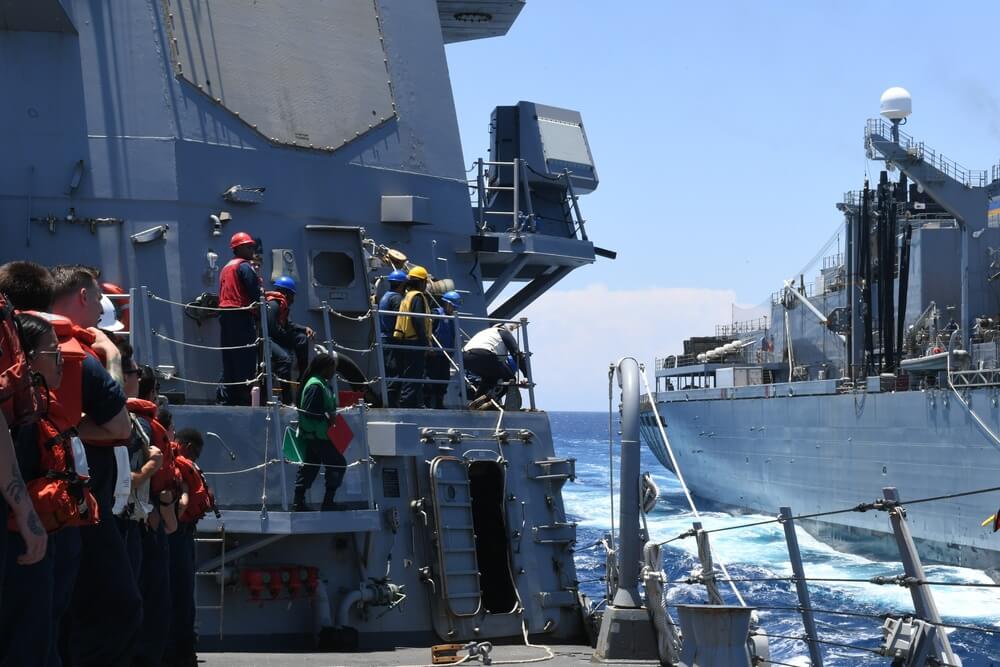
Recently, the USS Mason participated in a replenishment-at-sea with the Military Sealift Command’s fast combat support ship USNS Supply (T-AOE 6). During this operation, the USS Mason received fuel, food, ammunition, and other supplies from the USNS Supply. The replenishment-at-sea also tested the coordination and communication skills of both ships’ crews.

The USS Mason is a ready and reliable ship that can perform a variety of missions, including air defense, anti-submarine warfare, anti-surface warfare, and ballistic missile defense. She is equipped with a powerful AEGIS combat system that integrates advanced sensors, weapons, and command and control capabilities. She has a crew of 380 officers and enlisted personnel and can carry two MH-60R Seahawk helicopters.

The USS Mason is named in honor of the non-segregated crew serving on board USS Mason (DE-529), the first ship in the US Navy with this distinction of a predominantly black crew. She is the 37th destroyer of her class and the 21st ship of this class to be built at Bath Iron Works in Bath, Maine. She was commissioned in April 2003 and is currently homeported in Mayport, Florida.

The USS Mason represents the legacy of her namesake and the dedication of her crew. She is ready to defend our nation and our allies with honor, courage, and commitment.

The USS Mason is not only a powerful ship, but also a decorated one. She has earned several awards and honors for her outstanding performance and achievements in various missions and exercises. Some of her notable awards include:
• The Combat Action Ribbon, for engaging and defending against missile attacks from Houthi rebels in Yemen in October 2016.
• The Navy Unit Commendation, for conducting strike operations against Libyan air defense systems and military targets, as well as humanitarian assistance and disaster relief missions for Libyan civilians, in support of Operation Odyssey Dawn /Operation Unified Protector in 2011.
• The Navy E Ribbon, for achieving excellence in battle efficiency and readiness in 2004, 2005, and 2016.
• The Battenberg Cup, for being the best all-around ship or submarine in the United States Navy’s Atlantic Fleet based on crew achievements in 2016. Mason was only the fifth destroyer in the last 111 years to receive this prestigious award.
• The Bloodhound Award, for meritorious anti-submarine warfare preparation and prowess in 2020. Mason demonstrated exceptional ASW capabilities during multiple exercises and operations, including tracking a Russian submarine that was operating near the US coast.
The USS Mason is a ship that has made history and continues to make a difference. She is a testament to the courage, skill, and dedication of her crew, past and present, who proudly serve on board this remarkable vessel. She is also a tribute to the legacy of her namesake crew, who broke barriers and paved the way for future generations of African American sailors.

Safeguarding Maritime Security: U.S. Navy Defends International Waters Against Iranian Aggression

USS McFaul, a U.S. Navy guided-missile destroyer,
safeguarding merchant vessels and upholding the principle of freedom of navigation.

Introduction:
In a rapidly evolving global landscape, the role of a robust and resilient navy is pivotal in preserving peace, enforcing international laws, and maintaining security across the world’s oceans. Recent events in the Gulf of Oman underline the pivotal role that the U.S. Navy plays in defending commercial interests and ensuring safe passage for all nations. This incident is a shining example of the critical work done by the brave men and women of the United States Navy, underpinning the mission of the Americans for a Stronger Navy organization.

Summary:
In two separate incidents on July 5th, U.S. forces successfully prevented attempts by the Iranian Navy to seize commercial tankers in international waters near Oman. Both attempts were thwarted by the prompt intervention of the USS McFaul, a U.S. Navy guided-missile destroyer, safeguarding merchant vessels and upholding the principle of freedom of navigation. This article delves into these incidents, illustrating the need for a powerful Navy to protect global commerce and maritime security. I I 9(.

Key Takeaways:
Through prompt and decisive action, the U.S. Navy successfully defended two commercial tankers from hostile attempts at seizure. These incidents underscore the urgent need for an alert and robust naval presence to ensure the safety and free navigation of commercial vessels in international waters.

Defense of International Waters: U.S. forces successfully prevented two attempted commercial tanker seizures by the Iranian Navy in international waters, highlighting the vital role that a strong navy plays in defending maritime interests.

Vigilance and Rapid Response: The U.S. Navy’s swift response demonstrates the importance of a vigilant and agile naval force ready to respond at a moment’s notice to maintain maritime security.

The Role of Partnerships: The increased rotation of ships and aircraft patrolling the Strait of Hormuz alongside partner nations underscores the power of international cooperation in securing global waters.

Conclusion:
As we reflect on these recent incidents, let us remember the importance of a strong and responsive Navy. Not only does it protect our economic interests, but it also serves as a beacon of security in turbulent waters. As part of the Navy community, we couldn’t be prouder of the exceptional effort by the McFaul crew and the entire U.S. Naval Forces Central Command team. Let these events serve as a reminder to all of the vital work the Navy performs daily, and inspire us to continue supporting their mission.

As we move forward, let us bolster our commitment to ensure a stronger Navy – not just for America but for the safety and security of international waters that connect us all. Together, we can help maintain a global order that respects international law, protects economic prosperity, and enforces the freedom of the seas.

Whether you’re a member of the Navy, a related civilian, or an average American – your support is crucial in shaping a stronger future for our Navy, our nation, and our world. Subscribe to Americans for a Stronger Navy, and join us as we rally to secure our seas.