The sinking of the first ‘Tin Can’ and the recent finding of its 80lb Bell – How a World War I American Destroyer Became a Symbol of Courage and Sacrifice

Dear Members, Friends and Tin Can Fans,

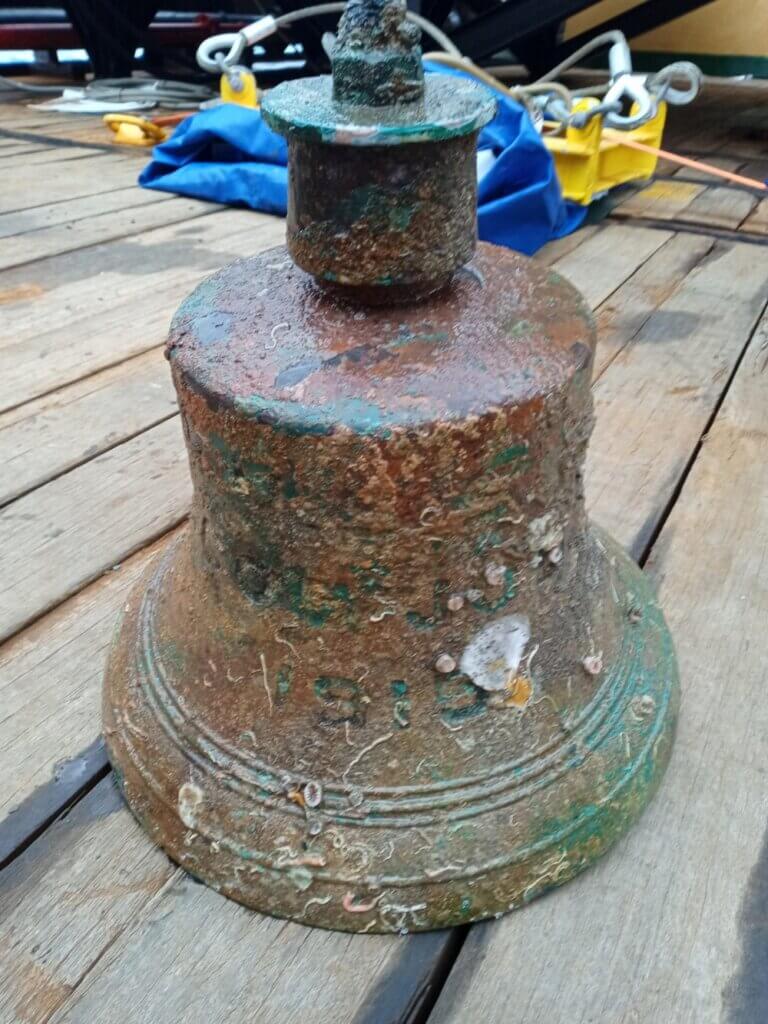
USS Jacob Jones Ships Bell
Bill Cullifer, Founder

Here is an amazing story that you won’t read about everyday. It is a story of US Naval history and heritage, and to honor the legacy of some of the bravest and most heroic sailors who ever served in the U.S. Navy.

The Story of on USS Jacob Jones

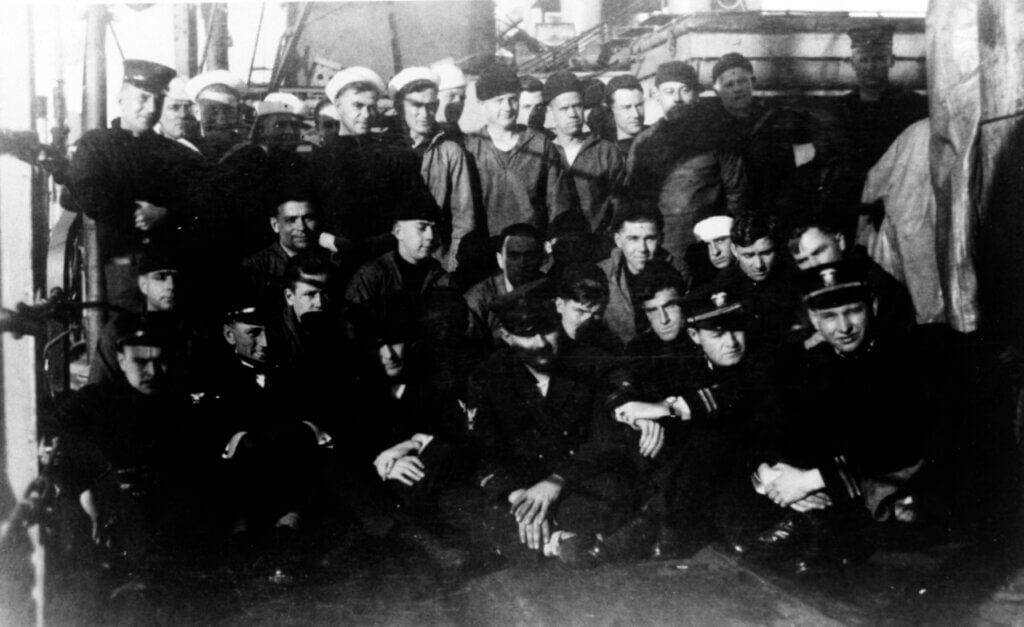
The USS Jacob Jones was a World War I American destroyer that rescued hundreds of survivors from torpedoed ships. In 1917, it was sunk by a German submarine in the English Channel, killing 64 sailors. The ship’s bell, a symbol of the crew’s bravery and sacrifice, was recently recovered from the wreck by British divers. It will be displayed at the National Museum of the U.S. Navy in Washington, D.C.

This is the story of the USS Jacob Jones, the first U.S. Navy destroyer ever sunk by enemy fire, and the recent recovery of its bell from the wreck site.

The USS Jacob Jones and Its History

The USS Jacob Jones was a Tucker-class destroyer commissioned in 1916. It was named after Commodore Jacob Jones, a naval hero of the War of 1812. The ship was designed for high speed and maneuverability, and armed with four 4-inch guns, eight 21-inch torpedo tubes, and two depth charge racks. The ship was assigned to the Atlantic Fleet, and patrolled the U.S. coast and the Caribbean Sea.

After the U.S. entered World War I in April 1917, the USS Jacob Jones was deployed to the U.K. to join the anti-submarine warfare campaign. The ship escorted supply convoys across the Atlantic Ocean, and rescued hundreds of survivors from damaged British ships that had been hit by enemy torpedoes. The ship earned a reputation for its courage and compassion, and was praised by both the U.S. and the British naval authorities.

On December 6, 1917, the USS Jacob Jones was returning from escorting a convoy to France, when it was attacked by a German U-boat, U-53, in the English Channel. The U-boat fired a single torpedo that struck the ship’s stern, causing a massive explosion and a fire.

The ship’s commander, David W. Bagley, ⁹ordered the ship to be abandoned and the life rafts to be launched, as the stern began to sink. The ship went down in eight minutes, with two officers and 62 crew members on board. The U-boat commander, Hans Rose, radioed the coordinates of the survivors to the U.S. base at Queenstown, Ireland, and offered to take some of the wounded on board.

However, the survivors refused his offer, and waited for rescue. The U.S. Navy later awarded Rose a letter of commendation for his humanitarian gesture.

The Discovery and Recovery of the Bell

The wreck of the USS Jacob Jones remained undiscovered for over a century, until August 2022, when a group of expert divers found it about 400 feet below the surface of the English Channel, some 60 miles south of Cornwall. The divers were amazed by the condition of the wreck, which was largely intact and well-preserved. They also noticed the ship’s bell, which was still attached to the ship’s mast. The bell was made of brass and weighed 80 pounds. It had the ship’s name and the year of commissioning engraved on it. The bell was a historical and symbolic artifact, as it was used to signal the ship’s movements, to mark the time, and to call the crew to action.

The discovery of the wreck attracted the attention of the Naval History and Heritage Command (NHHC), the U.S. Navy’s official organization responsible for preserving and protecting the Navy’s historical and archaeological resources. The NHHC partnered with the U.K. Ministry of Defense to study the wreck site, and to recover the bell. The NHHC’s policy is to leave the shipwrecks undisturbed, as they are considered war graves and sacred sites. However, in this case, the NHHC was concerned about the unauthorized and illegal salvaging of the bell, which could damage the wreck and disrespect the sailors. The NHHC decided to retrieve the bell, and to use it as a memorial to the sailors who made the ultimate sacrifice in the defense of both the U.S. and the U.K.

In January 2024, a specialized salvage unit from the U.K. Ministry of Defense’s Salvage and Marine Operations (SALMO) conducted a survey of the wreck site, and successfully recovered the bell. The operation was challenging and risky, as the wreck site was deep, dark, and cold, and the bell was heavy and fragile. The salvage team used a remotely operated vehicle (ROV) to cut the bell from the mast, and to lift it to the surface. The salvage team also placed a wreath and an American flag on the wreck, to honor the lost sailors. The operation was a remarkable example of the cooperation and friendship between the U.S. and the U.K. in the naval domain.

The Bell as a Memorial

After the recovery, the bell was given temporarily to Wessex Archaeology, a private U.K. firm under contract with the NHHC, for documentation and conservation. The bell will be turned over to the U.S. during a ceremonial transfer later this year, and will be sent to the NHHC’s Underwater Archaeology Branch for further conservation treatment. The bell will eventually be displayed at the National Museum of the U.S. Navy in Washington, D.C., where it will serve as a memorial to the sailors who served and died on the USS Jacob Jones, and as a reminder of the history and heritage of the U.S. Navy.

We, the members and friends of the Americans for a Stronger Navy, are grateful and proud of the USS Jacob Jones and its sailors, who exemplified the values and ideals of the U.S. Navy, and who contributed to the security and freedom of both the U.S. and the U.K. We are committed to honoring their legacy and supporting the U.S. Navy and its sailors in their efforts to maintain and enhance their naval power, deterrence, and readiness in the 21st century. We invite you to learn more about the USS Jacob Jones and its history, and to visit the National Museum of the U.S. Navy when the bell is displayed. We also encourage you to continue your advocacy and support for a stronger U.S. Navy, and to join us in our efforts to promote naval power, deterrence, and readiness in the 21st century. Thank you for your attention and interest, and may God bless the U.S. Navy and the U.S.A.

Dr. Steven Wills Appointed to Advisory Board of Americans for A Stronger Navy

Steven Wills

The Americans for A Stronger Navy organization is honored to welcome Dr. Steven Wills, a distinguished navalist, historian, and former U.S. naval officer, to its Advisory Board. With over 30 years of experience in surface warfare, naval strategy, and national security, Dr. Wills brings a wealth of knowledge and a unique perspective to the organization.

Dr. Wills’ notable contributions to naval history and strategy, including his significant works “Strategy Shelved” and “Where are the Carriers?”, co-authored with former Navy Secretary John Lehman, showcase his deep understanding of naval power and its evolution. His frequent contributions to esteemed publications such as the U.S. Naval War College Review and U.S. Naval Institute News further highlight his expertise and commitment to advancing the field of naval studies.

As we continue to explore the future of American naval power through our podcast series “Charting the Course: Navigating the Future of American Naval Power,” and the webinar series “Wings of Victory: How Naval Aviators Transformed WWII from Battleships to the Skies,” Dr. Wills’ insights will be invaluable. His perspective on the importance of a robust and forward-thinking naval strategy aligns perfectly with our mission to champion a stronger navy and advocate for peace through strength.

Reflecting on his appointment, Dr. Wills stated, “Joining Americans for A Stronger Navy offers an exciting opportunity to leverage historical naval strategies to address contemporary challenges. It is essential for our generation to understand and apply the lessons learned from past naval engagements to ensure a formidable naval force for the future.”

About Americans for A Stronger Navy:

Founded by Bill Cullifer, Americans for A Stronger Navy is dedicated to advocating for a robust naval force and promoting peace through strength. The organization emphasizes the importance of learning from historical naval strategies to build a stronger future.

About Dr. Steven Wills:

Naval historian, author, and former U.S. naval officer, Dr. Steven Wills has over three decades of experience in surface warfare, naval strategy, and national security. His work, including “Strategy Shelved” and “Where are the Carriers?”, provides critical insights into the development and implementation of effective U.S. Navy strategies.

For further inquiries or to arrange an interview with Dr. Steven Wills, please contact:

Bill Cullifer, founder of Americans for A Stronger Navy at the contact us page.

Happy Thanksgiving Salute to Our Navy Sailors and Their Families: Strength Across All Divisions

Dear Members and Friends of Americans for a Stronger Navy,

Our Deepest Gratitude This Thanksgiving

Bill Cullifer, Founder

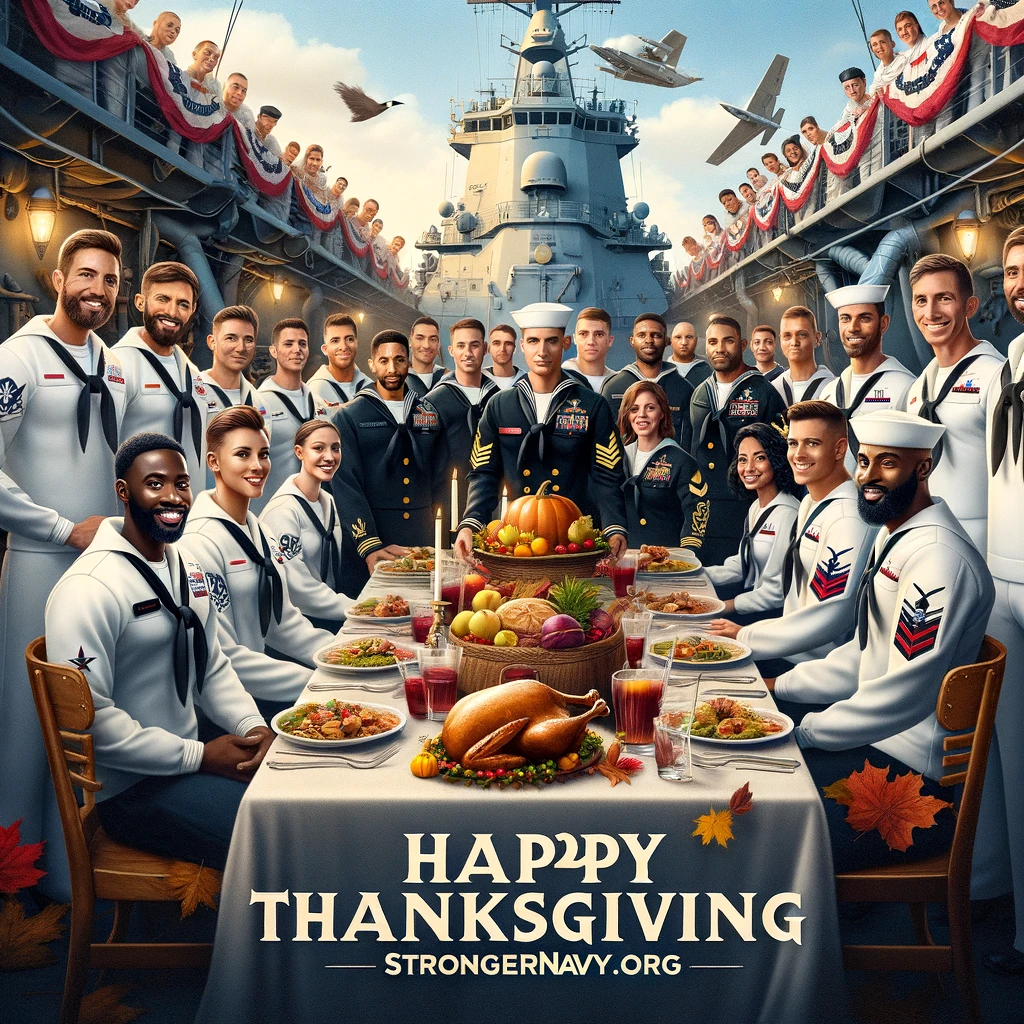
As we gather with our loved ones to celebrate Thanksgiving, it’s a poignant time to reflect and express our deepest gratitude to the men and women serving in the United States Navy. These sailors, stationed across the globe from the decks of mighty aircraft carriers, destroyers, and support ships to the silent realms of the deep sea, showcase unwavering commitment and dedication every day.

A Unified Force: Celebrating Every Division and Unit

The Navy is a complex and diverse organization, with each division and unit playing a crucial role in the fulfillment of its overarching mission. This Thanksgiving, we honor the unique and essential contributions of each facet of our Navy:

  • Surface Fleet: Our surface warriors manage a vast array of sophisticated warships, ensuring a strong and visible naval presence.
  • Submarine Force: The silent service, operating beneath the waves, plays a critical role in deterrence and intelligence gathering.
  • Naval Aviation: The eyes in the sky, these pilots and their support teams provide essential air power and support to naval operations.
  • SEAL Teams and Special Warfare: Embodiments of resilience and bravery, undertaking the most challenging missions to protect our nation.
  • Naval Construction Forces (Seabees): The builders and protectors, essential to the construction and maintenance of naval facilities.
  • Logistics and Supply Units: The lifeline of the Navy, ensuring that our forces are always ready and well-equipped.
  • Medical and Chaplain Corps: The heart and soul, providing vital care and spiritual support to our sailors.

To the Families Behind Our Sailors

We extend our heartfelt thanks to the families of our Navy personnel. Your sacrifices and support form the foundation of our sailors’ strength. This Thanksgiving, we recognize and celebrate your resilience and unwavering spirit.

A Thanksgiving Message of Thanks

To each sailor serving across every division and unit, and to their families – our Thanksgiving is more meaningful because of your commitment and sacrifices. Your dedication safeguards our freedoms and upholds our nation’s values. We are eternally grateful and inspired by your service.

Join Our Mission

This Thanksgiving, let us renew our commitment to supporting our Navy. We invite you to join Americans for a Stronger Navy in advocating for the resources and recognition our sailors and their families deserve. Your involvement can make a significant difference.

With deepest gratitude and respect,

Bill


The Lone Star Flight Museum: A Must-See Destination for Navy Lovers and WW2 History Buffs, A Testimonial by Dale A. Jenkins

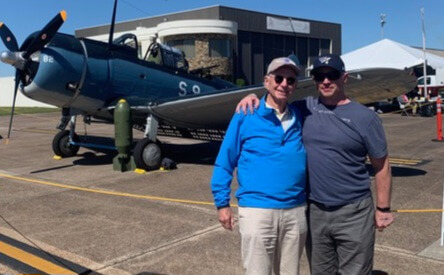
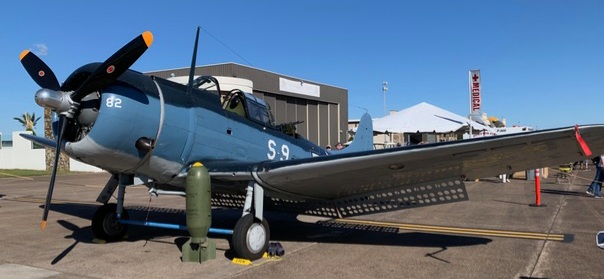
Dale A. Jenkins, Senior Advisor – Americans for a Stronger Navy and son Dave Jenkins at Lone Star Flight Museum. Houston, Texas. They stand in front of a Douglas SBD Dauntless, a World War II American naval scout plane and dive bomber that was manufactured by Douglas Aircraft from 1940 through 1944.
Bill Cullifer, Founder

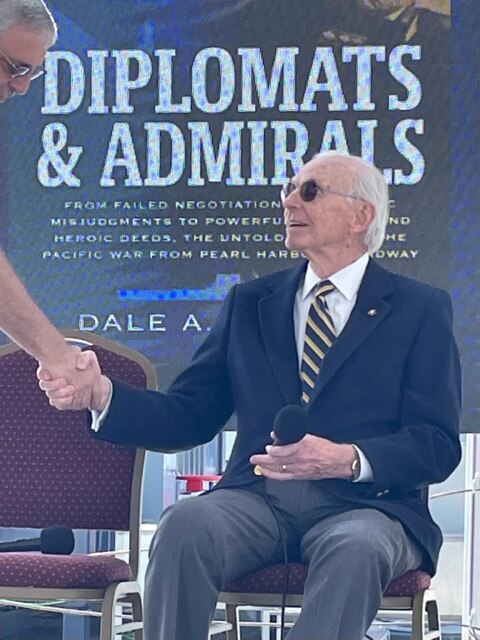
If you are a fan of aviation and history, you will love the Lone Star Flight Museum in Houston, says American for a Stronger Navy senior advisor, Dale A. Jenkins, a former Naval officer and author of Diplomats and Admirals, a book that explores the diplomatic and military aspects of World War II.

The museum displays more than 24 historically significant aircraft, and many artifacts related to the history of flight. Among its collection, there are several U.S. Navy planes that have served in various wars and missions, and tell the stories of courage and sacrifice of their pilots and crews.


Douglas SBD Dauntless is a World War II American naval scout plane and dive bomber that was manufactured by Douglas Aircraft from 1940 through 1944 sturdy enough for pilots to dive at a near-vertical 80 degrees. The US Navy’s primary dive-bomber at the war’s start, the bomber earned its reputation—and helped earn victory—at the 1942 Battle of Midway, sinking four Japanese carriers.

One of these planes is the Douglas SBD Dauntless, a dive bomber that played a crucial role in the Battle of Midway in 1942. The Dauntless was of particular interest to Dale, who has done extensive research on the Battle of Midway and the role of the Dauntless in turning the tide of the war in favor of the U.S. Dale said that it was touching to be there with his son, who shares his passion for aviation and history. “It was a wonderful experience to share with my son. He was fascinated by the planes and their stories,” said Dale.


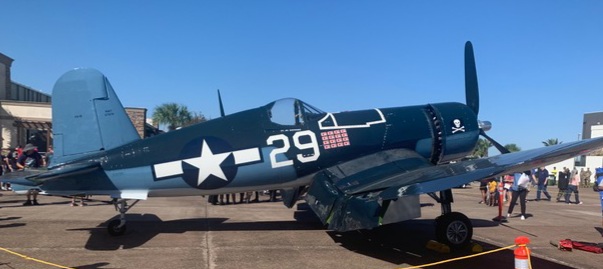
Another plane is the Grumman F6F Hellcat, a fighter that dominated the skies over Iwo Jima and Okinawa. The plane on display at the museum was flown by David McCampbell, the Navy’s top ace of World War II, who shot down 34 enemy planes and received the Medal of Honor.

The Grumman F6F Hellcat is an American carrier-based fighter aircraft of World War II. Designed to replace the earlier F4F Wildcat and to counter the Japanese Mitsubishi A6M Zero, it was the United States Navy’s dominant fighter in the second half of the Pacific War.

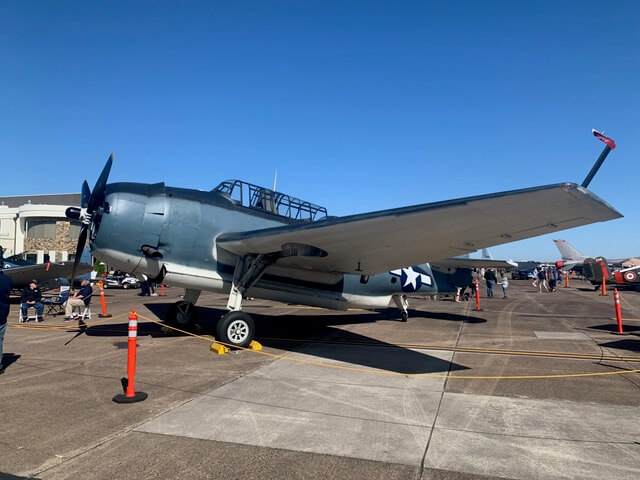
The Grumman TBF Avenger (designated TBM[1] for aircraft manufactured by General Motors) is an American World War II-era torpedo bomber developed initially for the United States Navy and Marine Corps, and eventually used by several air and naval aviation services around the world.

A third plane is the Grumman TBM Avenger, a torpedo bomber that was flown by future president George H.W. Bush. The plane on display at the museum was flown by Paul Newman, a pilot who participated in the Battle of Leyte Gulf and was shot down by a kamikaze.

A fourth plane is the Douglas A-1 Skyraider, an attack aircraft that served in Korea and Vietnam. The plane on display at the museum was flown by Ed Olander, a pilot who flew over 200 combat missions and rescued a downed airman in enemy territory.

These are just some examples of the U.S. Navy planes that you can see and learn more about at the Lone Star Flight Museum. The museum also offers flight experiences for those who want to feel what it is like to fly in a vintage aircraft.

“The Lone Star Flight Museum is an amazing place to see and appreciate the history and heritage of U.S.Naval aviation. The planes are not only museum pieces, but also flying legends that inspire us to be stronger and better,” said Dale. “I highly recommend it to our members and friends of the Americans for a Stronger Navy and anyone who loves our Navy and our country.”

In early 2024, together with Dale, we will be shining a spotlight on the courageous pilots at Midway with our Wings of Victory series, which will feature interviews, stories, photos, videos, and more about these heroic aviators.

We owe the pilots at Midway and elsewhere a debt of gratitude for their service and sacrifice for our freedom and security.

If you are interested in visiting the Lone Star Flight Museum or learning more about our Wings of Victory series, you can find more information on on their website by clicking here.

Thank you for your support for a stronger Navy.

From Depths to Skies: Exploring the Future Landscape of U.S. Naval Power.

Segment: An Interview with Captain Brent Sadler on U.S. Naval Strategy and Policy

Bill Cullifer, founder

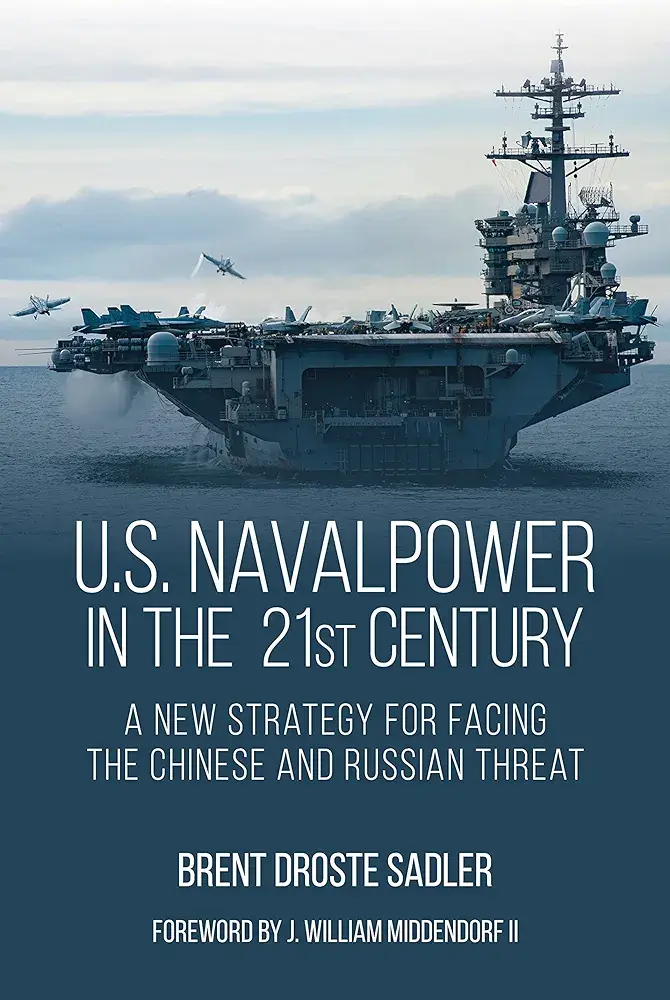
Editor’s Note: This segment is a continuation of our series “From Depths to Skies: Exploring the Future Landscape of U.S. Naval Power.” After exploring the future landscape of US Naval Power the RAND Perspective on U.S. naval power, we now converse with Captain Brent Sadler, a retired Navy officer and an expert on Naval strategy. Captain Sadler, currently a senior research fellow at The Heritage Foundation, has penned “U.S. Naval Power in the 21st Century: A New Strategy for Facing the Chinese and Russian Threat,” a pivotal read for those invested in our national security.

“The world is on the cusp of a dangerous decade, and whether it becomes a violent peace or worse is a function of how we as a nation choose to respond. Conventional thinking has not delivered the results or the forces needed to effectively compete with China and Russia.” – Brent Sadler

This is how Captain Brent Sadler, a retired Navy officer and an expert on naval power, begins his book U.S. Naval Power in the 21st Century: A New Strategy for Facing the Chinese and Russian Threat. In this book, he proposes a new strategy for U.S. naval power that integrates diplomacy, military operations, and economic statecraft to counter the challenges posed by China and Russia in the maritime domain.

As the founder of Americans for a Stronger Navy, I recognize the importance of a strong U.S. Navy more than anyone. The Navy protects our shores, our allies, and our way of life. But the Navy is facing new challenges in the 21st century, from China’s growing military power to Russia’s aggressive behavior.

That is why I reached out to Captain Sadler and asked him to share his insights and recommendations on U.S. naval power and how to overcome these challenges. He was very gracious to spend a few minutes in between meetings to discuss an office visit for a more in-depth series of conversations.

Highlight

In our brief conversation, Captain Sadler highlighted:

Urgency: The U.S. Navy must respond swiftly to deter threats from China and Russia. He stressed on fortifying maritime infrastructure, including shipyards and ports.

Public Awareness: He appreciated efforts to enlighten Americans about the Navy’s significance.

Naval Vision: He resonates with the vision of expanding the Navy fleet, infusing new technologies, devising fresh strategies, and bolstering alliances.

Future Discussions: Captain Sadler is keen on delving into his strategy’s nuances in our subsequent sit-down in Washington D.C.

Strategy

Captain Sadler’s book proposes a holistic naval strategy encapsulating diplomacy, military operations, and economic statecraft.

He bases his strategy on:

• Ensuring a credible deterrence posture.

• Augmenting maritime security cooperation.

• Broadening maritime domain awareness.

• Championing maritime governance and norms.

This strategy dovetails with the RAND Perspective, emphasizing innovation, alliances, and presence for the Navy’s evolution.

Conclusion

Join us in our upcoming interviews with Captain Sadler. Dive deeper into his work in Washingtom D.C.

Remember, as Americans, our Navy’s future strength and readiness lie in our hands. Let’s rally together for a robust U.S. naval power.

U.S. Naval Power in the 21st Century: A New Strategy for Facing the Chinese and Russian Threat

Happy Birthday US Navy

Happy Birthday US Navy from
Americans for a Stronger Navy

Dear Navy Family,

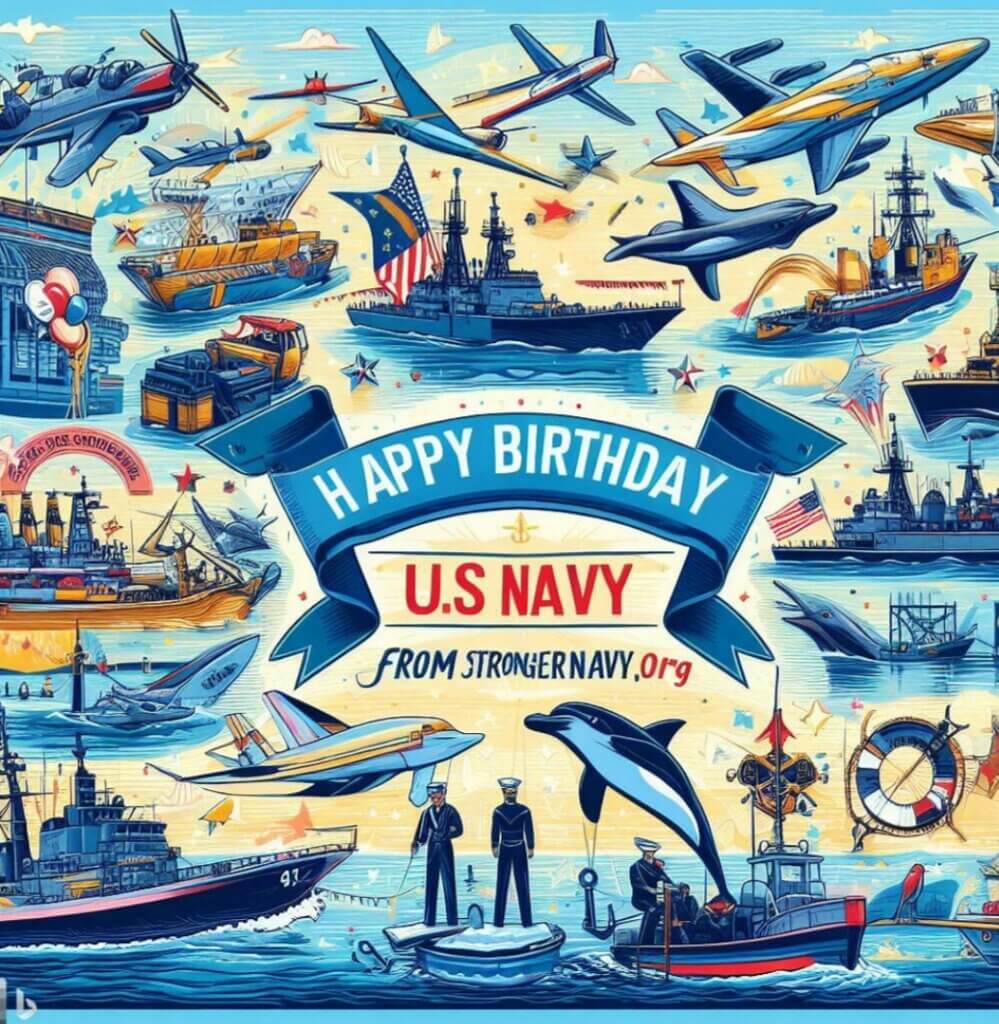
Today marks the 248th birthday of the US Navy, the most formidable and adaptable Naval force on the global stage. This day serves as a testament to the valor, dedication, and resilience of those who wear the Navy uniform, past and present. We equally salute the unyielding support of their families, the backbone behind their service.

Having served as an enlisted man on the Henry B. Wilson (DDG7), I’ve borne witness to numerous moments of camaraderie and growth. Yet, my time working alongside LCDR Nosal remains etched in my memory. His method of mentorship, a blend of wisdom and patience, was transformative. LCDR Nosal had this innate ability to identify potential and nurture it, turning raw talent into formidable skill. LCDR Nosal, wherever you are your commitment to building up those around you didn’t just make us better sailors but better individuals. You truly embodied what it means to lead with heart and purpose in the Navy.

This unwavering commitment, combined with the lessons from leaders like LCDR Nosal and others on board, inspired both the foundation of StrongerNavy.org and my personal desire to mentor and teach.

Our vision is clear: advocate for a robust, future-ready, and stronger Navy that stands guard over our nation’s interests and acts as a beacon of peace globally. Through our platform, we aim to amplify the importance of naval supremacy, champion the Navy’s forward-looking endeavors, and extend a helping hand to our Navy brethren and their kin.

A fortified Navy ensures our nation’s safety, prosperity, and the liberties we hold dear. This vision, however, can only be realized with your support. I invite you to champion our cause, to become an integral part of our fraternity. Your involvement can chart the course for our Navy’s brighter tomorrow.

Bill


·

Call for Speakers: ‘Charting the Course’ Webinar Series

Compass Rose Wikipedia

The “Americans for a Stronger Navy” initiative invites experts, thought leaders, and specialists to lend their voice to a groundbreaking webinar series, ‘Charting the Course’, shedding light on the evolving landscape of naval strength, AI advancements, and defense budgetary challenges.

Topics of Interest:

  • The “Replicator” initiative and its repercussions on AI system development.
  • Navigating budgetary challenges within the defense sector.
  • The role of Naval strategy in global geopolitics.
  • Steps to ensure a future-ready U.S. Navy.
  • The transformational power of AI in naval warfare.

Who Should Apply:

This call is open to members, subscribers, and anyone with expertise in national security, defense, and U.S. Navy topics. It’s an opportunity to enlighten a dedicated audience about critical issues shaping American Naval strength and security.

Episode Topics Available for Speakers:

  1. Rethinking Traditional Shipbuilding – Delve into the modernization of the U.S. Navy fleet. (Duration: 40 mins)
  2. Embracing Naval Innovation – Discuss the tech advancements transforming Naval warfare. (Duration: 40 mins)
  3. Budgetary Realities in Defense – Analyze budget constraints and defense initiative funding. (Duration: 40 mins)
  4. Implications of Naval Strategy – Examine how naval strategies influence global dynamics. (Duration: 40 mins)
  5. Strategies for a Future-Ready Navy – Share insights on prepping the Navy for future challenges. (Duration: 40 mins)
  6. AI and the US Navy – Explore the role of AI in naval warfare evolution. (Duration: 45 mins)

Details:

The series, underwritten by the Americans for a Stronger Navy, is set to debut on December 7, 2023. All episodes will be freely accessible at StrongerNavy.org. Click here for further event details.

How to Apply:

Interested speakers are invited to submit their credentials, along with a brief proposal outlining their preferred topic and approach. Please submit name and email using the contacr us page below or by email at strongernavydotorg AT gmail.com or on Twitter @StrongerNavy.

Call to Action:

Don’t just witness the future; help shape it! Apply now to be a speaker in ‘Charting the Course’ and steer the conversation on the future of American naval power.

Naval Historian Dale A. Jenkins Joins Americans for A Stronger Navy as Advisory Board Member

FOR IMMEDIATE RELEASE

Dale A. Jekinsa, Advisory Board Member - Americans for a Stronger Navy.
Dale A. Jekinsa, Advisory Board Member – Americans for a Stronger Navy.

The Americans for A Stronger Navy organization proudly welcomes renowned naval historian, author, and former US Navy officer, Dale A. Jenkins, to its Advisory Board. As a distinguished Staff Director of the Council on Foreign Relations in New York, and author of “Diplomats and Admirals,” Dale also holds positions on the Samuel Eliot Morison Committee of the Naval Order of the United States, New York, and as a Regional Director of the Naval War College Foundation. Jenkins contributes immense knowledge and expertise to the organization.

“Diplomats and Admirals,” Jenkins’ acclaimed work, explores the nuanced relationship between diplomacy and warfare during Pacific War events from July 1941 to June 1942. His research underscores the complex naval strategies, highlighting the significant transformation of naval warfare during WWII as focus transitioned from battleships to aviation supremacy.

Bill Cullifer, Founder of Americans for A Stronger Navy, remarked, “With Dale on board, our organization stands strengthened. His profound understanding of naval history, coupled with his commitment to harnessing the lessons of the past for a brighter, more resilient future, aligns perfectly with our mission. We eagerly anticipate the wealth of insights he will provide as we champion the ideals of a Stronger Navy and Peace through Strength.”

Jenkins’ collaboration with the organization has already yielded results, manifesting in the “Charting the Course: Navigating the Future of American Naval Power” Podcast Series and the “Wings of Victory: How Naval Aviators Transformed WWII from Battleships to the Skies” webinar series. These educational endeavors embody the informed and captivating narratives Jenkins is known for.

Reflecting on his new advisory role, Dale A. Jenkins expressed, “Joining Americans for A Stronger Navy is opportunity to bring our knowledge from past naval engagements forward to meet our current challenges. It’s crucial for our generation to grasp the pivotal strategies and moments that defined naval engagements of yesteryears. Our shared vision is to enlighten, educate, and reinforce the essence of a formidable naval force.”

About Americans for A Stronger Navy:

Founded by Bill Cullifer, Americans for A Stronger Navy is committed to championing a robust navy and advocating for peace through strength. The organization values the essence of shared history, community fostering, and the significance of gleaning insights from historical naval strategies to fortify the future.

About Dale A. Jenkins

Naval historian, author “Diplomats and Admirals,” former US Navy officer, Advisory Board member, for Americans for a Stronger Navy, distinguished Staff Director of the Council on Foreign Relations in New York, Dale also holds positions on the Samuel Eliot Morison Committee of the Naval Order of the United States, New York, and as a Regional Director of the Naval War College Foundation.

For further inquiries or to arrange an interview with Dale A. Jenkins, please contact:

Bill Cullifer, founder Americans for a Stronger Navy at the contact us now page.

Bridging the Waters: Understanding the Navy-Industry Partnership

To the esteemed members and subscribers of the Americans for A Stronger Navy,

Our nation’s security is a matter of collective pride and responsibility. A significant portion of this duty is understanding the complexities and dynamics between our armed forces and the industries that support them.

The relationship between the Navy and the defense industry is pivotal in this regard. In this article, we explore this intricate bond, highlighting its challenges and explaining its significance to all Americans and our mission.

Why This Matters to Americans and to Our Mission

The Navy serves as a beacon of our nation’s might, guarding our seas and ensuring our interests remain secure. But behind this force lies a complex network of collaborations, decisions, and strategies involving various stakeholders, most notably the defense industry.

To truly fortify our Naval capabilities, this partnership must be not just functional but exceptional. At the heart of the Americans for a Stronger Navy’s mission is the endeavor to ensure that this relationship is productive, transparent, and efficient.

Del Toro on the Essence of Partnerships

Secretary of the Navy, Carlos Del Toro, has frequently emphasized the significance of industry partnerships in strengthening the Navy. “I know what it takes to build a warship,” he remarked, shedding light on the intricate nature of defense contracts and collaborations.

Del Toro’s firsthand experience in shipbuilding has given him a deep appreciation for the teamwork between the government and industry players. “It’s an example of how America’s best can come together to build these tremendous platforms,” he observed, highlighting the symbiotic relationship that ultimately benefits national and economic security.

The Challenges for the Navy

Budget Constraints: Fiscal restrictions challenge the Navy to strike a balance between acquiring cutting-edge technology and ensuring value for money.
Rapid Technological Changes: The pace of tech advancements means the Navy must ensure new innovations integrate seamlessly with existing systems.
Bureaucratic Processes: Lengthy procurement procedures can potentially hamper the Navy’s preparedness.

The Challenges for the Industry

Understanding Navy Requirements: The defense industry must constantly adapt to the Navy’s evolving and specific needs.
Financial Risks: High initial costs with no certain returns can be a significant burden.
Security Protocols: While critical, stringent security guidelines can pose challenges to industry partners.

Role of Organizations in Strengthening the Partnership

External organizations play a pivotal role in nurturing and amplifying this relationship. Their contributions include:

Educating Both Parties: Through seminars and workshops, ensuring synergy between the Navy and industry.
Facilitating Communication: Promoting open dialogue to preempt misunderstandings and encourage seamless collaborations.
Advocacy: Championing policies and practices that benefit both the Navy and its industry partners.

A Personal Note from Bill Cullifer, Founder Americans for a Stronger Navy

“At the core of our ethos at the Americans for A Stronger Navy is the understanding that a robust Navy translates to enhanced safety and prosperity here at home.

Clarity and focus are our guiding principles. We strive to hone in on the essentials, especially in the procurement process, weeding out redundancies, stripping away non-essentials, and bypassing unnecessary overhead.

This perspective isn’t just about clarity; it’s about potential cost-savings, ensuring our Navy receives the best without undue expenses.”

Conclusion

In our commitment to enhancing public understanding and fostering dialogue about naval strength and its significance, the Americans for A Stronger Navy proudly underwrites a range of educational initiatives.

These resources serve as a bridge between the Navy, the defense industry, and the public, underscoring the importance of partnerships. The ‘Charting the Course: Navigating the Future of American Naval Power Podcast Series’ provides insights into how these partnerships can shape the future of naval capabilities.

Additionally, our upcoming ‘Wings of Victory: How Naval Aviators Transformed WWII from Battleships to the Skies and won the Pacific War’ series will highlight the historic significance of collaborative efforts.

Through these platforms, we aim to showcase the power of collaboration and the continuous need for a strong and adept Navy.”