A Tribute to Chicago’s Naval Legacy: Admiral Rickover’s New Submarine

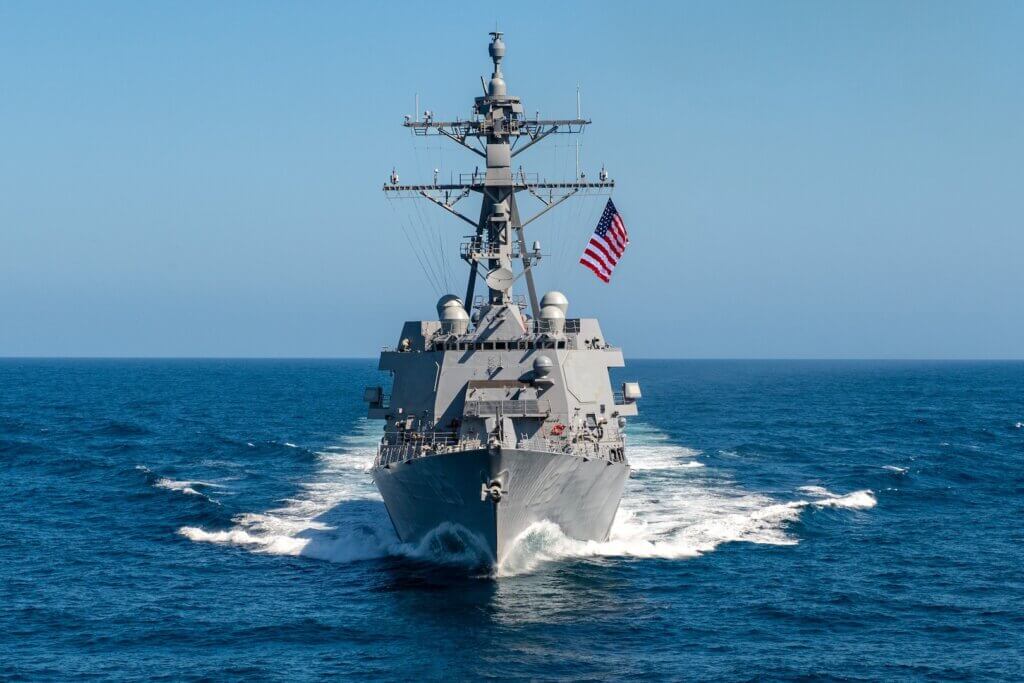
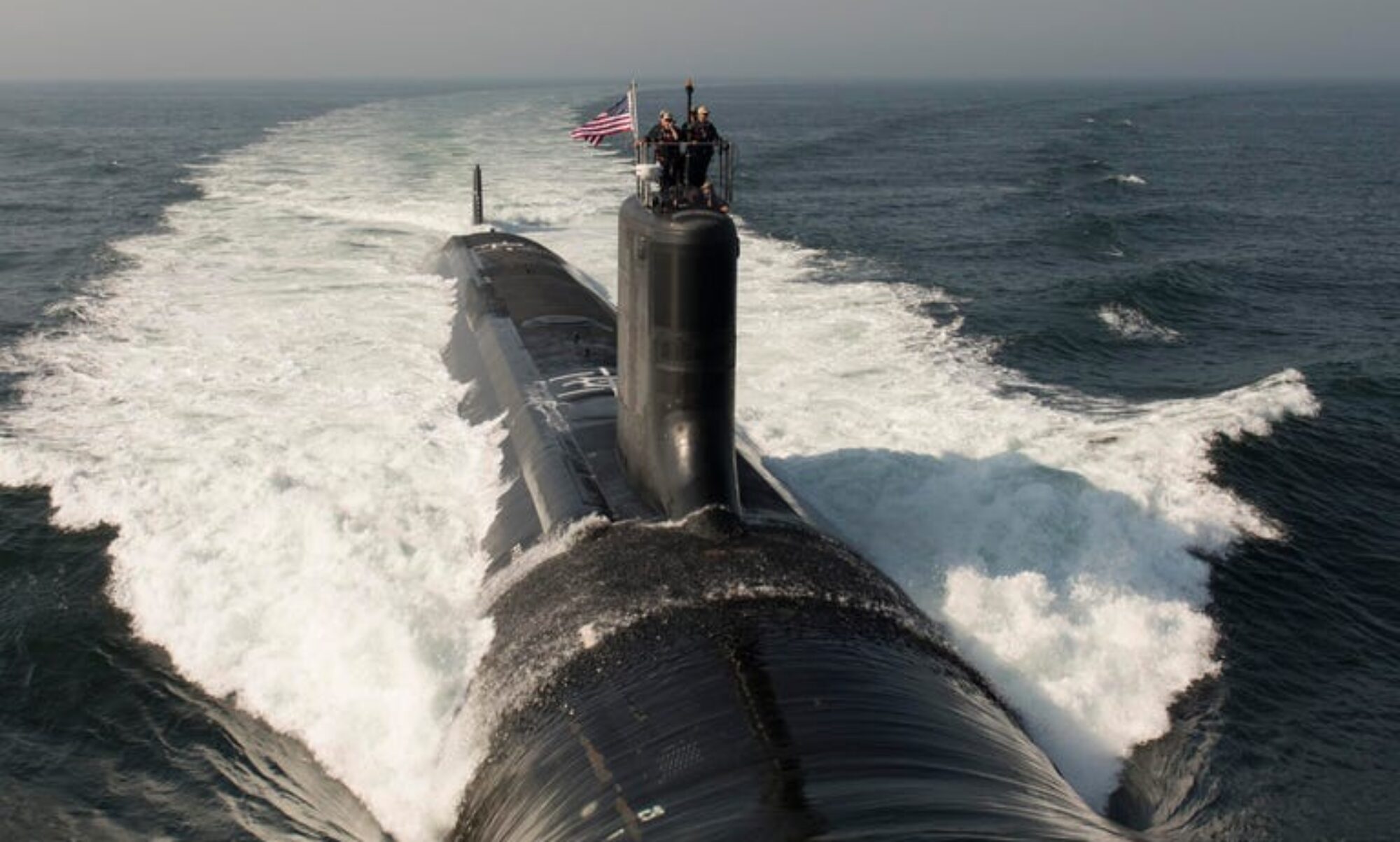
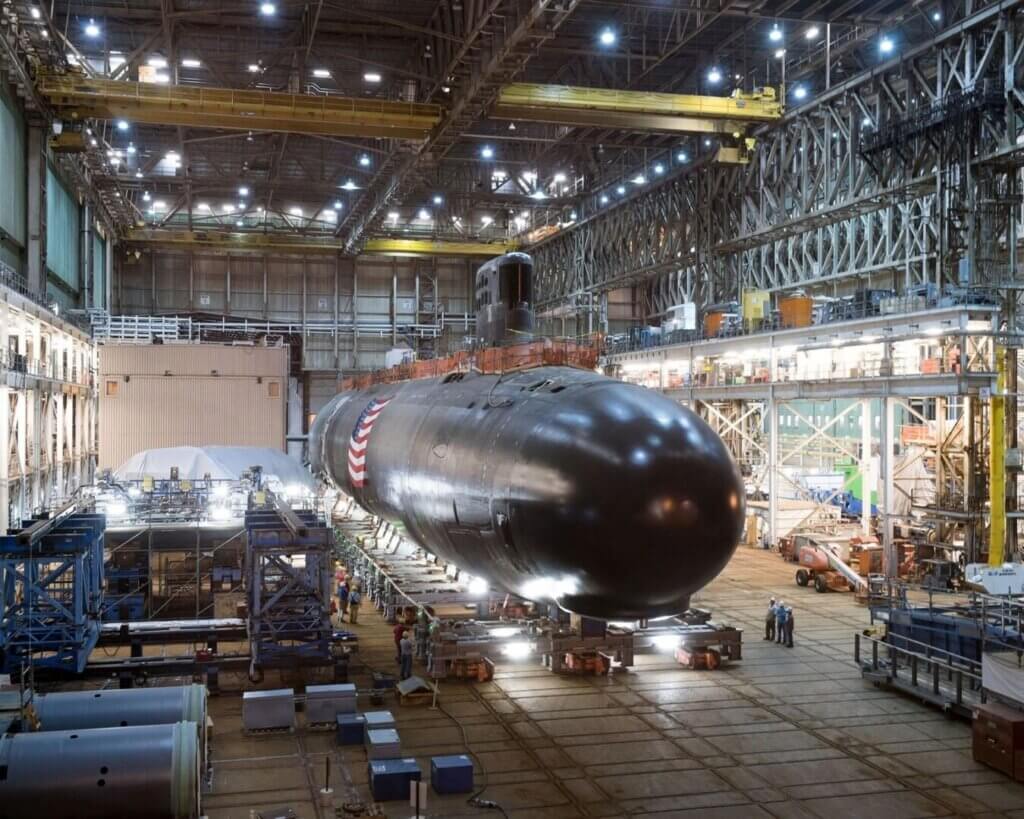
USS Hyman G. Rickover

Introduction

The sea’s immense depths have long symbolized mystery, vastness, and immense power. The submarines that glide beneath the waves are a testament to our nation’s commitment to defense and technological advancement. 

This week, the U.S. Navy unveiled its latest masterpiece, USS Hyman G. Rickover, a nuclear submarine named after one of Chicago’s own. In an age where military tensions bristle and global challenges surge, this submarine, and the history it represents, signifies the Navy’s dedication to ensuring America’s defense remains unparalleled.


Chicago’s Submarine Legacy

The U-boat Museum Connection

When one mentions Chicago and submarines, it’s hard not to envision the iconic German U-boat displayed at the Museum of Science and Industry. This captured artifact serves as a reminder of our past challenges and triumphs.

Admiral Rickover: The Visionary Behind Nuclear Submarines

Yet, Chicago’s submarine legacy doesn’t end there. Admiral Hyman G. Rickover, a figure intertwined with Chicago’s fabric, has now received his second tribute in the form of the USS Hyman G. Rickover, a state-of-the-art fast-attack nuclear-powered submarine. Rickover’s journey, from fleeing Jewish persecution in Poland to settling in Chicago’s North Lawndale and ascending the Navy ranks, is nothing short of inspiring.

Under his leadership, the concept of a nuclear-powered submarine transformed from an idea to a reality. He recognized the limitations of diesel submarines, which frequently needed to surface. With nuclear power, submarines gained the capability to remain submerged for prolonged periods, revolutionizing naval warfare.


Why It Matters

Submarines in Modern Defense

Bill Nissen, a Chicago lawyer and former Naval Officer, emphasizes the significance of these submarines. Their stealthy nature, ability to stay hidden, and readiness to act make them invaluable assets to national defense.

Chicago’s Ongoing Contribution

The USS Hyman G. Rickover is not just named in tribute to a Chicago legend but will also have four crew members hailing from the city. Among them is Chief Petty Officer Gino Rossi of St. Charles, who, like many servicemen, embarks on this mission carrying the hopes, pride, and concerns of his family back home.

Honoring a Legacy

Naming this the second submarine after Admiral Rickover, who holds the record for serving in the U.S. military for an incredible 63 years, is a testament to the Navy’s commitment to honoring its heroes. It’s a message that valiant service, vision, and dedication to one’s nation will never be forgotten.


Conclusion

The unveiling of the USS Hyman G. Rickover is more than just the launch of another submarine; it’s a celebration of a visionary, the recognition of Chicago’s integral role in naval history, and a statement of America’s unyielding commitment to its defense. As global challenges loom, such tributes remind us of the strength, innovation, and unity that underpin our nation.
The Importance of a Strong U.S. Naval Presence in the Face of Growing Geopolitical Tensions

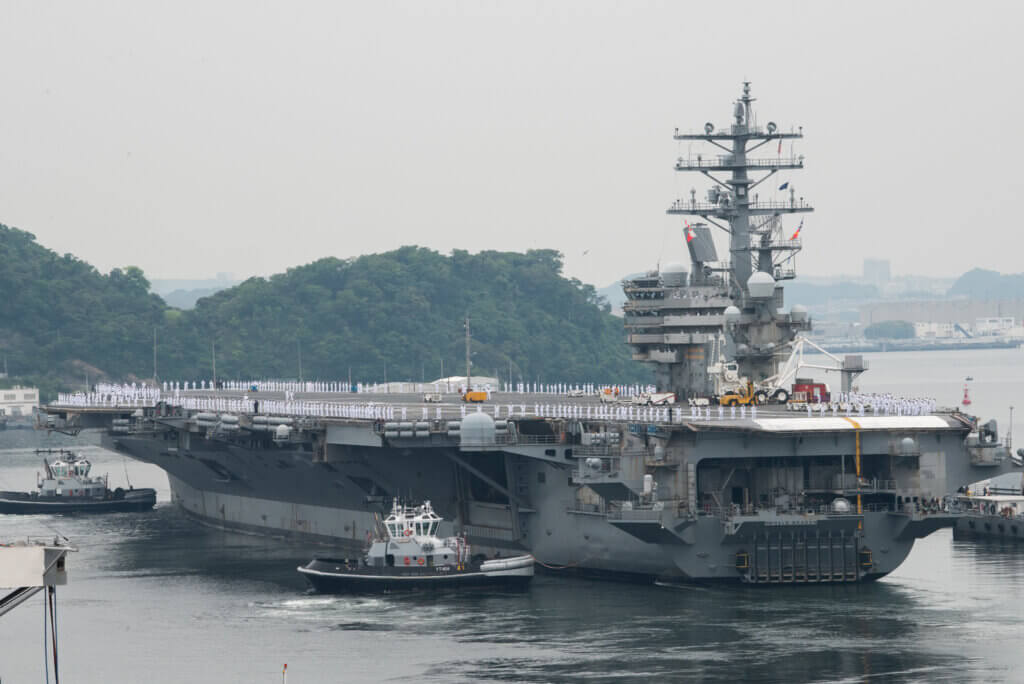
USS Ronald Reagan is (U.S. Navy photo by Tetsuya Morita)

Introduction: In an ever-changing world with dynamic geopolitical shifts, the significance of a powerful naval presence cannot be understated. The recent arrival of the USS Ronald Reagan, a nuclear-powered aircraft carrier, in South Korea underscores this importance, especially in light of escalating tensions with North Korea and their evolving ties with Russia.

Why This Matters to Americans: A robust naval presence in strategic regions is pivotal for a plethora of reasons:

  1. Security and Defense: The movement of the USS Ronald Reagan to South Korea is not merely symbolic; it’s a clear demonstration of America’s commitment to its allies and the protection of its interests overseas. By doing so, the U.S. aims to dissuade any potential threats from North Korea, which continues to advance its nuclear program.
  2. Deterrence: The deployment of such powerful U.S. military assets in the vicinity of potential threats is a testament to the nation’s determination to prevent any aggression. It sends a strong message of unity and strength, especially in light of North Korea’s perceived security threats and its history of ballistic missile tests in response to such deployments.
  3. Geopolitical Implications: North Korea’s pursuit of advanced weapons technologies from Russia, potentially in exchange for support in the ongoing Ukraine war, has wide-reaching implications. Such alliances can reshape the balance of power, making it essential for the U.S. to monitor, respond, and adapt to these changes effectively.

Key Takeaways:

  • The USS Ronald Reagan’s arrival in South Korea is a manifestation of America’s commitment to its allies in the region and its resolve against potential threats from North Korea.
  • The carrier’s deployment is part of a bilateral agreement to maintain U.S. visibility in the region in light of North Korea’s advancing nuclear program.
  • Growing ties between North Korea and Russia, especially in the realm of arms and weapons technologies, highlight the urgency and importance of a strong U.S. naval presence in strategic regions.

Conclusion: As the global landscape evolves with new alliances and challenges, it becomes imperative for the U.S. to maintain and display its naval strength. The recent deployment of the USS Ronald Reagan to South Korea emphasizes this commitment and highlights the necessity for a resilient navy. It’s not just about ships and military might; it’s about ensuring global stability, fostering peace, and protecting American interests and its allies. The strength of our navy is not just a source of pride; it’s a beacon of security in uncertain times.

How the USS Bougainville Will Boost the Navy’s Amphibious Capabilities

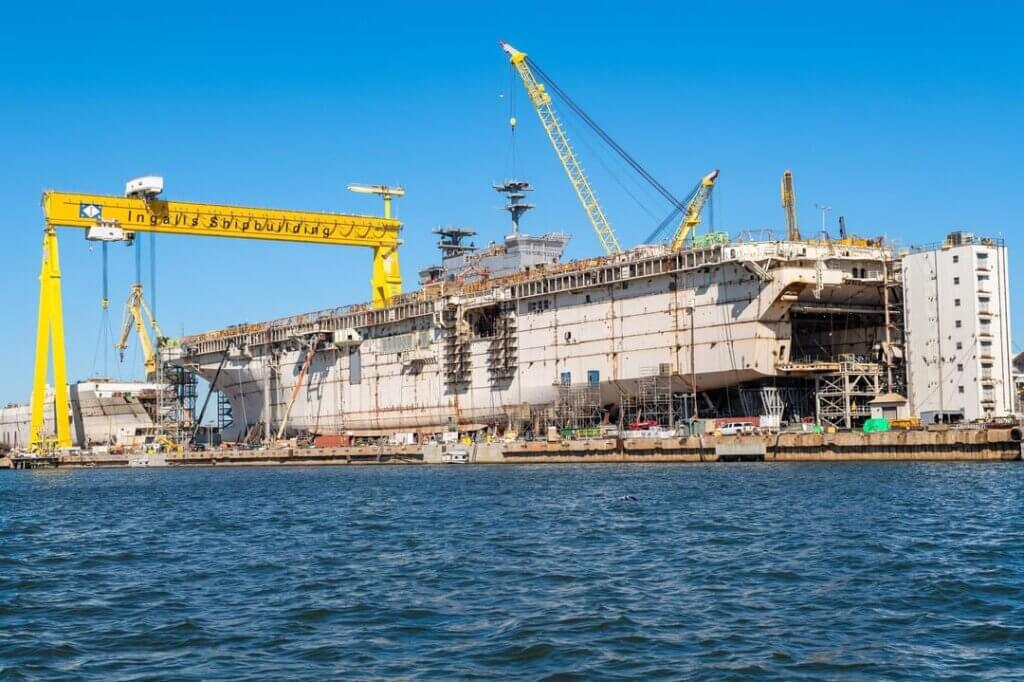
USS Bougainville (LHA 8) image credit Ingalls Shipbuilding

Launch and Historical Significance On October 6, 2023, Ingalls Shipbuilding launched the USS Bougainville (LHA 8), the Navy’s third America-class amphibious assault ship, from its floating dock into the Pascagoula River. This was a major milestone for the ship, which is expected to be delivered to the Navy in 2025. The ship is named after Bougainville Island, where U.S. Marines fought a fierce battle against Japanese forces during World War II.

The Growing Need for Amphibious Capabilities Recent events, like the evacuation challenges in Sudan and the aftermath of a massive earthquake in Turkey and Syria, have highlighted the urgent need for more available amphibious capabilities. In Sudan, for instance, the Marines couldn’t deploy an amphibious ready group to evacuate trapped Americans, underscoring a critical gap in readiness.

Enhanced Amphibious Capabilities The USS Bougainville is not just another ship in the Navy’s fleet. It is a game-changer for the Navy’s amphibious capabilities, as it is the first ship in the America class to be built with a well deck. This vessel can launch and recover landing craft and amphibious vehicles, crucial for missions like the one needed in Sudan.

The Debate on Fleet Size The Navy and Pentagon are currently debating the ideal number of amphibious ships. The recent incidents, coupled with the shifting geopolitical landscape, particularly regarding China, highlight the significance of this debate. As of now, the Navy has 31 amphibious ships, a number that some, including the Marine Corps, consider to be the bare minimum. However, plans indicate a potential reduction below this number by fiscal 2024.

Aviation and Aircraft Support, and Ingalls Shipbuilding’s Crucial Role The USS Bougainville also has a larger flight deck than its predecessors, the USS America (LHA 6) and the USS Tripoli (LHA 7). Decisions about the future of amphibious ships have significant implications for defense contractors like Ingalls Shipbuilding. If the Pentagon decides against buying more amphibious ships, this could affect Ingalls’ production line directly.

Ingalls Shipbuilding launched the USS Bougainville (LHA 8)

The Broader Implications Beyond pure numbers, there’s a debate about the evolving role of amphibious ships. While they retain their warfighting capabilities, they are increasingly used for training with partners, disaster response, and citizen evacuations. This dual role, both in war and peace, underscores their importance in the Navy’s fleet.

Conclusion The USS Bougainville will honor the legacy of its namesake island and its heroes by serving as a versatile platform for peace and freedom around the world. As the world grapples with complex security challenges, the debate over amphibious capabilities will continue, with ships like the USS Bougainville at the center of the discussion.


USS Jack H. Lucas (DDG 125): A Beacon of Technological Advancement Commissioned Today

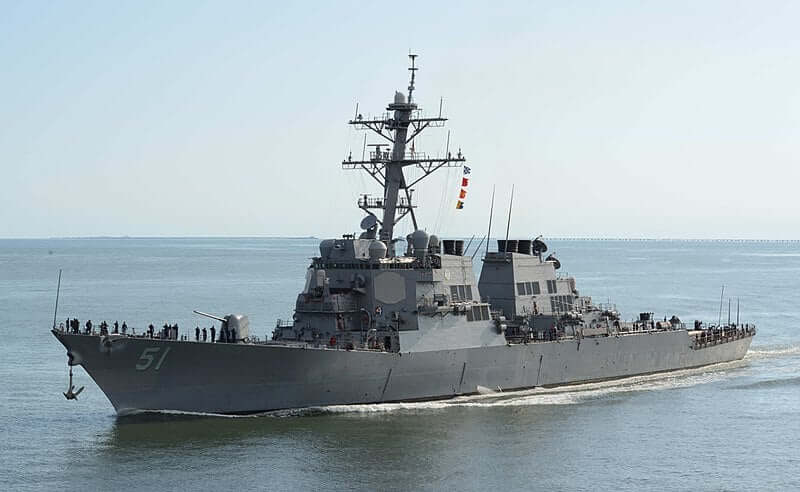
USS Jack H. Lucas (DDG 125),

Today, in Tampa, the U.S. Navy proudly commissioned the USS Jack H. Lucas (DDG 125), the inaugural Flight III Arleigh Burke-class guided-missile destroyer. This monumental event not only commemorates Capt. Jack H. Lucas, the youngest serviceman in WWII to receive the Medal of Honor but also showcases a pivotal stride in naval defense capabilities.

The Flight III, including the Jack H. Lucas, is renowned for its SPY-6(V)1 radar, a significant advancement over the SPY-1 radars found on earlier AEGIS-equipped vessels. The cutting-edge technology behind the SPY-6(V)1 Air and Missile Defense Radar (AMDR) represents this ship’s major technological differentiator. Paired with significant electrical power and cooling system upgrades, the destroyer stands poised for future operations. However, it’s also worth noting the limitations in space, weight, power, and cooling, which may affect the ship’s capability to incorporate forthcoming energy weapons.

The Jack H. Lucas not only symbolizes technological advancement but also resilience and dedication. As guest speaker Under Secretary of the Navy, The Honorable Erik Raven, mentioned during the commissioning, the ship is built for agility, versatility, and adaptability to various missions. He highlighted its purpose in maintaining the free flow of commerce, deterring military aggression, and swiftly responding to global natural disasters.

This commissioning marks a significant juncture in naval shipbuilding. Previously, the Arleigh Burke program was slated to end with DDG 112. However, changes in plans for the DDG 1000 Zumwalt-class ships led to the reintroduction of the DDG 51 production. The Jack H. Lucas, built at Ingalls Shipbuilding in Pascagoula, is a testament to this strategic shift.

While the Lockheed Martin AEGIS combat system undergoes continual updates, there remain different baselines within the fleet. The Navy, however, is committed to integrating the AEGIS Baseline 9 capabilities into DDGs 113 to 124 and DDG 127. On the other hand, DDGs 125, 126, and DDG 128 are set to benefit from the AEGIS baseline 10, which exploits the SPY-6 radar system’s enhanced capabilities.

The Navy is also planning ahead, focusing on replacing the Ticonderoga-class guided missile cruisers with the new “large surface combatant” termed “DDGX.” This transition aims to safeguard the vital shipbuilding and supplier industrial base, a commitment the Navy emphasized to Congress.

In conclusion, the commissioning of the USS Jack H. Lucas, coupled with its advanced features and the broader strategy of naval modernization, emphasizes the Navy’s commitment to national defense, innovation, and honoring legacy. The ship serves as a testament to both historical valor and future-ready capabilities.


The US Navy’s ‘Ghost Fleet’: A New Dimension of Naval Cooperation with Japan

The unmanned surface vessel Ranger transits the Pacific Ocean during Integrated Battle Problem (IBP) 23.2, Sep. 15, 2023. US Navy Photo

Japan Welcomes the US Navy’s ‘Ghost Fleet’: A Showcase of Unmanned Maritime Technology and Strategy

Why this matters
• The US Navy’s ‘Ghost Fleet’ is in Japan to test and demonstrate its unmanned vessels. These ships can operate autonomously or remotely, with advanced sensors and weapons. They can also link with other Aegis vessels, creating a networked force multiplier. #GhostFleet #Aegis #USNavy
• Japan welcomes the US Navy’s ‘Ghost Fleet’, a program that aims to integrate unmanned vessels into its fleet. These ships are equipped with the Aegis combat system and the SM-6 interceptor missiles. They can perform various missions, such as ISR, EW, MCM, and ASW. #GhostFleet #Aegis #USNavy
• The US Navy’s ‘Ghost Fleet’ arrives in Japan for testing and demonstration purposes. These unmanned vessels are designed to operate autonomously or remotely, with minimal human intervention. They are part of the US Navy’s efforts to maintain a strong presence and deterrence in the Indo-Pacific region. #GhostFleet #IndoPacific #USNavy

The Strength and Significance of Fleet Week: A Rally for a Stronger Navy ,

Introduction: Why Fleet Week Matters to America

Taking place October 2 -9, 2033 San Francisco, CA.

Every year, San Francisco plays host to a celebration of naval prowess: Fleet Week. Beyond the enthralling air shows, this event underscores the nation’s reliance on a robust naval force. The near-cancelation of this year’s Fleet Week due to a potential government shutdown brings to light the significance of continued support for our Navy and the broader implications for businesses, tourism, and communities.

Key Takeaways:

  1. Economic Impact on Local Businesses
    Events like Fleet Week aren’t just displays of military might; they are significant economic drivers. Local businesses, particularly those still grappling with the after-effects of the pandemic, eagerly anticipate the surge of visitors. As Troy Reese, owner of a Louisiana-style cafe on The Embarcadero mentioned, this is the break they need, suggesting an anticipation of considerable business with extended hours and overstocking.
  2. Boost for Tourism
    The pandemic cast a long shadow on tourism, but events like Fleet Week promise a much-needed boost. Not only does it attract locals, but also visitors from afar, like the Laboriel family from Sacramento. Such events invigorate the city, fill hotels, restaurants, and attractions, and underscore San Francisco’s stature as a prime destination.
  3. Symbol of Resilience and Unity
    Fleet Week stands as a symbol of resilience. Even in the face of potential government shutdowns and financial challenges, the community’s spirit, led by the U.S. Navy’s commitment, ensures the event’s continuity. It’s not just about ships or air shows; it’s about national pride, unity, and the celebration of our naval forces’ dedication.
  4. Reinforcing the Importance of a Strong Navy
    This event, especially in light of the recent suspense over its occurrence, reinforces the critical role the Navy and Marines play. Their presence in the Bay Area during Fleet Week is a stark reminder of their importance to national security, maritime trade, and global diplomacy.

Conclusion: The Way Forward
Fleet Week serves as an annual testament to the symbiotic relationship between the nation’s military forces and its citizens. As the military ships set their course for the Bay and the Blue Angels prepare to soar the skies, it is a call to action for Americans to rally behind a stronger Navy, understanding its pivotal role in ensuring economic vibrancy, national security, and the perpetuation of the American spirit. As we celebrate this week, let’s also advocate for sustained support, ensuring our naval forces remain robust and resilient for years to come.

When is Fleet Week San Franslcisco, CA.
Fleet Week gets underway Monday Oct. 2 and lasts through Monday Oct. 9.

Fleet Week air show schedule
Fleet Week culminates in the annual San Francisco Fleet Week air show, headlined by the iconic U.S. Navy Blue Angels. In addition to the Blue Angels, this year’s air show will also feature the Leap Frogs Navy Parachute Team, a United Airlines 777, the Patriots Jet Team, and demos from other military aircraft, including Coast Guard helicopters, a Marine F-35B fighter, and a Navy Ace Maker T 33.

The Unwavering Precision of USS Louisiana: A Symbol of U.S. Naval Superiority

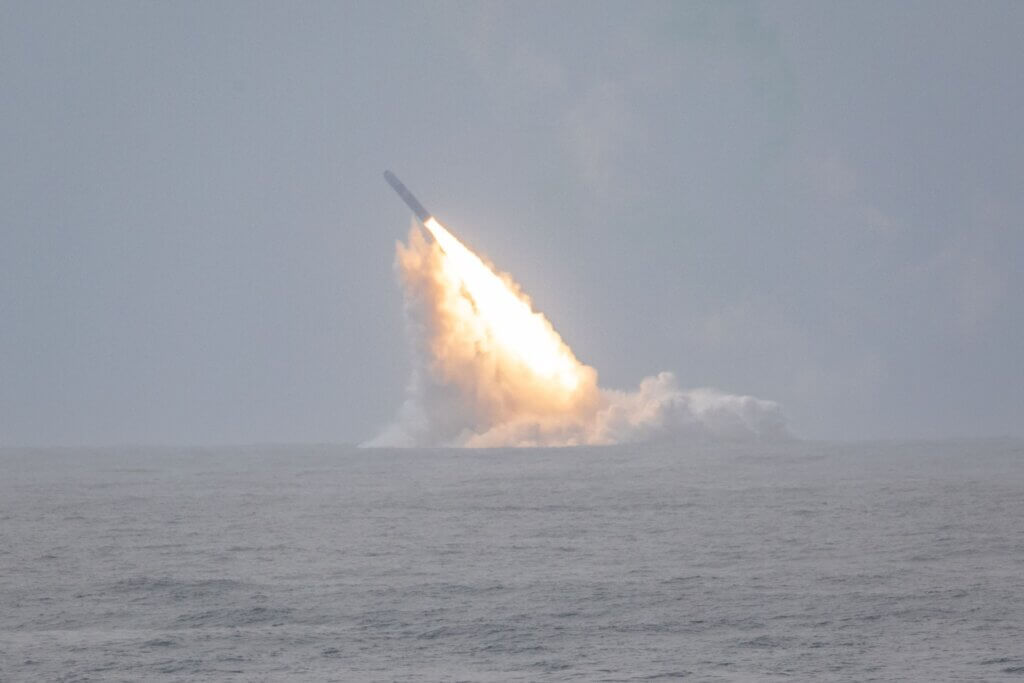
USS Louisiana (SSBN-743) The Trident II (D5LE) missile

Introduction:

In the rapidly evolving world of military technology, the U.S. Navy continues to be a beacon of excellence and reliability. The recent missile test flight from USS Louisiana (SSBN-743) serves as a testament to the unmatched capabilities of the Trident II strategic weapon system. Let’s delve into what this means for the Navy and the nation.

Why This Matters:

With maritime territories becoming more contested and the global political climate continually shifting, it’s vital for the U.S. to maintain a clear edge in strategic deterrence. A successful test such as this underscores our commitment to peace through strength.

Key Takeaways:

Consistent Track Record:
The recent test from the USS Louisiana marks the 191st successful missile launch of the Trident II (D5 & D5LE) since its inception in 1989. This consistency is unparalleled and showcases the reliability of American defense systems.

State-of-the-Art Technology:
The Trident II (D5LE) missile is a life-extended version of its predecessor, symbolizing the U.S. Navy’s commitment to technological upgrades and maintaining its edge in naval warfare.

Strategic Deterrence:
The success of the Trident II missile program sends a clear message to potential adversaries about the U.S.’s capability and readiness to defend its interests, allies, and global peace.

A Testament to the Crew:
Behind every successful test is a dedicated crew, like that aboard the USS Louisiana. Their expertise, training, and commitment play an integral role in these achievements.

Strengthening Global Alliances:
Successful tests and advancements in strategic weapons systems bolster the confidence of U.S. allies and partners, strengthening international alliances and cooperative defense strategies.

Forward-Looking Approach:
The Navy’s Strategic Systems Programs emphasize not just current capabilities but also future readiness. The regular testing and upgrading of systems like Trident II ensure the U.S. remains prepared for tomorrow’s challenges.

Conclusion:

The unmatched reliability of the Trident II missile system, as demonstrated by the USS Louisiana, is more than just a technological marvel. It represents the diligence, expertise, and forward-thinking approach of the U.S. Navy. As we reflect on this successful test, we are reminded of the immense responsibility and capability our naval forces carry, ensuring a safer world for all.

USS Gerald R. Ford Engages in Diplomatic Port Call in Trieste, Italy

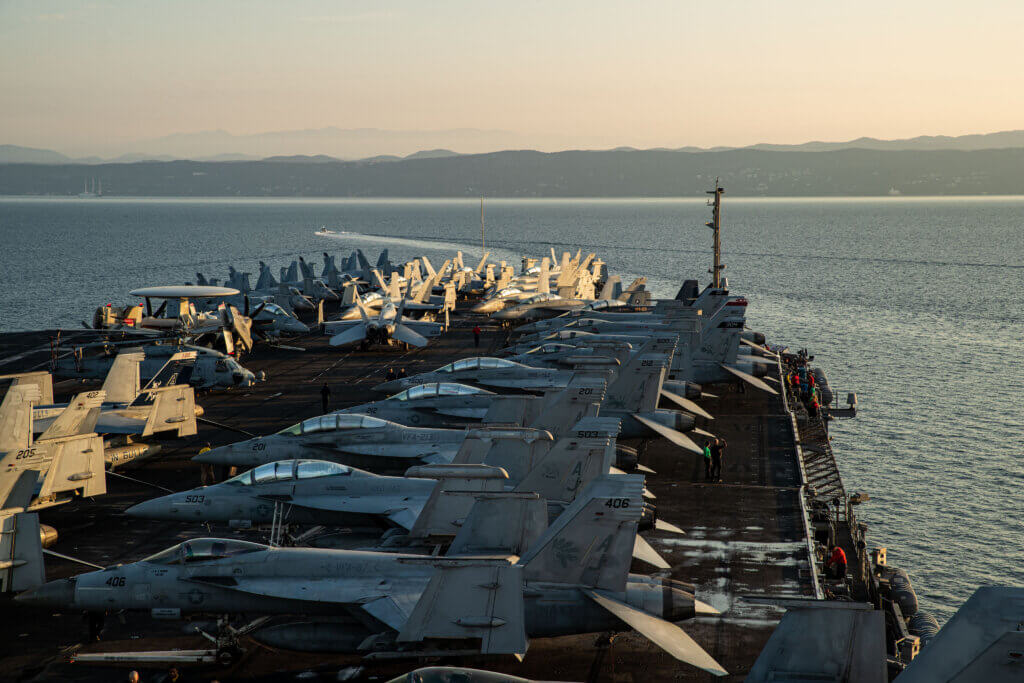
USS Gerald R. Ford (CVN 78) arrives in Trieste, Italy for a scheduled port visit, Sept. 17, 2023.

The USS Gerald R. Ford has anchored off the coast of Trieste, marking a significant step in strengthening ties between the U.S. Navy and its Italian counterparts. Commanding Officer Capt. Rick Burgess highlighted the importance of this visit, stating, “This port call offers Sailors from the USS Gerald R. Ford, Carrier Strike Group 12, Carrier Air Wing 8, and Destroyer Squadron 2 a unique opportunity to connect with a key ally and deepen their appreciation for Italian culture.”

During its anchorage, the Gerald R. Ford will welcome local officials and military leaders for a lunch and tour, emphasizing the longstanding alliance between the U.S. and Italy. Additionally, the crew will actively engage with the local community, with plans to participate in a city clean-up event to express gratitude to the city of Trieste.

Cmdr. Tim Yuhas, commanding officer of the USS Ramage, a ship accompanying the Gerald R. Ford, reemphasized the strategic significance of such visits: “The Carrier Strike Group symbolizes the U.S. Navy’s commitment to maintaining forward presence. This visit underscores the value we place on our alliance with Italy and our collective commitment within NATO.”

The Gerald R. Ford’s port call in Italy is part of its scheduled deployment within the U.S. Naval Forces Europe-Africa/U.S. Sixth Fleet’s operational area. This deployment exemplifies the U.S. Navy’s commitment to ensuring maritime stability, with the Gerald R. Ford Carrier Strike Group playing a pivotal role. Over 5,000 Sailors across various platforms are currently deployed, showcasing the Navy’s readiness to respond to global challenges.

Comprising this Strike Group are the Carrier Strike Group 12, Carrier Air Wing 8, Destroyer Squadron 2, along with notable ships such as the USS Normandy, USS Ramage, USS McFaul, and USS Thomas Hudner.

U.S. Naval Forces Europe-Africa/U.S. Sixth Fleet, with headquarters in Naples, Italy, orchestrates operations across European and African waters. Their continuous presence serves as a testament to the U.S.’s unwavering commitment to upholding international agreements and ensuring collective defense with its allies.


Balancing Naval Power: The Role and Relevance of Small Combat Ships in a Modern Navy

Small Ship, Big Impact? Reevaluating the Navy’s Approach to Vessel Size.
U.S. NAVY

Introduction:

To the esteemed members and subscribers of Americans for a Stronger Navy,

In our continued endeavor to promote an educated dialogue surrounding the strength and direction of our nation’s naval forces, we bring forward an opinion piece recently penned by Craig Hooper for Forbes.

The piece titled “U.S. Navy Turns Away From Small Warships Despite Growing Demand, Tactical Relevance” delves into the Navy’s decision to shift focus away from small combat-oriented ships, despite their apparent global demand and tactical significance.

This is a topic of paramount importance, as the balance between small and large naval vessels has implications for our tactical flexibility, regional engagements, and how we project power and diplomacy on the global stage.

Key Takeaways:

Departure from Small Ships:

Hooper discusses the U.S. Navy’s move away from managing small combatants, such as the Cyclone class coastal patrol ships. This responsibility has now been transferred to the U.S. Coast Guard, which is grappling with its own challenges.

Global Interest in Small Vessels:

There seems to be a discrepancy between the U.S. Navy’s stance and the rest of the world. Many allies have shown keen interest in the U.S. Navy’s Cyclone class ships. This interest juxtaposes the Navy’s lack of enthusiasm to invest in small craft.

Unprecedented Elimination:

The wholesale removal of small combat-oriented ships from the U.S. Navy is a historical shift. Currently, the Naval Vessel Register lists only ten battle force ships under 2400-tons.

Differing Perspectives:

While the U.S. Navy finds smaller vessels vulnerable against adversaries like China, other nations seem to be taking a different stance. The South China Sea, for instance, has seen small ship engagements, with countries like the Philippines commissioning former U.S. Navy’s Cyclone class ships.

The Robot Replacements:

There’s a hint of an inclination to look towards maritime robots. While valuable, Hooper believes that they can’t yet replace the human-led missions of crewed small ships.

The Coast Guard’s Role:

With the Navy shifting its focus, the Coast Guard has been compelled to pick up the slack, despite its distinct and diverse mission set.

Conclusion:

We are grateful to Dr. Craig Hooper for shedding light on this evolving aspect of our naval strategy. While his perspective provides valuable insights, it’s crucial to remember the foundational principle of the Americans for a Stronger Navy: the belief in a robust, versatile, and adequately equipped naval force.

Both small and large vessels have their unique tactical and strategic advantages. As we advocate for a stronger Navy, it’s essential to understand the role of every ship, large or small, in ensuring America’s maritime supremacy.

Thank you for your continued support and commitment. Let’s foster an informed conversation, ensuring the best future for our Navy.

The USS Ted Stevens: The Ship That Can Strike Anywhere in Minutes

USS Ted Stevens (DDG-128)

Hello, members and subscribers of Stronger Navy! We are back with another exciting update on the latest developments in America’s naval power.

Today, we are going to talk about the USS Ted Stevens (DDG-128), a new Arleigh Burke-class guided missile destroyer that will be one of the most powerful and lethal warships in the world.

The ship was launched on August 15, 2023, and was christened on August 19, 2023, by his widow and daughters.

The ship is named after the late Senator Ted Stevens, who served Alaska for over 40 years and was a strong supporter of the Navy and the Marine Corps. He was also a decorated World War II pilot who flew missions in China, Burma, and India.

He survived several plane crashes, including one in 1978 that killed his first wife and another one in 2010 that killed him and four others. He was awarded the Distinguished Flying Cross, two Air Medals, and the Presidential Medal of Freedom.

The USS Ted Stevens is the third ship of the Flight III of the Arleigh Burke-class, which features improved capabilities in missile defense, air warfare, and electronic warfare.

The Flight III ships are equipped with the AN/SPY-6 (V)1 Air and Missile Defense Radar (AMDR), which is 35 times more powerful than the previous radar systems and can detect and track multiple threats simultaneously.

The Flight III ships also have the Conventional Prompt Strike (CPS) system, which can launch hypersonic missiles that can travel faster than five times the speed of sound and strike targets anywhere in the world within minutes.

The USS Ted Stevens will be one of the first ships to carry this system, which will give it a significant edge over potential adversaries.

The USS Ted Stevens will join the USS Zumwalt (DDG-1000) and its sister ships as part of America’s naval power projection in an era of great power competition.

The USS Zumwalt is a revolutionary ship that represents the future of naval warfare, with its stealth design, electric propulsion, and potential to carry hypersonic weapons.

The ship’s homeport shift from San Diego to Pascagoula, Mississippi, is part of a plan to upgrade the ship with new technologies and systems, such as the CPS system. The USS Zumwalt and its sister ships will provide a significant boost to America’s naval power and deterrence.

We hope you enjoyed this article and learned something new about the USS Ted Stevens and its significance for America’s naval power.

We invite you to share your thoughts and opinions on this topic in the comments section below. Thank you for your support and stay tuned for more updates from Stronger Navy!

  • The USS Ted Stevens is the third ship of the Flight III of the Arleigh Burke -class, which features improved capabilities in missile defense, air warfare, and electronic warfare. The Flight III ships are equipped with the AN/SPY-6 (V)1 Air and Missile Defense Radar (AMDR), which is 35 times more powerful than the previous radar systems and can detect and track multiple threats simultaneously. The Flight III ships also have the Conventional Prompt Strike (CPS) system, which can launch hypersonic missiles that can travel faster than five times the speed of sound and strike targets anywhere in the world within minutes.
  • The USS Ted Stevens will be one of the first ships to carry this system, which will give it a significant edge over potential adversaries.
  • The USS Ted Stevens is named after Ted Stevens, who was the longest serving Republican U.S. senator in history when he left office in 2009. He represented Alaska for over 40 years and was a strong advocate for the Navy and the Marine Corps.
  • He was also a decorated World War II pilot who flew missions in China, Burma, and India. He survived several plane crashes, including one in 1978 that killed his first wife and another one in 2010 that killed him and four others. He was awarded the Distinguished Flying Cross, two Air Medals, and the Presidential Medal of Freedom.
  • The USS Ted Stevens was launched on August 15, 2023, at the Ingalls Shipbuilding division of Huntington Ingalls Industries in Pascagoula, Mississippi. It was christened on August 19, 2023, by his widow Catherine Ann Stevens and his daughters Susan Stevens Covich, Lily Irene Becker, and Karina Stevens.
  • The ship’s motto is “Lead with Courage”, which reflects Ted Stevens’ legacy of leadership and service. The ship’s crest features a grizzly bear, which symbolizes Alaska’s wildlife and Ted Stevens’ nickname “Uncle Ted”. It also features a gold star, which represents his military service and his Medal of Freedom. The ship’s hull number is DDG-128, which coincides with Ted Stevens’ birthday on November 28.