Recent US Navy Contracts Awarded for Maintenance, Operations, and Support Service

The US Navy has recently awarded several contracts to companies for maintenance, operations, and support services. General Dynamics Electric Boat Corp. was awarded a contract for non-nuclear maintenance of submarines, while Vectrus Systems Corp. will provide base operations support services at Naval Station Guantanamo Bay. BAE Systems Land & Armaments L.P. will provide mechanical design agent effort for the MK 41 Vertical Launching System, and International Systems Management Corp. will provide engineering support services for the Australian and Canadian Surface Combatant programs. DynCorp International LLC and Avian Inc. will provide aircraft maintenance, modification, and aircrew support, as well as engineering, program management, and administrative support for tests and experiments, respectively. Lastly, Raytheon Co. will repair the towed auxiliary radar antenna system, position tracking system, and APY9 radar receiver system for the E2D Advanced Hawkeye aircraft.

  • Vectrus Systems Corp. awarded contract for base operations support services at Naval Station Guantanamo Bay
  • BAE Systems Land & Armaments L.P. awarded contract for mechanical design agent effort for the MK 41 Vertical Launching System
  • International Systems Management Corp. awarded contract for engineering support services for the Australian and Canadian Surface Combatant programs
  • DynCorp International LLC awarded contract for aircraft maintenance, modification, and aircrew support
  • Avian Inc. awarded contract for engineering, program management, and administrative support for tests and experiments
  • Raytheon Co. awarded contract for repair of the towed auxiliary radar antenna system, position tracking system, and APY9 radar receiver system for the E2D Advanced Hawkeye aircraft

Key Takeaways:

  • Several contracts have been awarded for maintenance, operations, and support services for the US Navy.
  • General Dynamics Electric Boat Corp., Vectrus Systems Corp., BAE Systems Land & Armaments L.P., International Systems Management Corp., DynCorp International LLC, Avian Inc., and Raytheon Co. are the companies that have been awarded these contracts.
  • These contracts involve a range of services, including non-nuclear maintenance of submarines, base operations support services, mechanical design agent effort, engineering support services, aircraft maintenance, modification, and aircrew support, and repair of radar systems for the E2D Advanced Hawkeye aircraft.

Conclusion:

The US Navy has awarded several contracts to companies for maintenance, operations, and support services. These contracts are essential for ensuring that the Navy has the necessary resources to maintain its fleet and carry out its missions effectively. The companies that have been awarded these contracts are critical partners in supporting the Navy’s mission, and their work is vital to the security of the United States. By continuing to invest in the Navy’s maintenance, operations, and support services, we can ensure that our fleet remains strong and ready to meet any challenge.
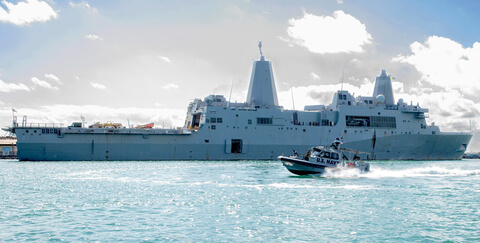
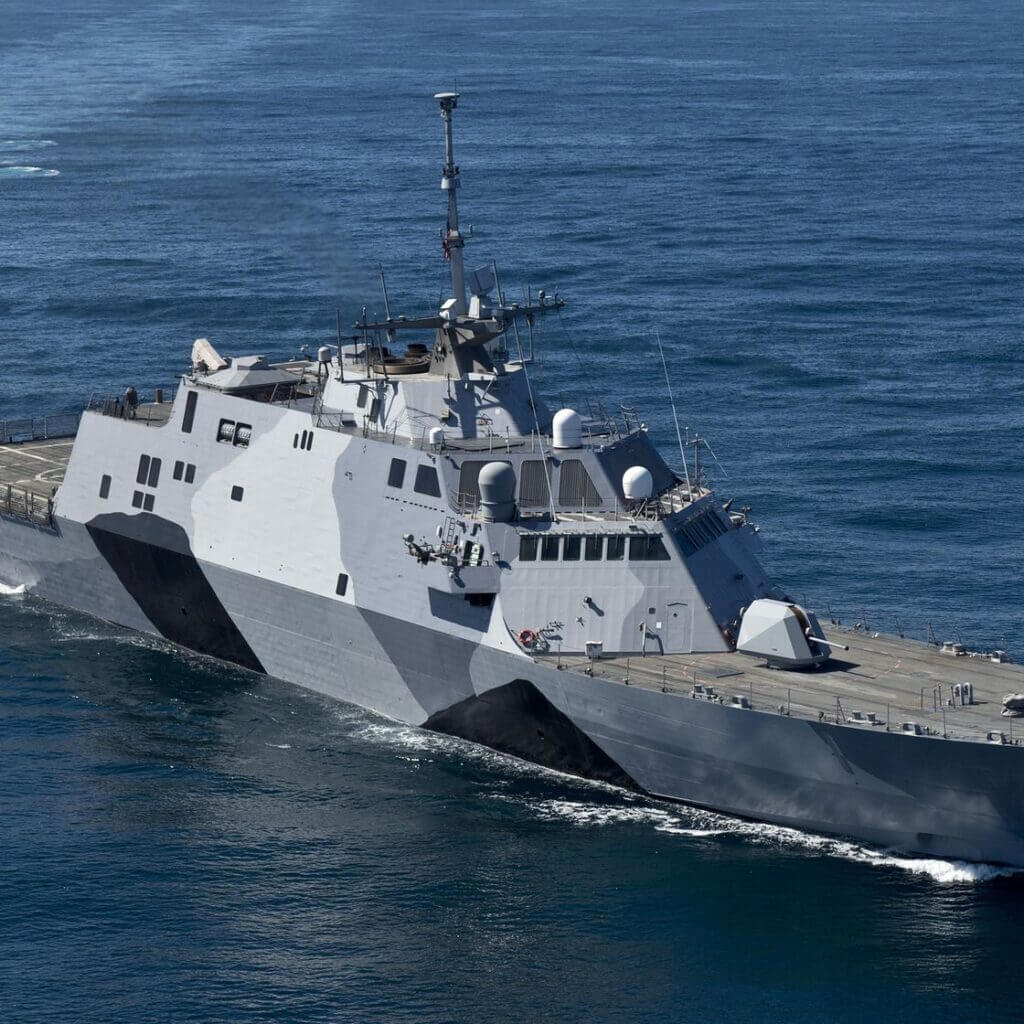
BAE Systems Awarded $537M Contract to Engineer C4I Services on Surface Ships

USS Portland (LPD 27) during a sustainment and logistics visit to the Port of Djibouti photo by US Navy

Greetings to all members and subscribers of Americans for a Stronger Navy! As an organization dedicated to promoting peace through strength, we strive to keep our readers informed about the latest developments in the U.S. Navy and inspire them to support our mission.

Whether you are a member of the Navy or an average American, your support is critical to the success of our mission.

In this blog post, we will be discussing BAE Systems’ recent contract to engineer command, control, communications, computers, and intelligence (C4I) services on surface ships for the U.S. Navy.

This is just one example of the important work being done to strengthen our naval capabilities and ensure the safety and security of our nation. Let’s dive in!

BAE Systems, a global defense, aerospace, and security company, has been awarded an eight-year indefinite delivery, indefinite quantity (ID/IQ) contract worth $537 million by the U.S. Naval Information Warfare Systems Command in San Diego.

The contract requires BAE Systems to engineer command, control, communications, computers, and intelligence (C4I) services on surface ships. C4I systems are essential for the operation of surface ships, providing the ability to communicate, control, and coordinate operations across the fleet. BAE Systems will be one of three companies that will compete for work on the program, providing C4I services and data deliverables throughout the five phases of shipboard integration

Key Points:

BAE Systems has been awarded an eight-year ID/IQ contract worth $537 million by the U.S. Naval Information Warfare Systems Command to engineer C4I services on surface ships.
C4I systems are critical to the operation of surface ships, providing the ability to communicate, control, and coordinate operations across the fleet.
BAE Systems will provide C4I services and data deliverables throughout the five phases of shipboard integration.
The company will perform work in Alabama, California, Louisiana, Maine, Mississippi, South Carolina, Washington, and Wisconsin.
BAE Systems has a long history of providing advanced technology solutions to the U.S. military.
C4I systems are essential for the operation of surface ships, providing the ability to communicate, control, and coordinate operations across the fleet.
BAE Systems will be one of three companies that will compete for work on the program.

Conclusion:

The contract awarded to BAE Systems by the U.S. Naval Information Warfare Systems Command to engineer C4I services on surface ships highlights the importance of advanced technology solutions in today’s military. BAE Systems has a long history of providing such solutions to the U.S. military and is a leader in systems integration. The company’s work on the new ID/IQ contract will be critical in ensuring the effectiveness of C4I systems on surface ships

U.S. Navy Launches Fourth USS Cleveland Combat Ship

Introduction

Dear members and subscribers, we at Americans for a Stronger Navy would like to greet you all.

We are delighted to share the news of the launch and christening of the USS Cleveland, the latest addition to the U.S. Navy’s fleet.

As an organization that promotes peace through strength, this milestone event is consistent with our mission. We hope this blog post will inform and inspire you to support our cause by subscribing to our website.

Navy to christen new ‘USS Cleveland’

Wikimedia Commons

Introduction

The U.S. Navy is set to launch and christen the Lockheed Martin USS Cleveland (LCS 31) its newest combat ship, in a shipyard in Marinette, Wisconsin, today April 15, 2023.

The USS Cleveland, a Freedom-variant Littoral Combat Ship, is set to be launched and christened in Marinette, Wisconsin on Saturday morning, according to a press release from the U.S. Navy. It is the 16th and final Freedom-variant LCS and the fourth ship to be named in honor of the city.

The USS Cleveland is designed for missions along coastal areas, such as counteracting mines and submarines, and conducting coastal surface warfare.

This ship, which is the fourth U.S. Navy ship to bear the city’s name, is 387 feet long and has accommodations for 98 sailors. It can carry two helicopters and is designed for missions along coastal areas, such as counteracting mines and submarines, and conducting coastal surface warfare.

The last ships to be named the USS Cleveland include a World War I cruiser, a World War II light cruiser, and a Vietnam-era amphibious transport dock that was decommissioned in 2011.

“This christening is a significant milestone for the future USS Cleveland, the ship’s sponsor Mrs. Robyn Modly, and the prospective crew,” said Secretary of the Navy Carlos Del Toro. “LCS 31 will be another step closer to joining our fleet, sailing the open seas, continuing to defend our nation, and representing the strong connection our Navy has with the city of Cleveland.”

The USS Cleveland will be launched into Wisconsin’s Menominee River and will make its way to its permanent base in Mayport, Florida.

Key Takeaways

  • The USS Cleveland is the newest addition to the U.S. Navy’s fleet and is the fourth U.S. Navy ship to bear the city’s name.
  • The USS Cleveland is 387 feet long and has accommodations for 98 sailors. It can carry two helicopters and is designed for missions along coastal areas.
  • The ship will be launched into Wisconsin’s Menominee River and will make its way to its permanent base in Mayport, Florida.
  • The USS Cleveland is capable of handling a variety of tasks from anti-submarine duties to dropping off Navy SEALs.
  • The USS Cleveland is a Freedom-variant Littoral Combat Ship designed for missions along coastal areas, such as counteracting mines and submarines, and conducting coastal surface warfare.
  • It is the 16th and final Freedom-variant LCS and the fourth ship to be named in honor of the city of Cleveland.
  • The ship’s christening ceremony will feature remarks from Austin Davis, Senior Police Advisor for the City of Cleveland, and the bottle will be broken by Robyn Modly, wife of former Acting Secretary of the Navy and a Cleveland native.
  • The USS Cleveland’s christening is a significant milestone for the ship, its sponsor, and the prospective crew.

Conclusion

The launch and christening of the USS Cleveland is an important milestone for the U.S. Navy and the City of Cleveland.

As an organization that supports a stronger navy and promotes peace through strength, we are delighted to share this news with our members and subscribers.

We hope this blog post has informed and inspired you to support our cause by subscribing to our website. Let us continue to work together to ensure a stronger navy for the safety and security of our nation.

U.S. and Philippines Discuss Military Partnership

Secretary of State Antony J. Blinken, Secretary of Defense Lloyd J. Austin III, Philippine Officer in Charge of the Department of National Defense Carlito Galvez Jr., and Philippine Secretary of Foreign Affairs Enrique A. Manalo.

Introduction:

Greetings to our members and subscribers, as well as to all average Americans who are passionate about peace and security through strength.

Americans for a Stronger Navy is committed to promoting the mission of a stronger U.S. Navy, which plays a critical role in ensuring global peace and stability. In line with our mission, we would like to share a recent news development on the partnership between the U.S. and the Philippines.

Summary:

Top leaders from the U.S. and the Philippines have met to discuss their nations’ partnership in the areas of military, economic, and humanitarian cooperation. The meeting was held in Washington and attended by Secretary of State Antony J. Blinken, Secretary of Defense Lloyd J. Austin III, Philippine Officer in Charge of the Department of National Defense Carlito Galvez Jr., and Philippine Secretary of Foreign Affairs Enrique A. Manalo.

The leaders discussed modernizing the Philippine armed forces and operationalizing four new sites in Palawan and northern Luzon under the Enhanced Defense Cooperation Agreement signed on February 1st. They also emphasized the significance of the Mutual Defense Treaty signed in 1951, which serves as the foundation of their cooperation. The treaty applies to armed attacks on either nation’s armed forces or public vessels anywhere in the South China Sea.

Key Takeaways:

U.S. and Philippine leaders met to discuss their nations’ partnership in the areas of military, economic, and humanitarian cooperation.
Discussions included modernizing the Philippine armed forces and operationalizing four new sites in Palawan and northern Luzon under the Enhanced Defense Cooperation Agreement signed on February 1st.
The leaders emphasized the significance of the Mutual Defense Treaty signed in 1951, which serves as the foundation of their cooperation.
The treaty applies to armed attacks on either nation’s armed forces or public vessels anywhere in the South China Sea.

Conclusion:

As we work towards promoting peace through strength, this development is a positive step towards enhancing U.S.-Philippine relations and maintaining regional stability. We encourage our readers to stay informed on this partnership and its impact on global security. Join us in supporting a stronger U.S. Navy by subscribing to our mission on

U.S. Navy Week returns to Wilmington, NC after 3 years

The U.S. Navy has announced that Navy Week will bring demonstrations, performances and events to Wilmington, NC for the week of April 10 to 16, 2023.

Americans for a Stronger Navy is proud to support U.S. Navy Week, a community outreach initiative that showcases the brave men and women who serve in our nation’s Navy.

Navy Week provides an opportunity for communities to interact with sailors, learn about the Navy’s mission, and show support for our servicemen and women. As an organization dedicated to promoting peace through strength, we believe that a strong Navy is crucial to ensuring the safety and security of our nation.

This year’s Navy Week in Wilmington, NC is especially exciting as it marks the return of the event after a three-year absence. We hope that this week will inspire more people to become active supporters of the Navy and its mission.

Wilmington will host the city’s first Navy Week since 2019 when the Navy visits the area for a week of events April 10-16, in conjunction with the Azalea Festival.

Wilmington Navy Week brings Sailors from across the fleet to the area to emphasize the importance of the Navy to Wilmington, the state of North Carolina, and the nation.

Participating Navy assets include USS Constitution, USS San Jacinto (CG-56), Navy Reserve Center Raleigh, Navy Talent Acquisition Group Carolina, Naval History & Heritage Command, Navy Band Southeast, Explosive Ordnance Disposal Group 2, Helicopter Mine Countermeasures Squadron 15, Naval Meteorology and Oceanography Command, USS North Carolina (SSN-777), U.S. Navy Parachute Team (Leap Frogs), Navy Medical Center Camp Lejeune, Office of Small Business Programs, and U.S. Fleet Forces.

More than 75 Sailors will participate in education and community outreach events throughout the city, including the Azalea Festival Parade.

The Navy’s senior executive attending is Admiral Daryl Caudle, commander, U.S. Fleet Forces Command. Adm. Caudle is a native of Winston-Salem and a graduate of North Carolina State University. During Wilmington Navy Week, he will participate in community engagements, meet leaders in education, and speak with local businesses, veterans, and government leaders.

Navy Weeks are a series of outreach events coordinated by the Navy Office of Community Outreach designed to give Americans an opportunity to learn about the Navy, its people, and its importance to national security and prosperity. Since 2005, the Navy Week program has served as the Navy’s flagship outreach effort into areas of the country without a significant Navy presence, providing the public a firsthand look at why the Navy matters to cities like Wilmington.

“We are excited to bring the Navy Week program to Wilmington,” said NAVCO’s director, Cmdr. Anthony Falvo. “Seapower and America’s Navy are more important now than ever before. The U.S. Navy remains our nation’s most powerful instrument of military influence and Navy Weeks allow us to showcase how the Navy serves America at sea, in the air, and ashore.”

Throughout the week, Sailors will participate in various community events across the area, including engaging with visitors at the Children’s Museum of Wilmington and NC Aquarium Fort Fisher, and volunteering at the Brigade Boys and Girls Club, YMCA, and Cape Fear Habitat for Humanity. Residents will also enjoy free live music by Navy Band Southeast at venues throughout the week.

Wilmington Navy Week is one of 15 Navy Weeks in 2023, which brings a variety of assets, equipment, and personnel to a single city for a weeklong series of engagements designed to bring America’s Navy closer to the people it protects. Each year, the program reaches more than 140 million people — about half the U.S. population.

TACAMO: The Next Generation of Nuclear Communication Aircraft for the Navy

Introduction:

Greetings to all members and subscribers of the Americans for a Stronger Navy blog. Our organization’s mission is to promote peace through strength.

Today, we are excited to share some news regarding the U.S. Navy’s plan to purchase new aircraft that will act as communication links between the government and nuclear forces worldwide.

Summary:

The Navy is preparing to replace the E-6 Mercury with the E-XX, a new aircraft that will be based on the C-130J Super Hercules military transport aircraft. The E-XX will be responsible for transmitting messages to missile submarines and other nuclear forces, including the launch codes for nuclear weapons if necessary.

United States Navy Boeing E-6B Mercury of Strategic Communications Wing ONE, Task Group 114.2, based at Tinker Air Force Base, Oklahoma, high over Colorado Aug. 23, 2019. The E-6B was refueled by a Boeing KC-135R Stratotanker of the 507th Air Refueling Wing, Air Force Reserve Command, also from Tinker AFB. (U.S. Air Force photo/Greg L. Davis)

The Navy will release a requirements list for the new plane, with three test aircraft set to be built soon, followed by a contract for nine more by 2025. The 12 new aircraft will replace the 16 E-6s currently in service.

The TACAMO (take charge and move out) planes are responsible for relaying Emergency Action Messages (EAMs) to submarines at sea. The submarines are armed with nuclear-tipped ballistic missiles and are tasked to disappear into the oceans to evade detection.

TACAMO planes ensure that the National Command Authority can command nuclear forces even in the midst of a nuclear war. One

TACAMO plane is usually in the air at all times, and it’s not uncommon for up to six to be in the air at once.

The new E-XX TACAMO will trail long wires that transmit very low-frequency messages, which can penetrate seawater and reach submerged submarines. Lockheed Martin’s entry for the E-XX competition is the EC-130J TACAMO, a plane it is co-developing with Raytheon and Northrop Grumman.

Northrop Grumman along with Lockheed Martin Skunk Works, Raytheon Intelligence & Space, Crescent Systems, and Long Wave Inc. to partner to develop a solution for the US Navy’s E-XX TACAMO requirements.

Key Takeaways:

  • The Navy is preparing to replace the E-6 Mercury with the E-XX, a new aircraft that will be based on the C-130J Super Hercules military transport aircraft.
  • The E-XX will be responsible for transmitting messages to missile submarines and other nuclear forces, including the launch codes for nuclear weapons if necessary.
  • The TACAMO planes ensure that the National Command Authority can command nuclear forces even in the midst of a nuclear war.
  • The new E-XX TACAMO will trail long wires that transmit very low-frequency messages, which can penetrate seawater and reach submerged submarines.
  • Lockheed Martin’s entry for the E-XX competition is the EC-130J TACAMO, a plane it is co-developing with Raytheon and Northrop Grumman.

Conclusion:

The TACAMO aircraft are some of the most important planes in the entire U.S. military arsenal, as their job as an essential link in nuclear command and control means they truly live up to their hype as the “deadliest planes in the world.” We hope this news has informed and inspired our readers to support a Stronger Navy. Let us work together to promote peace through strength.

USS Nitze Returns from Eight-Month Deployment Supporting Maritime Security Operations

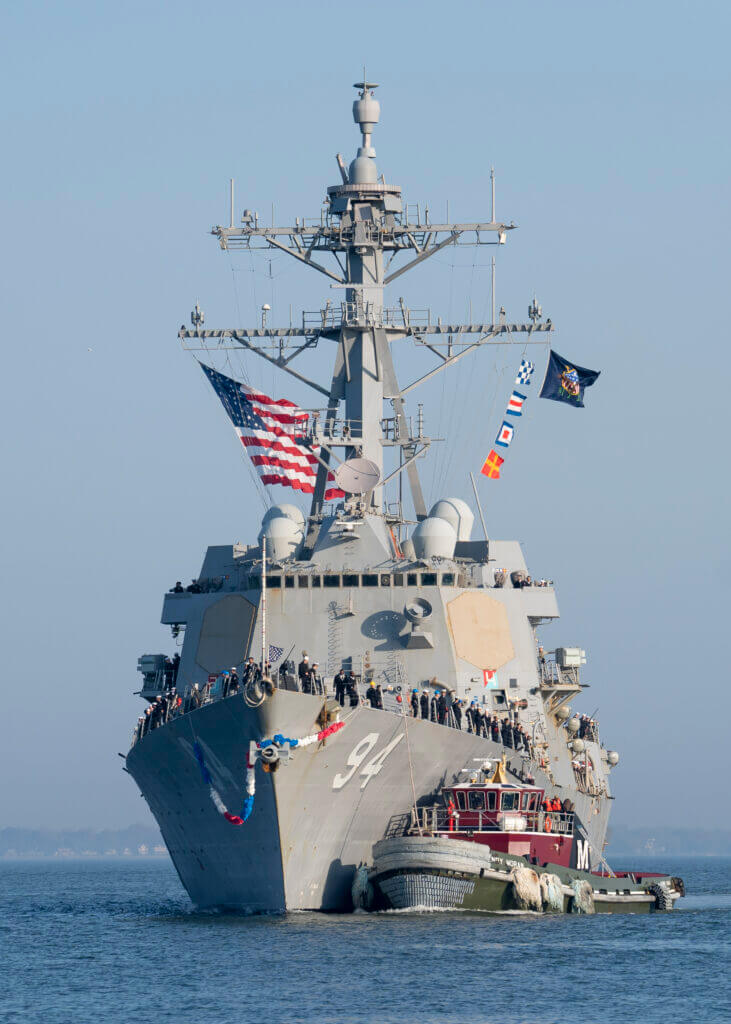
USS Nitze returns to homeport after an eight-month deployment in support of maritime security operations and theater security cooperation efforts in the 2nd, 5th and 6th Fleet areas of operation. (U.S. Navy photo by Mass Communication Specialist 1st Class Kris R. Lindstrom)

Welcome Home USS Nitze

The USS Nitze (DDG 94) returned to its homeport of Naval Station Norfolk on April 5th, 2023, after an eight-month deployment in the U.S. 5th and 6th Fleet areas of operation.

The ship conducted a variety of missions, including maritime security operations, theater security cooperation efforts, and counter-narcotics and counter-weapons smuggling operations as part of Operation Unified Takedown. The crew had the opportunity to visit several regions and strengthen important allied and partner relationships.

The successful completion of their mission is a testament to the hard work and dedication of the crew, and the Americans for Stronger Navy organization is proud to welcome them home.

The ship supported maritime security operations and theater security cooperation efforts and worked with the Yemen Coast Guard to rescue three civilians from a burning boat in the Gulf of Aden.

In addition, Nitze participated in Exercise Juniper Oak 23-2, the largest bi-lateral U.S.-Israeli exercise in history, and the NATO-led vigilance activity Neptune Strike 23.1. Key takeaways from the deployment include:

Nitze recovered two U.S. Saildrone Explorer unmanned surface vehicles captured by an Iranian ship in the Red Sea.

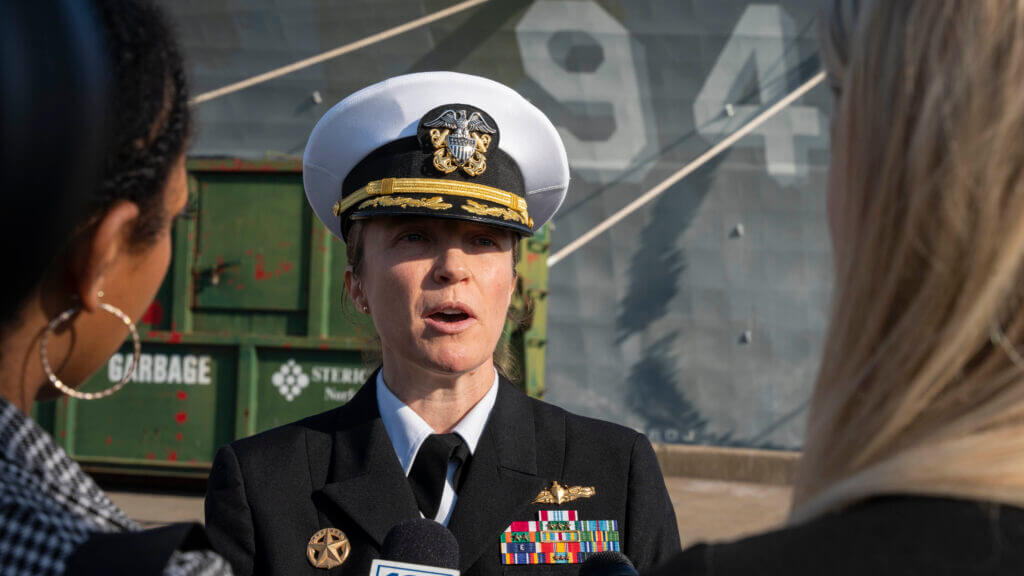
Cmdr. Katie Jacobson-missile destroyer USS Nitze (DDG 94), U.S. Navy photo by Mass Communication Specialist 1st Class Kris R. Lindstrom

Cmdr. Katie Jacobson relieved Cmdr. Sam Sareini as commanding officer during a change of command ceremony in the Gulf of Aden.

The ship completed numerous visit, board, search, and seizure operations, resulting in the seizure of 2,200 kilograms of hash and 320 kilograms of crystal methamphetamine worth an estimated $43 million.

The crew had the opportunity to experience the regions of Rota, Spain; Eilat, Israel; Aqaba, Jordan; Salalah, Oman; Duqm, Oman; Djibouti; Rome, Italy; Gölcük, Türkiye; and Valletta, Malta during scheduled port visits.

The deployment highlighted the Nitze’s commitment to advancing maritime security and strengthening relationships with allies and partners across the theaters.

Cmdr. Katie Jacobson expressed pride in her crew’s achievements and reflected on the ship’s role as ambassadors ashore.

This deployment serves as a reminder of the importance of a stronger navy to maintain peace through strength.

Hypersonic Air-Launched Offensive Anti-Surface Warfare weapon program Welcomed by Americans for a Stronger Navy

The Navy has awarded contracts to two defense giants, Lockheed-Martin and Raytheon, to separately develop prototype ship-sinking hypersonic missiles for the program

As an organization dedicated to promoting a strong and capable U.S. Navy, Americans for a Stronger Navy welcomes the recent investment by the Navy in the development of a new hypersonic ship-killing missile known as HALO.

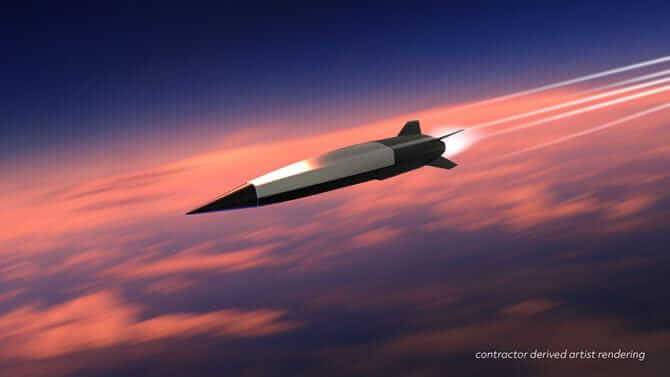
A contractor-derived rendering of the Hypersonic Attack Cruise Missile, or .
Raytheon Missiles & Defense and Northrop Grumman are developing the next-generation Hypersonic Attack Cruise Missile, also known as HACM

HALO is a carrier-based offensive anti-ship strike weapon that supports the U.S. Navy’s long range fires strategy.

Press reports reflect that this new weapon is expected to have both anti-ship and hypersonic capabilities, making it a powerful tool for targeting and destroying enemy ships from a safe distance.

In this blog post, we will explore the importance of this investment, as well as the potential impact that HALO could have in a potential conflict with China in the western Pacific.

As the world becomes more interconnected and tensions rise between nations, it is crucial for countries to invest in their defense capabilities.

For the United States, this means ensuring that the Navy remains a strong and capable force, capable of deterring potential adversaries and protecting American interests around the world.

Recently, the U.S. Navy has taken a major step towards maintaining its strength by investing in the development of a new hypersonic ship-killing missile known as HALO (Hypersonic Air-launched Offensive).

What makes HALO unique is that it combines both anti-ship and hypersonic capabilities, allowing it to effectively target and destroy enemy ships from hundreds of miles away.

This new weapon is expected to be carried by carrier-based jets such as the FA-18E/F Super Hornet and F-35 Lightning, and possibly future successors. It is also expected to fly farther and faster than the current LRASM stealth cruise missile.

The focus on anti-ship capabilities in the development of HALO reflects the Navy’s recognition of the potential conflict with China in the western Pacific, particularly in the event of a battle over Taiwan.

Simulations have shown that the effectiveness of long-range anti-ship missiles will be critical in such a scenario, highlighting the importance of the Navy’s investment in the HALO program.

Key Takeaways:

  • The U.S. Navy is investing in the development of a new hypersonic ship-killing missile known as HALO.
  • HALO combines anti-ship and hypersonic capabilities and is expected to fly farther and faster than the current LRASM stealth cruise missile.

The Navy’s focus on anti-ship capabilities in the development of HALO reflects the potential conflict with China in the western Pacific, particularly in the event of a battle over Taiwan.

The effectiveness of long-range anti-ship missiles will be critical in a potential conflict with China, highlighting the importance of the Navy’s investment in the HALO program.

A strong and capable Navy is crucial for the United States to deter potential adversaries and protect American interests around the world.

Navy commissions USS Santa Barbara

The Navy will commission the USS Santa Barbara (LCS 32) on April 1, 2023, as the newest Independence-variant littoral combat ship in Port Hueneme, California.

The Independence-variant variant littoral combat ship USS Santa Barbara (LCS 32) is in port at Naval Base Ventura County (NBVC) for its commissioning ceremony, March 31, 2023. (U.S. Navy photo by Ensign Drew Verbis)

The ship’s sponsor is Mrs. Lolita Zinke, and the ceremony will feature notable speakers such as Admiral Samuel Paparo and U.S. Representative Julia Brownley.

The #USSSantaBarbara is named after the city with a strong military history and connection with the Navy and Marine Corps.

The ship is part of the LCS class of ships, which consist of two variants, the Freedom and the Independence, designed and built by two industry teams with the Independence-variant team led by Austal USA for LCS 6 and the subsequent even-numbered hulls, including the USS Santa Barbara.

Littoral Combat Ships are fast, mission-tailored surface combatants designed to operate in near-shore and open-ocean environments. USS Santa Barbara is the third U.S. ship to bear the name Santa Barbara, with the previous two being a single-screw steel freighter and a Kilauea-class ammunition ship.

The commissioning ceremony will be live-streamed at www.dvidshub.net/webcast/31155.

Raytheon Awarded Contract for Navy Radars

Raytheon Technologies has been awarded a $619 million contract to produce AN/SPY-6(V) radars for the US Navy. This contract is the second option exercised from the March 2022 hardware, production, and sustainment contract, which is valued up to $3 billion over five years.

The SPY-6 radars can defend against ballistic missiles, cruise missiles, hostile aircraft, and surface ships simultaneously, and provide significantly greater detection range, increased sensitivity, and more accurate discrimination than legacy radars.

The radars are being integrated into the US fleet, and this contract will enable them to be added to more ships, including the first of existing Flight IIA destroyers that will be modernized.

About Raytheon Technologies
Raytheon Technologies (NYSE: RTX) is the world’s largest aerospace and defense company. Our global team of 180,000 employees pushes the limits of known science and redefines how we connect and protect our world. We are advancing aviation, building smarter defense systems and creating innovations to take us deeper into space. The company, with 2022 sales of $67 billion, is headquartered in Arlington, Virginia.