Challenges in the South China Sea

A Chinese naval Z-9 helicopter prepares to land aboard the People’s Liberation Army (Navy) frigate CNS Huangshan (FFG-570) as the ship conducts a series of maneuvers and exchanges with the Arleigh Burke-class guided-missile destroyer USS Sterett (DDG 104) in the South China Sea June 16, 2017. U.S. Navy photo by Mass Communication Specialist 1st Class Byron C. Linder

Introduction: Hello to our esteemed members and subscribers! We bring you the latest developments from the South China Sea, shining light on China’s concerning activities and highlighting the unwavering support of the US Navy in the region.


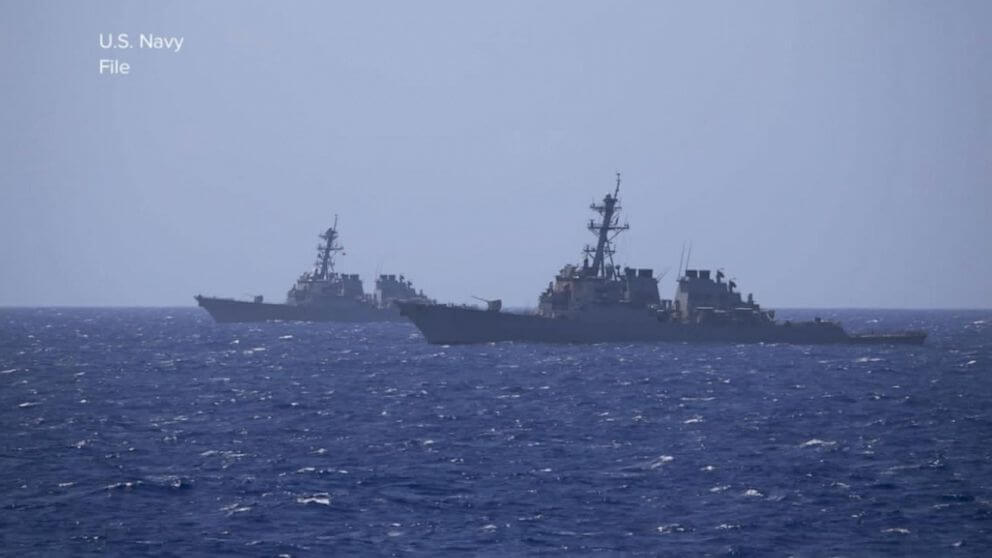
China’s Growing Assertiveness in the South China Sea: China’s recent “aggressive behaviour” in the South China Sea, especially the use of water canons against a Philippine vessel, is causing increasing alarm. This blatant show of force not only challenges regional dynamics but underscores the importance of naval power in the face of rising threats.


US Navy’s Stance: Vice Admiral Karl Thomas, the commander of the U.S. Navy’s Seventh Fleet, has voiced concern over these provocative actions. “My forces are out here for a reason,” Thomas emphasized, signaling the US Navy’s commitment to counterbalance such regional aggressions. The Seventh Fleet, stationed primarily in Japan, boasts up to 70 ships, approximately 150 aircraft, and over 27,000 sailors, covering a vast area of 124 million square km.


Recent Incidents on the South China Sea: A significant incident unfolded on August 5th when a Chinese coast guard ship used water canons against a Philippine vessel transporting supplies to its troops. This aggressive move only deepens the fault lines between the US and China in the region.


US and Philippine Collaborative Measures: Vice Admiral Thomas and Vice Admiral Alberto Carlos of the Philippine Western Command have been in discussions to better comprehend the challenges faced by the Philippines in the South China Sea. Their collaboration aims to fortify strategies and enhance the region’s security.


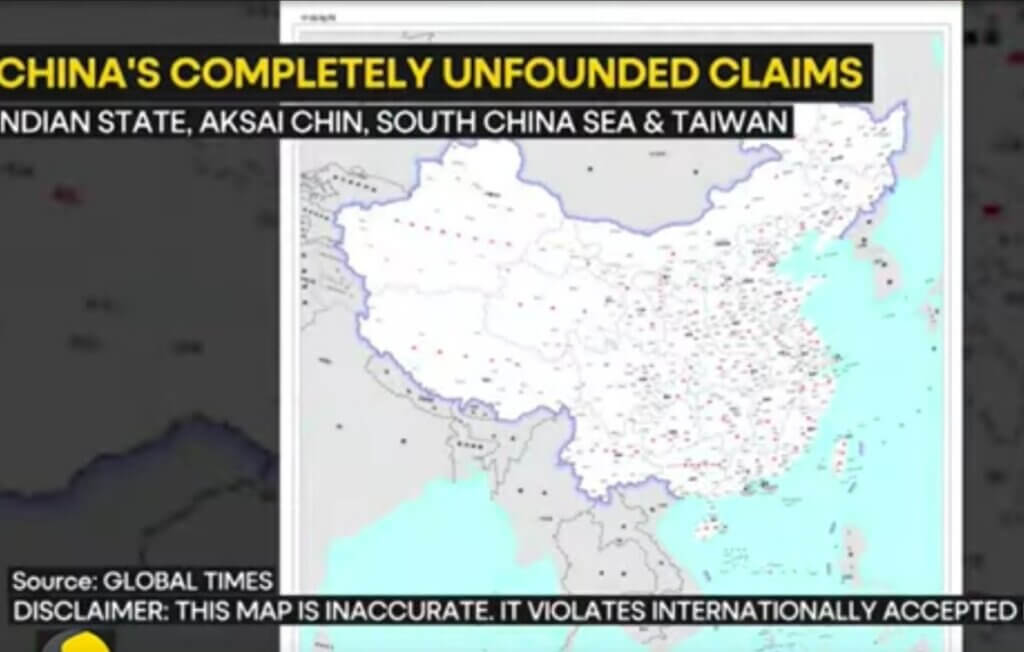
China’s Territorial Claims and Militarization: China’s territorial assertions in the South China Sea have long been contentious, especially after their claims were refuted by an international tribunal in 2016. Yet, China continues to militarize artificial islands in the region, which overlap with exclusive economic zones of several Southeast Asian nations, leading to heightened tensions.


Key Takeaways:

  1. Assertive Behavior: China’s actions in the South China Sea are becoming increasingly aggressive, challenging regional stability.
  2. US Navy’s Dedication: The Seventh Fleet underlines the US’s commitment to ensuring peace and stability in the region.
  3. Need for Collaboration: Dialogues between the US Navy and the Philippine Western Command signify the importance of collaborative efforts in addressing shared challenges.

Conclusion: The dynamics in the South China Sea are complex and rapidly evolving. As China intensifies its assertive actions, the role of the US Navy, along with collaborative efforts with regional allies, becomes increasingly crucial. The recent incidents underline the importance of maintaining a formidable naval presence and fostering cooperation to ensure peace and stability in the region.

Guardians of the Sea: The Philippines, China, and the Legacy of the Sierra Madre


Introduction

Amid the vastness of the South China Sea, an aging warship rests as a symbol of sovereignty, determination, and regional tension. This rusting relic, the BRP Sierra Madre, has inadvertently become the flashpoint of geopolitical contention between the Philippines and China. While for some it may appear as just a dilapidated warship, its importance transcends its physical condition. By understanding its past and its current role, we can appreciate the mission of the Americans for a Stronger Navy and the call for unity and strength across the seas.

https://youtu.be/duhNoYsqnGo
Legacy of the Sierra Madre

Summary

The South China Sea has always been a hotspot for territorial disputes. The Philippines has made a move to assert its presence by grounding the Sierra Madre, a warship with a rich history, on Second Thomas Shoal. This strategic decision was made in response to China’s increasing maritime activities, especially after the occupation of the nearby Mischief Reef. The ship, though no longer seaworthy, still holds significance as an extension of Philippines’ sovereign territory. The recent actions by the Chinese coast guard, including the use of water cannons, underline the rising tensions and the urgency to address maritime rights and sovereignty.


Key Takeaways

  • Legacy of the Sierra Madre: Originally a US tank-landing ship, the Sierra Madre was later acquired by the Philippines navy and has since been a symbol of the Philippines’ presence and territorial claim in the South China Sea.
  • Strategic Importance: The ship was grounded on Second Thomas Shoal in the late 1990s as a countermove to China’s growing dominance and occupation of nearby areas. It remains a testament to the Philippines’ resolve in upholding its maritime rights.
  • Recent Tensions: China’s recent aggressive actions against the Sierra Madre, including firing water cannons at Philippine vessels, reflect the escalating tension in the region.

Conclusion

The story of the Sierra Madre is not just of a ship, but of resilience, strategy, and a fight for sovereignty. As tensions rise, the importance of a stronger and unified maritime force becomes increasingly evident. We, the Americans for a Stronger Navy, stand in solidarity with our allies and urge all to recognize the importance of preserving maritime rights. We are proud to be part of a community that values the significance of these waterways, and we call upon every American to join us in bolstering our mission and securing a safer future for all.


Upholding Security: The US Responds to Chinese and Russian Naval Patrol Near Alaska

Introduction

In a historic first, a joint naval patrol consisting of Chinese and Russian military vessels approached US territory near Alaska, raising concerns about security and territorial sovereignty. This article delves into the details of the event, the US response, and the implications for the region and international relations.

Summary

The Combined Naval Patrol: The Wall Street Journal reported on the joint naval patrol, which was the largest flotilla to approach US territory. Experts weighed in on the significance of this maneuver amid geopolitical tensions.

US Response: In response to the Chinese and Russian flotilla, the US dispatched four navy warships and a reconnaissance airplane. The presence of these vessels aimed to assure the defense of the United States and Canada.

Chinese and Russian Statements: The Chinese embassy in Washington DC emphasized that the naval patrol was not targeted at any third party and was part of their annual cooperation plan. The US Northern Command corroborated this, stating that the patrol remained in international waters and was not considered a direct threat.

Alaska Senators’ Reactions: Senators Lisa Murkowski and Dan Sullivan expressed vigilance in monitoring the situation closely. They stressed the importance of Alaska’s role in national defense and territorial sovereignty, especially given the proximity to China and Russia.

Key Takeaway:
The joint Chinese and Russian naval patrol near Alaska underscores the geopolitical complexities in the region. The US response demonstrated its commitment to safeguarding national interests and territorial integrity, sending a strong message of deterrence to potential adversaries.

Conclusion:
The recent naval patrol near Alaska serves as a stark reminder of the evolving security landscape and the need for continued vigilance. It highlights the significance of maintaining a strong navy to protect vital national interests and ensure stability in the region. The US must remain resolute in upholding its commitment to defend its territorial sovereignty while navigating complex international relations.

China’s Naval Base in Cambodia: A Challenge to US Interests

Cambodian Ream Naval Base in Sihanoukville, Cambodia,
Photo by screenshot Youtube

The recent revelation that China has made significant progress building a naval base in Cambodia has raised alarm bells in Washington and the region.

According to satellite imagery, China is close to completing a pier that could berth an aircraft carrier at Ream Naval Base, near Sihanoukville on the Gulf of Thailand. This Chinese-funded project would extend Beijing’s military reach into the contested waters of Southeast Asia, where it faces rival claims from several countries, including US allies.

China and Cambodia have denied that the People’s Liberation Army will have access to the base, claiming that the construction is for Cambodia’s navy and that the two countries have no secret agreement. However, US officials and analysts have voiced suspicions that the base is part of China’s broader strategy to expand its influence and challenge US presence and interests in the region.

China has over the past decade built a number of military bases on reefs and reclaimed land in the South China Sea, where it claims almost the entire waterway as its sovereign territory.

The US has conducted freedom of navigation operations and military exercises to challenge China’s claims and assert its support for its regional partners.

A naval base in Cambodia would give China another strategic advantage, as it would provide access to the Gulf of Thailand and the Malacca Strait, a vital choke point for global trade and energy flows.

A Chinese military presence at Ream Naval Base would also have implications for the balance of power across Southeast Asia, where many countries are wary of China’s growing assertiveness and seek to maintain good relations with both Beijing and Washington. Cambodia, once a close ally of the US during the Cold War, has tilted towards China in recent years, receiving billions of dollars in aid, investment and loans from Beijing.

The US has criticized Cambodia for its democratic backsliding, human rights violations and crackdown on dissent under Prime Minister Hun Sen, who has ruled the country since 1985.
The US has urged Cambodia to be transparent about its intentions and activities at Ream Naval Base, and to respect its constitutional prohibition on foreign military bases on its soil.

The US has also sought to deepen its security ties with other countries in the region, such as Vietnam, Indonesia, Malaysia and Singapore, to counter China’s influence and promote a free and open Indo-Pacific.

In August 2022, US Secretary of State Antony Blinken visited Phnom Penh and raised the issue of the naval base with Cambodian officials, saying that it would pose a threat to Southeast Asia if used exclusively for China’s military.

The development of Ream Naval Base is a clear sign of China’s ambition to become a global naval power and a challenge to US interests and values in the region.

The US should continue to monitor the situation closely and engage with Cambodia and other regional partners to uphold a rules-based order and prevent any escalation or conflict in the waters of Southeast Asia.

Sources:
• Chinese base in Cambodia nears completion in challenge to US naval power (Financial Times)
• Cambodian Ream Naval Base Modernized by China Nears Completion: Defense Ministry (VOA News)
• Is China building a military base in Cambodia? (Chatham House)
• China’s Base in Cambodia Nearing Completion, Challenging US Naval Power (Military View)

Strengthening the US Navy: Safeguarding American Interests at Sea

Introduction:
In a recent incident that highlights the increasing assertiveness of Beijing in the South China Sea, a Chinese warship narrowly avoided colliding with the USS Chung-Hoon, an American destroyer according to press reports.

As Americans for a Stronger Navy, we recognize the significance of such incidents and the need to address the challenges facing our naval forces. This article delves into the debate surrounding the shipbuilding of US naval vessels and explores the arguments for and against allowing them to be built elsewhere. By examining this issue, we aim to inform and inspire our readers, reinforcing the importance of a strong and self-sufficient US Navy.

Summary:
This article discusses a near-collision between a Chinese warship and the USS Chung-Hoon, emphasizing the aggressive military maneuvers of Beijing in the South China Sea. The incident occurred during a joint Canada-US mission sailing through the Taiwan Strait. Such confrontations underscore the critical role of the US Navy and the necessity to address the challenges faced by American naval forces. The article further explores the ongoing debate about where US naval ships should be built, offering insights from both sides of the argument.

The Incident in the South China Sea:
During a joint Canada-US mission, a Chinese warship came within 150 yards of the USS Chung-Hoon, nearly causing a collision. The encounter exemplifies the increasingly provocative actions of Beijing in the South China Sea.

The Importance of a Strong US Navy:
A robust US Navy is vital to ensuring national security and protecting American interests worldwide. The ability to project power, maintain freedom of navigation, and respond to global threats relies on a strong and capable naval force.

The Debate: Building US Naval Ships Elsewhere:
There is an ongoing debate regarding whether US naval ships should be built exclusively in the United States or if the law should be changed to allow for construction in other locations. Proponents argue that building ships abroad could reduce costs and increase efficiency, while opponents emphasize the need to preserve domestic shipbuilding capabilities and ensure national security.

Balancing Costs and National Security:
Advocates for building naval ships overseas argue that cost savings and access to specialized expertise could enhance the fleet’s capabilities. However, opponents emphasize the strategic importance of maintaining domestic shipbuilding capacity, which supports jobs, protects sensitive technologies, and ensures national sovereignty.

Key Takeaways:

The incident between the Chinese warship and the USS Chung-Hoon underscores the need for a strong US Navy capable of protecting American interests and maintaining global stability.
The debate surrounding the location of shipbuilding for US naval vessels raises important considerations about costs, efficiency, national security, and domestic job creation.
Americans for a Stronger Navy advocates for the preservation of domestic shipbuilding capabilities to ensure national sovereignty and maintain the strength of the US Navy.

Conclusion:
The incident in the South China Sea serves as a powerful reminder of the importance of a strong and self-sufficient US Navy. Americans for a Stronger Navy believes that preserving domestic shipbuilding capabilities is essential to safeguarding national security, supporting American jobs, and protecting sensitive technologies. We urge our readers to join us in our mission and support a robust US Navy that can effectively respond to global challenges, uphold freedom of navigation, and protect American interests at sea and beyond. Together, we can ensure a safer and more prosperous future for our nation.

How China’s Hacking of Navy Systems Threatens America’s Security


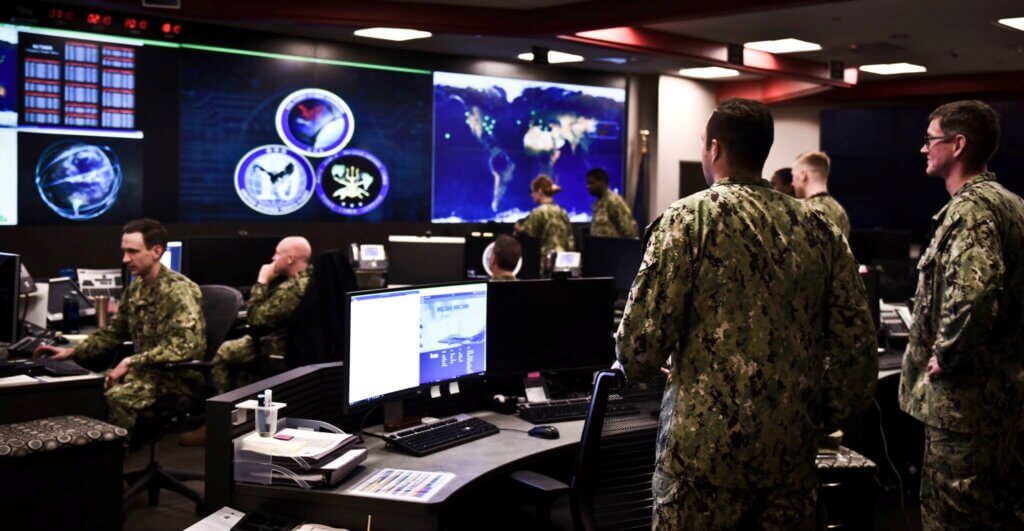
U.S. Fleet Cyber Command

Introduction:

China has been conducting aggressive cyber operations to steal sensitive data and disrupt critical communications infrastructure of the United States and its allies.

Recently, Chinese-backed hackers breached technology systems belonging to the U.S. Navy, targeting its assets on Guam, a strategic island in the Pacific.

This blog post will explain what we know about this hack, why it matters for America’s security and peace through strength, and what we can do to protect ourselves from such threats.

Americans for a Stronger Navy is a community-driven and membership-supported organization that advocates for policies and legislation that support the Navy’s ability to meet the challenges of a rapidly changing global security environment.

We believe that a strong and capable U.S. Navy is essential for protecting America’s interests and ensuring peace through strength. Join us today and help us promote a stronger navy for a safer world.

Summary:

The hack was carried out by a group called Volt Typhoon, which used legitimate credentials and small-office routers to gain access to the systems.

The hackers aimed to develop capabilities that could disrupt communications between the United States and Asia in a crisis. The Navy confirmed that it was impacted by the hack, but did not reveal the extent of the damage.

The United States and its allies issued a joint advisory on how to detect and prevent similar intrusions.

In this blog post, we will answer the following questions:

Who is behind the hack? A brief overview of the group’s history, motives, and techniques.

What was affected by the hack? A description of the infrastructure and sectors targeted by the hack, especially the Navy’s assets on Guam and their importance for regional security.

What’s being done to prevent or respond to the hack? A summary of the responses and actions taken by the United States and its allies, including Microsoft, the Five Eyes intelligence sharing organization, and the Cybersecurity and Infrastructure Security Agency.

Answers

Who is behind the hack? The hack was carried out by a group called Volt Typhoon, which is believed to be a state-sponsored actor based in China that typically focuses on espionage and information gathering.

The group has been active since at least 2021 and has targeted critical infrastructure organizations in Guam and elsewhere in the United States. Volt Typhoon uses legitimate credentials and small-office routers to gain access to the systems, disguising their origin and activity.

They also use custom versions of open-source tools to establish a command and control channel over proxy. The Chinese government has denied any involvement in the hack, calling it a “collective disinformation campaign” by the United States and its allies.

What was affected by the hack? The hack targeted key infrastructure like communications, electric and gas utilities, manufacturing, transportation, construction, maritime, government, information technology, and education sectors. The hackers aimed to develop capabilities that could disrupt critical communications infrastructure between the United States and Asia region during future crises.

One of the main targets was the U.S. Navy’s infrastructure on Guam, a strategic island in the Pacific that hosts several military installations, including B-52 bombers and submarines. Guam is a vital part of the U.S. military’s strategy in the region, as it provides access to resources and markets, protects sea lanes of communication, and supports humanitarian aid in times of crisis.

What’s being done to prevent or respond to the hack?

  • Microsoft was the first to report on the hack and identify Volt Typhoon as the perpetrator.
  • Microsoft contacted all groups affected by the hack and provided guidance on how to detect and mitigate this malicious activity
  • The cybersecurity agencies of the Five Eyes member nations (the United States, United Kingdom, Canada, Australia and New Zealand) issued a joint advisory on how to prevent or respond to similar intrusions.
  • One of the agencies involved in issuing the advisory was the Cybersecurity and Infrastructure Security Agency (CISA), which also published a statement highlighting China’s continued use of sophisticated means to target America’s critical infrastructure. CISA director Jen Easterly said in a statement:

“For years, China has conducted aggressive cyber operations to steal intellectual property and sensitive data from organizations around the globe. Today’s advisory highlights China’s continued use of sophisticated means to target our nation’s critical infrastructure, and it gives network defenders important insights into how to detect and mitigate this malicious activity.” – CISA director Jen Easterly

  • The advisory contains a hunting guide for the tactics, techniques, and procedures used by Volt Typhoon.
  • The Cybersecurity and Infrastructure Security Agency (CISA) also published a statement highlighting China’s continued use of sophisticated means to target America’s critical infrastructure. CISA urged network defenders to implement best practices such as patching vulnerabilities, enforcing strong passwords, monitoring network activity, and reporting incidents.

Key takeaways:

  • China is pursuing cyber warfare as a means of challenging America’s interests and influence in the Asia-Pacific region.
  • The hack exposed vulnerabilities in America’s communications systems and naval infrastructure, which could have serious consequences in a conflict scenario.
  • The United States needs to invest more in strengthening its cyber defenses and resilience, as well as enhancing its naval capabilities and readiness.

Conclusion:

The hack by Volt Typhoon is a wake-up call for America and its allies to take China’s cyber threats seriously.

A strong and capable U.S. Navy is essential for protecting America’s security and ensuring peace through strength. Americans for a Stronger Navy is a community-driven and membership-supported organization that advocates for policies and legislation that support the Navy’s ability to meet the challenges of a rapidly changing global security environment.

Join us today and help us promote a stronger navy for a safer world.

Sources:1: https://strongernavy.org/2: https://www.wionews.com/world/explained-everything-about-volt-typhoon-china-backed-hackers-targeting-critical-us-infrastructure-5962633: https://www.microsoft.com/en-us/security/blog/2023/05/24/volt-typhoon-targets-us-critical-infrastructure-with-living-off-the-land-techniques/4: https://www.cnbc.com/2023/05/24/microsoft-warns-that-china-hackers-attacked-us-infrastructure.html
: https://www.reuters.com/technology/what-is-volt-typhoon-alleged-china-backed-hacking-group-2023-05-25/

US Stands with Philippines Against Chinese Harassment in South China Sea

A Chinese Coast Guard vessel is pictured on the disputed Second Thomas Shoal, part of the Spratly Islands, in the South China Sea, March 29, 2014. REUTERS/Erik De Castro

Introduction

The South China Sea remains a point of contention between the Philippines and China. Recently, the US has issued a warning to China’s Coast Guard to stop harassing Philippine vessels. As a strong advocate for a robust Navy, Americans for a Stronger Navy stands with the US in upholding the rules-based international maritime order and supports the Philippines in their efforts to protect their sovereignty.

The Situation in the South China Sea

Last week, the Philippines accused China’s Coast Guard of “aggressive tactics” and “dangerous maneuvers” in the South China Sea. China’s foreign ministry had said that the Philippine vessels had intruded into Chinese waters and made deliberate provocative moves. The Philippines has filed more than 200 diplomatic protests against China since last year.

Chinese Coast Guard’s Provocative and Unsafe Conduct

The US has warned the Chinese Coast Guard to stop harassing Philippine vessels in the South China Sea. The US state department said in a statement: “We call upon Beijing to desist from its provocative and unsafe conduct.” China has angered the Philippines by repeatedly harassing its navy and coast guard patrols and chasing away fishermen in the waters close to Philippine shores but which Beijing claims as its own.

US Stands with the Philippines

The US state department said Washington “stands with our Philippine allies in upholding the rules-based international maritime order.” In Washington, the US and Philippine defence and foreign secretaries met earlier in April to discuss the development of nine Philippine military camps, where American forces have been allowed to stay indefinitely under the 2014 Enhanced Defense Cooperation Agreement. The US is allocating more than $100m to build infrastructure at the sites, where Americans would be stationed.

Building a Strong Navy to Ensure Regional Peace and Stability

Americans for a Stronger Navy supports the US in its efforts to maintain stability and security in the South China Sea. We advocate for a strong Navy to protect American interests and promote peace and stability worldwide. The ongoing tensions in the South China Sea demonstrate the need for a strong and capable Navy to ensure regional security and stability. We encourage readers to stay informed about developments in the South China Sea and to support efforts to promote a rules-based international maritime order.

China Conducts Military Drills Around Taiwan, Alarming the Region

Introduction

Greetings members and subscribers, we at Americans for a Stronger Navy, are committed to promoting Peace Through Strength. As an organization that aims to inform and inspire, we want to provide the latest news on the recent military drills that China has conducted around Taiwan.

Summary

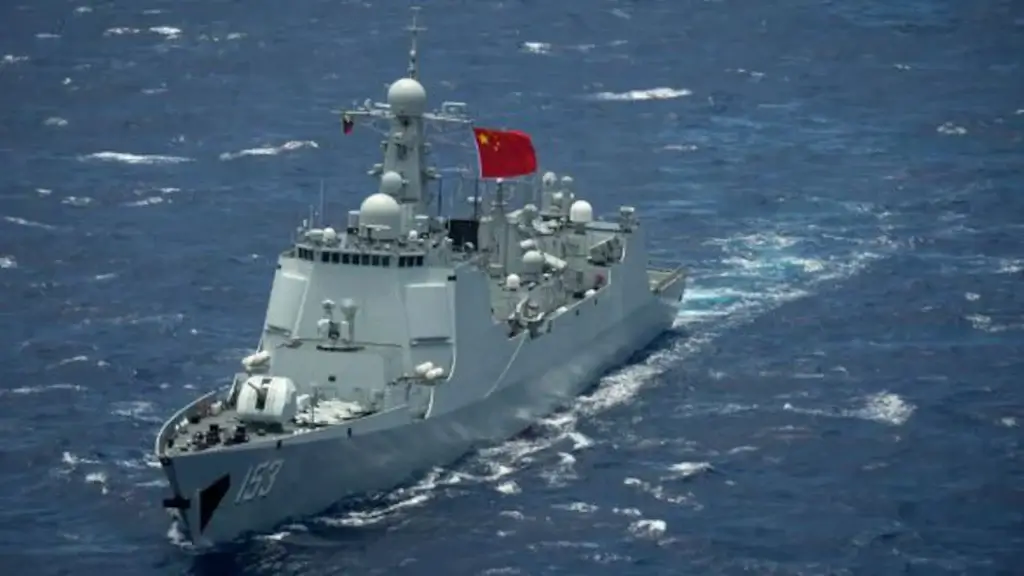
Chinese Destroyer Courtesy of DoD

China recently completed three days of military drills around Taiwan, which included “sealing off” the island and simulating targeted strikes. Taiwan detected jets to its east, and China confirmed its Shandong aircraft carrier had taken part. China began the exercises after Taiwan President Tsai Ing-wen met the US House Speaker in California. The drills have not been as big as those that followed Nancy Pelosi’s visit to Taipei last August.

Taiwan considers itself a sovereign state, while China sees it as a breakaway province that will eventually be brought under Beijing’s control, by force if necessary.

Taiwan’s defence ministry detected 12 Chinese warships and 91 aircraft around the island on Monday. A senior US official has expressed concern about Beijing’s military exercises, saying they undermine peace and stability in the region.

Key Takeaways

China has conducted military drills around Taiwan, which included “sealing off” the island and simulating targeted strikes.

Taiwan considers itself a sovereign state, while China sees it as a breakaway province that will eventually be brought under Beijing’s control, by force if necessary.

Taiwan’s defense ministry detected 12 Chinese warships and 91 aircraft around the island on Monday.

The US has expressed concern about Beijing’s military exercises, saying they undermine peace and stability in the region.

Conclusion

As a supporter of a Stronger Navy, we hope this update on the recent military drills by China around Taiwan will encourage you to subscribe and stay informed. We want to emphasize the importance of peace through strength and how vital it is for a Stronger Navy.

Our mission is to keep you updated on the latest news and inspire you to support our efforts towards a safer future.

Thank you for your time, and we appreciate your continued support.

source: BBC

US Navy Asserts Navigational Rights in the South China Sea Near China-Militarized Island

Introduction:

Greetings to all members and subscribers of Americans for a Stronger Navy. We believe in promoting peace through strength, which is a valuable central theme of our organization mission.

In this blog post, we will summarize a recent event related to the US Navy in the South China Sea.

Summary:

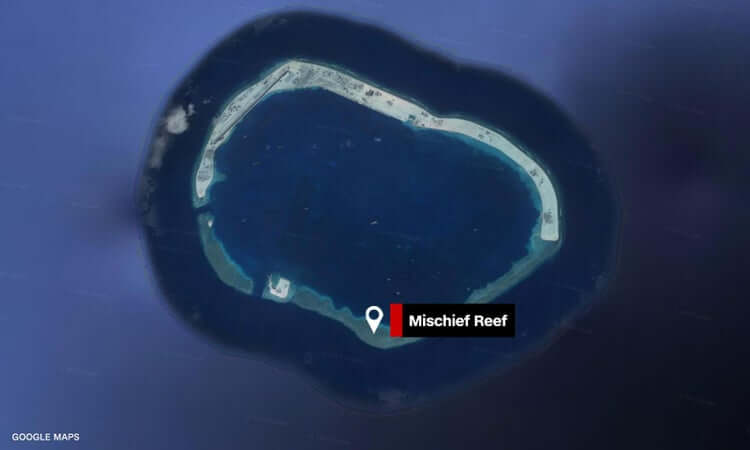
The US Navy has sent a guided-missile destroyer, the USS Milius, close to Mischief Reef in the Spratly Islands, near the South China Sea. Mischief Reef, which is claimed by the Philippines, Taiwan, and Vietnam, has been militarized by China.

The sailing was consistent with international law, and the US Navy asserts that China’s actions are in violation of the Law of the Sea Convention. China has claimed almost all of the South China Sea as part of its territorial waters, including many distant islands and inlets, and has militarized many of them.

“No member of the international community should be intimidated or coerced into giving up their rights and freedoms,” the US Navy said.

The US Navy announcement came after China’s military simulated precision attacks against key targets in Taiwan.

China called the USS Milius mission “illegal trespassing.”

The US regularly conducts freedom of navigation operations (FONOPs) in the region, defending the rights of vessels of any nation to operate in the area.

Key Takeaways:

  • The US Navy has sent a guided-missile destroyer close to Mischief Reef in the Spratly Islands, near the South China Sea.
  • Mischief Reef has been militarized by China, which is in violation of international law.
  • China claims almost all of the South China Sea as part of its territorial waters and has militarized many of the islands and inlets.
  • The US regularly conducts FONOPs in the region to defend the rights of vessels of any nation to operate in the area.

Conclusion:

It is essential to promote peace through strength, as our organization mission states, and the recent US Navy’s action in the South China Sea is an example of how we can achieve it. By following international law and conducting FONOPs, we can defend the rights of all nations to operate in the region.

We encourage all our readers to support a Stronger Navy by subscribing to our website and staying informed on these critical issues.

source CNN

China Sends 71 Warplanes Near Taiwan During Three-Day Military Drills

Press reports reflect that China conducted “Joint Sword” drills and combat patrols around Taiwan from April 2-4, 2022, involving 71 warplanes and nine naval vessels in a show of force against Taiwan’s sovereignty according to Japan Times.

According to the Eastern Theater Command, the drills were conducted in the waters and airspace to the north, south and east of Taiwan. It warned that it is a serious warning against the ‘Taiwan independence’ separatist forces’ collusion and provocation with external forces, and it is a necessary action to safeguard national sovereignty and territorial integrity.

Taiwan’s defense ministry detected 45 of the warplanes crossing the median line of the Taiwan Strait, the most in a single day since Taiwan began releasing daily tallies in 2020. The exercises were held days after Taiwanese President Tsai Ing-wen incurred Beijing’s wrath for meeting with U.S. House Speaker Kevin McCarthy.

China has not ruled out the use of force to take Taiwan, which it regards as its own territory, and has denounced Tsai’s meetinyg with McCarthy as “collusion” between Washington and Taipei, promising to take “resolute and effective measures” in response. The latest military exercises by China have been criticized by Taiwan’s Defense Ministry as a threat to “regional peace, stability and security,” adding that China had “used President Tsai’s visit to the United States as an excuse to conduct the military exercises.”

Japan has watched the area with trepidation, with senior officials fearing that conflict in the Taiwan Strait would also constitute an emergency for Japan. Okinawa Prefecture’s Yonaguni Island sits about 110 kilometers from Taiwan, and growing concerns over a possible war have helped Tokyo push through a dramatic shift in security policy and boost in defense spending.

Key takeaways:

  • China conducted “Joint Sword” drills and combat patrols around Taiwan from April 2-4, 2022, involving 71 warplanes and nine naval vessels in a show of force against Taiwan’s sovereignty.
  • The Eastern Theater Command warned that it was a serious warning against the ‘Taiwan independence’ separatist forces’ collusion and provocation with external forces, and it is a necessary action to safeguard national sovereignty and territorial integrity.
  • Taiwan’s defense ministry detected 45 of the warplanes crossing the median line of the Taiwan Strait, the most in a single day since
  • Taiwan began releasing daily tallies in 2020.
    The latest military exercises by China have been criticized by Taiwan’s Defense Ministry as a threat to “regional peace, stability and security.”
  • Japan has watched the area with trepidation, with senior officials fearing that conflict in the Taiwan Strait would also constitute an emergency for Japan.